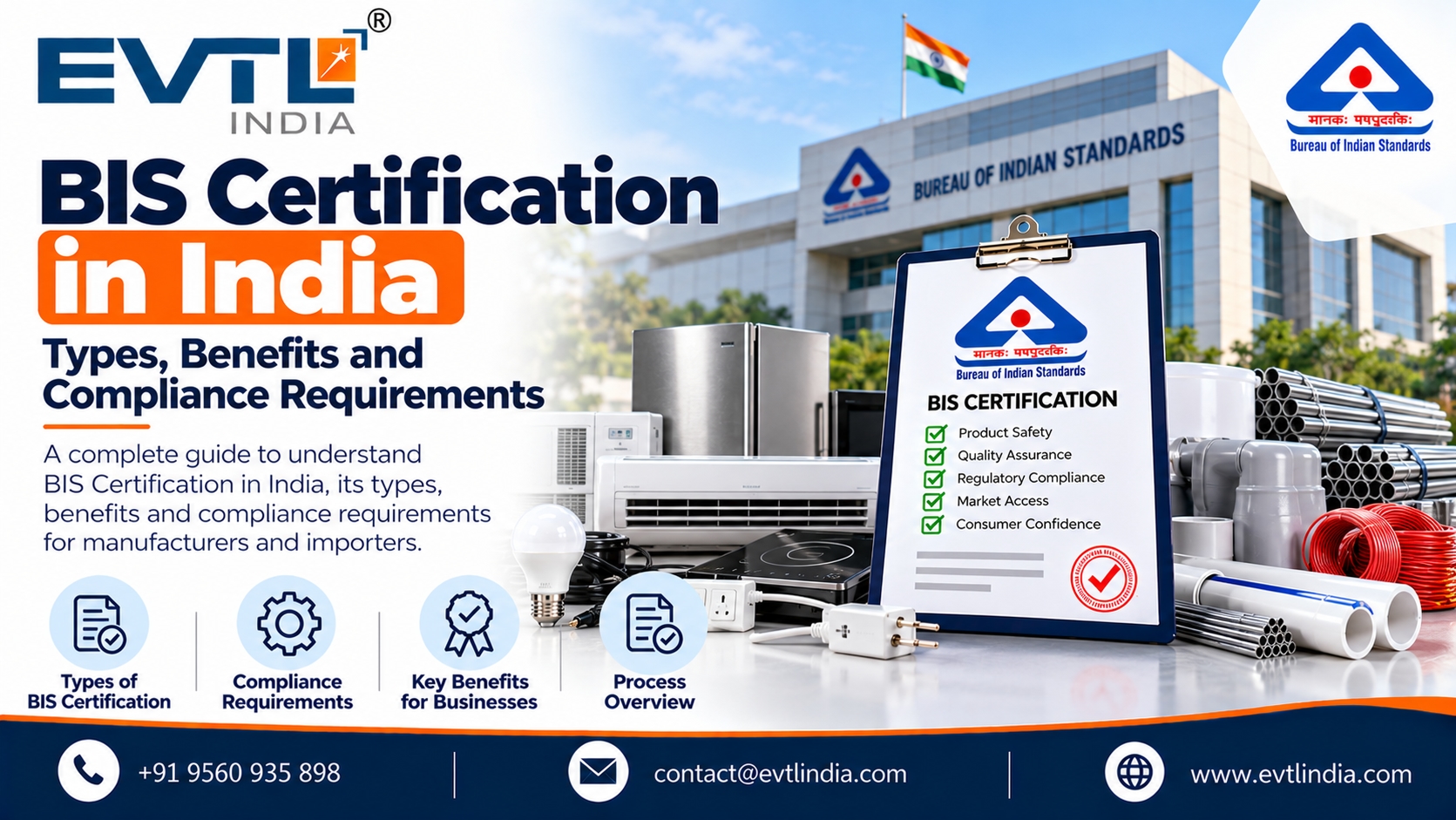
BIS Certification is an important quality assurance system in India that helps ensure products meet established Indian Standards for quality, safety, performance and reliability. The Bureau of Indian Standards (BIS) is the national standards body of India, responsible for developing standards and operating various product certification and conformity assessment schemes. For manufacturers, importers and foreign companies planning to enter the Indian market, understanding BIS Certification, BIS Registration and BIS License requirements is essential.
Depending on the product category and applicable government notifications, obtaining BIS approval may be voluntary or mandatory. Businesses dealing in products covered under Quality Control Orders (QCOs) must comply with the relevant certification requirements before manufacturing, importing, distributing or selling those products in India.
What Is BIS Certification?
BIS Certification is a conformity assessment process through which the Bureau of Indian Standards verifies whether a product meets the requirements of its applicable Indian Standard (IS). After successfully completing the required assessment, testing and approval process, eligible manufacturers receive authorization to use the applicable BIS Standard Mark.
The certification system aims to protect consumers from unsafe and substandard products while encouraging manufacturers to maintain consistent quality. It also helps businesses establish credibility and meet regulatory requirements in the Indian market.
BIS operates different certification schemes, including the ISI Mark Certification Scheme, Compulsory Registration Scheme (CRS), Foreign Manufacturers Certification Scheme (FMCS) and Scheme-X Certification. The applicable scheme depends on the nature of the product and the relevant regulatory requirements.
What Is BIS Registration in India?
BIS Registration is a term commonly used for obtaining approval under the applicable BIS conformity assessment scheme. However, BIS Registration and BIS Licensing are not identical in every case.
For example, electronic and IT products covered under the Compulsory Registration Scheme generally require registration before they can be sold in India. Manufacturers must ensure that their products comply with the applicable Indian Standards and complete the required testing and registration formalities.
BIS Registration is particularly relevant to products such as electronic equipment, IT products and other notified categories. Manufacturers must identify the applicable standard and follow the requirements prescribed under the relevant scheme.
What Is a BIS License in India?
A BIS License is an official authorization granted by the Bureau of Indian Standards to a manufacturer for using the applicable Standard Mark on products that conform to the relevant Indian Standard.
Under the ISI Mark Certification Scheme, the manufacturer must demonstrate that its production facilities, quality control systems and testing capabilities meet BIS requirements. The product is also evaluated through the prescribed testing procedure.
A BIS License is generally granted to the manufacturing unit rather than simply to a trader or distributor. Separate applications may be required for different manufacturing locations, depending on the applicable certification scheme.
Why Is BIS Certification Important for Businesses?
BIS Certification plays an important role in maintaining product quality and consumer safety. Its benefits include:
Regulatory Compliance: Helps manufacturers and importers meet applicable Indian government requirements and Quality Control Orders.
Consumer Confidence: Demonstrates that certified products conform to the relevant Indian Standards.
Market Access: Helps businesses manufacture, import and sell products in India where certification is mandatory.
Brand Reputation: Builds trust among customers, distributors and business partners.
Product Quality: Encourages manufacturers to maintain appropriate production and quality control procedures.
Business Opportunities: Supports businesses in developing a stronger presence in the Indian market.
BIS Certification Process in India
The BIS Certification process depends on the applicable product category and certification scheme. However, the general procedure involves the following steps:
1. Identify the Applicable Indian Standard
The first step is to identify the relevant Indian Standard for the product. Manufacturers must verify whether their product falls under a mandatory BIS certification requirement or another applicable conformity assessment scheme.
2. Determine the Applicable Certification Scheme
After identifying the standard, the manufacturer must determine whether the product requires ISI Mark Certification, CRS Registration, FMCS or Scheme-X approval.
3. Prepare the Required Documents
The applicant needs to arrange the necessary business, manufacturing and technical documents. These may include company registration documents, factory details, manufacturing process information, product specifications and quality control records.
4. Product Testing
The product must undergo testing according to the applicable Indian Standard. Depending on the scheme, testing may need to be conducted at a BIS-recognised laboratory or through another prescribed testing arrangement.
5. Submit the Application
The applicant submits the application through the applicable BIS online portal along with the required documents and prescribed fees.
6. Factory Inspection and Assessment
For schemes involving factory assessment, BIS officials evaluate manufacturing infrastructure, production facilities, quality control procedures and testing capabilities.
7. Grant of BIS Approval
After successful completion of the applicable assessment and verification requirements, BIS may grant the licence, registration or certificate of conformity.
Documents Required for BIS Registration and Licensing
The document requirements vary depending on the product and certification scheme. Commonly required documents include:
Company registration certificate.
Manufacturing unit address proof.
GST registration details, where applicable.
Product specifications and technical details.
Manufacturing process flowchart.
Factory layout and machinery details.
List of testing equipment.
Quality control and testing procedures.
Product test reports.
Trademark or brand authorization documents, where applicable.
Authorized signatory details.
Applicants should check the latest product-specific guidelines before submitting their applications.
Who Needs BIS Certification in India?
BIS Certification may be required by domestic manufacturers, foreign manufacturers and businesses involved in manufacturing or importing products covered under mandatory certification requirements.
Foreign manufacturers planning to export regulated products to India may need approval under the Foreign Manufacturers Certification Scheme or another applicable scheme. Importers should also verify that the overseas manufacturer holds the necessary approval before importing regulated products.
Conclusion
BIS Certification are important parts of India's product quality and regulatory compliance framework. Choosing the correct certification scheme, identifying the applicable Indian Standard and preparing the required documentation can make the approval process more organised and efficient.
Businesses should verify the latest BIS notifications and Quality Control Orders before introducing products into the Indian market. With professional guidance from EVTL India, manufacturers and importers can understand the applicable requirements, prepare their documentation and navigate the BIS approval process with greater confidence.