Find competitive commodity prices by comparing verified supplier rates, understanding market trends, and making smarter purchasing decisions.
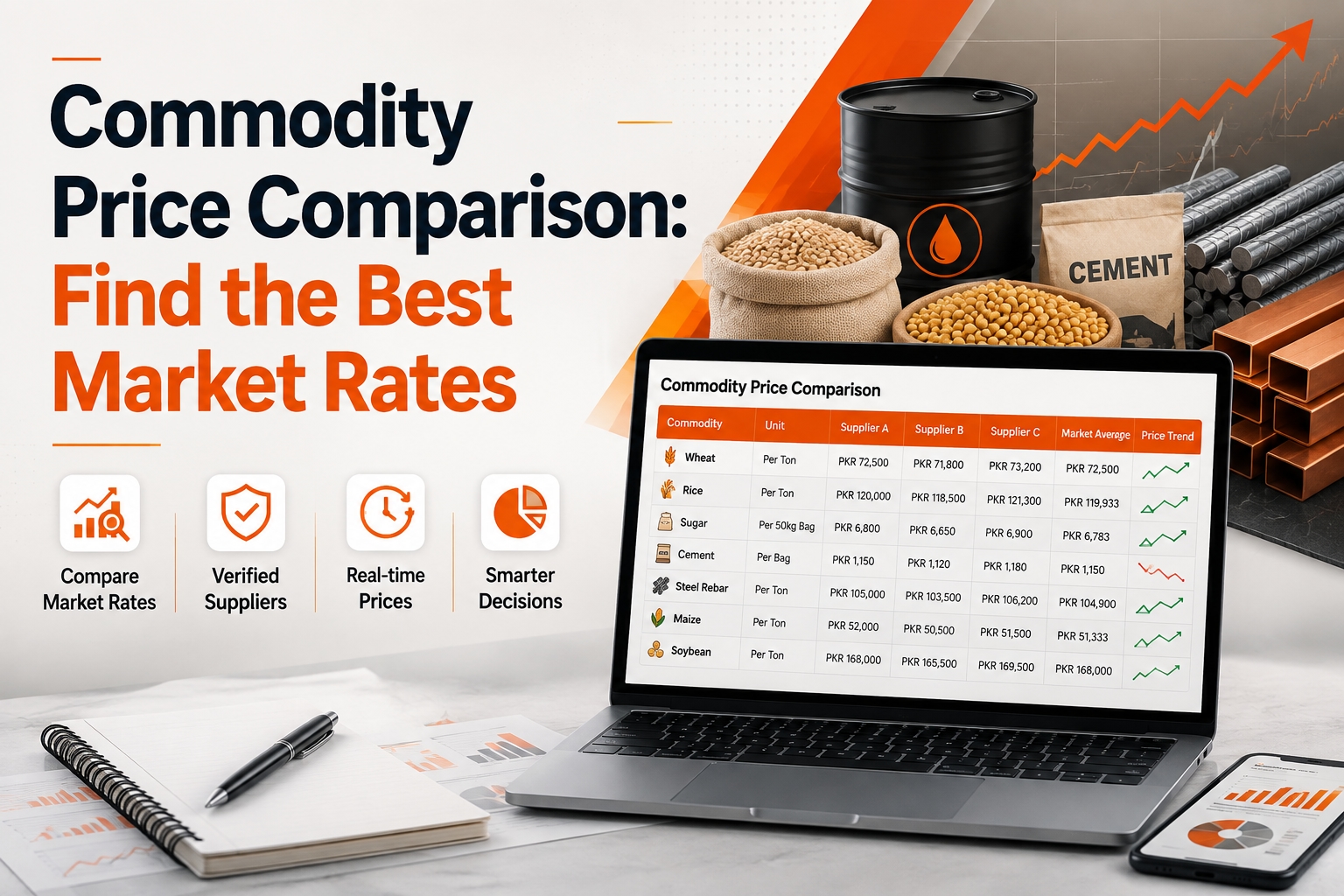
A trader in Faisalabad once told me he checks four different sources before confirming a single steel order, two phone calls, a WhatsApp group, and whatever the last invoice said. By the time he's done, half a day is gone and he's still not entirely sure he got a fair rate. That's not carelessness. It's just what commodity price comparison looks like when there's no single place to check it.
Commodity prices move fast, sometimes daily, sometimes within the same afternoon. Steel, cement, cotton, edible oil, grains, they all shift with currency swings, import costs, and local demand. If you're buying in bulk, the gap between what you paid and what you could have paid is rarely small. It adds up order after order, and most businesses never actually see the total.
The instinct is usually to call around. A supplier here, a broker there, maybe a rate someone shared in a trade group last week. It works, sort of, but it's slow, and by the time you've gathered enough quotes to compare commodity rates properly, the market's often already moved again.
This piece looks at what commodity price comparison actually involves, why a single quote rarely tells the whole story, where market rate comparison tends to fall apart in Pakistan, and how a proper price benchmarking tool changes the math.
What Commodity Price Comparison Actually Involves
At its simplest, it's checking what the same commodity is going for across different suppliers before you commit to one. But real comparison means more than lining up three numbers side by side.
It means knowing whether a quote includes delivery or not. Whether the grade or spec matches what you actually need, since a slightly different grade of steel or a different moisture content in grain can swing the price without anyone mentioning it upfront. It means checking the date on the rate, because a quote from three days ago on cotton or edible oil might already be stale. And it means knowing who's actually quoting, a mill, a distributor, or a broker adding their own margin on top.
Skip any of that and you're not really comparing rates. You're just comparing numbers that happen to look similar on paper.
Why the Lowest Number Isn't Always the Best Deal
Chasing the lowest quoted rate is the natural instinct, but the best commodity deals aren't always the cheapest ones on the page.
• Specs matter as much as price. A lower rate on a lower grade isn't a deal, it's a different product.
• Delivery terms shift the real cost. A rate that excludes freight can end up higher than one that includes it once the truck shows up.
• Timing changes everything. Commodity prices don't sit still, so a rate you compare today might not hold by the time you place the order.
• Reliability has a price too. A supplier with a track record of hitting delivery dates is worth more than a marginally cheaper one who isn't.
None of this means price doesn't matter, it obviously does. It just means a proper price comparison looks at the full picture, not the headline number.
Where Rate Comparison Tends to Break Down
A few patterns show up again and again for buyers trying to compare commodity rates in Pakistan.
Rates are scattered. One number from a phone call, another from a WhatsApp group, a third from an old invoice, none of it sitting in one place where it can actually be compared side by side.
Quotes go stale fast. Commodity markets move daily, sometimes faster, so a rate that was accurate on Monday can be off by Wednesday, and there's rarely a clean way to know which quotes are still current.
There's no shared reference point. Two buyers in the same city, buying the same grade of the same commodity, can end up with rates that are meaningfully different, and neither one has an easy way to check if they're being quoted fairly.
And comparison takes real time. Gathering enough quotes to trust a decision usually means a string of calls and follow-ups, time that could go toward actually running the business.
What a Real Price Benchmarking Tool Changes
A proper benchmarking tool doesn't replace supplier relationships, it just gives buyers a faster, clearer way to check where the market actually sits before they commit.
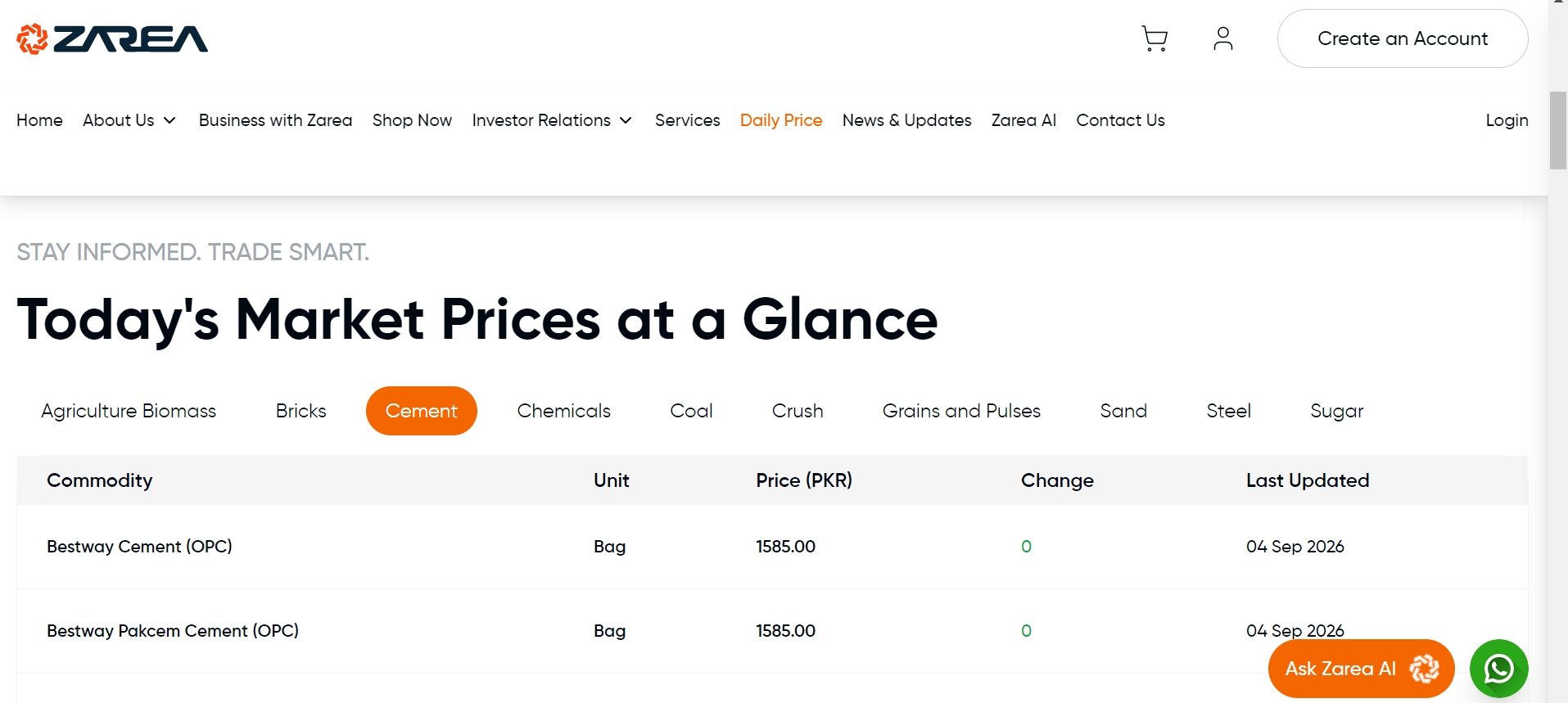
On a platform built for this, rates from multiple verified suppliers sit in one view instead of scattered across calls and messages. Market rate comparison happens in minutes, not half a day. Specs and grades are listed clearly, so the number in front of you actually means something. And because pricing updates as the market moves, buyers get a live picture instead of a quote that's already gone stale, closer to real commodity price comparison than guesswork.
That's a bigger shift for smaller buyers than it might sound. Larger companies have always had procurement teams built to track rates across the market. A benchmarking tool hands a version of that same visibility to anyone comparing quotes on their own.
Before You Lock In a Rate, Check These
A few habits worth building into every comparison, in roughly the order people tend to overlook them:
1. Confirm the spec first. Grade, quality, and moisture or purity levels should match before the price even enters the conversation.
2. Check the date on every quote. A rate from a few days ago on a fast-moving commodity may not hold anymore.
3. Ask what's included. Delivery, taxes, and handling can turn a good-looking number into an average one.
4. Compare at least three sources. One quote is a data point, not a market rate.
5. Weigh reliability alongside price. A supplier who delivers on time consistently is worth factoring into the comparison, not just the number they quote.
A Faster Way to Compare Rates
Price comparison shouldn't require a full afternoon and a phone full of missed calls. Zarea brings verified rates on agricultural commodities, industrial chemicals, and construction materials into one place, so buyers can compare commodity rates across suppliers without chasing each one down individually. Specs are listed clearly, pricing reflects current market conditions, and quotations come back fast enough to actually act on.
For buyers, that means fewer stale quotes and fewer guesses. For a market where prices shift by the day, that visibility is worth more than it might first seem.
Bottom Line
Commodity price comparison has always mattered, but doing it well used to take more time and more phone calls than most businesses could really spare. That's changing. Buyers who treat rate comparison as a quick, repeatable check, rather than an occasional scramble, tend to land the best commodity deals more consistently, simply because they're looking at the market clearly instead of guessing at it.
Ready to compare rates properly? Check live commodity prices on Zarea and see how your current supplier's rate actually stacks up against the market.
Frequently Asked Questions
How can I compare commodity rates in Pakistan?
Gather quotes from multiple verified suppliers, confirm they're for the same spec and delivery terms, and check how current each rate actually is. A price benchmarking tool speeds this up by putting rates in one place.
Why does the same commodity have different prices from different suppliers?
Grade, delivery terms, and how many middlemen are involved in a given quote all affect the final number, even when the underlying commodity is technically the same.
What is a price benchmarking tool?
A platform that shows current rates from multiple suppliers side by side, so buyers can check where the market sits without collecting quotes one call at a time.
How often do commodity prices change?
It varies by commodity, but many, cotton, edible oil, steel, and grains among them, can shift daily based on currency movement, import costs, and local demand.
What should I check besides price when comparing commodity deals?
Grade or spec accuracy, whether delivery is included, how current the quote is, and the supplier's track record for delivering on time.