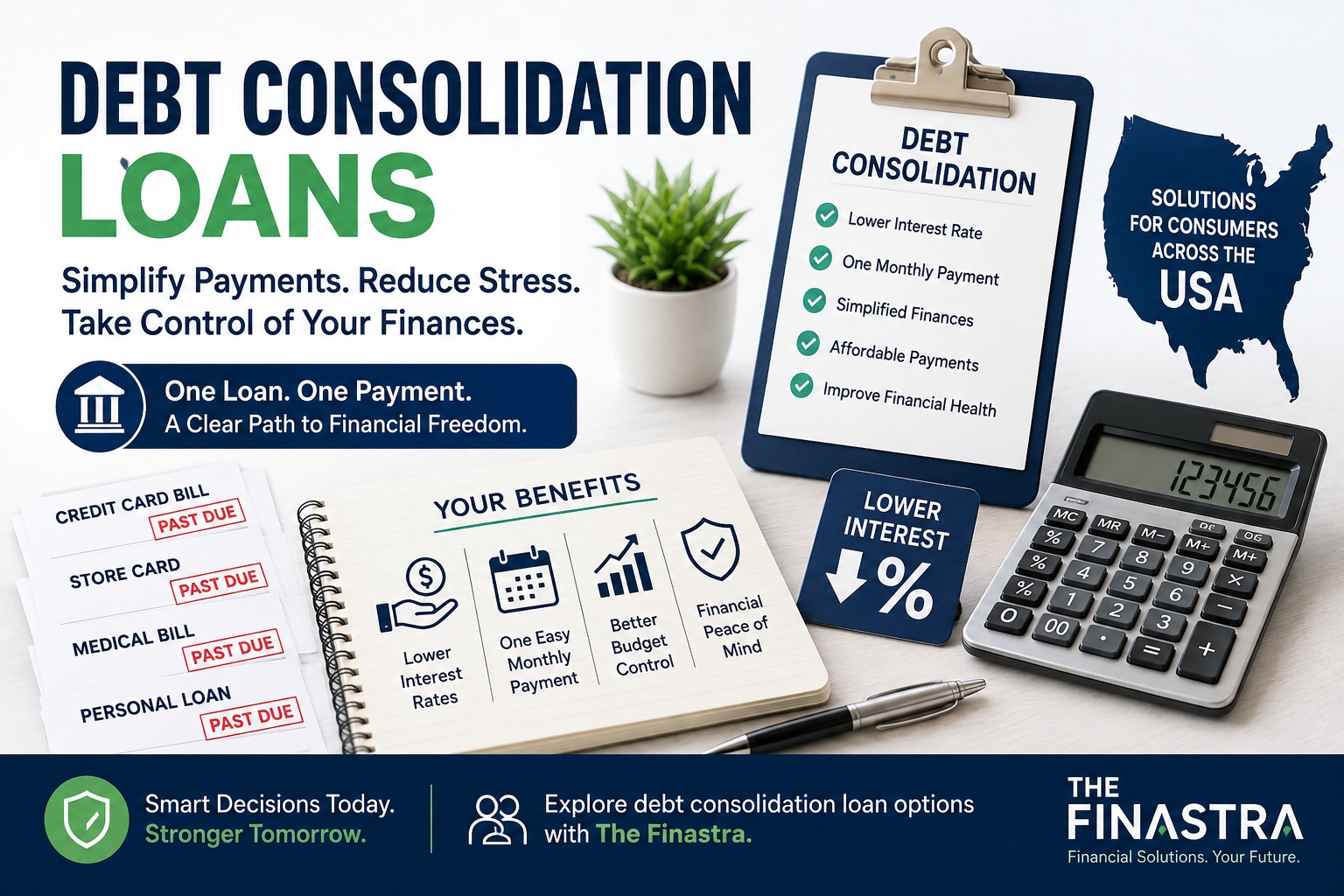
Managing several debts at the same time can become difficult. You may have multiple credit card balances, personal loans, or other eligible debts with different interest rates, due dates, and monthly payments.
A debt consolidation loan may be one option for simplifying multiple debts into a single payment. However, consolidation isn't automatically the best solution for everyone. The new loan's interest rate, fees, repayment term, and total cost all need to be considered.
According to the Consumer Financial Protection Bureau (CFPB), debt consolidation can simplify multiple payments into one, but a lower monthly payment may sometimes result from extending the repayment period, potentially increasing the total amount paid.
This guide from The Finastra explains how debt consolidation loans work in the USA, what lenders may consider, potential benefits and risks, and alternatives borrowers can evaluate.
What Is a Debt Consolidation Loan?
A debt consolidation loan is a loan used to pay off multiple existing debts, leaving you with one new loan and typically one monthly payment.
For example, suppose you have:
Three credit card balances
One personal loan
Different payment due dates
Different interest rates
Instead of managing several payments, you may use a debt consolidation loan to pay eligible debts and then make payments toward the new loan.
The goal is generally to simplify repayment and, depending on the terms, potentially reduce borrowing costs.
However, consolidation does not erase your debt. You are replacing multiple debts with a new repayment obligation.
How Does Debt Consolidation Work?
The process generally involves several steps.
1. Review Your Existing Debts
Start by listing your outstanding balances, interest rates, minimum payments, and remaining repayment periods.
This gives you a clearer picture of how much you currently owe.
2. Determine How Much You Need
Calculate the amount required to pay the debts you intend to consolidate.
Avoid borrowing substantially more than necessary simply because you qualify for a larger amount.
3. Compare Loan Offers
When comparing debt consolidation loans, don't look only at the monthly payment.
Consider:
APR
Interest rate
Loan term
Origination fees
Monthly payment
Total repayment amount
Prepayment terms
Eligibility requirements
4. Review the Loan Agreement
Before accepting an offer, read the complete terms and understand your repayment obligations.
5. Repay the New Loan
Once existing eligible debts are paid, you'll generally have one new monthly payment to manage.
What Types of Debt Can Be Consolidated?
The types of debt that can be consolidated depend on the lender and loan product.
Potentially eligible debts may include:
Credit card balances
Personal loans
Certain unsecured debts
Other qualifying consumer debts
Not every debt consolidation loan can be used for every type of debt.
For federal student loans, for example, federal Direct Consolidation Loans have different rules and potential benefits than a private debt consolidation loan. Borrowers should understand whether consolidating could affect existing federal protections or benefits.
Benefits of Debt Consolidation
One Monthly Payment
One of the biggest advantages can be simplicity.
Instead of tracking several payments and due dates, you may have one payment for the consolidation loan.
Potentially Lower Interest Rate
If you qualify for a consolidation loan with a lower APR than some of your existing debts, you may potentially reduce interest costs.
However, this should be evaluated using the total cost of the new loan, not just the advertised rate.
Easier Budget Management
Having one scheduled payment can make monthly budgeting easier.
Defined Repayment Schedule
A fixed-rate installment loan may provide predictable payments and a defined payoff date, depending on the loan terms.
Risks of Debt Consolidation Loans
Debt consolidation isn't risk-free.
A Lower Monthly Payment May Cost More Overall
A lender may offer a lower monthly payment by extending the repayment period.
For example, reducing your monthly payment may make your budget easier today, but paying the loan for additional years could result in more interest over the life of the loan.
The CFPB specifically recommends considering the loan's fees, costs, and repayment length before consolidating.
Fees Can Increase the Cost
Some loans may include origination or other fees.
Always calculate the total cost before accepting an offer.
Your Credit May Affect Your Options
Borrowers with stronger credit profiles may have access to more competitive loan terms. Those with lower credit scores may receive higher rates or have fewer options.
Consolidation Doesn't Solve the Cause of Debt
If you consolidate your credit card balances but continue accumulating new credit card debt, you could end up with both the new consolidation loan and additional credit card balances.
The CFPB recommends understanding why the debt accumulated and creating a budget before relying on consolidation alone.
Can You Get a Debt Consolidation Loan With Bad Credit?
It may be possible, but options can vary significantly.
A borrower with bad credit may face:
Higher APRs
Lower loan amounts
Additional eligibility requirements
Higher fees
Fewer lender choices
If you're considering bad credit debt consolidation, compare the new loan's cost with your existing debts before making a decision.
A consolidation loan is only potentially useful if the overall terms make sense for your financial situation.
What Credit Score Do You Need?
There isn't one universal credit score requirement for every debt consolidation loan.
Lenders may consider multiple factors, including:
Credit score
Credit history
Income
Existing debt
Debt-to-income ratio
Employment or income stability
Loan amount
Repayment ability
Because requirements differ between lenders, borrowers should review individual eligibility criteria rather than assuming that one specific credit score guarantees approval.
Debt Consolidation vs. Debt Settlement
These terms are sometimes confused, but they are different.
Debt consolidation generally involves taking a new loan to repay existing debts.
Debt settlement involves attempting to negotiate with creditors to settle debts for less than the amount owed.
The CFPB warns that debt settlement can carry significant risks, particularly when companies encourage consumers to stop making payments to creditors. Missed payments can lead to additional fees, credit damage, collection activity, and potentially legal action.
Consumers should understand exactly what a company is offering before providing personal or financial information.
Alternatives to Debt Consolidation
A consolidation loan isn't your only option.
Credit Counseling
Nonprofit credit counseling organizations may help consumers create a budget and explore debt-management strategies.
Balance Transfer
Some credit cards offer promotional balance-transfer rates. However, these offers may include fees and promotional periods that eventually expire.
Directly Contacting Creditors
Depending on the situation, creditors may offer options such as modified payment schedules or other assistance.
Debt Repayment Strategies
Some consumers choose to repay debt independently using strategies such as prioritizing the highest-interest debt first or focusing on the smallest balance first.
The right approach depends on your financial circumstances.
How to Compare Debt Consolidation Loans
Before choosing a loan, create a simple comparison.
Factor | What to Check |
|---|---|
APR | Is the new rate competitive with your current debts? |
Monthly Payment | Can you comfortably afford it? |
Loan Term | How long will repayment take? |
Fees | Are there origination or other charges? |
Total Cost | How much will you repay overall? |
Credit Requirements | Do you meet the lender's criteria? |
Repayment Terms | Are the terms clear and manageable? |
This approach can help you evaluate the actual financial impact instead of choosing a loan solely because it offers a lower monthly payment.
Is Debt Consolidation Right for You?
A debt consolidation loan may be worth considering if:
You have multiple eligible debts.
Managing several payments has become difficult.
You qualify for terms that make financial sense.
You have a realistic plan to avoid accumulating additional debt.
The total cost of the new loan is reasonable compared with your existing obligations.
It may not be appropriate if the new loan has significantly higher costs or if consolidation doesn't address the spending or budgeting issues that contributed to the debt.
How The Finastra Can Help
Understanding your borrowing options is an important part of responsible financial planning.
The Finastra provides educational resources covering debt consolidation loans, personal loans, bad credit loans, auto financing, credit, and other financial topics.
Our goal is to help consumers understand important borrowing factors such as APR, eligibility, repayment terms, credit requirements, and potential risks before making financial decisions.
If you're exploring debt consolidation options in the USA, learning how different loan structures work can help you ask better questions and compare potential financing options more effectively.
Final Thoughts
A debt consolidation loan can simplify multiple debts into one payment and may potentially offer more manageable terms. But consolidation isn't a guaranteed way to save money or eliminate financial problems.
Before applying, review your current debts, compare APRs and fees, calculate the total repayment cost, and make sure the new monthly payment fits your budget.
Most importantly, look beyond the promise of a lower monthly payment. The total cost, repayment period, and your ability to manage the new loan should all be part of the decision.
For more educational information about debt consolidation, personal loans, credit, and borrowing options in the USA, explore resources from The Finastra.