
Deep within the heart of Central Africa lies the Congo Basin, the world's second-largest tropical rainforest. Often called the "green lungs of Africa," this vast expanse of pristine emerald canopy is home to extraordinary wildlife, ancient rivers, and some of the world's oldest living human cultures.
While many travelers visit the Republic of the Congo for gorilla trekking and wildlife safaris, those who take the time to connect with its indigenous communities discover something far deeper: a living relationship with nature that has endured for thousands of years.
In this guide, we explore the rich forest traditions, cultural heritage, and deep wisdom of the indigenous peoples of the Congo Basin, along with practical advice on how to plan your journey responsibly.
The Heart of the Congo Basin: An Ancient Living Forest
The Republic of the Congo encompasses vast swathes of dense, low-elevation tropical rainforest. Key conservation areas like Odzala-Kokoua National Park and Nouabalé-Ndoki National Park protect thousands of plant and animal species, including western lowland gorillas, forest elephants, and elusive bongo antelopes.
For the indigenous peoples who have inhabited these forests for millennia, the rainforest is not merely a geographic location—it is a living provider, sanctuary, and spiritual home.
Indigenous Cultures: Life in Harmony with the Rainforest
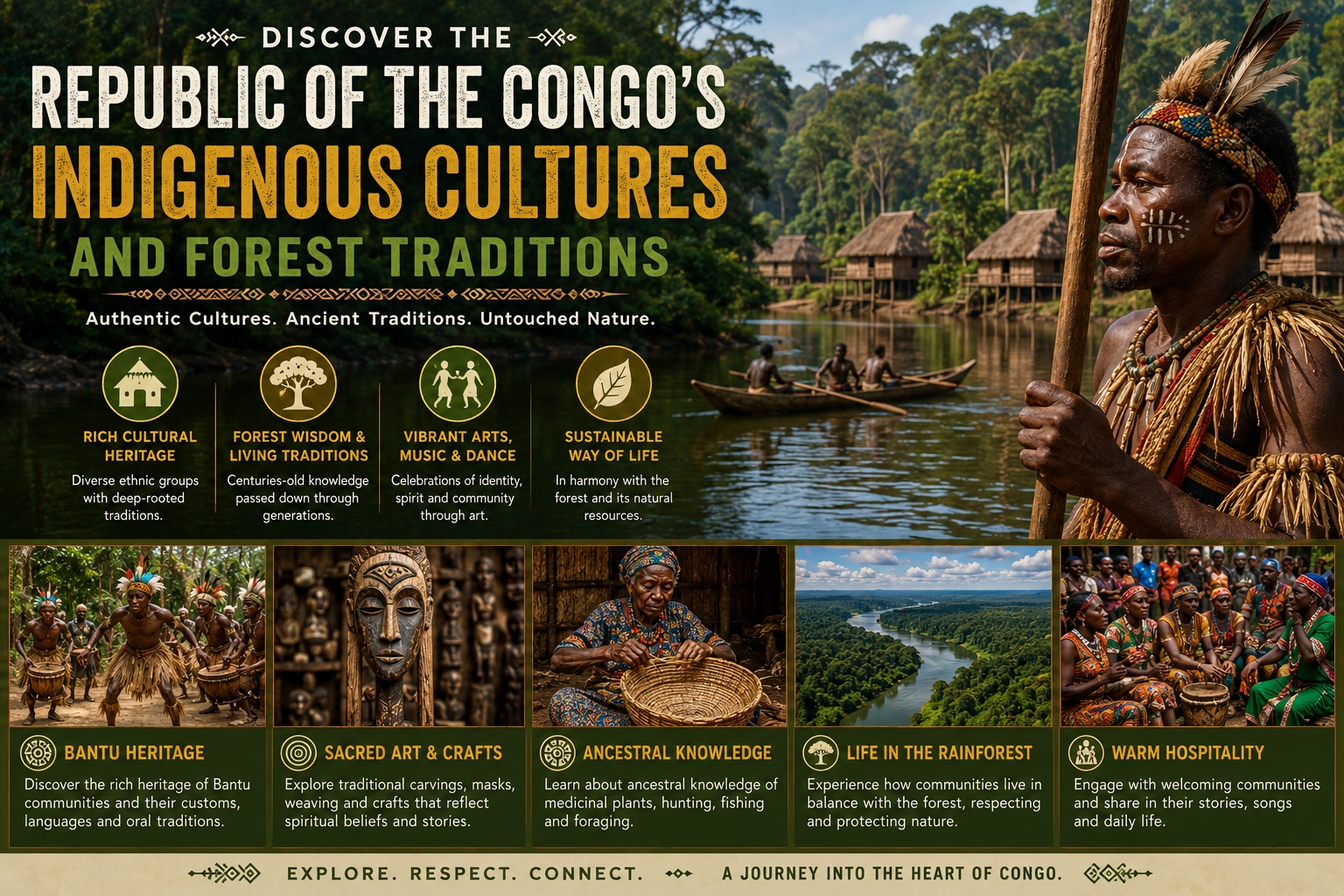
The forest-dwelling indigenous peoples of the Congo region—often collectively referred to as the BaAka, Baka, or Mbendjele—have developed a hunter-gatherer lifestyle finely tuned to the rhythms of the ecosystem.
Key Characteristics of Forest Traditions:
Egalitarian Community Structure: Decisions are made collectively, and resources like food, honey, and medicinal plants are shared freely among clan members.
Nomadic Camps: Camps are built using flexible saplings and large leaves woven into domed huts (mongulu), designed to leave zero trace on the forest when the community moves.
Deep Ecological Knowledge: Indigenous guides possess an unparalleled understanding of animal behaviors, plant properties, and weather patterns passed down through oral storytelling across generations.
Sacred Music, Dance, and Spiritual Traditions
For forest communities, music is a vital bridge between human beings and the spirits of the forest.
Polyphonic Singing: The vocal harmonies of BaAka women are internationally recognized for their intricate, multi-layered melodies that imitate the sounds of birds, rivers, and wind.
Yelli Ceremonies: Before major hunts or seasonal gatherings, communal singing ceremonies called Yelli are held at dawn to harmonize with forest spirits and invoke good fortune.
Rhythmic Storytelling: Dances and songs serve as historical archives, teaching young children essential life skills, ethics, and reverence for nature.
Ethnobotany and Traditional Forest Wisdom
Long before modern pharmaceuticals, forest communities relied entirely on native botanical knowledge for medicine and survival:
Natural Healing: Leaves, barks, and roots are prepared to treat fever, stomach ailments, snakebites, and physical fatigue.
Wild Harvesting: Wild yams, mushrooms, palm nuts, and wild honey form an essential part of the forest diet, harvested sustainably without damaging host trees.
Master Trackers: Indigenous trackers can follow animal paths across miles of dense brush by analyzing single bent twigs, subtle scent cues, and disturbed moss.
Responsible Ecotourism: How to Visit Respectfully
Experiencing indigenous traditions firsthand can be a transformative journey, provided it is conducted ethically and sustainably.
Choose Community-Led Guided Tours: Opt for eco-lodges and tour operators that employ local community members as equal partners and fair-wage guides.
Respect Local Customs: Always seek permission before photographing people, entering family living spaces, or participating in private rituals.
Support Local Artisans: Purchasing handmade crafts, woven basketry, or musical instruments directly supports the local economy.
Planning Your Travel: Getting Your Congo Visa Simplified
Embarking on a journey to the Congo Basin requires careful preparation, starting with securing your official travel authorization. Understanding entry requirements in advance ensures a smooth trip from the moment you land.
If your travel itinerary includes crossing borders or exploring the broader Congo region, making sure you have the correct documentation is critical.
To review detailed entry guidelines, visa categories, and required documentation, check out the complete Democratic Republic of the Congo Visa Requirements guide before booking your flights.
Why Choose Us for Your Visa Application?
Navigating international entry requirements can feel complex, but securing your travel authorization doesn't have to be stressful. Our specialized visa application platform simplifies the process every step of the way:
Reliable Travel Visa Services: Our global approach has assisted numerous travelers in successfully obtaining their visas.
Round-the-Clock Assistance: Reach out to us 24/7, and our expert team will respond within 72 hours to guide you.
Experienced Visa Consultants: Receive expert guidance tailored to ensure the accuracy and acceptance of your application.
Efficient Visa Application Process: Apply for your visa in minutes using our simplified digital application form.
Final Thoughts
A journey into the Republic of the Congo is more than a holiday—it is an opportunity to reconnect with one of the planet's last remaining wild landscapes and learn from cultures that have lived in perfect harmony with nature for thousands of years. By traveling thoughtfully and planning your entry documentation early, you set the stage for an unforgettable African adventure.




