Learn how drill chuck jaw design affects tool grip, runout and drilling accuracy, plus how to choose suitable CNC tools for aluminium machining.
Understanding Drill Chuck Jaw Design for Better Machining Performance
A Drill Chuck plays an important role in holding a drill bit securely during machining. Its jaw design affects gripping force, tool alignment and stability, which can influence hole accuracy and surface finish. In workshops and CNC applications, understanding how jaws contact a tool helps machinists select suitable holding equipment and reduce common problems such as slipping, vibration and uneven drilling.
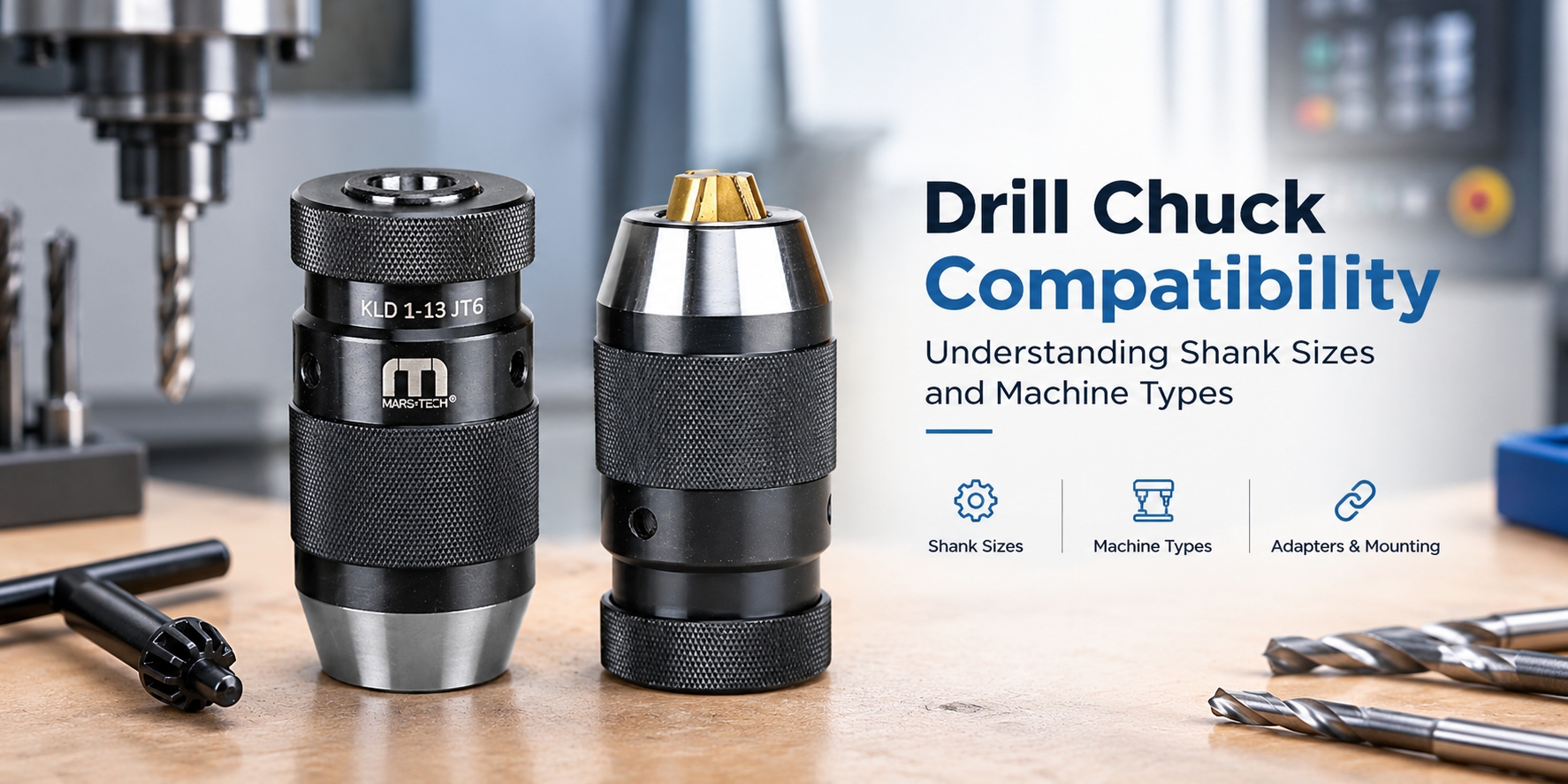
Although the chuck body and tightening mechanism matter, the jaw geometry determines how effectively the tool is centred and held. Choosing the right chuck for the machine, tool shank and machining operation can improve consistency and support safer working conditions.
1. How Jaw Design Influences Tool Grip
Most conventional drill chucks use three jaws that move inward or outward together. Their contact surfaces grip the cylindrical shank of a drill bit. When the jaws close evenly, they help centre the tool and distribute clamping force around the shank.
Jaw contact area is important. Worn, damaged or uneven jaw faces may reduce effective contact, allowing the tool to slip under cutting loads. Poor contact can also contribute to runout, where the drill rotates slightly off-centre. This may produce oversized holes, rough surfaces or premature tool wear.
For reliable performance, keep the jaw surfaces clean and inspect them for wear. Always tighten the chuck according to the manufacturer's instructions and use a compatible shank diameter.
2. Jaw Geometry, Alignment and Drilling Accuracy
Jaw shape and movement influence how consistently a tool sits on the spindle axis. Properly manufactured jaws should close evenly and hold compatible shanks securely. If one jaw is damaged or the mechanism is contaminated, the tool may not centre correctly.
Runout is especially important when drilling small holes or working with tight tolerances. Even slight misalignment can affect hole position, finish and tool life. A chuck should therefore be selected according to the required accuracy, spindle speed and cutting conditions.
For precision CNC operations, a dedicated toolholding system such as an appropriate collet chuck may be more suitable than a conventional drill chuck. The choice depends on the machine, tool shank and operation.
3. Choosing the Right Drill Chuck Sizes
Selecting suitable drill chuck sizes starts with checking the drill shank diameter and the chuck's rated capacity. A chuck designed for a smaller shank cannot safely hold a tool outside its specified range. Likewise, using a very small shank near the upper capacity limit may leave less flexibility for other tools.
The machine interface also matters. Check spindle compatibility, mounting type, operating speed and manufacturer specifications before installation. For repetitive production work, consistency of tool seating and regular inspection can help maintain reliable results.
A keyless drill chuck 13mm is a common option for applications that require quick, convenient tool changes within its specified capacity. However, the 13 mm rating describes the maximum supported shank size, not a guarantee of suitability for every CNC machine or high-speed operation. Always confirm the manufacturer's speed and application limits.
4. Factors That Affect Drill Chuck Price
Drill chuck price can vary according to manufacturing quality, gripping accuracy, supported capacity, construction materials and mounting compatibility. Models intended for general workshop drilling may differ significantly from precision-engineered options designed for demanding applications.
Instead of comparing price alone, consider runout specifications, durability, service requirements and the type of machine being used. A lower-cost chuck may suit occasional drilling, while repeat production or tighter tolerances may justify investing in a more precise toolholding solution.
At Jaibros, machinists can explore industrial tooling options and compare specifications before deciding which equipment fits their application. Always check the product details and compatibility requirements before purchasing.
5. Useful CNC Tools for Aluminium Machining
Aluminium is relatively soft, but it can stick to cutting edges and generate built-up material if the tool geometry and cutting conditions are unsuitable. Selecting the right CNC tool helps improve chip evacuation, surface finish and machining efficiency.
Carbide end mills with sharp cutting edges and suitable flute geometry are commonly used for aluminium milling. Polished flutes and appropriate helix designs can help remove chips and reduce material adhesion. For drilling, aluminium-suitable drill bits with effective chip evacuation are important, particularly when producing deeper holes.
Use cutting parameters recommended by the tool manufacturer, provide suitable lubrication or coolant where required, and ensure chips can escape the cutting zone. Toolholding rigidity also matters: excessive runout or a loose tool can reduce accuracy and shorten tool life.
A conventional drill chuck may be suitable for certain drilling tasks, but milling operations generally require a holder designed for the specific cutter, spindle and operating speed. Never assume a general-purpose chuck is suitable for high-speed CNC machining.
Conclusion
Jaw design influences how securely a drill bit is held, how accurately it rotates and how consistently it performs under cutting loads. Clean, undamaged jaws, correct chuck capacity and suitable mounting are essential for reliable drilling. For precision CNC work, the appropriate holder may offer better accuracy and rigidity than a conventional chuck.
By considering jaw condition, runout, machine compatibility and the material being machined, operators can make more informed tooling decisions. Choosing suitable tools and maintaining them properly helps support consistent machining quality and dependable workshop performance.