
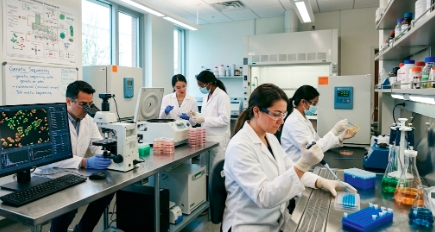
Food safety is built on science. Behind every safe food product is a team of professionals working carefully to identify hazards, monitor production, validate cleaning procedures, and verify that every stage of manufacturing meets strict safety expectations. Among these professionals, microbiologists play one of the most important roles.
Their work extends far beyond laboratory testing. They study microorganisms, investigate contamination sources, analyze environmental samples, evaluate sanitation effectiveness, and support manufacturing decisions with scientific evidence. Every laboratory report helps organizations understand potential food safety risks before they become costly problems.
As food production continues becoming more advanced, microbiologists are expected to contribute not only technical expertise but also practical solutions that improve manufacturing operations. Consumers, regulators, and international customers expect safe food products that are produced under controlled conditions and supported by reliable scientific evidence.
This growing responsibility makes internationally recognized food safety systems increasingly valuable. They provide structured methods for managing hazards while allowing scientific professionals to apply their expertise where it matters most.
For microbiologists, understanding how laboratory science connects with operational food safety creates opportunities to contribute more effectively across every stage of food production.
Why Microbiologists Are at the Center of Food Safety
Food manufacturing facilities contain many factors that influence microbial growth.
Raw ingredients arrive from different suppliers, production equipment operates continuously, employees handle materials throughout the day, and finished products move through packaging, storage, and transportation before reaching consumers.
Every stage presents opportunities for microorganisms to enter the production environment.
Microbiologists help organizations understand where these risks exist, how microorganisms behave under different conditions, and what preventive measures reduce contamination.
Their scientific knowledge supports production teams, sanitation departments, quality assurance personnel, and management by providing accurate information that guides food safety decisions.
Think of a microbiologist as someone reading the invisible story behind every production process. While contamination cannot always be seen, scientific testing reveals valuable information that helps manufacturers improve safety before problems develop.
That ability to predict rather than simply react makes microbiologists essential members of every modern food safety team.
Understanding the Purpose of ISO 22000
Food safety requires consistency.
A single laboratory result cannot guarantee long-term product safety. Instead, organizations need structured systems that combine scientific knowledge, documented procedures, monitoring activities, corrective actions, and continuous evaluation.
ISO 22000 provides exactly that type of framework.
Rather than focusing only on product testing, the standard encourages organizations to manage food safety across the entire production process.
This includes identifying hazards, evaluating operational risks, establishing preventive measures, monitoring critical activities, maintaining documentation, reviewing performance, and continually improving food safety systems.
For microbiologists, this structured approach creates an environment where scientific findings become part of everyday operational decisions rather than remaining isolated within laboratory reports.
The result is stronger communication between laboratories and production departments, creating safer manufacturing environments for everyone involved.
Connecting Microbiology with Food Safety Management
Scientific testing alone does not eliminate food safety risks.
Laboratory analysis identifies contamination, measures microbial levels, and verifies sanitation performance, but preventing contamination requires collaboration across the organization.
Microbiologists work alongside production managers, sanitation teams, maintenance personnel, warehouse supervisors, quality professionals, and senior management.
Their expertise helps explain why contamination occurs, how microorganisms survive under different environmental conditions, and which preventive actions improve manufacturing performance.
When laboratory findings influence production practices, organizations become much more effective at reducing food safety risks.
It is similar to weather forecasting.
Meteorologists cannot control the weather, but accurate predictions allow people to prepare effectively.
Microbiologists perform a similar function within food manufacturing by identifying potential biological risks before they affect finished products.
Identifying and Managing Food Safety Hazards
Every food manufacturing process contains biological hazards that require careful evaluation.
These hazards may originate from raw materials, processing equipment, employees, environmental conditions, water supplies, packaging materials, or transportation systems.
Understanding where hazards exist allows organizations to establish effective preventive measures before contamination occurs.
Microbiologists contribute scientific evidence that supports hazard identification and risk evaluation.
Their laboratory findings help manufacturers determine whether sanitation procedures remain effective, production controls are functioning properly, and environmental conditions remain suitable for safe food production.
Scientific analysis strengthens hazard management by replacing assumptions with measurable evidence.
Organizations that understand their biological hazards make more informed operational decisions while improving both product quality and consumer protection.
The Importance of Environmental Monitoring
Environmental monitoring has become one of the most valuable tools in modern food safety management.
Testing production surfaces, equipment, drains, air quality, processing environments, and employee contact areas provides early warning of potential contamination.
Microbiologists evaluate these samples to identify trends that may otherwise remain unnoticed.
Rather than waiting until finished products fail laboratory testing, environmental monitoring allows organizations to detect concerns much earlier.
This preventive approach reduces contamination risks while improving sanitation effectiveness.
Like routine medical checkups identify health concerns before serious illness develops, environmental monitoring helps manufacturers recognize microbial problems before they affect production.
The information collected also supports stronger cleaning validation, sanitation verification, and overall operational improvement.
Applying Science to Preventive Controls
Prevention always produces better results than correction.
Instead of relying only on finished product inspections, food manufacturers increasingly focus on identifying hazards before contamination occurs.
This is where iso 22000 certification provides significant value.
The standard encourages organizations to establish structured Preventive Controls that reduce biological hazards throughout production.
Microbiologists contribute by validating sanitation procedures, verifying microbial limits, evaluating environmental monitoring data, reviewing laboratory trends, and supporting scientifically based decision-making.
Their expertise ensures preventive measures remain effective under actual production conditions.
By combining laboratory science with operational controls, manufacturers create stronger food safety systems that protect both consumers and business reputation.
Building Stronger Laboratory Practices
Reliable laboratory operations form the backbone of scientific decision-making.
Testing procedures must be consistent, validated, documented, and performed using recognized methodologies.
Microbiologists continuously review laboratory practices to ensure testing remains accurate and repeatable.
Well-managed laboratories maintain equipment calibration, sample traceability, quality controls, documentation, and staff competency.
These activities improve confidence in laboratory results while supporting effective food safety management throughout the organization.
Strong laboratory systems also improve communication with production departments by providing clear, reliable scientific evidence that supports operational improvements.
Every accurate laboratory result contributes to safer products and better manufacturing performance.
Supporting Regulatory Compliance Through Scientific Expertise
Food safety regulations continue to evolve as governments strengthen requirements for consumer protection. Manufacturers are expected to maintain documented evidence showing that products are produced under controlled conditions and supported by reliable scientific verification.
Microbiologists play an important role in meeting these expectations. Laboratory reports, environmental monitoring records, validation studies, and microbiological trend analysis all provide valuable evidence during inspections and audits.
Strong Regulatory Compliance is not simply about passing inspections. It demonstrates that food safety controls are consistently implemented, monitored, and improved. When microbiologists contribute scientific evidence, organizations gain greater confidence in their food safety systems while building trust with regulators, customers, and certification bodies.
Improving Traceability Across the Food Supply Chain
Modern food production involves ingredients sourced from different regions, multiple suppliers, complex manufacturing processes, packaging operations, and global distribution networks.
If a food safety concern occurs, manufacturers must identify affected materials quickly and accurately.
Traceability supports this process by connecting raw materials, production batches, laboratory testing results, storage conditions, and finished products through documented records.
Microbiologists strengthen traceability by maintaining accurate laboratory documentation and linking microbiological findings to production activities.
This organized approach helps manufacturers investigate issues efficiently, reduce unnecessary waste, and protect consumers through faster decision-making.
Effective traceability also supports continual learning because organizations can review historical information to identify recurring patterns and improve preventive controls.
Creating a Strong Food Safety Culture
Food safety is not the responsibility of one department alone.
Production operators, sanitation teams, warehouse staff, maintenance personnel, laboratory professionals, supervisors, and senior management all influence product safety through their daily decisions.
Microbiologists contribute by sharing scientific knowledge that helps employees understand why hygiene practices, cleaning procedures, temperature controls, and preventive measures are essential.
When employees understand the reasons behind food safety requirements, they become more engaged in following established procedures.
A positive Food Safety Culture encourages employees to identify risks, communicate concerns, and participate actively in improving food safety performance.
Over time, this shared commitment creates stronger operational consistency across the entire organization.
Encouraging Continuous Improvement
Food manufacturing never stands still.
New ingredients, improved production technologies, changing regulations, emerging microorganisms, and evolving customer expectations require organizations to review their food safety systems regularly.
Continuous Improvement encourages manufacturers to evaluate laboratory findings, environmental monitoring data, internal audit results, customer feedback, and operational performance.
Microbiologists contribute valuable scientific insight by identifying opportunities for improving sanitation programs, sampling plans, testing methods, and hazard controls.
Even modest improvements introduced consistently often produce significant long-term benefits.
Organizations committed to continual improvement remain better prepared for future food safety challenges while strengthening product quality and consumer confidence.
Strengthening Collaboration Across Departments
Successful food safety management depends on teamwork.
Microbiologists frequently collaborate with production managers, sanitation supervisors, maintenance engineers, purchasing teams, quality assurance professionals, and senior leadership.
Scientific findings become much more valuable when they are communicated clearly and applied effectively.
For example, environmental monitoring results may influence cleaning schedules, equipment maintenance, production sequencing, or employee training activities.
This cross-functional collaboration creates stronger preventive systems while reducing opportunities for contamination.
Good communication transforms laboratory data into practical operational improvements that benefit the entire manufacturing facility.
Benefits of ISO 22000 Certification
Implementing an effective Food Safety Management System provides valuable benefits for microbiologists and food manufacturing organizations.
Key advantages include:
Improved food safety management
Better hazard identification
Enhanced microbiological control
Stronger preventive controls
Improved regulatory compliance
Better environmental monitoring
Increased product consistency
Greater customer confidence
Improved traceability throughout production
Stronger quality assurance systems
Reduced contamination risks
Support for continual improvement
These benefits strengthen scientific decision-making while supporting safer food production and long-term organizational success.
Why Should You Choose This Certification?
ISO 22000 Certification provides a structured framework that combines scientific knowledge with practical food safety management.
For microbiologists, the certification strengthens expertise in Food Safety Management System, Hazard Analysis, Microbiological Testing, Risk Assessment, Environmental Monitoring, Preventive Controls, and Quality Assurance.
Rather than focusing only on laboratory analysis, professionals learn how scientific evidence supports hazard prevention, operational improvements, and regulatory compliance throughout food manufacturing.
Organizations also benefit because certified food safety systems improve operational consistency, customer confidence, and international recognition.
The certification demonstrates a commitment to producing safe food while continuously improving manufacturing processes.
Why Should You Choose Integrated Assessment Services?
Integrated Assessment Services provides professional certification services designed to help food organizations establish effective Food Safety Management Systems through practical implementation and expert guidance.
The certification process focuses on helping organizations understand food safety requirements while developing documentation, operational controls, internal evaluation processes, and continual improvement activities.
Experienced professionals provide practical support throughout the certification journey, ensuring that organizations build systems that are both compliant and operationally effective.
For microbiologists, this practical approach creates opportunities to apply scientific expertise more effectively while contributing to stronger food safety performance across the organization.
Integrated Assessment Services emphasizes sustainable improvement rather than simply achieving certification, helping organizations maintain long-term food safety excellence.
Final Thoughts
Microbiologists are among the most important contributors to modern food safety. Their expertise helps organizations understand biological hazards, verify sanitation effectiveness, evaluate production environments, and support preventive food safety decisions with reliable scientific evidence.
ISO 22000 Certification strengthens this contribution by providing an internationally recognized framework that connects laboratory science with practical manufacturing operations. Instead of relying solely on finished product testing, organizations develop preventive systems that reduce risks before contamination occurs.
For microbiologists, the certification offers more than professional development. It provides an opportunity to participate directly in building stronger food safety systems, improving operational performance, enhancing regulatory compliance, and protecting public health.
As food manufacturing continues advancing through new technologies and higher consumer expectations, organizations supported by knowledgeable microbiologists and well-implemented food safety management systems will remain better prepared to deliver safe, consistent, and high-quality food products to markets around the world.




