When we think of ancient Egypt, our minds often drift to towering pyramids, golden pharaohs, and mysterious mummies. However, the true heartbeat of this incredible civilization has always been something much simpler, yet profoundly powerful: water. Without the ingenuity of ancient Egyptian agriculture and their masterful control of the Nile, the great monuments of Giza and Luxor would never have risen from the sand.
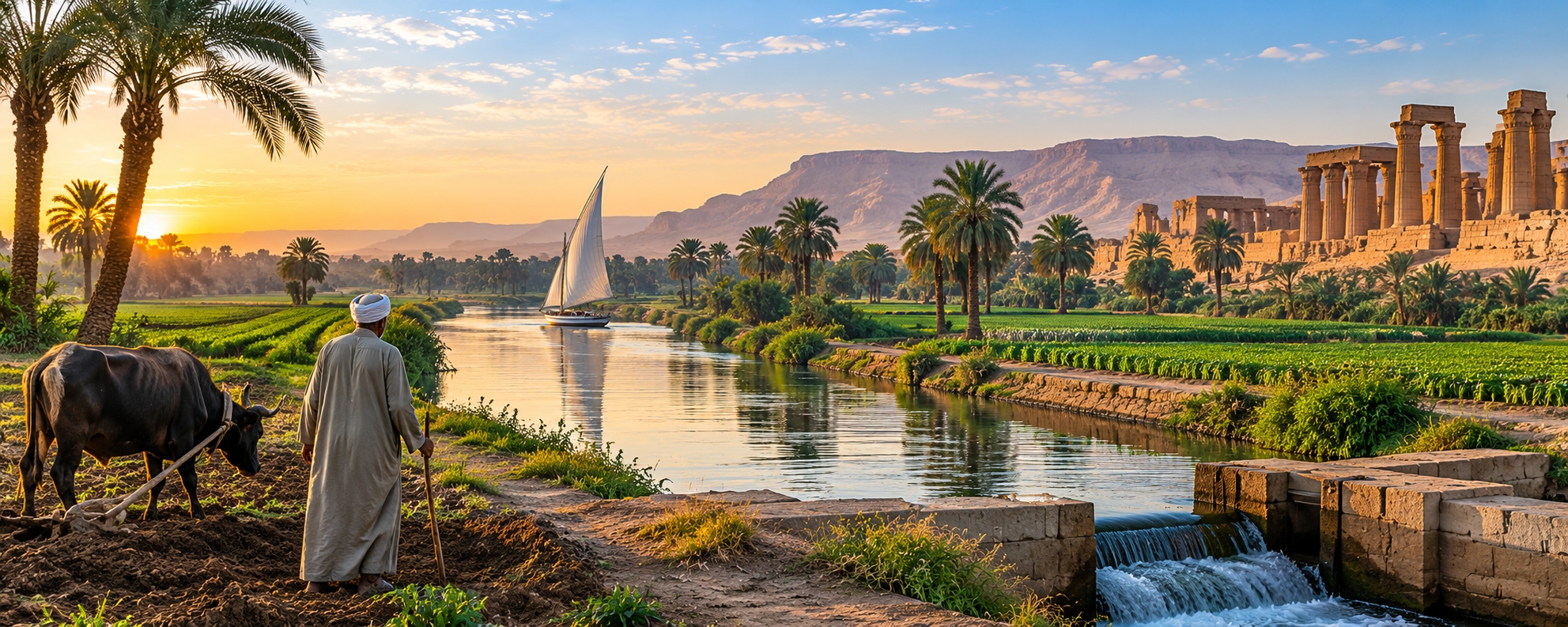
If you are planning a journey to witness these timeless landscapes yourself, understanding the agricultural roots of Egypt will completely transform your travel experience. To make your trip smooth and hassle-free, you can easily secure your Egypt Tourist Visa before setting out. Let us dive into the fascinating history of Egypt's ancient irrigation systems and how they shaped the modern world.
The Lifeblood of the Desert: The Nile and the Flood
The ancient Greek historian Herodotus famously called Egypt "the gift of the Nile." Every year, predictable seasonal rains and melting snows in Central Africa caused the Nile River to swell and overflow its banks.
Instead of seeing this massive flooding as a disaster, ancient Egyptians welcomed it as a blessing. The floodwaters carried rich, dark silt downriver, depositing a fresh layer of nutrient-rich mud across the valley floor every single year. This natural cycle meant Egyptian soil was among the most fertile in the ancient world, capable of producing abundant harvests of wheat, barley, and flax.
The Birth of Basin Irrigation: Engineering Marvels of the Ancients
Nature provided the water, but human ingenuity made it useful. To harness the annual flood, ancient farmers developed a brilliant system known as basin irrigation.
Earthen Networks: Farmers built networks of crisscrossing earthen walls and dikes across the floodplain, creating shallow rectangular basins.
Controlled Flooding: When the Nile rose, water was channeled into these basins and allowed to sit for 40 to 60 days, soaking the earth and depositing precious silt.
Gradual Drainage: Once the soil was thoroughly saturated, the remaining water was safely drained off into neighboring basins or back into the river just in time for the planting season.
This system allowed communities to cooperate on a massive scale, laying the very foundation of centralized government and social organization in ancient Egypt.
Inventions That Changed Farming Forever
To lift water from the river and canals into higher fields that the natural flood could not reach, ancient Egyptians invented and adopted revolutionary mechanical tools.
The Shaduf
Introduced around 3000 BCE, the shaduf is a simple yet ingenious device consisting of a long, suspended pole with a bucket on one end and a heavy counterweight on the other. A single farmer could use it to effortlessly scoop water from a canal and swing it up onto dry land. You can still spot shadufs in use by traditional farmers in rural parts of Egypt today!
The Saqiya (Water Wheel)
Later in history, the introduction of the animal-powered water wheel, or saqiya, allowed for continuous irrigation. Driven by oxen or donkeys, large gears turned a wheel fitted with pots, lifting significantly larger volumes of water to sustain crops year-round.
What Modern Travelers Can Experience Today
Visiting Egypt today is not just about ticking historical sites off a checklist; it is about stepping into a living landscape where ancient traditions persist.
A Nile River Cruise: Cruising down the Nile on a traditional felucca or modern cruise ship lets you witness the exact same green ribbon of agriculture contrasting against the golden desert that ancient pharaohs saw thousands of years ago.
Rural Villages and Farms: Take a day trip to explore agricultural communities outside Cairo or Luxor to see local farming techniques that have been passed down through generations.
The Aswan High Dam: Contrast the ancient basin methods with modern engineering at Lake Nasser and the Aswan High Dam, which transformed how Egypt manages its most precious resource today.
Ready to Explore Egypt?
Experiencing the magic of Egypt's ancient canals, lush riverbanks, and breathtaking temples is a bucket-list adventure. If you are dreaming of wandering through the temples of Karnak or watching the sunset over the Nile, we are here to help make your journey seamless.
Why Choose Us?
Planning an international trip should be exciting, not stressful. Here is how we make your travel preparations effortless:
Reliable Travel Visa Services: Our global approach has assisted numerous travelers in obtaining their Visa.
Round-the-Clock Assistance: Reach out to us 24/7, and our experts will respond within 72 hours.
Experienced Visa Consultants: Receive expert guidance to ensure the acceptance of your application.
Efficient Visa Application Process: Apply for your Egypt Tourist Visa in minutes with our simplified form.
Pack your bags, secure your travel documents with confidence, and get ready to uncover the agricultural heritage that built one of history's greatest civilizations!