Getting ready for an East African safari is the stuff dreams are made of. Between watching the Great Migration in Kenya, trekking alongside mountain gorillas in Uganda, and taking in the breathtaking rolling hills of Rwanda, you are in for an unforgettable trip.
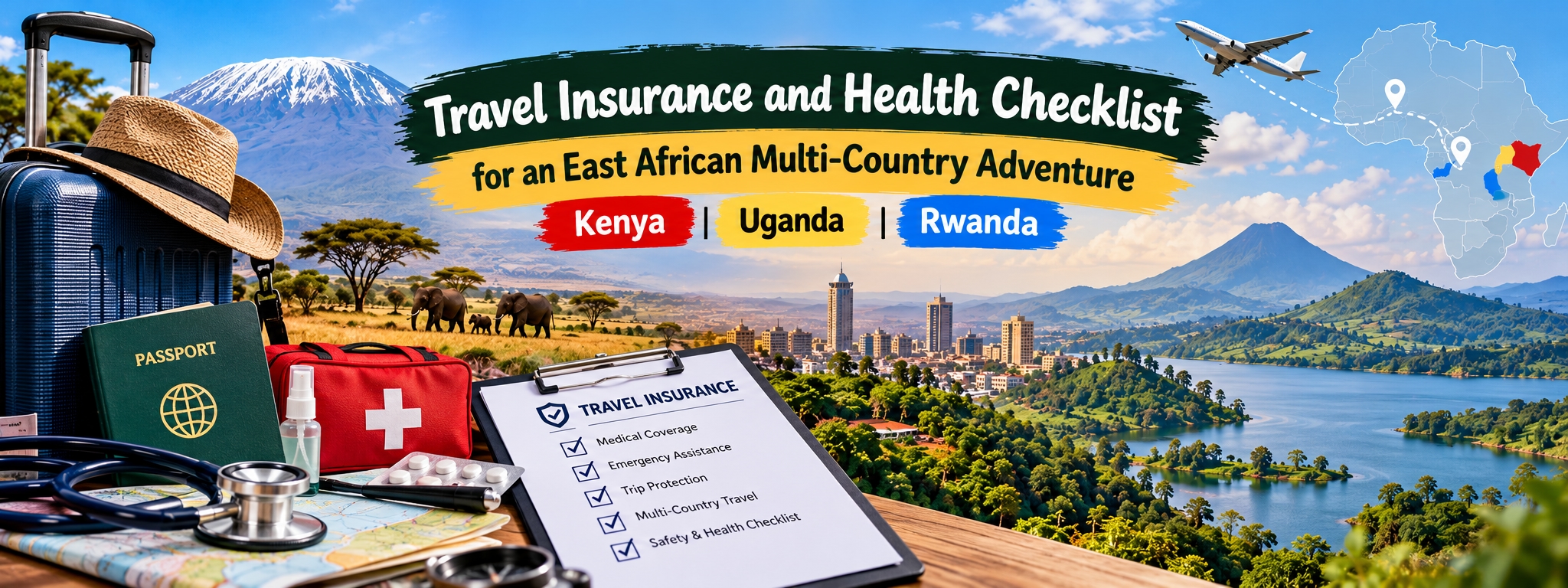
But before you pack your binoculars and safari boots, there is a slightly less glamorous—but completely essential—part of trip planning you have to tackle: your health and safety checklist.
Traveling through East Africa means navigating a few specific health requirements and making sure you are financially protected if things go wrong. Here is a simple, plain-English guide to getting your travel insurance, vaccinations, and visas sorted for a multi-country adventure in Kenya, Uganda, and Rwanda.
The East Africa Safari Health Checklist
Staying healthy on your trip is mostly about preparation. You will be traveling through tropical climates and remote wilderness areas, so a quick visit to a travel clinic a few months before your departure is a must.
1. The Yellow Fever Vaccine (Do Not Skip This!)
If you take only one thing away from this health guide, let it be this: you need a Yellow Fever vaccination certificate.
Uganda: It is a strict, non-negotiable entry requirement. You cannot get into the country without showing your "yellow card."
Kenya and Rwanda: While they might not ask for it if you are flying directly from the US or Europe, they will demand to see it if you are crossing borders between East African countries. Because you are doing a multi-country trip, consider this mandatory.
2. Malaria Prevention
Malaria is present in most parts of Kenya, Uganda, and Rwanda, especially around lakes and low-lying national parks. Talk to your doctor about getting a prescription for anti-malarial pills (like Malarone or Doxycycline).
Pro Tip: Pills aren't a 100% guarantee. Pack a good DEET-based bug spray, wear long sleeves during sunset, and always sleep under the mosquito nets provided by your lodges.
3. Routine and Recommended Shots
Make sure your standard vaccines (like Tetanus and Polio) are up to date. Most travel doctors will also highly recommend shots for Typhoid and Hepatitis A, as you can get these from contaminated food or water.
Travel Insurance Non-Negotiables for East Africa
Your standard health insurance from home usually will not cover you in the middle of the Maasai Mara. When shopping for a travel insurance policy for East Africa, you must make sure it covers these specific things:
Medical Evacuation (Medevac) Coverage
This is the single most important feature of your insurance. Safaris take you hours away from major cities. If you have a medical emergency in a remote camp, you might need to be airlifted to a top-tier hospital in Nairobi. Look for a policy with at least $100,000 to $250,000 in emergency medical evacuation coverage. (Many travelers also buy a temporary membership with AMREF Flying Doctors for extra peace of mind).
Adventure Activity Coverage
Are you going gorilla trekking in Rwanda's Volcanoes National Park or white-water rafting on the Nile in Uganda? Standard travel insurance often excludes "extreme" activities. Read the fine print to ensure your specific planned activities are covered.
Trip Cancellation and Interruption
East African safaris are a major financial investment. Gorilla permits alone cost hundreds (or thousands) of dollars and are non-refundable. If you break your leg right before the trip, or if a family emergency forces you to fly home early, a good policy will reimburse you for those massive upfront costs.
Getting Your Paperwork in Order: Entry Rules
Once your health and insurance are locked in, it’s time to handle the actual entry requirements. Because you are visiting three countries, you need to be highly organized.
Kenya's Digital Shift: Kenya recently removed their old visa on arrival and replaced it with a mandatory electronic system. Everyone must apply online before flying. Always verify the most up-to-date rules for your passport by checking the official Kenya ETA requirements.
Uganda's Advance Visa: Uganda does not do airport visas anymore. You need to apply online and upload your documents (including that essential Yellow Fever card). Government forms can be tricky, so it helps to read a breakdown on how to apply for Uganda eVisa before you start clicking.
Rwanda's Welcoming Borders: Rwanda is incredibly tourist-friendly, and depending on your nationality, you might not even have to pay a fee! Check out the list of eligible countries for Rwanda eVisa to see if you can skip the fees or how quickly you can get approved.
(Note: If you are visiting all three, look into the East Africa Tourist Visa, a joint visa that covers Kenya, Uganda, and Rwanda under one application!)
Why Choose Our eVisa Service?
Planning a multi-country African safari is complicated enough between the vaccines, the insurance, and the packing. Let us handle the government paperwork! Experience the difference with our professional, secure, and efficient visa processing service:
Fast Processing: Get your Rwanda eVisa (and others) approved in just 4-7 Working Days with our expedited processing service.
Secure Platform: Your personal information and documents are protected with bank-level SSL encryption.
99.5% Success Rate: Our expert team ensures your application meets all requirements for guaranteed approval.
24/7 Support: Get expert assistance anytime with our dedicated customer support team.
Money Back Guarantee: If your visa is rejected due to our error, we'll refund your service fee completely.
Mobile Friendly: Apply from anywhere using our mobile-optimized platform with real-time tracking.
Take the stress out of your travel prep. Get your health checks done, buy that insurance policy, and let us fast-track your visas so you can focus on the adventure of a lifetime!