Just 45 minutes east of the bustling metropolis of Abidjan lies Grand-Bassam, a serene coastal town steeped in history, ocean breezes, and artistic spirit. Recognized as a UNESCO World Heritage Site in 2012, Grand-Bassam stands as a living museum where 19th- and early 20th-century colonial architecture meets the vibrant, rhythmic heritage of Côte d'Ivoire (Ivory Coast).'
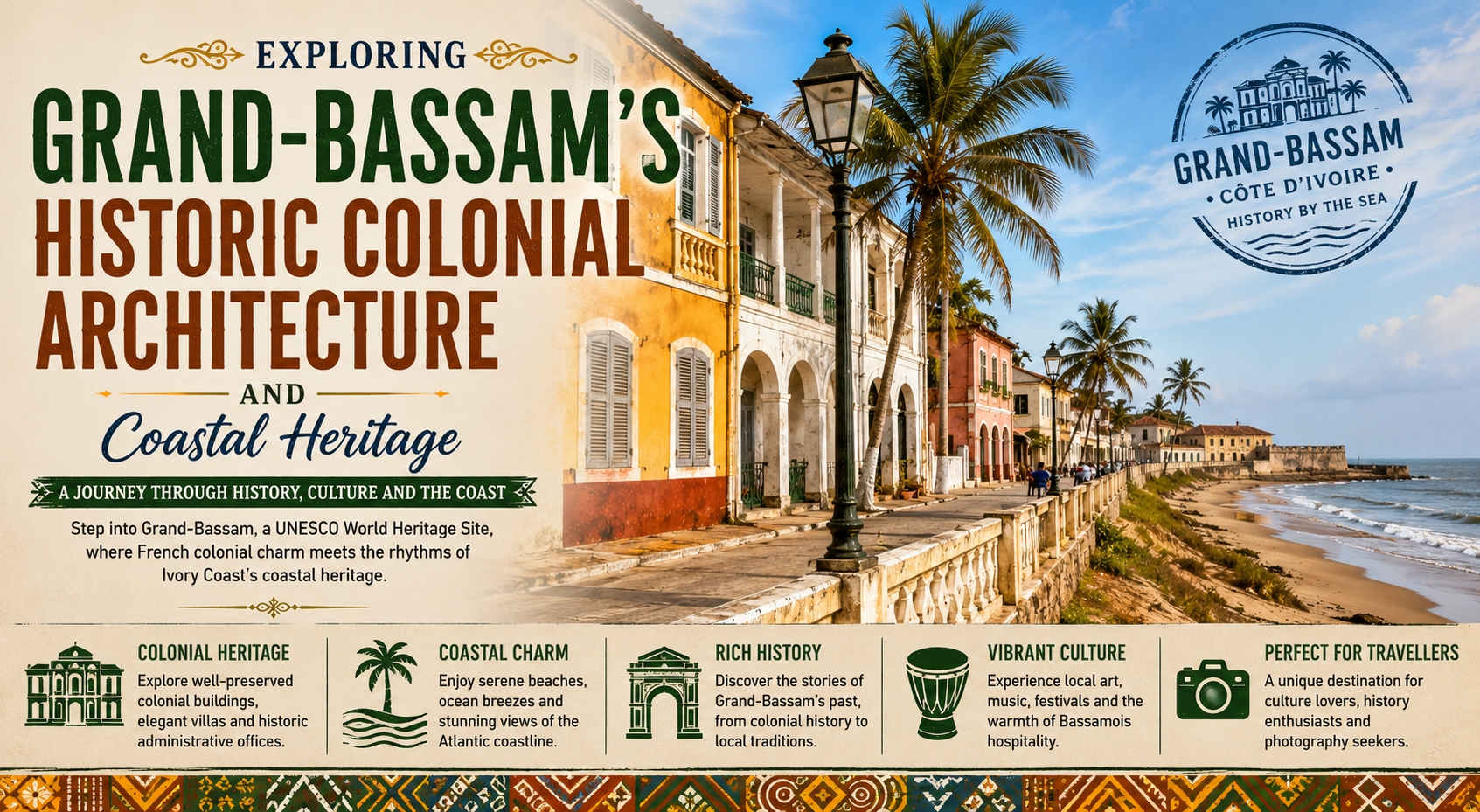
Whether you are a history enthusiast, an architecture admirer, or a traveler looking to unwind by the Atlantic surf, Grand-Bassam offers an unforgettable escape. Here is your complete guide to discovering the historic colonial quarter, coastal landscapes, and cultural treasures of this West African gem.
The Story of Grand-Bassam: From Colonial Capital to Cultural Haven
Before modern skyscrapers defined Abidjan's skyline, Grand-Bassam served as the first French colonial capital of Côte d'Ivoire from 1893 to 1896. Positioned strategically on a narrow strip of land between the Atlantic Ocean and the Ébrié Lagoon, the town flourished as a major trading hub for timber, palm oil, and cocoa.
Although a yellow fever epidemic forced the colonial administration to relocate inland to Bingerville in 1899, Grand-Bassam retained its distinct urban layout. Today, the town is divided into two contrasting yet harmonious sections:
Ancien Bassam (The Old Town): Located on the sandy coastal spit, home to grand colonial mansions, broad shaded avenues, and tranquil beachfronts.
Nouveau Bassam (The Modern Town): Located on the mainland side across the historic bridge, buzzing with local markets, street food stalls, and daily Ivorian life.
Architectural Highlights: Walking Through Ancien Bassam
Strolling through the quiet, sandy lanes of Ancien Bassam feels like stepping back in time. The area showcases a distinctive tropical colonial architectural style, designed specifically to cope with equatorial heat and coastal humidity. Key characteristics include elevated ground floors, sprawling wrap-around verandas, high louvered shutters (persiennes), and clay-tiled roofs.
Here are the must-see architectural landmarks:
1. The National Costume Museum (Musée National du Costume)
Originally built in 1893 as the Palais du Gouverneur (Governor’s Palace), this grand, two-story wooden and brick structure is one of the best-preserved colonial buildings in West Africa. Inside, you will find an extensive collection of traditional attire, masks, ceremonial textiles, and musical instruments representing the diverse ethnic groups of Côte d'Ivoire.
2. The Old Post Office (L’Ancienne Poste)
One of the most photographed ruins in West Africa, the Old Post Office features stately arched colonnades and decaying brickwork now embraced by tropical greenery. It captures the poignant, timeless character of Grand-Bassam’s historic quarter.
3. Maison Ganamet and Commercial Trading Houses
Along Boulevard Treich-Laplène, you will spot several trading houses once owned by prominent merchant families and trading companies. Notice the iron railings, spacious inner courtyards, and deep overhanging eaves built to catch Atlantic sea breezes.
4. Cathédrale Sacré-Cœur
Built in 1910, this cathedral is among the oldest Catholic churches in Côte d'Ivoire. Its tall bell tower and stained-glass windows provide a serene focal point in the heart of the historic district.
Coastal Beauty, Artisans, and Seaside Leisure
Beyond its storied buildings, Grand-Bassam is celebrated for its seaside culture and thriving creative community:
Oceanfront Dining and Relaxation: Along the beachfront, rustic-chic boutique hotels and open-air restaurants serve fresh Atlantic seafood. Try grilled sole or sea bass accompanied by attiéké (fermented cassava couscous) and spicy tomato-onion relish (sauce pimentée).
Vibrant Craft Markets: Grand-Bassam is known across Côte d'Ivoire for its artisans. Browse colorful stalls selling hand-carved wooden masks, batik clothing, bronze figurines, woven baskets, and traditional pottery.
The Meeting of Waterways: Take a relaxing pirogue (traditional wooden boat) excursion along the Ébrié Lagoon or visit the mouth of the Comoé River, where freshwater lagoons meet the rolling Atlantic waves.
Living Traditions: The N'zima People and the Abissa Festival
Grand-Bassam is not just a relic of the past; it is home to the N'zima Kotoko community, who maintain deep spiritual and cultural traditions.
If you visit between late October and early November, you may witness the Abissa Festival. This week-long cultural celebration features rhythmic drumming, elaborate ancestral costumes, traditional dancing, and communal ceremonies centered around renewal, forgiveness, and cultural unity.
Practical Tips for Visiting Grand-Bassam
Planning a trip to experience Côte d'Ivoire's coastal history requires just a little advance preparation. Before arriving, international travelers should make sure to apply for Ivory Coast e-Visa online to ensure smooth entry upon landing in Abidjan.
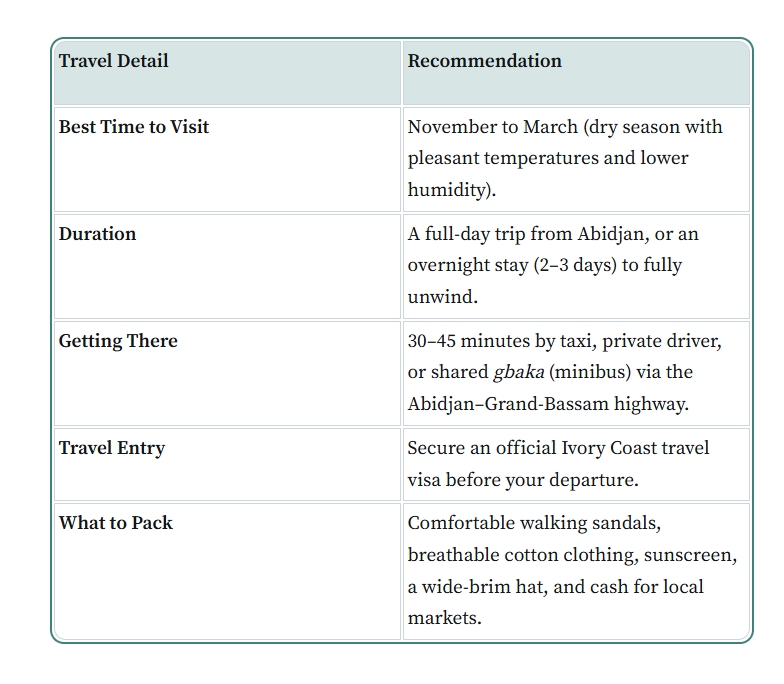
Planning Your Journey: Essential Visa Information
Before you pack your bags to explore Grand-Bassam's historic avenues and scenic shores, ensure your travel documentation is properly arranged. Most international travelers visiting Côte d'Ivoire require an official entry visa.
Getting your travel permit does not have to be complicated. With professional assistance, securing your visa is fast, secure, and stress-free.
Why Choose Our Travel Visa Services?
Reliable Travel Visa Services: Our global expertise has helped thousands of international travelers obtain their travel visas smoothly.
Round-the-Clock Assistance: Reach out to our dedicated support team 24/7, with guaranteed expert responses within 72 hours.
Experienced Visa Consultants: Get tailored, professional guidance to review your documents and ensure application accuracy.
Efficient Visa Application Process: Complete and submit your official visa application in just minutes using our simplified online portal.
Ready to explore Grand-Bassam’s historic streets and coastal wonders?