Explore feeler gauge applications in automotive and industrial maintenance, including gap measurement, blade selection, and precision CNC machine setup.
How Feeler Gauges Support Accurate Maintenance and Machine Setup
A feeler gauge is a precision measuring tool used to check small gaps and clearances between mechanical components. It plays an important role in automotive servicing, industrial maintenance, and CNC machine setup, where correct spacing helps equipment operate reliably. Selecting the appropriate blade thickness and measuring carefully can help technicians identify incorrect clearances before they lead to excessive wear or performance problems.
What Is a Feeler Gauge?
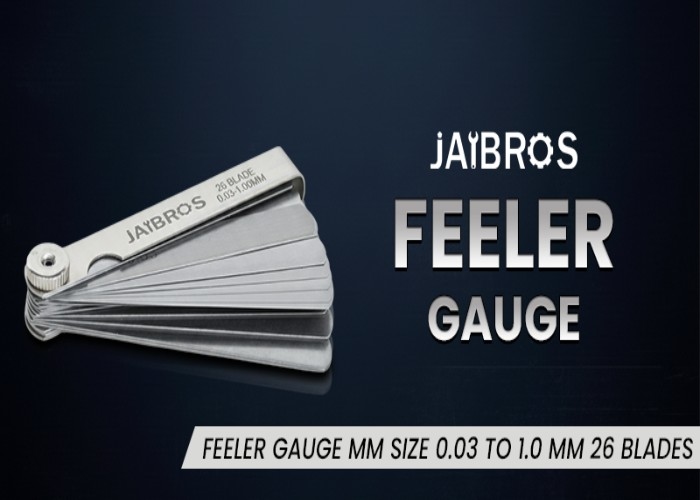
A feeler gauge consists of thin metal blades manufactured to specific thicknesses. Each blade is inserted into a gap to estimate or verify the clearance between two surfaces. The measurement is based on how the blade fits, rather than a digital or graduated scale.
These tools are commonly used to inspect valve clearances, machine components, bearings, and other assemblies that require controlled spacing. They are particularly useful when the gap is too small to measure conveniently with a standard ruler or similar instrument.
Automotive Applications of Feeler Gauges
Automotive technicians use feeler gauges during inspection, servicing, and mechanical adjustments. Accurate clearance measurements help components operate within manufacturer-specified limits.
1. Engine Valve Clearance
In engines that require manual valve-clearance checks, technicians measure the gap between specified valve-train components. Incorrect clearance can contribute to noise, poor performance, or excessive wear. The measurement procedure and acceptable clearance depend on the engine design and manufacturer specifications.
2. Spark Plug Gap Inspection
Some spark plugs require gap verification before installation. A suitable blade gauge can help check the gap against the manufacturer's recommended specification. However, the measuring tool and adjustment method must be compatible with the spark plug design.
3. Brake and Mechanical Component Inspection
During certain maintenance procedures, technicians may need to verify small clearances between mechanical components. The appropriate measuring method depends on the assembly and service instructions; a thin blade should not be used where the manufacturer specifies another instrument.
Industrial Maintenance and CNC Applications
In industrial environments, a feeler gauge helps technicians inspect machine assemblies and verify clearances during setup or maintenance.
1. CNC Machine Setup
Before machining begins, technicians may use thin blades to check specific gaps in fixtures, assemblies, or machine components. Correct clearance can support stable positioning and reduce setup errors. A feeler gauge is a supplementary inspection tool, not a replacement for machine alignment procedures or calibrated measuring instruments.
2. Machinery and Equipment Maintenance
Industrial machines contain components that must maintain suitable spacing during operation. Technicians can use blade gauges to inspect accessible clearances and identify deviations from specified values. Regular inspections can help detect developing problems before they interrupt production.
3. Tool and Fixture Inspection
During fixture assembly, blade gauges can help check small gaps between mating surfaces. This is useful when evaluating contact conditions or verifying a specified clearance. For critical precision work, measurements should follow the applicable engineering procedure.
Types, Sizes, and Least Count
There are different types of feeler gauge, including straight-blade sets, tapered gauges, and specialised designs for restricted access. The best option depends on the shape of the gap, required measurement accuracy, and working environment.
A feeler gauge set usually contains multiple blades with different thicknesses. Common feeler gauge sizes in mm may include 0.05 mm, 0.10 mm, 0.15 mm, and larger values, depending on the set. Always check the actual blade markings and available range before selecting a tool.
The term feeler gauge least count generally refers to the smallest thickness increment available in a set. For example, a set with a 0.05 mm blade increment offers finer selection than one whose smallest increment is 0.10 mm. This does not automatically establish the measurement accuracy, which also depends on blade condition, fit, and technique.
Which CNC Tools Are Useful for Aluminum Machining?
Aluminum is relatively soft and machinable, but it can stick to cutting edges and produce built-up material if tooling and cutting conditions are unsuitable.
Sharp carbide drills and end mills with suitable flute geometry are useful for aluminum because they can support efficient chip evacuation and clean cutting. Polished cutting edges and appropriate rake geometry can help reduce material adhesion. Use cutting speeds, feeds, and coolant or lubrication according to the aluminum alloy and tool manufacturer's recommendations.
A suitable CNC tool must also match the operation. Drills create holes, end mills machine profiles and slots, and chamfer tools finish hole edges. A feeler gauge complements these tools by checking selected clearances during setup and maintenance; it does not cut or machine the workpiece.
How to Select and Maintain a Feeler Gauge
Choose a set with a thickness range that covers the clearances you need to inspect. Consider blade length, access to the measurement area, material, and the smallest required thickness increment.
Keep blades clean and free from rust, burrs, and deformation. Insert a blade gently without forcing it into the gap, since excessive pressure can damage the blade or distort the measurement. Clean and store the blades properly after use, and replace damaged blades when their condition may affect results.
Conclusion
Feeler gauges are valuable for checking small clearances in automotive servicing, industrial maintenance, and CNC machine setup. Understanding blade types, available thicknesses, and correct measuring techniques helps technicians perform more consistent inspections. Jaibros offers industrial tooling options for professionals who need suitable tools for machining, measurement, and maintenance tasks.