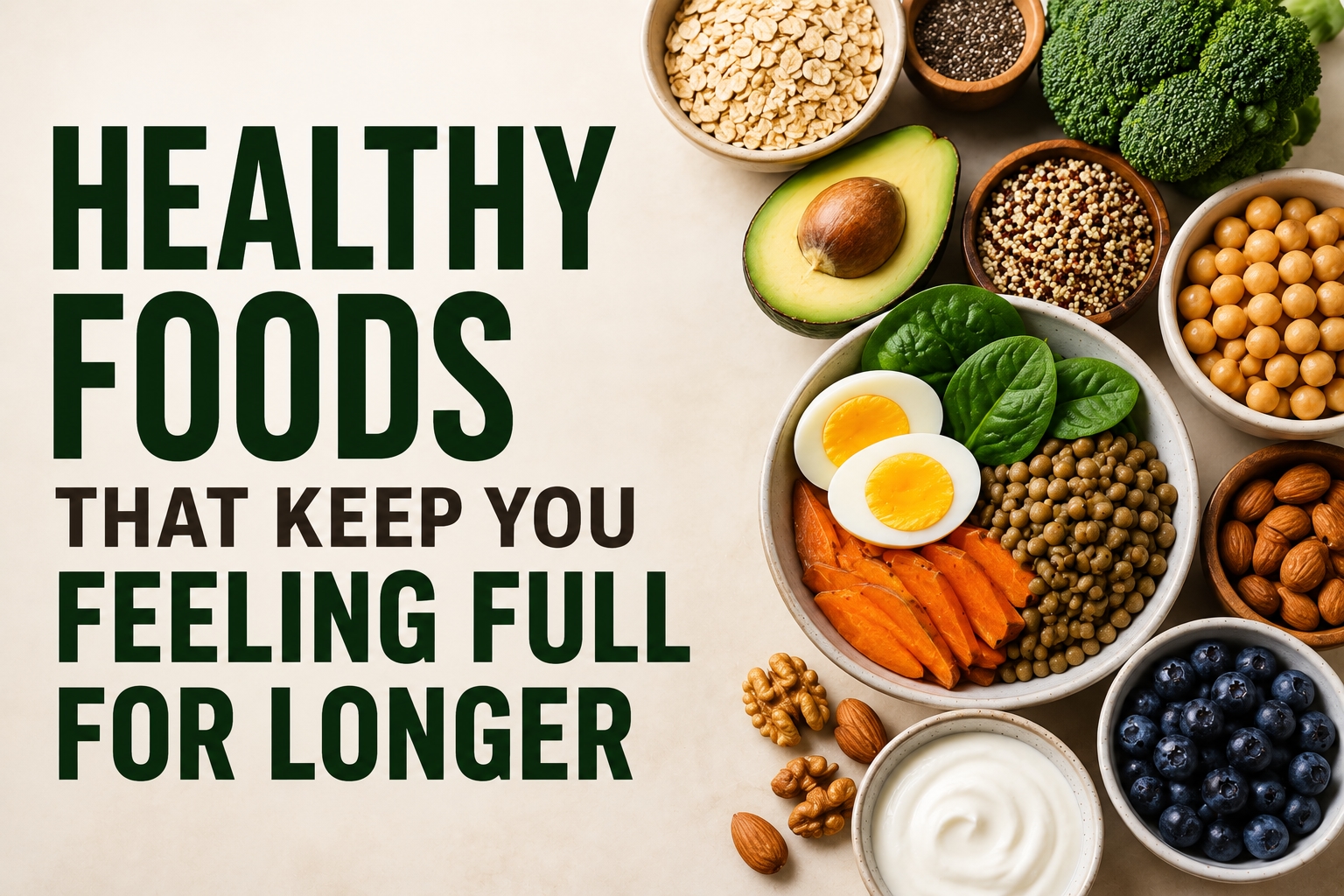
Healthy Foods That Keep You Feeling Full for Longer
Have you ever finished a meal and felt hungry again just an hour later?
It happens more often than people think.
Sometimes the problem isn't how much you're eating. It's what you're eating.
Certain foods help you stay satisfied for longer because they contain protein, fibre, or healthy fats. When your meals are balanced, you're less likely to keep reaching for snacks throughout the day.
The good news is that you don't need expensive ingredients or special meal plans.
Many everyday foods can help you feel fuller while supporting a balanced diet.
Let's look at some of the best options.
Why Feeling Full Matters
Feeling satisfied after a meal isn't just about comfort.
It can also help you:
Reduce unnecessary snacking
Maintain steady energy throughout the day
Avoid overeating during the next meal
Build healthier eating habits
Make balanced food choices more consistently
Small changes to your meals often have a bigger impact than simply eating larger portions.
Eggs Make a Filling Breakfast
Eggs are a good source of protein.
Protein helps slow digestion, which may help you stay full for longer.
You can enjoy eggs in many simple ways:
Boiled eggs
Vegetable omelette
Scrambled eggs
Egg bhurji
Pair them with whole wheat toast or fresh vegetables for a more balanced meal.
Oats Are Rich in Fibre
Oats are one of the easiest high-fibre breakfast choices.
They digest slowly and help provide steady energy.
You can prepare oats with:
Milk
Fresh fruit
Nuts
Seeds
A warm bowl of oats often keeps hunger away longer than sugary breakfast cereals.
Lentils and Dal Are Everyday Superstars
Indian meals already include one of the best filling foods.
Dal.
Lentils provide both protein and fibre.
Some good choices include:
Moong dal
Masoor dal
Toor dal
Chana dal
Mixed lentils
Serving dal with vegetables and whole grains creates a satisfying meal.
Fruits Help Control Hunger
Fruit isn't just for dessert.
Many fruits contain fibre and water, helping you feel satisfied between meals.
Some filling options include:
Apples
Pears
Oranges
Guava
Papaya
Bananas
Eating whole fruit usually provides more fibre than fruit juice.
Nuts Make Smart Snacks
A small handful of nuts can be surprisingly satisfying.
Try:
Almonds
Walnuts
Pistachios
Peanuts
Because nuts contain healthy fats and protein, they make convenient snacks when eaten in moderate portions.
Yoghurt Supports Balanced Meals
Plain yoghurt contains protein and pairs well with many foods.
You can enjoy it with:
Fresh fruit
Oats
Homemade smoothies
Lunch meals
It also adds variety to your daily diet without requiring much preparation.
Whole Grains Keep Energy Steady
Refined grains digest more quickly than whole grains.
Whole grains usually help you stay satisfied for longer.
Include foods such as:
Whole wheat chapati
Brown rice
Millets
Oats
Dalia
These foods also increase your daily fibre intake.
Beans and Chickpeas Are Filling Choices
Beans combine plant protein with fibre.
That's one reason they're so satisfying.
Try including:
Rajma
Chickpeas
Black beans
White beans
They work well in curries, salads, and rice dishes.
Vegetables Add Volume Without Excess Calories
Vegetables naturally contain water and fibre.
Adding more vegetables makes meals more filling.
Some easy choices include:
Spinach
Carrots
Cucumber
Broccoli
Cauliflower
Pumpkin
Green beans
Aim to include vegetables with both lunch and dinner whenever possible.
Don't Forget Healthy Fats
Many people avoid fats completely.
Your body still needs healthy fats in balanced amounts.
Good options include:
Seeds
Nuts
Peanut butter
Homemade nut spreads
Small amounts of ghee
Healthy fats help improve satisfaction after meals when combined with protein and fibre.
Build Meals Instead of Eating Single Foods
No single food keeps you full forever.
The best approach is combining different food groups.
A balanced meal might include:
Whole wheat chapati
Dal or paneer
Mixed vegetables
Curd
Fresh fruit
Meals like these usually provide longer-lasting satisfaction than eating only one type of food.
Stay Hydrated Throughout the Day
Sometimes thirst feels like hunger.
Before reaching for another snack, ask yourself if you've had enough water.
You can also include:
Buttermilk
Coconut water
Homemade soups
Proper hydration supports healthy eating habits and overall well-being.
Focus on Everyday Eating Habits
According to the Best Nutritionist in Mysore, meals that combine protein, fibre, healthy fats, and whole foods are often more satisfying than meals built around refined carbohydrates alone.
Simple home-cooked meals prepared consistently usually support healthier eating habits better than restrictive diets or trendy food plans.
Choose Nutrition Advice You Can Trust
There are many claims about foods that promise to keep you full all day.
Most of them oversimplify how nutrition works.
Your appetite depends on many factors, including your activity level, age, sleep, and overall eating pattern.
When making changes to your diet, rely on qualified nutrition professionals who use scientific research and recognised dietary guidelines. Personalised advice based on your health, lifestyle, and nutritional needs is more reliable than following online trends or eliminating entire food groups without proper guidance.
Small Food Choices Can Make a Big Difference
Feeling full for longer isn't about eating more.
It's about eating smarter.
Include protein with your meals.
Choose whole grains more often.
Add fruits and vegetables every day.
Keep healthy snacks nearby.
These simple habits can help reduce unnecessary hunger while supporting a balanced eating pattern that feels easy to maintain.
Eat Slowly and Pay Attention to Your Meals
How you eat can be just as important as what you eat.
Eating too quickly may leave you feeling less satisfied, even after a balanced meal.
Try to:
Chew your food well.
Eat without distractions when possible.
Notice when you feel comfortably full.
Taking a little more time during meals can help you enjoy your food and reduce unnecessary snacking later.
Choose Nutrition Advice You Can Trust
Everyone experiences hunger differently.
Your age, activity level, health conditions, and daily routine all influence the foods that work best for you.
When making changes to your diet, seek guidance from qualified nutrition professionals who use scientific research and recognised dietary guidelines. Personalised nutrition advice tailored to your individual needs is more reliable than following food trends or relying on a single "filling" food to solve every problem.
Lasting Fullness Comes From Balanced Meals
There isn't one magic food that keeps you full all day.
The best results usually come from combining protein, fibre, healthy fats, and whole foods in your daily meals.
Start with one small change.
Add more vegetables to your plate.
Choose whole grains more often.
Include a source of protein with every meal.
These everyday habits can help you stay satisfied for longer while supporting a balanced and healthy way of eating.