Ask almost anyone who's tried hiring WordPress help what the first real headache was, and it's rarely design or functionality it's figuring out how to actually pay for the thing. Do you bring someone on for a couple hours to fix a broken button? Sign up for a monthly retainer so someone's always around? Or hand off the whole build for one fixed price? Each of these exists for a reason, honestly, and picking the wrong one tends to mean you either overpay for flexibility you didn't need, or underpay and end up short on support when you actually needed it.
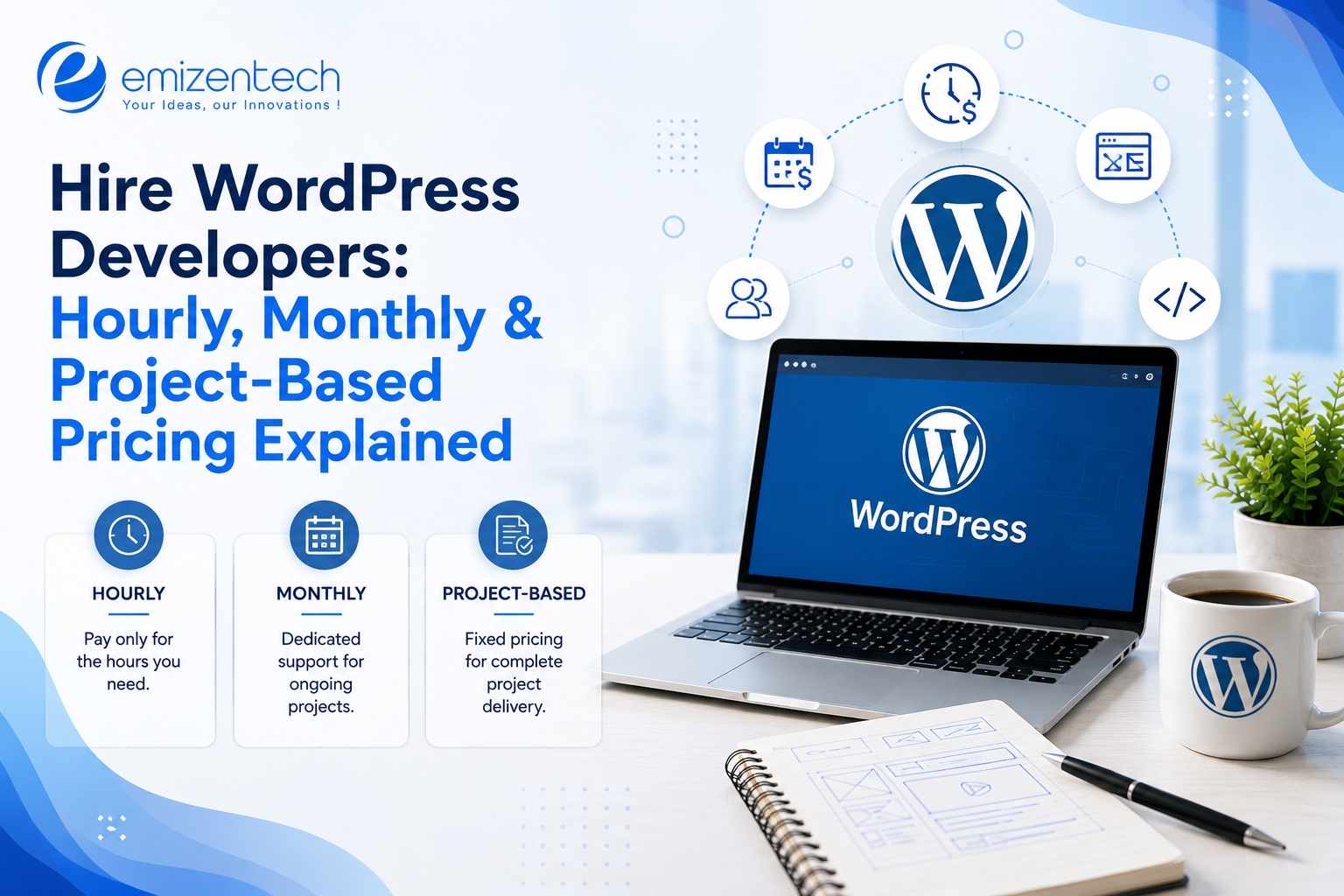
So let's go through the three ways people typically bring on WordPress talent—hourly, monthly, project-based and what each one's actually good for.
The Rate Isn't the Whole Story
A lot of people get stuck comparing numbers $20 an hour here, $50 there, $100 somewhere else without stopping to ask whether hourly billing even makes sense for what they're doing. Here's the thing though: the pricing model usually matters more than the rate attached to it. Whether you're planning a small fix or a full WordPress development project, a cheap hourly developer on an open-ended task can rack up more total cost than a fixed monthly or project rate ever would have. And going the other direction, paying for a full-time monthly commitment when you really just need the occasional fix is just money down the drain.
Knowing what each model's built for saves you from both mistakes.
Hourly — Good for Small, Contained Work
Hourly does what it says you pay for time, that's it. Works well for:
Quick bug fixes
Small plugin or theme tweaks
A one-off consulting call or code review
Anything with a genuinely narrow, well-defined scope
The upside's obvious no long-term commitment, pay for exactly what gets done. The downside is scope creep. A "quick fix" can turn into three hours of digging around if the actual problem's messier than it looked at first glance. Worth pinning down an estimated hour range before anyone starts, rather than leaving it wide open.
Rates climb with experience, unsurprisingly someone doing basic edits costs less than someone who's spent years untangling WooCommerce or writing custom plugins.
Monthly—Good for Work That Doesn't Really Stop
Monthly setups retainers, dedicated-team arrangements, whatever you want to call them make sense when there's always something going on. Sites needing constant updates, regular maintenance, someone on standby for whenever an issue pops up that kind of ongoing need fits monthly billing better than getting nickel-and-dimed hour by hour.
Usually this looks like a developer allocated to your project for a set chunk of hours or work each month, at a flat, predictable rate. Why people like it:
Budgeting's easier since the number doesn't change month to month
You're not competing with five other hourly clients for attention
The same person stays on your project, so they're not relearning your codebase every time something comes up
This one tends to suit active sites ongoing feature work, regular tweaks, security monitoring more than a site that's basically finished and only needs occasional attention.
Project-Based—Good for a Defined Build With a Clear End
This flips things entirely. Instead of paying for hours, you agree on one price for one deliverable. Makes sense for:
Building a new site from scratch
A full redesign or platform switch
A specific feature with clear requirements a booking system, a membership setup, an eCommerce integration
You get cost certainty going in, assuming the scope stays put. The catch is flexibility or the lack of it. Change your mind mid-project and you're usually renegotiating price or timeline, since the original quote was built around a specific set of requirements, not a moving target.
Works best when you already know exactly what you want. Less great for anything exploratory where requirements are likely to shift as you go.
So Which One's Right for You?
Honestly, there's no single right answer it comes down to the shape of the work. A few questions worth actually sitting with:
Is this a one-time thing or ongoing? One-off, narrow work → hourly. Continuous, evolving work → monthly.
Do you already know exactly what you want built? Locked-in requirements → project-based gives you price certainty. Still figuring it out → hourly or monthly gives you room to adjust as you go.
How hands-on do you want to be? Project-based generally needs less day-to-day management since the deliverable's set. Hourly and monthly tend to need more direction from your end.
How comfortable are you with scope creep? Hourly carries the most risk here if tasks aren't tightly scoped. Project-based shifts more of that risk onto the developer, since they've committed to a number regardless of how long it actually takes them.
A lot of businesses honestly just mix models project-based to get the site launched, then a monthly setup afterward to keep it running.
What This Actually Looks Like When You're Hiring
When you go to hire WordPress developers, the pricing conversation should happen early not as a footnote once someone's already knee-deep in your codebase. A developer or agency worth working with will usually look at your scope first and suggest the model that actually fits, instead of just defaulting to whatever's easiest for them to bill.
Worth asking, too, how experience factors into the number. Someone doing basic edits will cost less than someone with real depth in WooCommerce or custom plugin work and for anything beyond simple stuff, that gap tends to show up in the actual quality of what you get, not just the invoice.
A Few Red Flags
Some things that usually mean the pricing model and the actual need don't match up:
An hourly quote with zero estimated range usually means nobody's actually thought through the scope
A monthly retainer with vague deliverables and no real list of what's covered
A project quote that seems suspiciously low for what's being asked often means corners get cut somewhere down the line
None of these automatically mean the developer's shady, but they're worth asking about before signing anything.
Cost Isn't the Whole Picture
It's easy to chase whatever number looks smallest across these three models, but cost alone doesn't tell you much on its own. There's a deeper breakdown on how much it actually costs to hire a WordPress developer that gets into rate ranges by experience level and project type pairs well with this one, since that piece covers the "how much" and this one covers the "how."
Final Thoughts
Pricing structure isn't just paperwork it actually shapes how the work gets done. Hourly's for small, contained stuff. Monthly's for ongoing, evolving work. Project-based is for builds with a fixed, known scope. Matching the model to what you actually need, instead of just grabbing whatever looks cheapest on paper, tends to save both money and a fair amount of headache later.
If you're ready to move forward, it's worth taking a look at your options to hire wordpress developers comparing the models side by side before committing makes it a lot easier to land on the right fit for your budget and your project.
Across the industry, providers structure pricing along these same three lines pretty consistently EmizenTech included so whichever provider you end up going with, this breakdown should give you a decent reference point for what hourly, monthly, and project-based arrangements actually look like once you're in them.
Frequently Asked Questions
1. Which one's actually cheapest — hourly, monthly, or project-based?
Depends entirely on the work, not the model. Hourly can be cheapest for small stuff, but it can also blow past a fixed project rate if things drag on longer than planned. There's no universal "cheapest" here.
2. Can I switch models partway through?
Usually, yeah. Pretty common to start project-based to get something built, then move to monthly afterward for upkeep. Switching mid-task is rarer but not impossible just talk to the developer if the scope genuinely changes.
3. How do I keep hourly billing from spiraling?
Pin down an estimated hour range before starting, and get clear on what's actually included. If a task starts growing past the original ask, pause and confirm the extra work before it gets billed.
4. Is a monthly retainer worth it if my workload's inconsistent?
Depends on the month as a whole, not any single week. If stuff comes up regularly even if it's unevenly spaced, a retainer can still make sense. If work's genuinely rare, hourly's probably the better call.
5. What should a project-based quote actually include?
Varies by developer, but at minimum it should spell out scope — what's being built, what's not included, and how changes get handled if requirements shift mid-project.
6. Do more experienced developers cost more no matter which model I pick?
Pretty much, yeah. Experience affects hourly rates, retainer costs, and project quotes alike. Someone deep in WooCommerce or custom plugin work is going to cost more than someone doing basic template edits, regardless of the billing structure.