
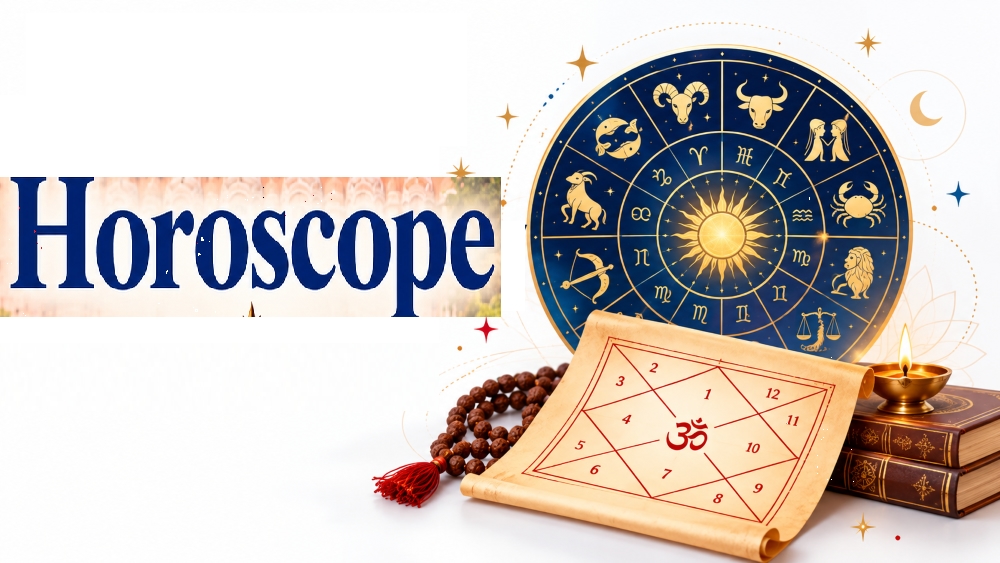
What a horoscope is, how it is made and how to read one without taking it too seriously.
You have probably read one today without meaning to. A line in a newspaper, a story on your phone, a relative telling you that this is a good month for money. That is a horoscope, and in India it sits somewhere between habit and tradition. Some people check theirs every morning. Others only bring it out for weddings, naming ceremonies and big purchases.
This guide explains what a horoscope actually is, the two very different things the word can mean, how a birth chart is built and how to read one sensibly.
One thing worth saying early. A horoscope is a tradition, not a science. There is no scientific evidence that it can predict events or describe your character reliably, and no honest astrologer should claim otherwise. Plenty of people enjoy it anyway, as a way to reflect or to start a conversation. That is a perfectly good way to use it.
What is a horoscope?
In plain terms, it is a chart of the sky for a particular moment. When that moment is your birth, the chart is called a birth chart, natal chart or, in India, a kundli or janam kundli. It records where the Sun, Moon and planets stood at the time and place you were born, and astrologers use it to talk about your personality, strengths and the timing of events.
The word has a second meaning that causes most of the confusion. The short “your horoscope for today” forecasts in newspapers and apps are not drawn from your chart at all. They are written for everyone born under one zodiac sign, usually the Sun sign, which is why they stay general. A personal horoscope needs your birth date, exact time and place. A daily one needs only your sign.
How is a birth chart made?
The astrologer starts with your date, time and place of birth, then works out where each planet was at that moment, today usually with software. The positions are placed in a chart made of twelve signs and twelve houses. The sign rising on the eastern horizon at your birth, called the lagna or ascendant, decides how the chart is laid out.
Each house stands for an area of life, such as family, career, marriage or health, and the planets in it are read as influences on that area. In Vedic astrology there is another layer, the dasha, a long sequence of planetary periods used to talk about phases of life.
Because everything depends on time and place, a small mistake in your birth time can change the lagna and shift the houses. That is why astrologers keep asking for the exact time, and why a rough guess gives a rougher reading.
What are the twelve zodiac signs?
The table below shows the common Western dates, the Hindi name, the element and the traditional ruling planet of each sign.
Sign | Hindi name | Approximate dates | Element | Ruling planet |
|---|---|---|---|---|
Aries | Mesha | 21 March to 19 April | Fire | Mars |
Taurus | Vrishabha | 20 April to 20 May | Earth | Venus |
Gemini | Mithuna | 21 May to 20 June | Air | Mercury |
Cancer | Karka | 21 June to 22 July | Water | Moon |
Leo | Simha | 23 July to 22 August | Fire | Sun |
Virgo | Kanya | 23 August to 22 September | Earth | Mercury |
Libra | Tula | 23 September to 22 October | Air | Venus |
Scorpio | Vrishchika | 23 October to 21 November | Water | Mars |
Sagittarius | Dhanu | 22 November to 21 December | Fire | Jupiter |
Capricorn | Makara | 22 December to 19 January | Earth | Saturn |
Aquarius | Kumbha | 20 January to 18 February | Air | Saturn |
Pisces | Meena | 19 February to 20 March | Water | Jupiter |
These dates are approximate. Vedic astrology uses a different zodiac, and it bases your sign, the rashi, on where the Moon was at your birth. So your Vedic sign and the Western sign you grew up with often do not match, and nobody has made a mistake. The ruling planets shown are the traditional ones used in Vedic astrology; modern Western astrology also links Scorpio with Pluto, Aquarius with Uranus and Pisces with Neptune.
What kinds of horoscope are there?
Birth chart (kundli): drawn from your own birth details, and the base for most serious readings.
Daily, weekly and monthly forecasts: short general notes for each sign.
Yearly horoscope: an overview of the year ahead.
Love, career and money readings: forecasts focused on one area of life.
Kundli milan: a comparison of two charts, usually before a wedding.
Baby horoscope: a chart for a newborn, often used when choosing a name.
How should you read your horoscope?
Find your sign first, and if you are following Vedic astrology, your Moon sign. Then read for themes rather than events. A line about patience at work is a prompt to think about your week, not a prediction that something will happen on Thursday. If you follow a horoscope for a while, ask yourself an honest question: does it help me think, or am I just waiting for it to come true?
It also helps to remember why broad statements can feel so personal. A sentence like “you have been thinking about a change” fits almost everyone, so it seems to fit you. That is not a trick, just how general language works.
Are horoscopes accurate?
No reliable evidence says they are. Tests of newspaper-style horoscopes have not shown that they predict anything, and personality descriptions by sign have not held up well either. That does not stop people from finding them comforting or entertaining.
So a sensible approach is to treat a horoscope as entertainment or a conversation starter, and to make important decisions on facts, qualified advice and your own judgement.
Do you need an astrologer?
For a daily forecast, no. For a full birth chart reading, kundli milan or an auspicious date (muhurat), people usually do consult one. If you go that route, look for someone who explains how they reached a point in plain words, tells you the fee upfront and respects your choices.
Be careful with anyone who guarantees results, claims a curse that only they can remove, pushes expensive gemstones or rituals, or asks for your bank details or OTPs. If you are cheated, tell your bank at once and report it on the National Cyber Crime Reporting Portal or call the helpline 1930.
Astrologers to look at
The six listings below come from the Horoscope category. Each point comes from the listing itself.
Shiv Shakti Jyotish Sansthan, Jagatpura: about 10 years in business, with kundli reading and husband-wife problem consultations listed.
Jyotish Sagar, Mansarovar: about 7 years in business, with kundli reading and husband-wife problem consultations listed.
Pandit Deepak Kumar Sharma, Vaishali Nagar: about 8 years in business, with kundli reading and husband-wife problem consultations listed.
Astrologer Rohitash Bansal, Sanganer Bazar: about 11 years in business, with kundli reading and husband-wife problem consultations listed.
Pandit Chandra Mohan Dadhich, Airport Sanganer: about 11 years in business, with kundli reading and husband-wife problem consultations listed.
Astrologer Dr Vijay Goel, Malviya Nagar: about 11 years in business, with kundli reading and husband-wife problem consultations listed.
This is a starting point, not a ranking. A listing shows what someone offers, not how good a reading will be.
Final thoughts
A horoscope works best when you hold it lightly. Learn the difference between a personal chart and a daily forecast, know which system you are reading, and keep the big decisions in your own hands.
If you would like to compare more local astrology providers in one place, you can explore the Horoscope category on Service Bazzar, a local business listing platform where you can see location, experience and details together.
Frequently asked questions
What is a horoscope in simple words?
It is an astrological chart or forecast based on where the Sun, Moon and planets were at a certain time, usually your birth.
What is the difference between a horoscope and a kundli?
A kundli is a personal birth chart used in Indian astrology. “Horoscope” can mean that same chart, or a general forecast for a zodiac sign.
How do I find my zodiac sign?
Match your date of birth with the ranges in the table above. For Vedic astrology, your sign depends on the Moon’s position at birth, so you will need an astrologer or kundli software.
Do I need my exact birth time? For a daily horoscope, no. For a personal birth chart, yes, because the lagna and houses depend on it.
Are daily horoscopes personal?
No. They are general forecasts written for everyone born under one sign.
Is a horoscope scientifically proven?
No. There is no scientific evidence that horoscopes predict events, so treat them as tradition and reflection.


