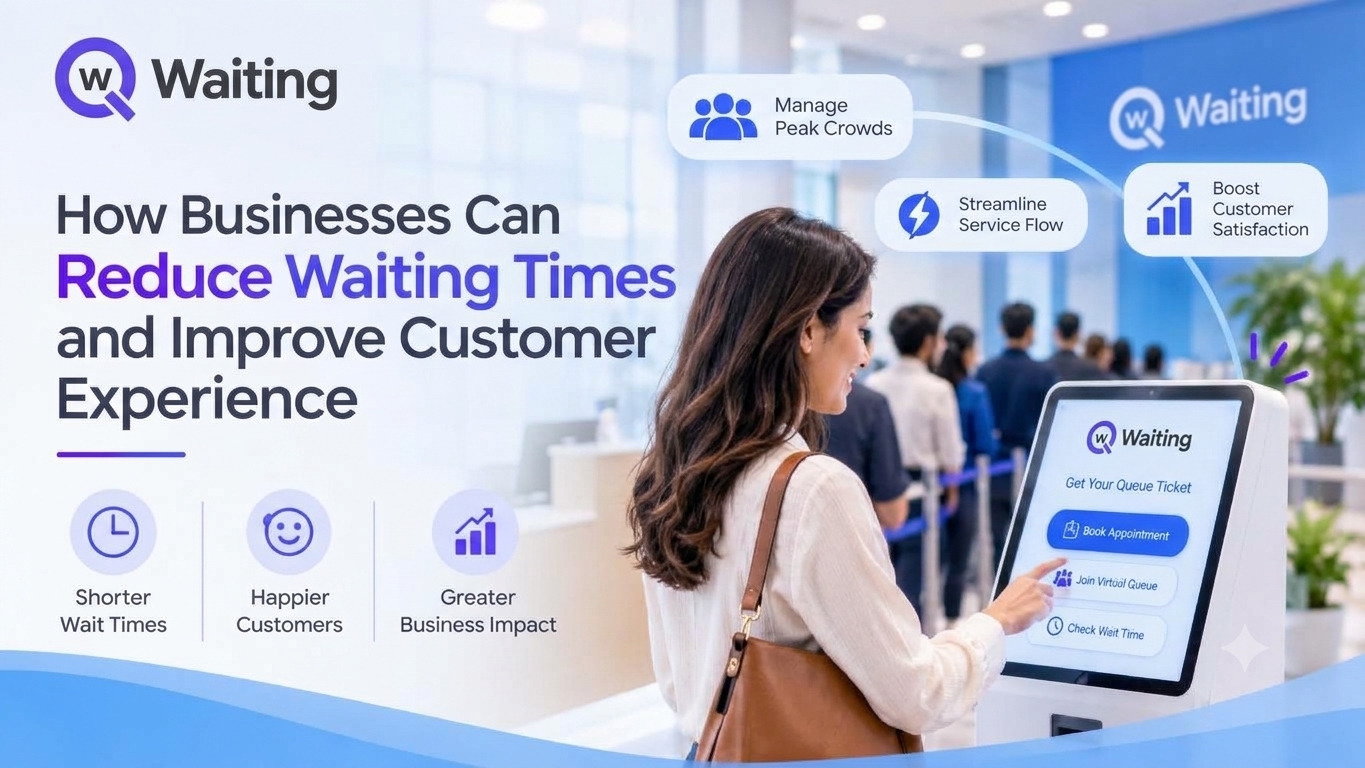
Introduction
The subtle effects of long queues Queue abandonment can quietly ruin your business. Customers leave before they are served. Employees can't keep up with bigger queues Managers don't know why the queues are growing. Whether your business runs a retail shop, healthcare unit, bank, restaurant, government office, or service center, poor queue management will impact customer experience and your organization's bottom line.
Adding staff or more service counters may sound like the obvious answer, but it's the wrong one. Adding more staff or counters means higher costs that do not solve the fundamental problem. Companies need a more intelligent way of handling customer flow, demand, and communication with visitors.
A virtual queue solves this problem by letting customers enter into a queue via their mobile device rather than in person. Brands can provide a more streamlined service experience and empower their staff to operate more productively with the right strategy.
What Is a Virtual Queue System?
A virtual queue enables customers to enter a queue for a service without physically standing in line. Different virtual queue solutions offer various ways for customers to get on your waitlist, including: Through a QR code, mobile device, website, or self-serve kiosk (or by an employee at your facility).
Once you are in the store, you'll be given a queue number or digital booking confirmation and have the option to monitor your place in the queue. Queues can also notify you when it's almost your turn so you can better plan your time.
A traditional queue management system is reliant on physical queues and manual operations. Digital queue management provides businesses with more insight into the flow of customers.
Another way a virtual queue management system can assist your business is by integrating with appointment management, customer alerts, digital signage, and reporting.
Typical Business Challenges and Virtual Queuing Solutions
1. Long Queues and Customer Frustration
Physical queues can seem crowded when the customer base gets in during busy hours. The customer may not be sure of the wait time, which can make the task of waiting seem even worse.
Customers may join a queue virtually and wait in a different location rather than stay in a packed waiting room. They are informed about their standing in the queue and alerted when it is time to move forward.
For instance, retail store customers might join a waitlist to get help with a product while they shop. Patients may wait in a designated waiting area instead of in the reception area.
Business benefit: Improved waiting experience, less crowding, and improved customer communication.
2. Challenges Handling Peak-Hour Traffic
Demand is often unpredictable for many types of businesses. For example, a bank may see a spike in customers coming in during lunchtime, a restaurant may get busy at dinnertime, or a service center may see an unexpected increase in walk-ins.
Without visible queues, it can be challenging for managers to allocate customers efficiently across several counters.
With virtual queue management, your staff has a clear picture of your waiting visitors, allowing them to better allocate their time to help. They can also direct customers to the right department when demand shifts.
When coupled with queue analytics, businesses can identify recurring peak times and can optimize staffing.
Business benefit: More structured service delivery and more effective use of resources available.
3. Employees Operating Excessively on Manual Queues
Reception staff and desk staff have to spend time taking names and answering questions about queue positions, guidance to shops, and standing in phone queues.
These are tasks that can eat up the time that should be spent with customers.
Automation can take care of daily operational tasks such as online check-in, queue assignment, status monitoring, and consumer notification (if the system has this feature).
This allows staff to concentrate on responding to customer inquiries, helping visitors, and giving the guest experience their undivided attention.
Business benefit: Minimize admin workload—greater consistency in service process.
4. Poor Visibility Into Service Delays
You can't help make the flow of consumers a lot more successful if you usually do not know the place the waste takes place.
For example, one service center could observe that it takes customers more time to get their documents verified than to see the doctor. Or a bank could realize that one particular department attracts heavier customer traffic than its other branches.
Queue reporting can assist managers in analyzing delays, service time, customer volume, and performance across service points. This information simplifies the challenge of locating bottlenecks and evaluating potential improvements.
The objective is not just to shepherd people into the queue more efficiently. It's to understand what's causing the waiting and making the whole service process better?Business benefit: Improved operational decision-making with observable service data.
Which Industries Can Benefit From Virtual Queue Management?
Virtual queuing has benefits that can help businesses of all kinds, including businesses that experience high walk-in customer traffic or irregular demand.
Healthcare: Assist patients in registration and update wait time updates as they await their consultation.
Banking: Schedule appointments for clients with various divisions, such as account, sales assistance, and loan inquiries.
Retail: Run the service desk, provide product advice, process returns, and operate check-out queues at high-traffic times.
Dining and hospitality: Provide your customers with the ability to add their names to the waitlist and be notified once a table is available.
Government Offices: Visitors by Department. Find out more.
Automotive service centers: Schedule for vehicle service, walk-ins, and customer advisor coverage.
The implementation should be tailored to the needs of each business. For example, in the case of a hospital, clinical priorities and emergencies should be taken into consideration—rather than the usual first-in, first-out queue.
Virtual Queue Management System Comparison: How To Select The Right Solution
The right functionality isn't needed by all firms. Decision-makers should consider what operational needs they have to meet before posing the answer.
Consider the following factors:
1. Flexible Customer Check-in: Seek establishments that have easy check-in solutions like QR codes, check-in by web, kiosks, and check-in with an associate.
2. Queue status updates: Both consumers and staff need to have access to helpful information regarding queue status and additional service turns.
3. Automated alerts: SMS and/or other notifications can remind customers when to come back or get ready for service.
4. Manage data and analysis: Select data that will show you important trends such as number of customers, average wait times, service times, and repeat bottlenecks.
5. The system should be compatible with the current business processes, such as booking, customer management, or other applications where applicable.
6. Scalability and security: Think about the ability of the solution to manage multiple sites, various service departments, necessary security, and your business's data storage needs.
Also needed for successful rollout: employee training, explicit directions for customers, and a way to help those who can't or don't want to go digital.
How Qwaiting Can Help Businesses Improve Customer Flow
If you want to digitize your customer flow, you could consider taking advantage of a solution like Qwaiting—a queue management and customer flow management platform.
The solution to managing customer check-in, queuing, and improving service visibility Its digital queue management solution can help organizations with customer check-in, queuing, and providing more visibility into service events. In addition, businesses can combine a queue management and appointment booking, virtual queuing, customer feedback, and business intelligence feature set depending on the configuration and functionality chosen.
If your business experiences long queues of clients waiting for services or if your service offerings are inconsistent, then the goal of your improvement process is to smooth out the flow from arrival to service.
Instead of accepting queues as a necessary part of doing business, you can utilize digital communication channels to better understand demand, more effectively communicate, and make more rational operational improvements.
Conclusion
Waiting times aren't just a service issue either. They have a tangible impact on your employees' productivity and your business's costs and customer service quality.