
Microwaves come in a wide range of sizes and styles, and each variation can influence how much power the appliance uses. In this Jackery guide, you’ll learn how to identify your microwave’s wattage and discover which wattage level is best suited for your cooking requirements.
Microwaves are essential kitchen appliances used for everything from reheating meals to cooking and even baking. They’re convenient, fast, and help you avoid extra cleanup. However, different microwave models vary widely in how much power they consume. So how do you determine your microwave’s wattage? Most units typically use between 600 and 1200 watts, depending on their size and design.
Powerful battery backups such as the Jackery Solar Generator 2000 v2, Jackery Solar Generator 2000 Plus, and Jackery Solar Generator 3000 Pro are built to handle a wide range of household and outdoor devices. With strong output capabilities and portable designs, they let you easily run appliances wherever you need them. Whether your microwave draws lower or higher wattage, Jackery Solar Generators provide reliable power to keep your cooking routine running smoothly.
Microwave Wattage Key Takeaways
Before exploring how to determine your microwave’s wattage, here are a few important points to keep in mind:
A microwave’s wattage reflects its cooking power.
Higher wattage means more energy is delivered to heat or cook food quickly.
Smaller units usually use around 600W, standard household microwaves range from 800–1000W, and commercial models typically draw 1000–1200W.
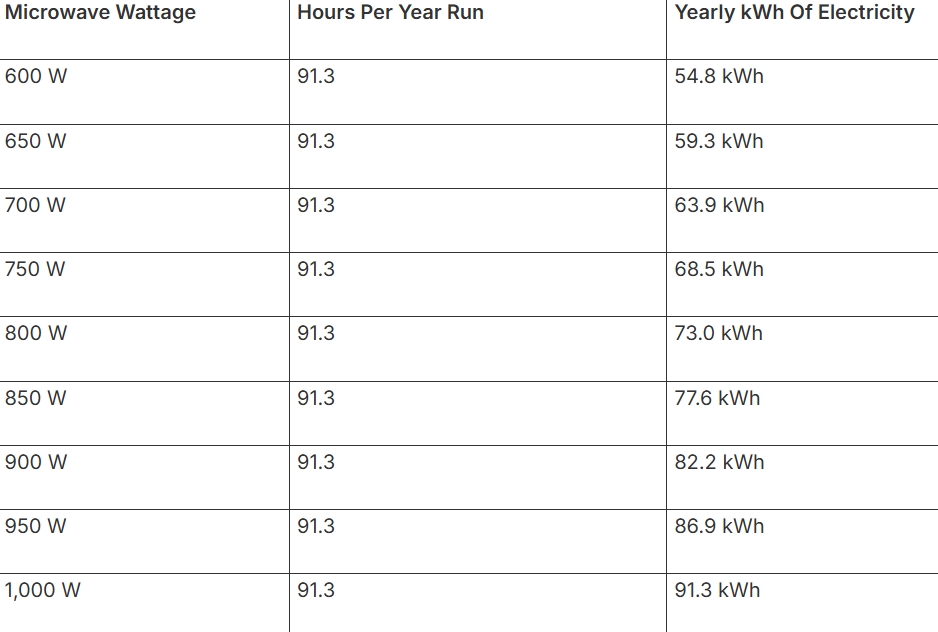
If you use a microwave for 15 minutes a day, it consumes roughly 6.1 kWh per month or 73 kWh per year.
How to Find Microwave Wattage
The easiest way to determine your microwave’s wattage is to check the user manual. If you don’t have the manual, look for the information label inside the microwave—usually on the door frame or interior wall. The wattage is often listed there. If neither option works, you can estimate the wattage through a simple test.
To estimate your microwave’s wattage, fill a microwave-safe measuring cup with one cup of cold water. Heat it and note how long it takes to reach a boil:
2.5 minutes → roughly 1200W
2 minutes → about 1000W
2.5 minutes → around 800W
3 minutes → approximately 700W
Keep in mind that microwave features also influence power usage—the more functions the appliance has, the higher its wattage tends to be.
Microwave Wattage | Function |
|---|---|
600-800W | Reheat |
800-1000W | Cook, reheat, crisp, defrost |
1000-1200W | Cook, reheat, crisp, defrost, air fry, convection, roast, broil, bake, grill, steam |
How Many Watts Does a Microwave Use?
Microwaves come in a wide range of sizes and power levels. Smaller, compact models generally use 600–800 watts, while standard household units draw 800–1000 watts. Larger or more powerful microwaves exceed 1000 watts, offering faster cooking times. High-end commercial microwaves—often found in restaurants—can reach up to 1700 watts.
To understand how much energy your microwave uses, consider its size, wattage rating, and how long you run it each day. You can calculate its energy consumption with this simple formula:
Total Energy Use = Time Used × Input Wattage
Time used refers to the number of minutes or hours the microwave operates per day.
Input wattage is the microwave’s power rating.
Total energy use represents the appliance’s daily electricity consumption.
Microwaves with higher wattage heat food faster but consume more electricity. By knowing your microwave’s wattage and usage habits, you can better estimate its annual energy impact and manage your overall power consumption.
How Much Does It Cost to Power a Microwave?
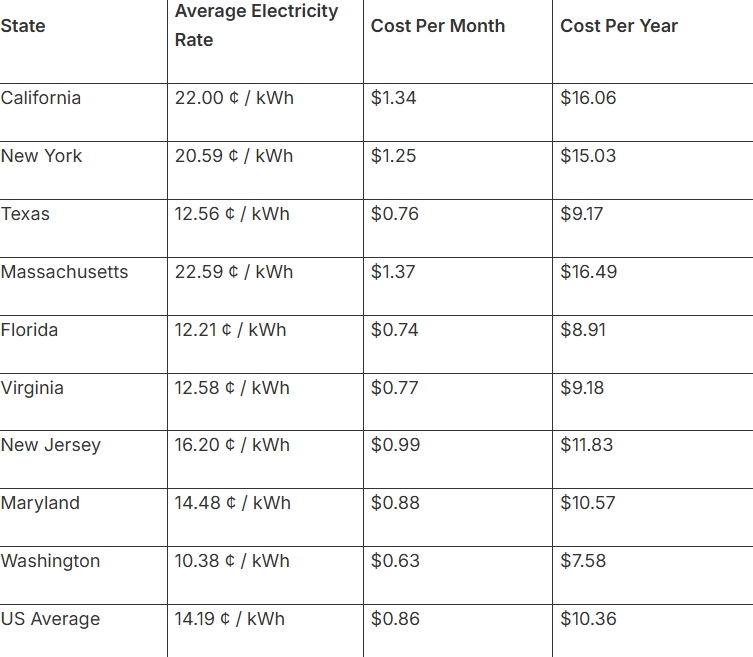
The cost of running a microwave varies based on your electricity provider and local energy rates. To estimate the expense, simply multiply the microwave’s energy consumption (in kWh) by the electricity rate in your area.
For example, if your local rate is $0.30 per kWh, running a microwave for about 15 minutes would cost:
1 kWh × $0.30 = $0.030
If you use your microwave daily, the annual cost comes to approximately $10.95.
Actual costs can differ depending on usage habits and regional pricing, but this calculation provides a clear starting point for understanding your microwave’s operating expense.
Jackery Solar Generators for Microwaves
Jackery Solar Generators combine Jackery Explorer Portable Power Stations with Jackery SolarSaga Solar Panels to deliver reliable, renewable power for a wide range of appliances—including microwaves. Using a solar-powered generator ensures your microwave stays operational during power outages or when you're far from a traditional electrical outlet.
The system works by capturing sunlight with the monocrystalline cells inside Jackery SolarSaga Solar Panels, converting it into DC electricity. The Jackery Explorer Portable Power Station then transforms that DC power into AC electricity, allowing you to safely operate microwaves and other household devices.
Jackery Solar Generator 3000 Pro
The Jackery Solar Generator 3000 Pro features a robust 3024Wh NMC battery, making it capable of powering even high-wattage microwaves. This powerful home backup system supports 99% of common household and outdoor appliances. When paired with six Jackery SolarSaga 200W Solar Panels, it can fully recharge in just 3.5 hours. With its high capacity, the generator can run a 1200W microwave for approximately 2 hours, offering dependable off-grid cooking and heating capabilities whenever you need them.

Jackery Solar Generator 2000 Plus
The Jackery Solar Generator 2000 Plus is equipped with a durable LiFePO₄ battery offering 2042.8Wh of capacity, and it can be expanded up to an impressive 24kWh with the addition of extra Jackery Battery Pack 2000 Plus units. This makes it a powerful and versatile solution for running 99% of household and outdoor appliances—including microwaves.
When operating a high-end 1200W microwave, the Jackery Solar Generator 2000 Plus can provide a stable power supply for approximately 1.3 hours, ensuring reliable cooking and heating whether you're off-grid, camping, or navigating a power outage.
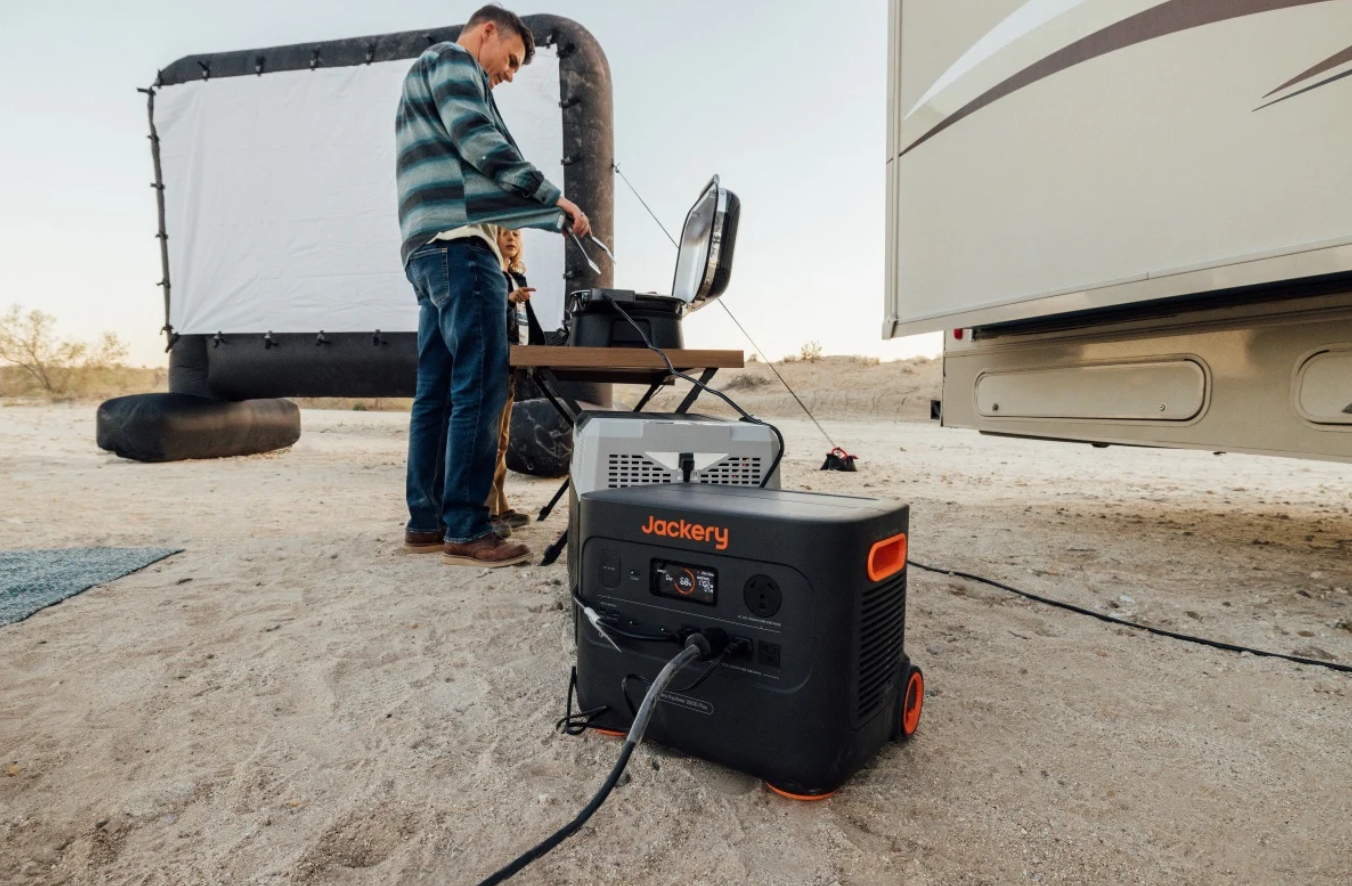
The Jackery 2000 Plus is currently sold out. Upgrade to the bestselling HomePower 3600 Plus instead—now offering enhanced capacity and higher output for essential home backup needs. Its expandable design provides 2–24 kWh of flexible power storage, making it suitable for a wide range of scenarios.
Jackery Solar Generator 2000 v2
The Jackery Solar Generator 2000 v2 is engineered for portability—designed to be 40% smaller and 34% lighter than comparable products in its class, making it an excellent companion for outdoor trips and off-grid living. This quiet, eco-friendly power solution can run 99% of household appliances, providing comfort and reliability during blackouts or emergencies.
It also features UPS (Uninterrupted Power Supply) capability, allowing essential devices like refrigerators, computers, and microwaves to switch seamlessly to backup power the moment an outage occurs.
Shop the upgraded HomePower 3000 › now starting at $1,499.
All-Day Essential Power
With 2042Wh of LiFePO₄ (LFP) capacity, this system keeps core appliances—such as your refrigerator, Wi-Fi router, and lighting—running throughout a full-day outage.
Run Essential Appliances
Reliable backup power ensures your home’s most important devices stay operational when you need them most.
600-800W Microwave Working Hours | 800-1000W Microwave Working Hours | 1000-1200 Microwave Working Hours | |
|---|---|---|---|
3.0-4.0H | 2.4-3.0H | 2.0-2.4H | |
2.0-2.7H | 1.6-2.0H | 1.3-1.6H |
Please note that the appliance runtimes referenced above are approximate and may differ from real-world performance. Actual operating hours will vary based on conditions and usage.
What Microwave Wattage Do You Need?
The ideal microwave wattage depends on how you intend to use the appliance. Lower-wattage models in the 600–800W range are suitable for simple tasks like reheating leftovers or preparing small meals. Higher-wattage units are better suited for larger portions and more complex cooking tasks because they heat food faster and more evenly.
Below, we compare different microwave wattage levels and how they’re typically used to help you choose the best option for your needs.
Wattage | Usage | Pros | Cons |
|---|---|---|---|
700W Microwave | Best for simple heating tasks such as warming drinks, reheating leftovers, or heating frozen meals. | • Compact and lightweight• Low energy consumption | • Takes longer to cook or heat food |
700–1000W Microwave | Suitable for everyday cooking needs, including reheating, defrosting, and preparing regular meals. | • Reliable, consistent cooking• Versatile and ideal for home kitchens | • Uses more power than compact, low-wattage models |
1000W+ Microwave | Designed for advanced cooking functions—air frying, grilling, steaming, baking, broiling, and roasting. | • Powerful performance for large or complex meals• Faster, more even cooking | • Higher power draw• Typically heavier and bulkier |
Affiliate Disclosure: This post contain affiliate links. If you purchase through these links, I may earn a small commission at no extra cost to you. I only recommend products I trust and believe add value.
How to Find Microwave Wattage — FAQs
What is 700W in a microwave?
A 700W microwave is considered a medium-power appliance. Microwave wattage levels are generally grouped into low, medium, and high ranges, and 700W falls right in the middle, suitable for basic everyday heating tasks.
What factors affect microwave wattage?
Microwave energy consumption is influenced by several factors, including the size of the unit, how often it’s used, and its age. Larger models and frequent or extended usage naturally draw more power. These factors play a role whether you're identifying wattage or estimating energy consumption.
How many watts is my microwave — input or output?
The input wattage reflects how much power the microwave pulls from the outlet.
The output wattage indicates how much cooking power the microwave delivers.
Input wattage is usually higher, and larger models typically have higher wattage ratings overall.
How do you measure microwave output?
To measure output, run the microwave on power-only mode and monitor the temperature change using a temperature probe. A handheld thermostat or similar device can also help you determine output performance.
Does a higher-wattage microwave use more electricity?
Yes. Higher wattage means greater energy use over time. For example, a 1000W microwave will consume roughly twice as much electricity in an hour as a 500W model.
Final Thoughts
Microwaves are indispensable for cooking and heating food quickly, whether at home or outdoors. Choosing the right wattage ensures you get the performance you need without unnecessary energy waste. Once you determine the wattage—using the label, manual, or simple calculation—you can better understand your appliance’s power demands.
Jackery Solar Generators provide a reliable and portable way to power microwaves and other devices anywhere you go. With clean solar energy and robust output, your appliances stay running even when you're off-grid.
Disclaimer:
The appliance runtimes listed for Jackery products are estimates. Actual usage times will vary based on operating conditions and load.