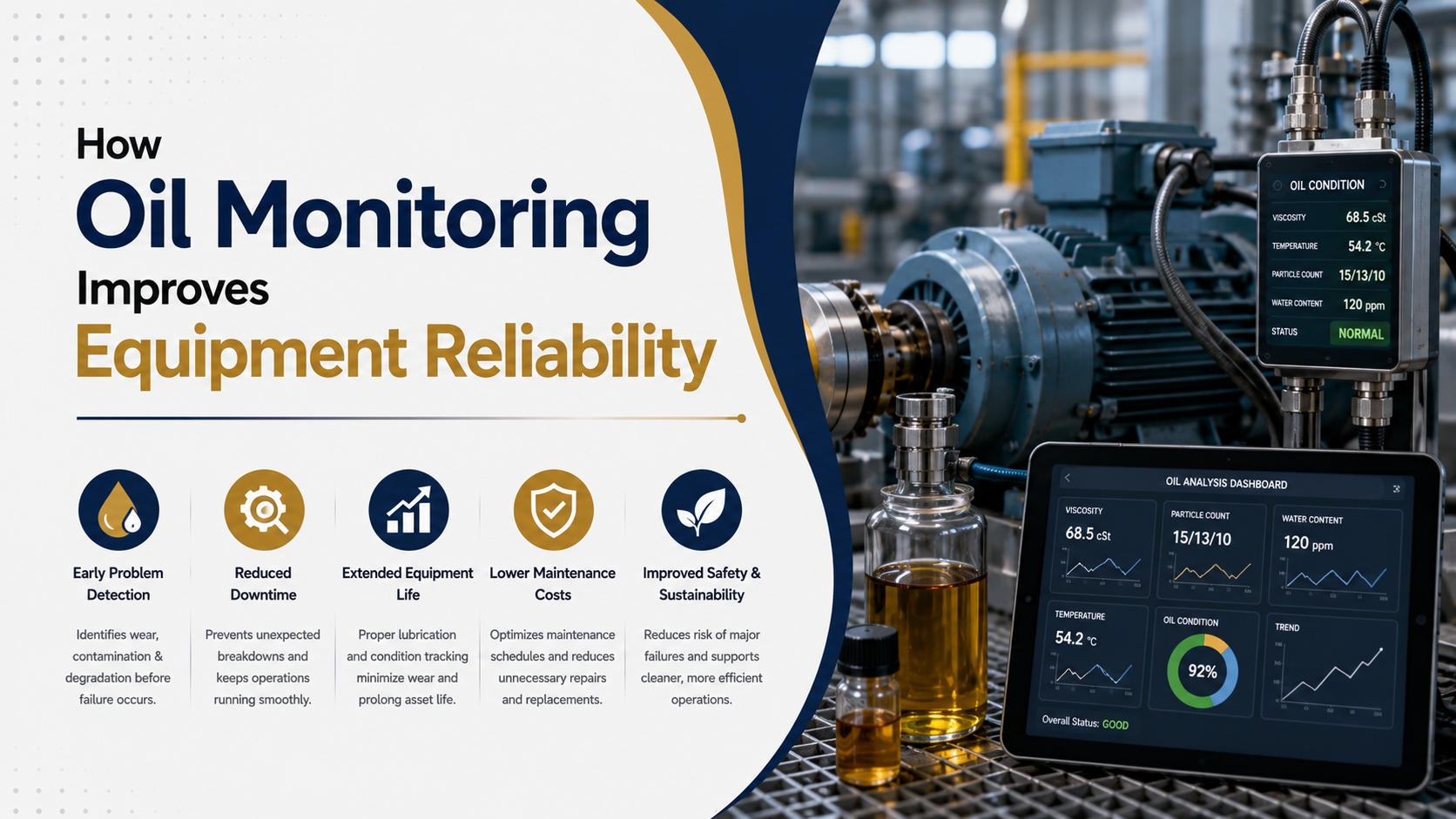
Oil condition monitoring is becoming important across industries that depend on engines, turbines, compressors, gearboxes, hydraulic systems, and heavy machinery. By analyzing lubricant quality and contamination levels, operators can detect early signs of wear, overheating, oxidation, fuel dilution, water ingress, and component damage. This helps reduce unexpected downtime, extend equipment life, and support more efficient maintenance planning.
According to MarkNtel Advisors, the oil analysis and equipment monitoring outlook states that the oil condition monitoring industry was valued at USD 1.44 billion in 2025 and is projected to grow from USD 1.51 billion in 2026 to USD 2.21 billion by 2032. The study estimates a CAGR of around 6.55% during 2026–2032, supported by hardware adoption, oil and gas applications, North America’s strong share, and predictive maintenance demand.
Predictive Maintenance Supports Adoption
Traditional maintenance often follows fixed schedules or responds after equipment failure. Oil condition monitoring supports predictive maintenance by showing whether lubricant and machine conditions are changing before visible breakdown occurs. This allows maintenance teams to replace oil, filters, bearings, seals, or other components based on actual condition rather than assumptions.
This approach is useful where equipment downtime is costly. Industrial plants, refineries, mines, marine fleets, utilities, and transport operators can use oil analysis to reduce emergency repairs and improve asset availability. Better data also helps teams prioritize maintenance budgets and avoid unnecessary oil changes.
Hardware Holds the Largest Share
Hardware accounted for around 62% share in 2026, according to the shared study. This category includes sensors, analyzers, particle counters, sampling devices, wear debris monitors, viscosity meters, and related testing equipment. Hardware remains essential because accurate monitoring begins with reliable measurement of oil properties and contamination indicators.
On-site devices can provide quick results, while laboratory systems offer deeper analysis. Many operators use both approaches depending on equipment criticality, sample frequency, and required detail. Hardware selection depends on accuracy, durability, calibration needs, operating environment, integration capability, and ease of use for maintenance personnel.
Oil and Gas Remains a Key User
Oil and gas accounted for around 27% share in 2026, making it the leading end-user segment in the report. The sector uses pumps, compressors, turbines, drilling equipment, engines, gearboxes, and hydraulic systems that operate under demanding conditions. Lubricant degradation or contamination can affect safety, production continuity, and repair costs.
Oil condition monitoring helps operators track equipment health in upstream, midstream, and downstream operations. Refineries, pipelines, offshore platforms, drilling rigs, and processing facilities can benefit from early fault detection. The International Energy Agency’s oil sector analysis provides broader context on the importance of reliable energy operations, where equipment performance remains central to continuity.
North America Shows Strong Demand
North America accounted for approximately 38% share in 2026, according to the shared report. The region’s position is supported by industrial automation, mature oil and gas operations, power generation, transportation fleets, mining activity, and strong adoption of predictive maintenance technologies. Companies in the region often use monitoring tools to manage asset reliability and regulatory expectations.
Industrial users in North America also have access to testing laboratories, specialized service providers, sensor manufacturers, and advanced maintenance software. This ecosystem supports wider use of oil monitoring across large facilities and distributed equipment fleets. Strong technical support can make implementation easier for complex operations.
Contamination Detection Prevents Damage
Contamination is one of the most common causes of lubricant-related failure. Water, dirt, metal particles, coolant, fuel, soot, and process chemicals can reduce oil performance and accelerate wear. Monitoring programs test for these contaminants so maintenance teams can identify leaks, seal failures, filtration issues, or abnormal wear patterns.
The U.S. Department of Energy’s operations and maintenance guidance emphasizes maintenance practices that improve equipment reliability and energy performance. In oil monitoring, consistent sampling and interpretation help operators identify small problems before they become expensive failures.
Laboratories Provide Detailed Analysis
Laboratory testing remains important for detailed oil analysis. Labs can measure viscosity, acid number, base number, oxidation, nitration, particle count, elemental metals, moisture, and additive depletion. These results help determine whether oil is still suitable for use or whether equipment components may be wearing abnormally.
A structured sampling program is necessary for reliable results. Samples should be taken from consistent locations, under similar operating conditions, and at suitable intervals. Poor sampling can create misleading results. Maintenance teams also need historical data because trends are often more useful than single readings.
Digital Monitoring Improves Response
Connected sensors and digital platforms are improving oil condition monitoring by providing faster access to equipment data. Online sensors can track parameters such as moisture, viscosity, temperature, dielectric properties, and particle concentration. When connected with maintenance systems, alerts can help teams respond quickly to changing conditions.
Digital tools can also support fleet-wide monitoring. Mining companies, transportation operators, marine fleets, and industrial plants can compare equipment performance across sites. However, digital monitoring still requires expert interpretation. A sensor warning should lead to inspection, confirmation, and corrective action rather than automatic conclusions.
Competition Reflects Technical Expertise
The report notes that the top five players account for around 32% share, indicating a competitive environment involving sensor manufacturers, laboratory service providers, lubricant companies, testing equipment suppliers, and industrial maintenance firms. Competition is shaped by accuracy, reporting quality, service coverage, software capability, and industry specialization.
Customers often value providers that offer both testing and interpretation. Oil analysis data can be technical, so clear reports and practical recommendations are important. Strong providers help clients understand whether action is urgent, whether the lubricant is still usable, and whether equipment inspection is needed.
Outlook for Oil Condition Monitoring
Oil condition monitoring demand is being shaped by predictive maintenance, hardware adoption, oil and gas applications, North America’s industrial base, contamination detection, and digital asset management. The report figures indicate steady growth through 2032 as organizations work to reduce downtime and improve equipment reliability.
The long-term direction will depend on sensor accuracy, service availability, maintenance skills, data integration, and the ability to turn oil analysis results into practical decisions. As industries place greater emphasis on asset performance and cost control, oil condition monitoring will remain important for protecting machinery and improving operational resilience.