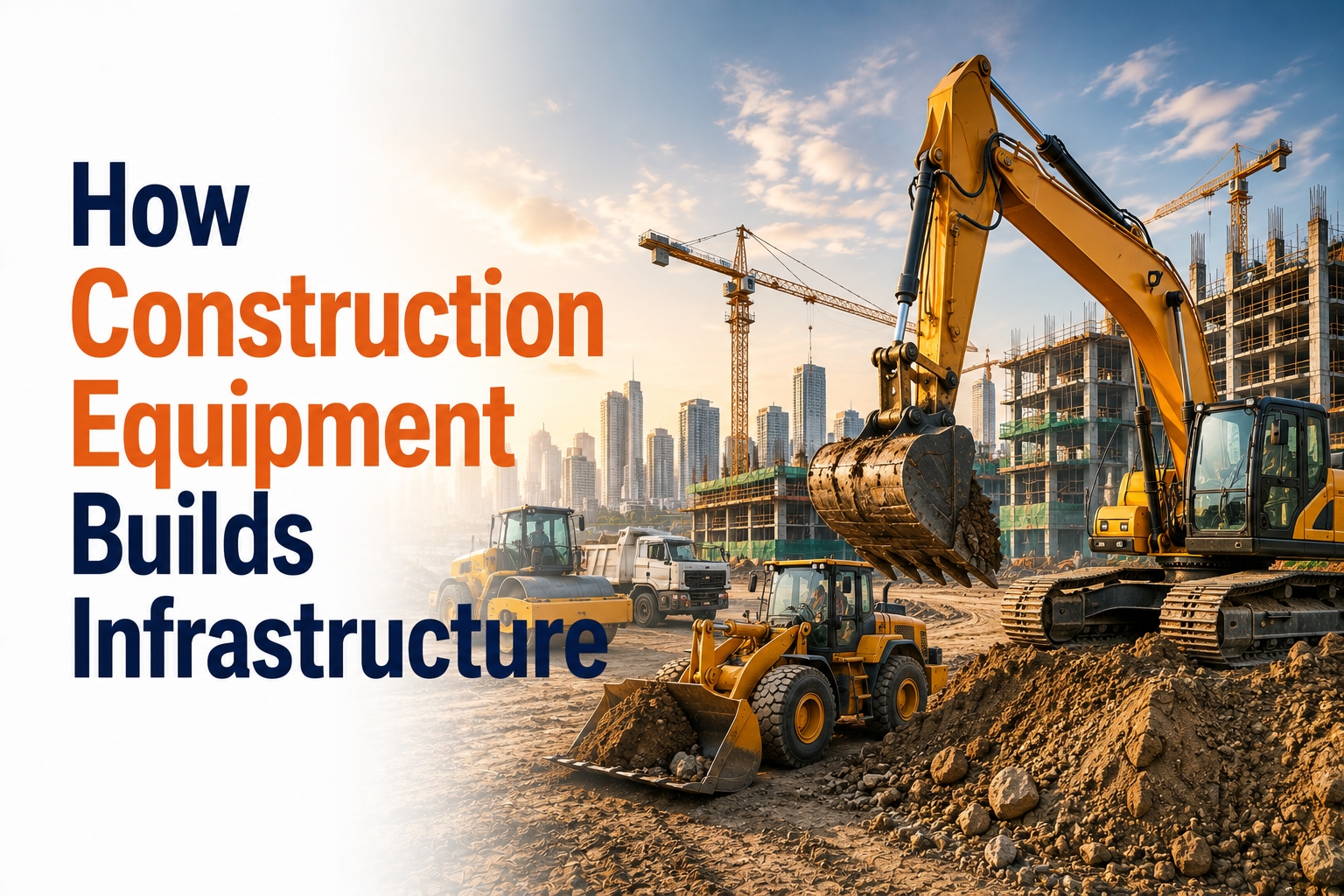
Construction equipment enables contractors to complete earthmoving, lifting, excavation, material handling, roadbuilding, demolition, and concrete work efficiently. Excavators, loaders, bulldozers, graders, cranes, compactors, dump trucks, and related machines support residential buildings, commercial facilities, highways, railways, airports, utilities, mines, and industrial projects. Their productivity and versatility make them essential wherever large quantities of soil, materials, or structural components must be moved safely.
A recent study by MarkNtel Advisors highlights that the global construction equipment sector was valued at USD 181.17 billion in 2025. It is projected to reach USD 218.4 billion by 2032, registering a CAGR of 3.17% during 2026–2032. This growth reflects infrastructure investment, urban development, equipment replacement, road construction, mining activity, and increasing adoption of automated machinery.
Infrastructure Projects Drive Equipment Use
Transport, energy, water, housing, and industrial projects require equipment suited to different ground conditions, materials, and construction stages. Excavators prepare sites and trenches, while loaders move soil and aggregates. Graders shape road surfaces, compactors improve ground stability, and cranes lift heavy structural components.
Equipment selection depends on project scale, lifting capacity, operating space, terrain, fuel availability, and expected utilization. Contractors must also consider whether purchasing, leasing, or renting machinery offers the most suitable balance between capital cost, operating flexibility, and maintenance responsibility.
Automation Improves Site Productivity
Modern construction machines increasingly incorporate sensors, cameras, satellite positioning, telematics, and machine-control technologies. These systems help operators follow design specifications, monitor equipment location, measure fuel use, and reduce unnecessary material movement. Automated grading and excavation tools can also support more consistent depth, slope, and alignment.
Telematics platforms allow fleet managers to review operating hours, idle time, fault codes, and maintenance requirements across multiple sites. This visibility helps companies schedule equipment efficiently and identify underused machines. Predictive maintenance can further reduce disruption by detecting developing mechanical problems before they cause an unexpected shutdown.
Safety Remains a Core Requirement
Heavy equipment creates risks involving blind spots, unstable ground, moving parts, suspended loads, rollovers, and contact with workers or structures. Safe operation depends on trained personnel, suitable traffic controls, regular inspections, clear communication, and compliance with load and operating limits.
The OSHA equipment standard for construction requires appropriate precautions when machinery is repaired, parked, or supported. It states that loader buckets, bulldozer blades, dump bodies, and similar components must be lowered or securely blocked when they are not operating, helping prevent unintended movement during maintenance activities.
Emission Controls Shape Machinery Design
Diesel engines remain widely used because they provide the torque and durability required for demanding construction work. However, emissions from nonroad machinery have encouraged tighter engine standards and greater attention to fuel efficiency, exhaust treatment, and alternative power systems.
The U.S. Environmental Protection Agency’s heavy-equipment regulations apply to compression-ignition engines used in excavators and other construction machinery. These standards have influenced technologies such as particulate filters, selective catalytic reduction, electronic engine controls, and cleaner fuel systems.
Electric Machines Expand Equipment Options
Battery-electric construction equipment is becoming relevant for indoor projects, urban sites, underground operations, and locations with strict noise or emission requirements. Electric compact excavators, loaders, lifts, and material-handling machines can reduce direct exhaust emissions and operating noise.
Adoption depends on battery capacity, charging access, working hours, equipment size, and the availability of electrical infrastructure. Hybrid systems may provide another option for larger machines by combining engines with electric components. Contractors must compare charging downtime, acquisition costs, energy prices, and expected utilization before selecting these technologies.
Material Handling Requires Controlled Operation
Earthmoving and material-handling machines must be operated according to the conditions of each site. Uneven surfaces, overhead hazards, restricted visibility, and nearby workers can affect safe movement. The OSHA material-handling equipment requirements specifically cover loaders, bulldozers, graders, off-highway trucks, tractors, and similar earthmoving equipment, including requirements related to seat belts, brakes, and visibility.
Technology Will Guide Future Development
Construction equipment development will remain connected with infrastructure spending, urban expansion, emissions requirements, workforce safety, and digital project management. Contractors increasingly need machines that combine productivity with lower fuel use, accurate controls, dependable service support, and real-time operational data.
Equipment manufacturers that integrate automation, efficient power systems, operator-assistance features, and predictive maintenance will be better positioned to address changing project requirements. Construction machinery will remain central to turning infrastructure plans into functioning roads, buildings, utilities, and industrial facilities.