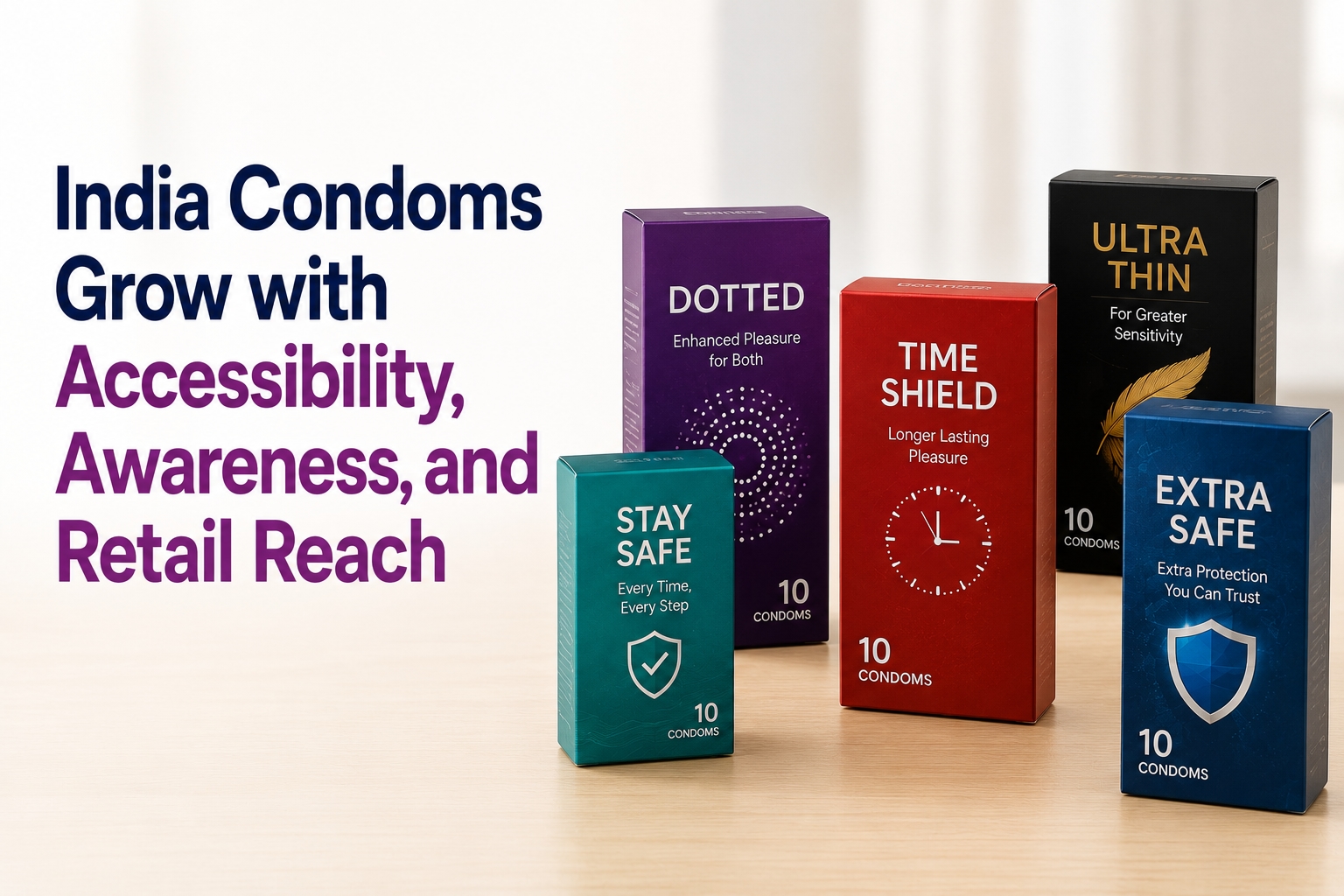
Condoms are an important part of sexual wellness and reproductive health, providing protection against unintended pregnancies and sexually transmitted infections (STIs). The category includes male condoms, female condoms, flavored variants, ultra-thin products, textured options, and specialty formats designed around different consumer preferences. In India, changing attitudes toward sexual health, increasing awareness initiatives, expanding retail access, and greater acceptance of personal wellness products are influencing category development.
A recent study by Markntel Advisor highlights that the India condom sector was valued at USD 239 million in 2025. It is projected to grow from USD 260 million in 2026 to nearly USD 417 million by 2032, registering a CAGR of 8.19% during 2026–2032. Expansion reflects rising sexual-health awareness, government initiatives, wider availability through pharmacies and digital channels, changing consumer attitudes, and increasing demand for convenient and discreet protection solutions.
Sexual Health Awareness Supports Adoption
Awareness around reproductive health and safe sexual practices is becoming increasingly important in India. Public-health initiatives, educational campaigns, healthcare programs, and improved access to information are contributing to greater understanding of contraception and STI prevention.
The National Health Mission includes family-planning services as part of India's broader reproductive-health initiatives, supporting access to contraceptive methods and counseling. These programs contribute to awareness about informed choices and encourage the use of reliable protection methods among eligible populations.
Male Condoms Remain the Leading Category
Male condoms represent the largest product category due to their widespread availability, affordability, ease of use, and established consumer acceptance. They are distributed through pharmacies, supermarkets, convenience stores, healthcare channels, online platforms, and public-health programs.
Manufacturers continue introducing variations such as flavored, textured, and ultra-thin products to address changing consumer preferences. These innovations focus on improving comfort, user experience, and product differentiation while maintaining the core purpose of protection and reliability.
Retail Expansion Improves Accessibility
Distribution networks play an important role in making condoms accessible across urban and semi-urban regions. Traditional retail channels, including pharmacies and general stores, continue to contribute significantly to product availability, while organized retail and digital commerce are creating additional purchasing options.
Online platforms provide consumers with privacy, convenience, and access to a broader range of products. The growth of e-commerce is particularly relevant for personal-care categories where consumers may prefer discreet ordering and home delivery options.
Digital Platforms Change Consumer Buying Behavior
Digital commerce is reshaping how consumers discover and purchase sexual wellness products. Online platforms allow users to compare brands, review product features, explore different variants, and purchase products without concerns related to physical-store interactions.
The expansion of India's digital economy is supporting this transition. The Ministry of Electronics and Information Technology highlights the country's ongoing digital transformation through initiatives focused on digital services, connectivity, and technology adoption. This environment is creating opportunities for consumer wellness brands to strengthen online engagement and direct-to-consumer strategies.
Younger Consumers Influence Category Development
Younger consumers are becoming increasingly important for the sexual wellness category as discussions around relationships, personal health, and preventive care become more open. Greater access to online information and changing social conversations are influencing attitudes toward contraception and wellness products.
Brands are responding by focusing on awareness-driven communication, modern packaging, product variety, and educational content. These approaches aim to make sexual wellness products more approachable while addressing consumer concerns around comfort, safety, and reliability.
Government Programs Support Contraceptive Access
Public-health initiatives continue to play a role in improving access to contraceptive products. Government distribution programs and healthcare services support family-planning objectives by making contraceptive methods available through healthcare facilities and community-level programs.
The National Health Mission's family planning program focuses on expanding access to contraceptive choices, improving counseling services, and supporting reproductive-health outcomes. Such initiatives complement private-sector distribution by reaching diverse population groups.
Product Innovation Expands Consumer Choices
Manufacturers are investing in product innovation to address different user preferences. Ultra-thin condoms focus on improved sensation, textured products emphasize experience enhancement, and flavored variants target specific consumer segments.
Packaging innovation is also becoming important as brands seek to improve product visibility and consumer engagement. Discreet packaging, premium designs, and clearer product communication can influence purchasing decisions while helping brands differentiate in a competitive environment.
Quality Standards Strengthen Consumer Confidence
Product quality and safety are critical factors in the condom category because consumers depend on consistent performance. Manufacturing standards, testing procedures, material quality, and regulatory compliance help ensure product reliability.
The Bureau of Indian Standards provides standards-related guidance for various products and materials, supporting quality frameworks across industries. Compliance with applicable standards can help manufacturers maintain consumer trust and strengthen confidence in certified products.
Challenges Around Awareness and Social Barriers
Despite increasing awareness, social hesitation and limited open discussion around sexual health can continue to influence purchasing behavior in some communities. Lack of education, misconceptions, and discomfort around discussing contraception may affect adoption rates.
Healthcare communication, educational initiatives, and responsible brand messaging can help address these challenges by promoting accurate information and encouraging informed decision-making. Expanding access through both digital and physical channels can further support wider acceptance.
Innovation Shapes Future Sexual Wellness Growth
India's condom sector is evolving through increasing awareness, digital accessibility, product innovation, healthcare initiatives, and changing consumer attitudes toward sexual wellness. The projected increase from USD 260 million in 2026 to nearly USD 417 million by 2032 reflects continued demand for accessible and reliable protection solutions.
Future development will remain connected with awareness programs, retail expansion, e-commerce growth, product diversification, quality standards, and consumer education. As conversations around reproductive health become more open, condom products are likely to remain an important component of India's broader personal wellness landscape.



