
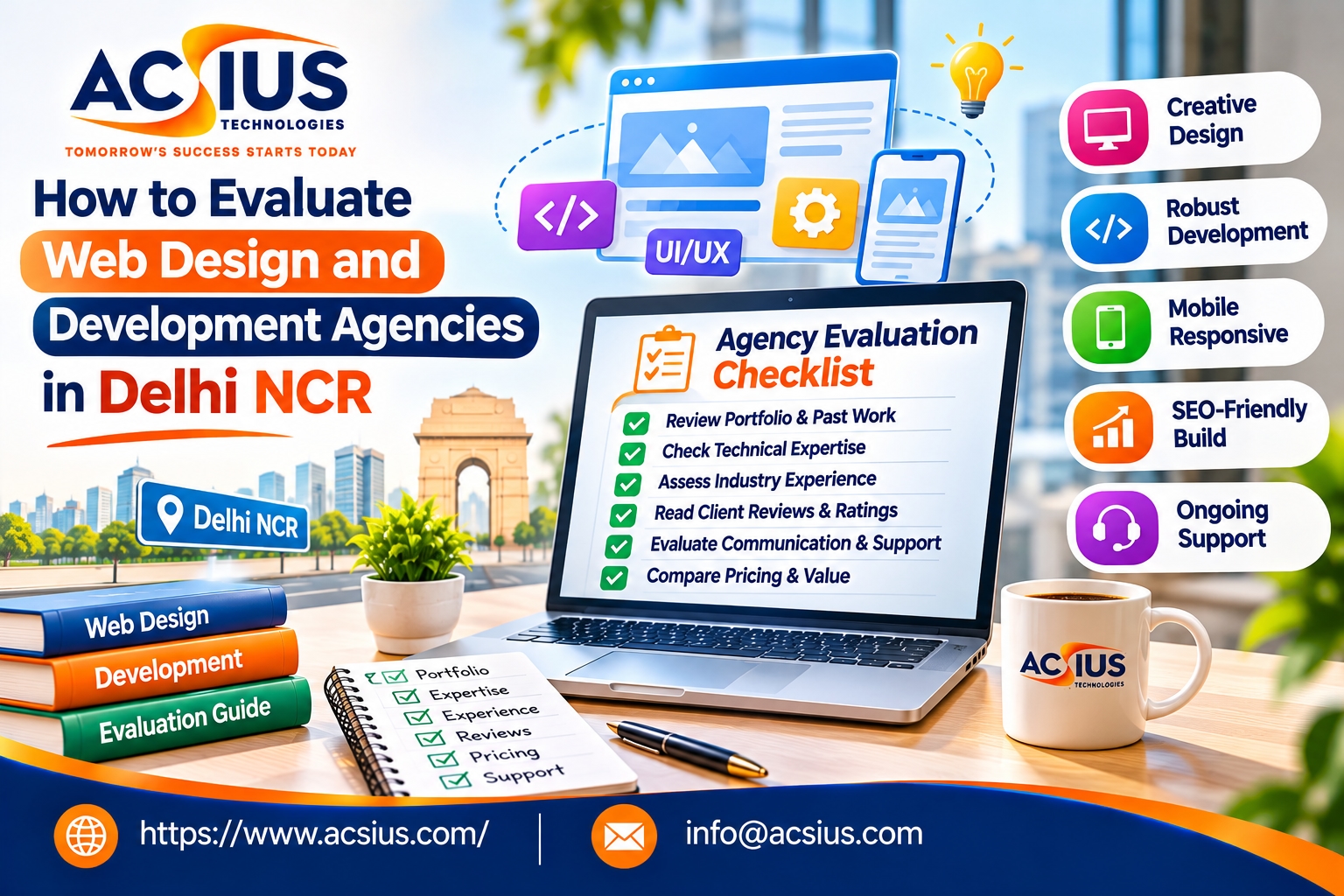
Delhi NCR is one of the busiest markets for web agencies in India. Between Delhi itself, Noida, Gurugram, Ghaziabad, and Faridabad, there are thousands of studios, freelancers, and development companies competing for the same projects. That choice is good news, but it also makes the decision harder. Websites look similar on the surface, proposals use the same buzzwords, and almost every agency says it is fast, creative, and affordable.
This guide gives you a simple way to evaluate agencies fairly. Instead of relying on a polished sales call, you will learn how to check real work, test technical skill, understand pricing, and spot warning signs before you sign anything. The advice applies whether you are building a first business website, replacing an outdated one, or launching an online store.
Start With Your Own Requirements
You cannot judge an agency well if you are unsure what you need. Before you speak to anyone, write a short brief that covers your business goal, target audience, must-have features, budget range, preferred timeline, and who will manage the site after launch. Add examples of websites you like and a few you dislike, with one line explaining why.
This brief does two things. It helps agencies give comparable quotes, and it quickly shows you which ones listen. If a team replies with a generic proposal that ignores your goals, that tells you a lot about how the project would go.
Check the Quality of Their Design Thinking
Good design is more than a pleasant color palette. It makes it easy for visitors to understand what you offer and take the next step. When you look at an agency's work, ask whether the layouts are clear, the text is readable, the buttons are easy to find, and the pages work well on a phone.
Pricing is part of this evaluation, but it should be about value rather than the lowest number. A company offering Affordable Web Design Services should still be able to explain what is included, how many revisions you get, how they plan mobile layouts, and how the design supports your goals. If a quote is much lower than others, ask what has been removed, such as research, custom layouts, content support, testing, or post-launch help. Low cost is fine when the scope is clear. It becomes a problem when the savings come from hidden gaps.
Review the Portfolio Like an Investigator
Every agency shows a portfolio, but screenshots tell only part of the story. Use this approach to read it properly:
Open the live sites on both desktop and mobile. Notice speed, broken elements, and how smooth navigation feels.
Look for relevant experience. A project similar to yours in industry, size, or features usually means fewer surprises.
Check variety. If every site looks nearly identical, the agency may rely on one template.
Ask about their role. Did they handle design, development, content, and SEO, or only part of the work?
Request outcomes. Ask about improvements in leads, sales, speed, or search visibility, and whether past clients can confirm them.
An honest agency will happily explain what worked and what they would change. Be cautious if they cannot show live examples or avoid questions about their exact contribution.
Test Their Technical Ability
You do not need to be technical to ask useful questions. The aim is to see whether the agency recommends technology based on your needs or only on what is convenient for them.
Ask which platform they would choose for your project and why. A good answer compares options like WordPress, Shopify, WooCommerce, or custom code, and explains trade-offs in cost, flexibility, security, and maintenance. Ask who will own the domain, hosting accounts, source files, and admin access after launch. The answer should be you.
It also helps to understand how they handle speed, security, backups, and testing across browsers and devices. For projects that need custom features, integrations, or e-commerce functionality, look for providers of Website Development Services India who can describe their coding standards, staging process, and long-term support in plain language. Clear answers suggest real experience. Vague or evasive answers suggest you should keep looking.
Make Sure SEO Is Built In, Not Added Later
A beautiful website that search engines cannot understand will struggle to attract visitors. During evaluation, ask how the agency handles the basics of search-friendly building:
Logical page structure, clean URLs, and internal linking.
Fast loading pages and good mobile performance.
Proper title tags, headings, image alt text, and structured data.
Redirect planning if you are replacing an existing site, so current rankings are protected.
XML sitemaps, indexing checks, and analytics setup.
Local search basics if you serve customers in Delhi NCR, such as consistent business details and location pages.
Be cautious about anyone who guarantees first-page rankings. Search engines make their own decisions, and honest agencies talk about foundations, content quality, and steady improvement instead of promises.
Look for Real Signs of Experience and Trust
The same qualities that search engines look for in websites, experience, expertise, authority, and trust, are useful when you judge an agency.
Experience: How long have they been working, and what kinds of projects have they completed? Can they describe a project that went wrong and what they learned?
Expertise: Do they have clear roles such as designers, developers, project managers, and SEO specialists? Who will be your main contact?
Authority: Do they share helpful articles, case studies, or talks that show real knowledge, rather than only advertising?
Trust: Do they list a real address, phone number, company details, and clear terms? Are their reviews believable and consistent across platforms?
Read reviews on Google and independent directories, but look at patterns rather than individual comments. Then ask for two or three client references and call them. Ask whether the project finished on time, whether there were surprise costs, how support felt after launch, and whether they would hire the agency again.
Compare Process and Communication
Communication during the sales stage is often a preview of the project itself. Notice whether the agency replies promptly, answers your actual questions, and explains things without hiding behind jargon.
A dependable process usually includes discovery, planning, design, development on a staging site, testing, launch, and support. Ask how often you will receive updates, which tools they use for feedback, how many revision rounds are included, and what happens if requirements change halfway. Having these answers in writing prevents misunderstandings later.
If you need ongoing development support after the first build, such as new features, updates, or performance improvements, it may be more practical to hire professional wordpress developers than to start a new project each time. Ask how developers are supervised, how code quality is reviewed, how communication works day to day, and what happens if a team member becomes unavailable. A flexible arrangement can give you steady skills without the cost of a full in-house team.
Understand the Quote and the Contract
Two quotes can look similar and still cover very different work. Ask for an itemized proposal and compare it line by line. It should state the number of pages and templates, design revisions, content and image responsibilities, features and integrations, SEO setup, testing, training, hosting and domain costs, post-launch support, and applicable taxes such as GST.
Then read the contract. Check that it clearly covers payment milestones, delivery timelines, ownership of design files and code, confidentiality, change request rules, a warranty or bug-fix period, and termination terms. Avoid paying the full amount upfront. A staged payment plan tied to milestones protects both sides.
Red Flags to Watch For
Some signs appear repeatedly in disappointing projects:
Guaranteed rankings or instant traffic.
Extremely low prices with unclear scope.
No live portfolio examples or references.
Pressure to sign quickly with short-term discounts.
The agency keeps control of your domain, hosting, or source files.
Pirated themes or plugins, or copied content.
No discussion of security, backups, or maintenance.
Vague answers about who will actually work on your project.
One warning sign may have a harmless explanation. Several together are a good reason to move on.
A Simple Scorecard for Agency Evaluation
Score each shortlisted agency from 1 to 5 in these areas and compare totals:
Treat the result as a guide, not a final verdict. If two agencies score closely, choose the one that listened better and explained more clearly.
Final Thoughts: Look for a Partner, Not Just a Quote
The best agency for your business is the one that understands your goals, explains things clearly, builds with quality, protects your search visibility, and supports you after launch. Start with a clear brief, inspect real work, ask direct technical and SEO questions, check references, compare itemized proposals, and trust honesty over hype. A little extra care now can save months of frustration and a significant amount of money later.
If you are looking for a team that combines thoughtful design, reliable development, and search-friendly planning, ACSIUS can help you define your requirements, build a fast and user-friendly website, and plan for steady growth. Get in touch with ACSIUS to discuss your project and see how a transparent, results-focused approach can support your business.




