
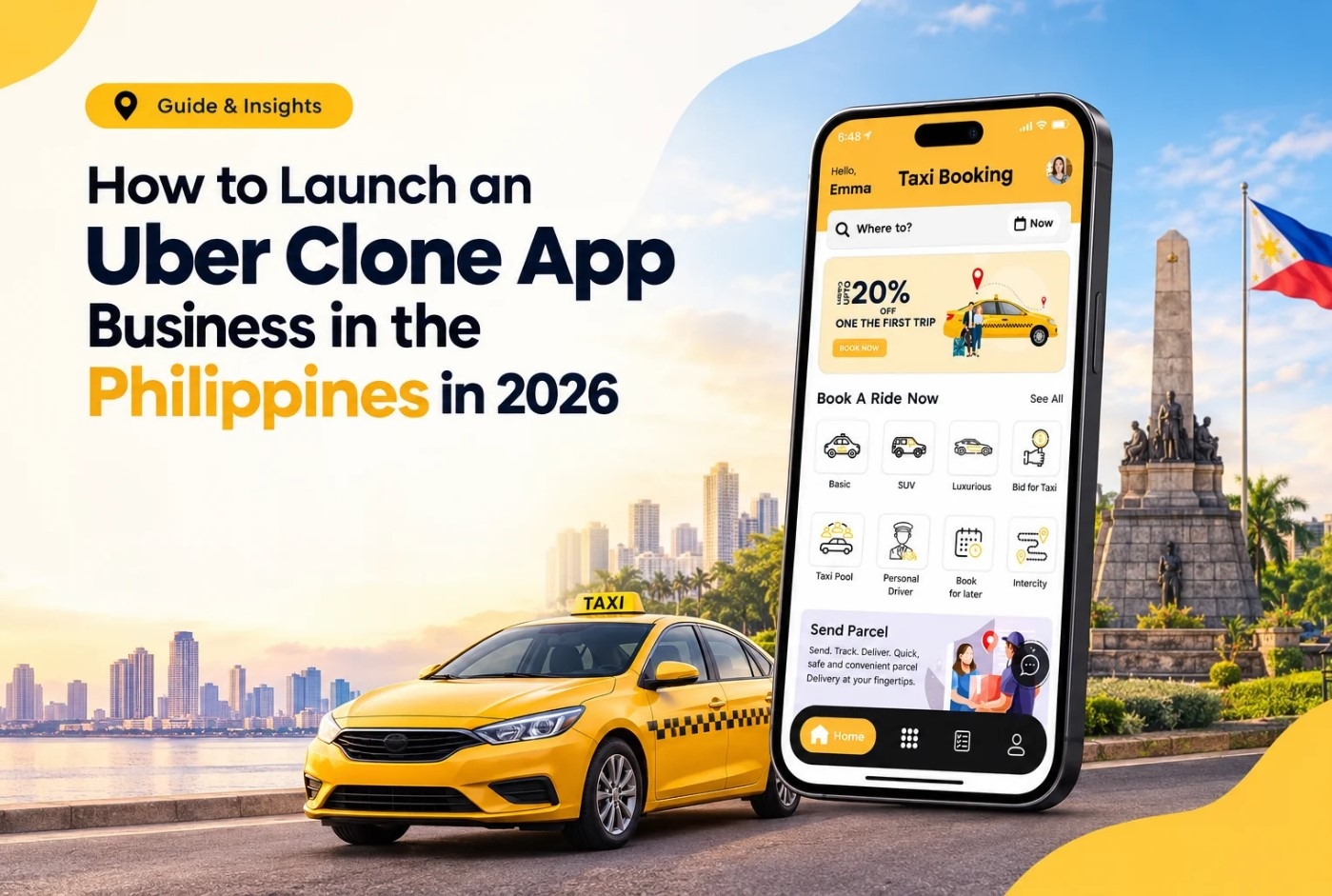
Starting a ride-hailing company involves several decisions that can shape its success long before the first passenger books a trip. Entrepreneurs must decide who their customers will be, how drivers will join the platform, which services to offer, and how the business will stand out in a competitive market.
For businesses entering the Philippine market, an Uber clone app offers a way to establish a branded ride-booking service using a customizable software solution. Instead of building every application component from scratch, entrepreneurs can start with an existing framework and adapt it to their business requirements.
However, the software is only one part of the process. Driver availability, passenger experience, payment convenience, marketing, and day-to-day operations all influence whether customers continue using the service.
This guide explains how to plan, develop, and launch an Uber clone app business in the Philippines in 2026.
1. Find Your Target Market
Before investing in app development, determine which customers you want to serve. A new ride-hailing business does not necessarily need to offer every transportation service from the beginning.
Metro Manila may provide opportunities for daily commuting, business travel, and airport transfers. Entrepreneurs can also investigate demand in Cebu City, Davao City, and other locations where a focused transportation service could meet local needs.
Consider these potential service categories:
Daily transportation: Convenient rides for commuters travelling to work, school, or other destinations.
Airport transfers: Advance bookings for travellers who need dependable transportation.
Corporate rides: Transportation arrangements for businesses and their employees.
Premium transportation: Higher-comfort rides for customers seeking a more personalized experience.
Taxi booking services: Digital reservation facilities for existing taxi operators.
Research your preferred market before selecting a category. Speak with potential passengers and drivers, review competitor services, and identify problems that customers experience when arranging transportation.
For example, your research may reveal that customers value advance reservations, clearer pickup instructions, or easier access to local transport providers.
Use these findings to develop a service proposition that gives passengers a practical reason to choose your platform.
2. Choose a Business Model
Your business model determines how the platform operates, who provides the vehicles, and how revenue is generated.
Independent ride-hailing platform
You operate under your own brand and build a network of drivers to fulfil passenger requests. This approach gives you greater control over the customer experience but requires ongoing investment in driver recruitment, marketing, and support.
Fleet partnership model
You collaborate with transport operators or fleet owners who can help provide vehicles and drivers. Existing industry relationships may make it easier to establish an initial network.
White-Label Ride-Hailing App
A white-label ride-hailing app allows entrepreneurs to launch a transportation service under their own brand using an existing, customizable software solution. The platform can be adapted with business-specific branding, booking features, payment options, and administrative tools, helping businesses establish their digital presence without developing every component from scratch.
Revenue opportunities may include commissions on completed rides, applicable booking fees, and corporate transportation contracts, depending on the business model and relevant requirements.
Compare the available solutions based on customization options, ownership and licensing terms, ongoing costs, and scalability before choosing a platform for your ride-hailing business in the Philippines..
3. Prepare Your Business for Launch
Business registration and transportation-related compliance should be part of your initial planning rather than something addressed after development.
In the Philippines, ride-hailing operations may involve requirements relating to business registration, transportation service authorization, driver eligibility, vehicle documentation, and passenger protection. The requirements depend on how your business is structured and the services it intends to provide.
Before launch, establish a plan for:
Registering the business under an appropriate structure.
Determining which transportation permissions apply to your operating model.
Checking driver credentials and relevant vehicle documents.
Organizing appropriate insurance and operational records.
Meeting applicable tax and invoicing obligations.
Protecting customer information and payment data.
Preparing clear booking, cancellation, and complaint policies.
The Land Transportation Franchising and Regulatory Board (LTFRB) is an important authority to consider when assessing a ride-hailing operation in the Philippines.
Make compliance part of your business preparation and allow sufficient time for the applicable procedures. An app development provider can supply the software, but purchasing an application does not automatically authorize a company to operate a transportation service.
4. Select an Uber Clone App Development Solution
Once your business model is established, decide how to build the technology behind your service.
Custom development allows you to create an application around specific operational requirements. However, it involves designing, building, testing, and maintaining the complete system.
A ready-made Uber clone app provides a prebuilt ride-booking framework that can be adapted to your branding and preferred features. Depending on the solution, this approach may reduce the amount of development work required before launch.
When comparing providers, evaluate the following:
Passenger and driver applications.
An administrative dashboard for managing operations.
Booking management and driver dispatch.
GPS tracking and navigation integration.
Payment gateway compatibility.
Customization and future expansion options.
Software maintenance and technical support.
Source-code access and licensing terms.
Request a demonstration that shows how a passenger books a ride, how the driver receives the request, and how the trip is completed.
Ask for a clear breakdown of included features, additional development charges, recurring fees, and support arrangements. This will help you compare solutions based on their overall suitability rather than their advertised feature count.
5. Build the Essential App Features
Your platform should provide separate tools for passengers, drivers, and administrators. Each component supports a different part of the ride-booking process.
Passenger application
The passenger app should make it easy to request transportation and follow the booking from confirmation to arrival.
Important features include:
Simple registration and secure login.
Pickup and destination selection.
Fare estimates before booking.
Real-time driver location.
Driver and vehicle details.
Booking notifications.
Available payment options.
Ride history and receipts.
Ratings, feedback, and customer support.
Emergency assistance and trip-sharing options.
A straightforward interface can make the booking experience easier for new users. Avoid unnecessary steps that slow down the process of requesting a ride.
Driver application
Drivers need practical tools to manage bookings and monitor their activity. Essential functions include ride requests, availability settings, navigation, trip status updates, earnings summaries, and access to customer support.
Document management can also help the business organize driver onboarding and maintain relevant records.
Admin dashboard
The administration dashboard gives the business visibility into its daily operations. Useful capabilities include driver management, customer records, booking monitoring, complaint handling, service-area configuration, and performance reports.
These functions help administrators identify recurring problems and make informed decisions about service quality and operational improvements.
6. Integrate Suitable Payment and Navigation Options
Payment convenience should reflect the preferences of your intended customers.
Depending on your target audience, you may consider cash payments, digital wallets such as GCash and Maya, or card payments through compatible providers. Availability and onboarding conditions can vary, so choose integrations that support your business requirements.
Review transaction charges, settlement arrangements, refund procedures, and payment security before selecting a provider.
Navigation is equally important. Your chosen mapping service should provide suitable coverage across your operating areas and help drivers locate passengers accurately.
Test common pickup situations around office buildings, shopping centres, residential communities, and transport terminals. Allow passengers to share additional pickup instructions when a map pin does not identify the most convenient meeting point.
These practical details can reduce confusion and help improve the overall booking experience.
7. Recruit and Retain Drivers
A ride-hailing business needs enough available drivers to serve customers consistently. If passengers regularly experience long waits or unsuccessful bookings, they may turn to other transportation options.
Begin building your driver network before the public launch. Connect with eligible drivers, fleet owners, and transport operators who may be interested in joining the platform.
Develop a clear onboarding process that explains the application, booking procedures, required documentation, payment arrangements, and service expectations.
Driver retention also deserves attention. Provide accessible support, transparent earnings information, clear operational policies, and timely communication when problems arise.
Monitor booking acceptance, completed trips, cancellations, and pickup delays. These indicators can help you understand whether your driver network is sufficient for the areas you serve.
It is generally more practical to establish reliable coverage in a limited area before expanding across multiple cities.
8. Promote Your Ride-Hailing Business
Your marketing strategy should explain why passengers and drivers should consider joining your platform.
Start with a professional website that describes your services, coverage area, booking process, and customer support options. Maintain active social media profiles and publish content that answers common transportation questions.
Potential promotional strategies include:
Passenger referral programmes.
Driver recruitment campaigns.
Partnerships with hotels and local businesses.
Corporate transportation arrangements.
Local search engine optimization.
Introductory offers for selected service areas.
Social media campaigns aimed at your target customers.
Choose marketing activities based on the audience you want to reach. For example, corporate partnerships may be more useful for a business focused on scheduled employee transportation than a broad consumer advertising campaign.
Track completed bookings, repeat customers, referral activity, cancellation rates, and customer acquisition costs. These measurements provide a clearer picture of business performance than app downloads alone.
Avoid promoting availability in areas where your driver network cannot consistently fulfil requests.
9. Plan Your Investment and Revenue
The investment required to launch an Uber clone app business in the Philippines depends on your chosen software, customization needs, operating model, and initial service area.
Your financial plan should cover both setup expenses and ongoing business costs.
Expense category | Items to consider |
|---|---|
App development | Software, customization, and testing |
Business preparation | Registration, professional advice, and applicable compliance processes |
Technology | Hosting, mapping, notifications, and security |
Driver operations | Recruitment, onboarding, and support |
Marketing | Advertising, referrals, and promotional campaigns |
Ongoing operations | Maintenance, administration, and customer service |
Ask your development provider for a detailed quotation and clarify which features are included in the proposed package.
For revenue planning, estimate how many rides the business could realistically complete and how much revenue it could retain from each booking under its chosen operating arrangement.
Account for payment processing, marketing, customer support, driver incentives, and technology expenses before estimating profit.
Prepare several financial scenarios to understand how changes in demand or operating costs could affect the business. This approach can help you make more informed decisions about the initial investment and future expansion.
10. Test the Platform Before Expanding
Before opening the service to a wider audience, conduct a controlled launch with a limited group of users and drivers.
Test registration, booking requests, driver matching, location tracking, notifications, payment processing, cancellations, and customer support. Check how the application performs under different network conditions and on the devices your intended customers use.
Collect feedback from early users and look for recurring issues. Problems with pickup locations, confusing instructions, or slow responses should be addressed before the business invests heavily in expansion.
Establish measurable targets for booking completion, driver availability, response times, and customer satisfaction.
Once the initial service operates consistently and demonstrates repeat demand, you can evaluate expansion into additional areas or new ride categories.
Conclusion
Launching an Uber clone app business in the Philippines in 2026 requires a practical combination of technology, market research, operational planning, and customer acquisition.
The first priority is to identify a specific transportation need and build a service around it. From there, choose an appropriate business model, prepare for the applicable requirements, select a suitable app development solution, and establish a dependable driver network.
A focused launch allows you to test your assumptions before committing to a larger operation. By monitoring customer feedback, managing expenses, and improving service quality, you can build a stronger foundation for a ride-hailing business that is prepared to grow.
Frequently Asked Questions
1. Can I start an Uber clone app business in the Philippines in 2026?
Yes, you can explore this business opportunity, provided you meet the registration, transportation, and operating requirements that apply to your business model. Prepare these requirements before launching the service.
2. What features are needed for an Uber clone app?
The core features typically include passenger and driver applications, ride booking, driver matching, GPS tracking, fare estimates, payment options, trip history, customer support, and an administrative dashboard.
3. Is a ready-made Uber clone app suitable for a startup?
A ready-made solution may be suitable if it provides the necessary features, customization options, technical support, and flexibility for future growth. Review its licensing terms and ongoing costs before making a decision.
4. How can I attract drivers to my ride-hailing platform?
Connect with eligible drivers and transport operators, explain the benefits of joining your platform, provide a straightforward onboarding process, and maintain clear payment and support policies.
5. Can I expand my ride-hailing business to other cities?
Yes. Expansion should depend on local demand, driver availability, operating resources, and the requirements applicable to each service area. Establish consistent service quality in your initial market before moving into additional locations.