
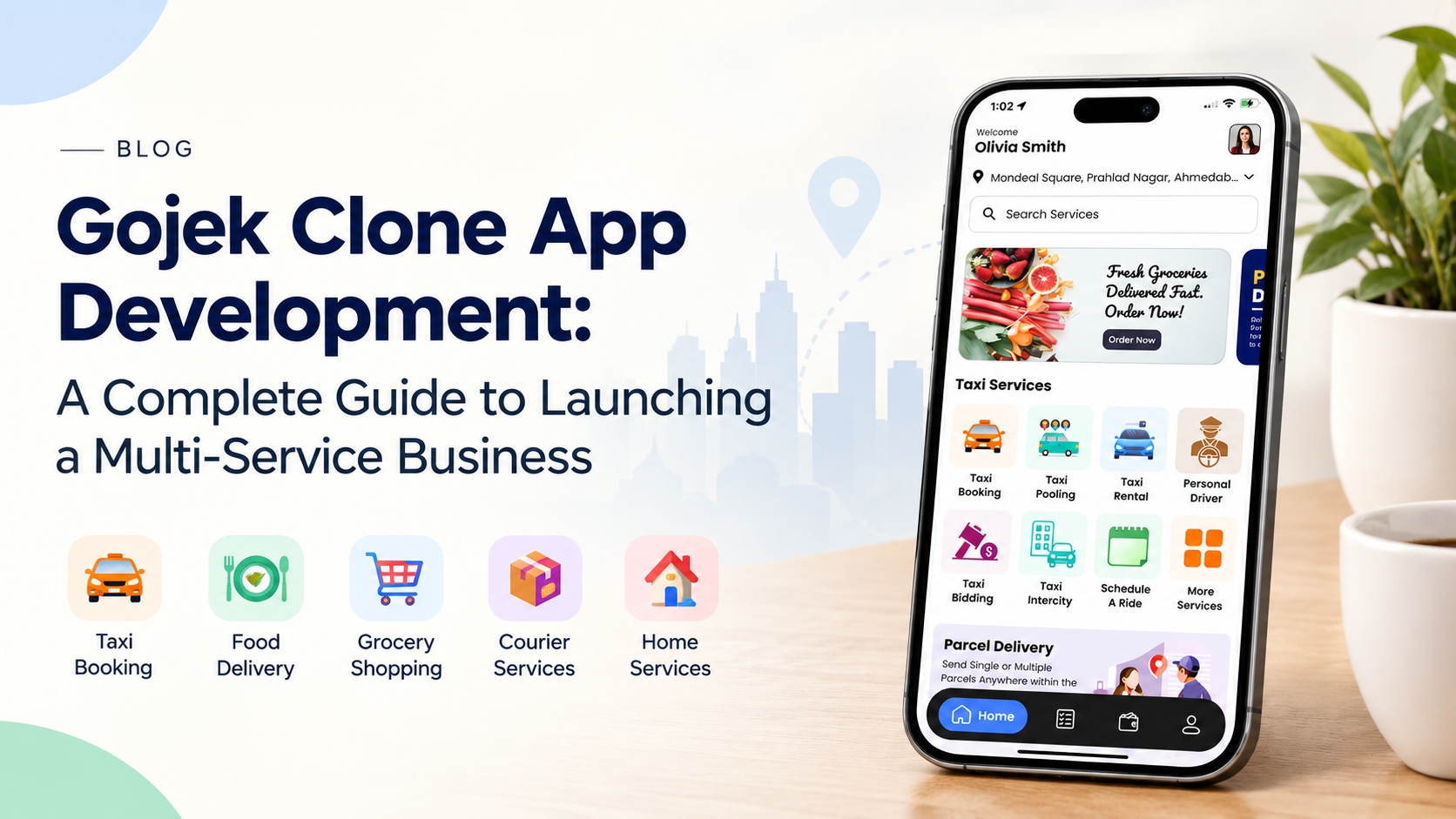
Launching a multi-service business requires more than offering several services through one platform. Customers expect convenient bookings, transparent pricing, reliable service providers, and a smooth experience whenever they use an application. For entrepreneurs, managing these expectations through separate systems can become complicated as the business grows.
A multi-service application brings different services together under one digital platform. Instead of developing individual applications for transportation, food delivery, grocery shopping, and home services, businesses can allow customers to access multiple options through a single interface.
Gojek clone app development follows this business model, providing a framework for entrepreneurs who want to establish an on-demand service platform. However, building a successful business requires more than replicating existing features. Entrepreneurs must understand their target market, choose suitable services, establish reliable operations, and select technology that supports future growth.
What Is Gojek Clone App Development?
A Gojek clone app is a multi-service application model inspired by the super app concept. It allows businesses to combine several on-demand services within one digital ecosystem, giving customers access to different solutions without installing multiple applications.
Depending on the business model, services may include ride-hailing, food delivery, grocery shopping, courier bookings, beauty appointments, and home maintenance.
A typical platform consists of four main components:
Customer app: Allows users to browse services, make bookings, track orders, pay, and review their experiences.
Service provider app: Enables drivers, delivery partners, and professionals to manage requests, update availability, and monitor earnings.
Merchant panel: Helps restaurants, retailers, and participating businesses manage listings, prices, orders, and availability.
Admin dashboard: Allows business owners to manage users, providers, bookings, commissions, payments, and customer support.
Each component serves a different purpose, but all work together to support the overall business. The exact structure depends on the services offered and the operational requirements of the target market.
Why Launch a Multi-Service Business?
A multi-service business can create opportunities by addressing several everyday customer needs through one platform. Instead of depending entirely on a single service category, entrepreneurs can develop a business model that serves different customer requirements.
Reach a wider audience: Customers may use the same application for transportation, restaurant orders, grocery purchases, and household services. This creates opportunities to attract users with different needs.
Diversify revenue streams: Depending on the business model, revenue may come from booking commissions, delivery charges, service fees, merchant subscriptions, or promoted listings. Multiple income sources can reduce dependence on a single category.
Encourage repeat usage: A convenient application can give customers more reasons to return. Features such as saved addresses, order history, digital payments, and personalized recommendations can make repeat transactions easier.
Expand gradually: Businesses can begin with a few relevant services and introduce additional categories after establishing a reliable customer and provider network.
Nevertheless, offering more services does not automatically guarantee profitability. Each category introduces operational responsibilities, including provider recruitment, customer support, quality control, and transaction management. Expansion should be based on demand and business capacity rather than the number of services competitors offer.
Identify Your Target Market and Services
Market research should be the first step before investing in development. Entrepreneurs need to understand which problems customers experience and whether an integrated platform can solve them effectively.
Start by identifying your target location, customer groups, competitors, and available service providers. Consider the local demand for transportation, food delivery, grocery shopping, courier services, and household assistance.
Research should answer several important questions:
Which services are difficult for customers to access conveniently?
What limitations do existing platforms have?
Which payment methods are commonly used locally?
Are enough merchants and service providers available?
Can orders be fulfilled reliably during busy periods?
Use these findings to select two or three services for the initial launch. For example, a startup operating in a growing city might begin with ride-hailing, food delivery, and courier bookings.
Starting with a focused offering makes it easier to test demand, understand customer behavior, and improve operations before introducing additional services.
Essential Features of a Gojek Clone App
The features of a multi-service application should support its business objectives while making transactions simple for customers and service providers.
User registration and profiles: Customers should be able to create accounts, update personal information, save addresses, and review previous bookings. A straightforward registration process reduces unnecessary friction.
Service browsing and booking: The application should display available categories, provider details, prices, and booking options clearly. Search and filtering tools become increasingly important as the number of services grows.
Real-time tracking: Transportation and delivery services can benefit from live location tracking. Customers should receive updates about driver assignments, order progress, estimated arrivals, and completed transactions.
Payment integration: Suitable payment options may include cards, digital wallets, and cash where appropriate. The platform should handle transaction records, refunds, and service charges consistently.
Ratings and reviews: Customers should be able to rate completed transactions and share feedback. Reviews help users make informed decisions and allow administrators to identify service-quality issues.
Provider and merchant management: Drivers, restaurants, retailers, and professionals need tools suited to their responsibilities. These may include availability settings, order acceptance, service management, earnings summaries, and booking history.
Admin dashboard: Administrators need a central system to manage users, providers, commissions, service categories, promotions, complaints, and performance reports.
Customer support: In-app assistance and clear cancellation, complaint, and refund processes help maintain customer confidence.
Additional capabilities, such as loyalty programs, multilingual interfaces, subscriptions, and AI-powered recommendations, can be introduced when customer demand and business activity justify them.
Choose the Right Development Approach
The development approach affects customization, launch time, maintenance requirements, and future scalability. Entrepreneurs should compare the available options before making a decision.
Custom app development involves building the platform according to specific business requirements. It provides greater control over the interface, architecture, workflows, and integrations. However, developing every component from scratch can require considerable time, technical expertise, and resources.
A ready-made Gojek clone solution provides an existing foundation for a multi-service application. Depending on the solution, it may include customer and provider apps, merchant tools, booking features, and an administrative dashboard. Businesses can configure supported services and customize the platform to meet their needs.
Before choosing a solution, review its customization options, source code access, security practices, scalability, documentation, and maintenance arrangements. Confirm that the features and integrations required for your business are actually supported.
A hybrid approach combines existing software components with custom development. For example, a business might use an established booking system while developing specialized features for merchant management or customer loyalty.
The best option depends on the business model, available budget, launch timeline, and level of technical control required.
Revenue Models for a Multi-Service Business
A clear revenue model helps entrepreneurs understand how the platform will generate income and cover operational expenses.
Transaction commissions: The platform receives an agreed percentage of completed bookings or orders. Commission rates may differ across service categories.
Delivery and booking fees: Customers may pay separate charges for transportation, delivery, or specific services. These fees should be displayed clearly before checkout.
Merchant subscriptions: Restaurants, retailers, or service providers may pay recurring fees for access to selected platform features.
Promoted listings: Participating businesses can pay for additional visibility within relevant categories, provided sponsored placements are clearly identified.
Membership programs: Customers may pay a recurring fee in exchange for benefits such as eligible discounts or reduced delivery charges.
Businesses do not need to introduce every revenue stream immediately. A simple commission structure and transparent service fees may be easier to manage during the early stages.
Before setting prices, calculate provider payouts, payment processing charges, refunds, customer acquisition expenses, support costs, and promotional spending. This helps determine whether each service can operate sustainably.
Steps to Develop and Launch the Application
A structured development process helps businesses avoid unnecessary expenses and prepare for real-world operating conditions.
Step 1: Define business requirements. Identify your target audience, initial service categories, operating locations, pricing rules, and expected customer journey. Establish measurable goals for completed bookings, repeat usage, and service availability.
Step 2: Design the user experience. Create interface designs for customers, providers, merchants, and administrators. Make sure users can find services, understand pricing, and complete transactions without confusion.
Step 3: Develop the platform. Build or configure the required applications and backend systems. Integrate mapping, notifications, payment processing, and identity verification where necessary.
Step 4: Test essential workflows. Check bookings, cancellations, refunds, payment failures, location updates, and notifications. Test performance across supported devices and different network conditions. Security and data protection should also be reviewed before launch.
Step 5: Conduct a pilot launch. Introduce the application in a limited area with a manageable number of providers and merchants. Collect feedback and monitor delays, cancellations, complaints, and completed transactions.
Step 6: Improve and expand. Address problems identified during the pilot before entering new locations or adding services. Expansion should follow demonstrated demand and the ability to maintain service quality.
Common Challenges and Their Solutions
Multi-service businesses face challenges that technology alone cannot resolve.
Maintaining service quality: Establish clear provider onboarding procedures, performance standards, and complaint-handling processes. Review feedback regularly to identify recurring problems.
Building a reliable provider network: Insufficient provider availability can lead to rejected bookings and long waiting times. Recruit suitable providers before launch and monitor availability during peak periods.
Managing different workflows: A taxi booking, restaurant order, and home repair appointment require different processes. Each category should have an appropriate workflow while maintaining a consistent overall user experience.
Protecting customer information: Use secure authentication, appropriate access controls, regular software updates, and responsible data-handling practices. Follow applicable requirements in the markets where the business operates.
Encouraging customer retention: Discounts can attract initial users, but reliable service, transparent pricing, and responsive support are essential for encouraging repeat transactions.
Controlling expansion costs: Every new service adds operational requirements. Evaluate customer demand, provider availability, and expected profitability before introducing another category.
Measure Performance After Launch
Launching the application is only the beginning. Regular performance analysis helps business owners identify problems and make informed decisions.
Important metrics include completed bookings, booking conversion rates, cancellation rates, customer retention, average order value, provider response time, and contribution margin.
Analyze these indicators separately for each service category. Strong performance in food delivery does not necessarily mean that transportation or home services will achieve similar results.
Customer feedback should also inform improvements. If users frequently abandon bookings because of unclear pricing or limited provider availability, addressing those problems may be more valuable than introducing additional features.
Conclusion
Gojek clone app development provides entrepreneurs with a framework for building a multi-service business through a connected digital platform. By combining services such as transportation, food delivery, grocery shopping, courier bookings, and home assistance, businesses can address multiple customer needs while exploring different revenue opportunities.
Long-term success depends on more than application features. Market research, suitable technology, reliable service providers, transparent pricing, and consistent customer support all play important roles.
The practical approach is to begin with a clear business model and a manageable selection of services. Test the application with real customers, measure operational performance, and expand when demand and service capacity support growth. With careful planning and continuous improvement, a multi-service platform can become a strong foundation for a sustainable on-demand business.