
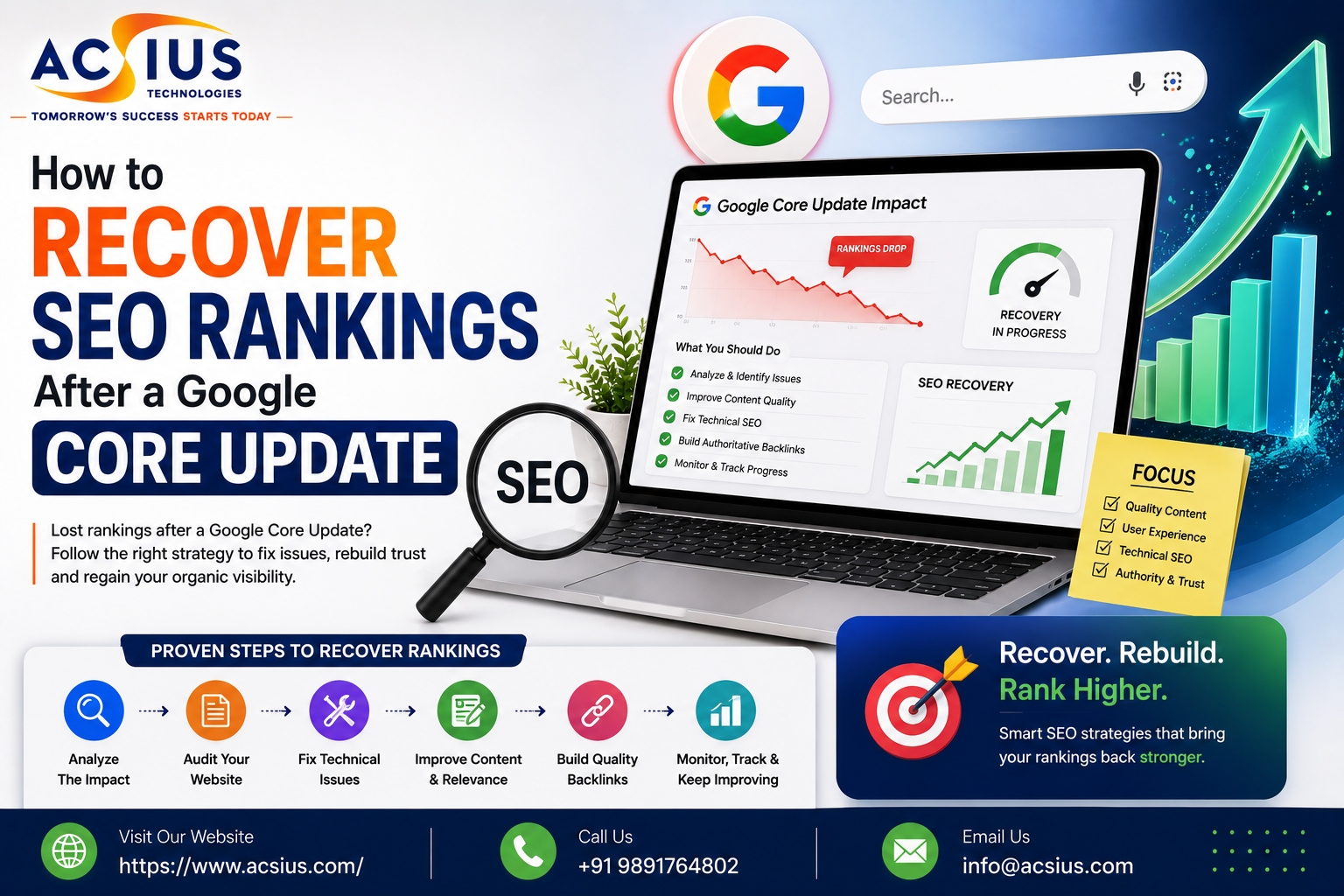
There's a specific kind of dread that hits when a site owner opens their analytics dashboard and sees organic traffic dropped overnight for no obvious reason. No warning email, no broken page, nothing visibly wrong — just a sudden decline that doesn't match anything the team actually changed. Nine times out of ten, the culprit is a Google core update, and the panic that follows is completely understandable, because these updates can undo months of steady growth in a matter of days.
2026 alone has already brought several of these shifts — a Discover-focused core update in February, a broad core update in March, another in April, and a further update in May, arriving just weeks after the previous one finished rolling out. That kind of pace is faster than the historical norm, and it's left a lot of businesses scrambling to understand not just what happened, but what to actually do about it. The good news is that recovery, while it takes patience, follows a fairly predictable process once you understand what these updates are actually evaluating.
The first instinct for most businesses after a ranking drop is to make sweeping, reactive changes — rewrite everything, delete pages, chase whatever the latest SEO forum theory happens to be. That impulse usually makes things worse, not better. What actually works is a methodical diagnosis followed by targeted fixes, which is exactly the kind of structured process a proper SEO Company India brings to a recovery situation — treating it as a diagnostic problem rather than a panic response.
Understanding What a Core Update Actually Does
Google runs core updates several times a year, and unlike smaller, targeted algorithm tweaks, these are broad re-evaluations of how content across the entire web is scored. They're not penalties in the traditional sense — a site doesn't get "hit" for breaking a specific rule the way it might with a manual spam action. Instead, core updates recalibrate how Google's systems judge relevance, quality, and trustworthiness, which means sites that were previously ranking based on outdated quality signals can lose ground even without doing anything that violates guidelines outright.
This distinction matters enormously for how recovery should be approached. There's no single "fix" to reverse a core update drop, because there was no single violation causing it. Recovery comes from genuinely improving the underlying quality and relevance of a site relative to what's now ranking above it — not from finding one broken setting to switch off.
Step One: Confirm It's Actually a Core Update
Before diagnosing anything, rule out simpler explanations. Check whether the traffic drop coincides with a confirmed Google update timeline, or whether it lines up with something else entirely — a site migration, a change in tracking code, seasonal demand shifts, or a technical issue like a broken sitemap or accidental noindex tag. Tools that track confirmed algorithm update dates, along with Google's own Search Status Dashboard, are useful for confirming whether the timing genuinely lines up with a known rollout rather than an unrelated technical problem masquerading as an algorithm issue.
Step Two: Diagnose Which Pages Were Actually Affected
Not every page on a site typically suffers equally. Pulling performance data segmented by page, and comparing rankings before and after the update window, usually reveals a pattern — certain content types, certain topics, or certain page structures losing ground while others hold steady or even improve. This pattern is the real diagnostic clue. A site that lost rankings primarily on thin, generic informational pages while product or service pages held steady points toward a content depth problem. A site that lost ground broadly across the board might be dealing with a trust or authority issue instead.
Common Root Causes Behind Core Update Losses
Several recurring patterns show up across sites hit by recent core updates:
Thin or generic content. Pages that technically cover a topic but don't go beyond surface-level information tend to lose visibility as Google's systems get better at distinguishing genuinely useful content from filler built primarily to target a keyword.
Content without demonstrated expertise. Pages lacking clear authorship, credentials, or evidence of firsthand knowledge tend to underperform compared to content that visibly reflects real experience with the subject matter.
Outdated information. Pages that haven't been refreshed in years, especially on topics where facts or best practices change over time, often lose ground to more recently updated competitors covering the same ground.
Over-optimized, keyword-stuffed pages. Content clearly written for search engines rather than people — repetitive phrasing, awkward keyword insertion, unnatural structure — tends to get deprioritized as quality evaluation systems improve.
Weak or declining backlink profile relative to competitors. If competing pages have earned stronger, more relevant backlinks since your content was last evaluated, your relative authority for that topic may have simply been overtaken.
Building a Recovery Plan That Actually Works
Once the affected pages and likely causes are identified, recovery work generally follows a few consistent phases:
Content audit and consolidation. Weak or duplicate pages targeting similar topics often perform better merged into a single, comprehensive resource than left scattered as thin, competing pages. Removing or redirecting genuinely low-value content can also improve how search engines evaluate the overall quality of the domain.
Depth and expertise upgrades. Rewriting affected content with genuine depth, specific examples, and clear authorship signals tends to be the single highest-impact recovery action available, since it directly addresses the quality gap most core updates are designed to surface.
Technical health checks. Site speed, mobile usability, and crawlability issues should be ruled out and fixed alongside content improvements, since technical weaknesses compound quality problems rather than existing separately from them.
Ongoing monitoring rather than a one-time fix. Recovery from a core update isn't instant, and results typically show up gradually over the weeks and months following the changes, often becoming clearer only after the next core update cycle re-evaluates the site.
This kind of sustained, iterative effort is exactly why recovery tends to go far better under an ongoing SEO Services India engagement rather than a one-time audit. A single report identifying problems doesn't fix anything on its own — recovery requires continuous implementation, monitoring, and adjustment as new data comes in, which is fundamentally different from a short-term consulting engagement that ends the moment recommendations are handed over.
Why Local Context Matters During Recovery Too
Businesses competing in local search results face an added layer of complexity during core update recovery, since local rankings blend traditional organic signals with location-specific factors like Google Business Profile activity, local citations, and regional relevance. A business in Delhi trying to recover lost local visibility benefits enormously from working with a SEO Company Delhi partner who understands the specific competitive landscape in that market, rather than applying a generic national recovery strategy to what is fundamentally a local visibility problem. Local search behavior, competitor density, and even the kind of content that resonates with a regional audience can differ meaningfully from broader national trends, and recovery strategies that ignore this nuance often underperform.
What Not to Do During Recovery
A few common reactions actively slow down or damage recovery efforts:
Making drastic, unexplained structural changes across the entire site at once, which makes it impossible to isolate what actually helped
Chasing quick-fix tactics from unverified forum threads instead of addressing genuine content and technical quality
Expecting overnight results, when meaningful recovery typically takes multiple weeks or months to fully materialize
Ignoring the affected pages entirely and hoping the next update reverses things on its own without any changes
The AI Search Layer Adds a New Recovery Consideration
Core update recovery increasingly needs to account for more than traditional blue-link rankings. As AI-driven search tools and AI Overviews play a larger role in how people find information, content quality signals that matter for core updates — depth, expertise, originality, clear structure — overlap significantly with what earns visibility in AI-generated answers too. Businesses focusing recovery efforts purely on traditional ranking factors while ignoring how their content performs in AI-driven search risk solving only half the problem, since both systems increasingly reward the same underlying qualities: genuinely useful, well-structured, expert content over generic filler.
Bringing It All Together
Recovering from a Google core update isn't about finding a single broken setting to fix — it's a methodical process of diagnosing which pages lost ground, understanding why relative to what's now outranking them, and committing to sustained content and technical improvements rather than expecting a quick reversal. Businesses that treat recovery as an ongoing discipline, rather than a one-time emergency response, consistently come out the other side stronger than before the update ever hit.
ACSIUS has guided businesses through exactly this kind of recovery process, combining technical diagnosis, content strategy, and local market expertise to rebuild organic visibility after ranking disruptions. Whether the drop stems from a broad core update, a Discover-specific shift, or a local ranking decline, ACSIUS brings the structured, data-driven approach needed to not just recover lost ground, but build a stronger, more resilient SEO foundation going forward.