According to IMARC Group's report titled "India Automotive Glass Market Size, Share, Trends and Forecast by Glass Type, Material Type, Vehicle Type, Application, End User, Technology, and Region, 2026-2034", the report offers a comprehensive analysis of the industry, including the automotive glass market size in India, its growth, trends, and regional insights.
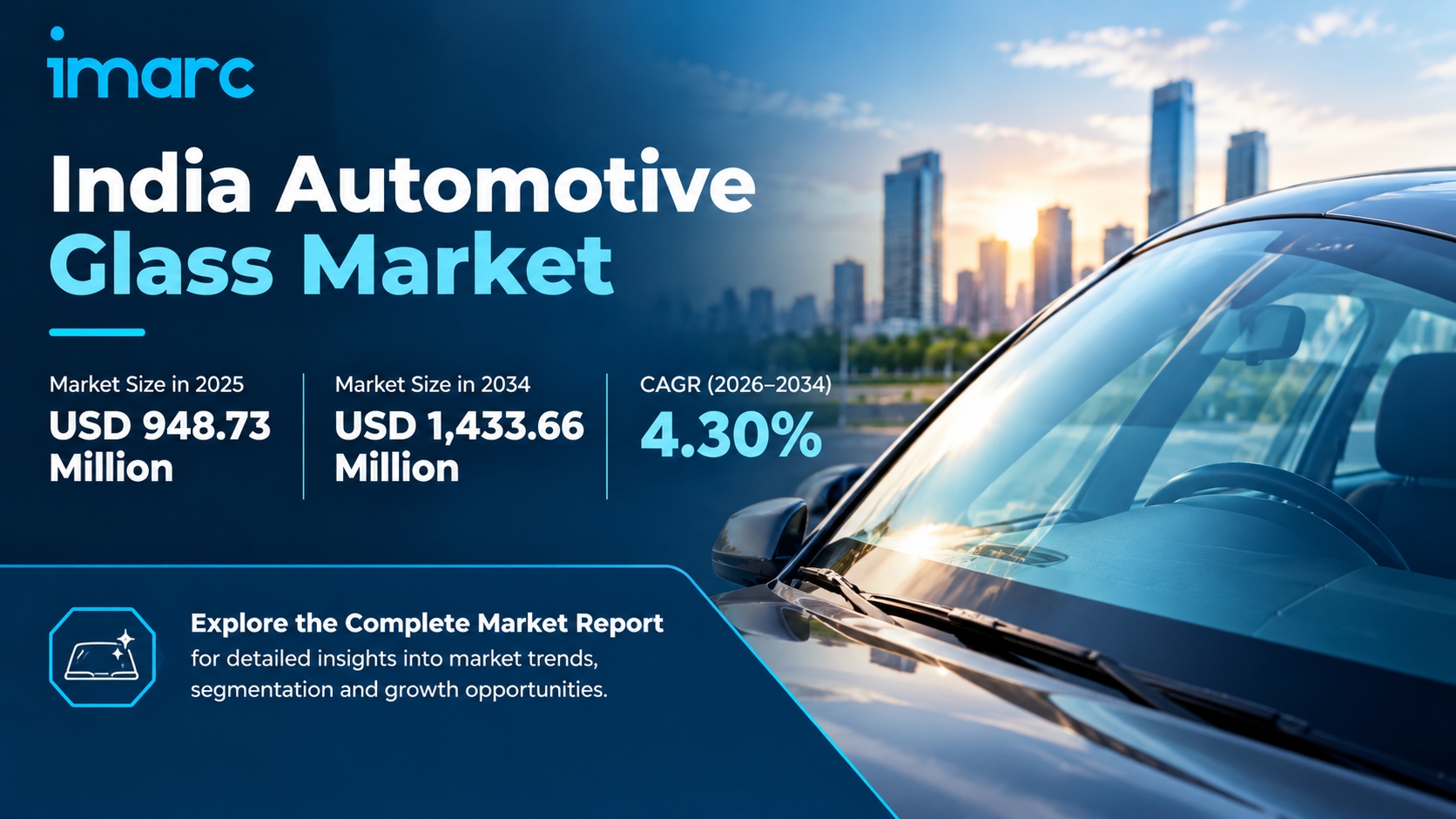
The India automotive glass market was valued at USD 948.73 Million in 2025, expected to reach USD 1,433.66 Million by 2034, at a CAGR of 4.30% during the forecast period 2026–2034. Glass is no longer a passive component in Indian vehicles; it is becoming a safety-critical, sensor-carrying and comfort-defining system. This market is being driven by rising vehicle production, safety regulations that make certified laminated windshields a compliance requirement and growing consumer demand for sunroofs, acoustic glass and ADAS-ready glazing.
Market Key Statistics:
Current Market Size (2025) : USD 948.73 Million
Projected Market Size (2034) : USD 1,433.66 Million
CAGR : 4.30%
Forecast Period : 2026-2034
Laminated Glass holds the largest glass type share at 66.0% in 2025 driven by windshield safety rules, shatter resistance, acoustic damping and UV filtering.
IR PVB leads the material type segment with a 34.0% share due to infrared heat rejection suited to both conventional and EV platforms.
Passenger Cars dominate the vehicle type segment at 74.0% share supported by rising ownership and safety and comfort preferences.
Windshield accounts for 38.0% share of the application segment as it is mandatory and increasingly carries ADAS and sensor functions.
OEMs represent the largest end user share at 81.0% through long-term supply contracts and co-development.
Passive Glass leads the technology segment with an 85.0% share being cost-effective, mature and free of electrical control needs.
North India is the leading regional market with a 32.0% share backed by vehicle manufacturing in Delhi NCR, Haryana and nearby industrial corridors.
India Automotive Glass Market Trends & Future Outlook
ADAS Integration Into Vehicle Glazing: Windshields are evolving to host camera zones, sensor arrays and radar-transparent sections as ADAS adoption grows. Suppliers are expanding portfolios with heads-up display, rain sensor and radar-ready windshield capabilities.
Wider Use of Laminated Glass Beyond Windshields: The use of automotive laminated glass in India is expanding to side windows, rear screens and panoramic roofs, as carmakers look for better acoustic comfort, UV protection and occupant safety across the cabin.
Thermally Efficient and Solar-Control Glazing for EVs: Solar-control and infrared-reflective glass is helping reduce cabin heat and air-conditioning load, which is especially valuable for electric vehicles looking to extend battery range.
Rising Demand for Premium Comfort Features: Sunroofs, tinted sidelights, acoustic glass and panoramic roofs are moving from premium to mainstream models. In April 2025, over 53% of new Hyundai cars sold in India were sunroof variants.
Localisation of Glass Supply Chains: Producers are increasingly sourcing float and solar control glass locally, shortening lead times and reducing import dependence. Asahi India Glass began using locally sourced glass at its Patan facility in August 2025.
Emerging Interest in Active Smart Glass: Suspended particle, electrochromic and liquid crystal glass are gaining attention for premium vehicles, although passive glass remains dominant today because of its lower cost and maturity.
Why Invest in the India Automotive Glass Market - Key Growth Drivers
Expanding Domestic Vehicle Production and Rising Car Ownership: Growth in vehicle manufacturing, supported by urbanization, road infrastructure, easier vehicle financing and rising middle-class incomes, is creating a stable demand pipeline for automotive glass manufacturers in India across both OEM and replacement channels.
Safety Regulations Making Laminated Windshields Essential: Certified laminated windshields have become a compliance requirement, increasing their penetration across vehicle categories. Safety norms are steadily raising technical specifications for glazing used in passenger and commercial vehicles.
Growing Consumer Demand for Premium Cabin Experience: Buyers increasingly expect sunroofs, acoustic glass, tinted sidelights and panoramic roofs even in mid-segment models. These features raise glass content per vehicle and support higher-value product mixes for manufacturers.
EV and Connected-Vehicle Adoption Raising Technical Content: Electric and connected vehicles require thermally efficient glazing and sensor-ready windshield zones. OEM demand for advanced glazing is rising in line with new platform launches and ADAS deployment.
Smaller-City Penetration and Aftermarket Replacement Demand: Rising vehicle penetration in smaller cities and a growing base of ageing vehicles are supporting aftermarket replacement of windshields and side glass, adding a steady revenue stream alongside OEM supply.
Government Policy Support
Bureau of Indian Standards Quality Control Orders: Compulsory BIS certification under Quality Control Orders, with 187 orders covering 769 products notified in March 2025, raises quality benchmarks and favours certified domestic suppliers.
Anti-Dumping Duty Measures: The Directorate General of Trade Remedies recommended extending anti-dumping duties on Malaysian glass imports for five years in November 2025, protecting domestic manufacturers from low-cost imports.
Production Linked Incentive Scheme for Automobile and Auto Components: Incentives for advanced automotive technology products and components encourage localisation and capacity expansion across the auto supply chain, including glazing suppliers.
Bharat New Car Assessment Programme: Crash-safety ratings push manufacturers toward stronger safety content, increasing the use of laminated windshields and sensor-ready glazing in new vehicles.
Make in India Initiative: Policy focus on domestic manufacturing supports new vehicle plants and local sourcing of key inputs such as float and solar control glass.
Evaluate Market Opportunity with the Business Sample Report
Key Market Challenges
Volatile Raw Material Costs: Prices of soda ash, silica sand and PVB interlayers fluctuate, creating margin pressure for glass manufacturers and making long-term contract pricing with OEMs difficult to manage.
High Capital Requirements: Float furnaces, tempering, lamination and quality control systems require significant investment, which limits new entrants and slows capacity additions even when demand is rising.
Pressure From Low-Cost Imported Glass: Imported products, especially in the aftermarket, compete aggressively on price, challenging domestic suppliers that must also meet higher quality and certification standards.
Market Segmentation Breakdown
By Glass Type - Laminated Glass Leads Market Expansion
Laminated Glass dominates with a 66.0% share in 2025, driven by windshield safety rules, shatter resistance, acoustic damping and UV filtering. Tempered Glass and other types complete the segment.
By Material Type - IR PVB Powers the Market
IR PVB leads with a 34.0% share due to infrared heat rejection that suits both conventional and EV platforms. Metal Coated Glass, Tinted Glass and other materials serve specific comfort and styling needs.
By Vehicle Type - Passenger Cars Dominate
Passenger Cars hold a 74.0% share, supported by rising ownership and growing safety and comfort expectations. Light Commercial Vehicles, Trucks, Buses and other vehicles form the remaining demand base.
By Application - Windshield Remains the Largest Application
Windshield accounts for a 38.0% share as it is mandatory and increasingly carries ADAS and sensor functions. Sidelite, Backlite, Rear Quarter Glass, Sideview Mirror and Rearview Mirror complete the application mix.
By End User - OEMs Command the Market
OEMs lead with an 81.0% share through long-term supply contracts and co-development with automakers. Aftermarket Suppliers serve replacement demand and remain exposed to low-cost imports.
By Technology - Passive Glass Leads
Passive Glass holds an 85.0% share, favoured for being cost-effective, mature and free of electrical control. Active Smart Glass, including suspended particle, electrochromic and liquid crystal types, remains an emerging premium category.
By Region - North India Leads Adoption
North India leads with a 32.0% share, supported by vehicle manufacturing in Delhi NCR, Haryana and nearby industrial corridors. West and Central India, South India and East India complete the regional view.
Competitive Landscape & Key Player Positioning
The market research report has also provided a comprehensive analysis of the competitive landscape. Competitive analysis such as market structure, key player positioning, top winning strategies, competitive dashboard, and company evaluation quadrant has been covered in the report. Also, detailed profiles of all major companies have been provided.
Key players include:
Asahi India Glass
Saint-Gobain India
Other OEM-focused automotive glass manufacturers and suppliers
Aftermarket glass suppliers and replacement-glass distributors
Other organised players active across the automotive glass market in India
Recent Developments & News
In January 2026, Maruti Suzuki announced a new Gujarat plant to add one million vehicles annually, expanding the vehicle production base that supports OEM glass demand.
In November 2025, India's Directorate General of Trade Remedies recommended extending anti-dumping duties on Malaysian glass imports for five years.
In August 2025, Asahi India Glass began using locally sourced float and solar control glass at its Patan facility.
In 2025, Asahi India Glass expanded its portfolio with ADAS-ready windshields featuring heads-up displays, rain sensors and radar-transparent sections.
Request Customized Data Tailored to Your Interest
Note: If you need specific information that is not currently within the scope of the report, we can provide it to you as a part of the customization.
Frequently Asked Questions
Q1. How big is the India automotive glass market?
➤ The India automotive glass market was valued at USD 948.73 Million in 2025, reflecting its role as an essential safety and comfort component in every new vehicle produced in the country.
Q2. What is the projected growth rate?
➤ The market is expected to grow at a CAGR of 4.30% from 2026 to 2034, reaching USD 1,433.66 Million by 2034 — driven by vehicle production, safety regulation, EV growth, IR PVB demand and ADAS integration.
Q3. Which glass type leads the market?
➤ Laminated Glass leads with a 66.0% share, driven by safety rules, occupant protection and OEM adoption, with windshields remaining the most important application at 38.0%.
Strategic Insight & Verdict
The India automotive glass market is moving from a commodity component business to a technology-led, regulation-backed category — safety norms are tightening, OEM demand for advanced glazing is rising and ADAS integration is raising value per vehicle. The convergence of an 81.0% OEM-led demand base, a 66.0% laminated glass share and a 4.30% CAGR growth trajectory positions this market as a steady, high-quality investment opportunity for glass manufacturers, interlayer suppliers and automotive component investors over the 2026–2034 forecast period.
Verified Source: IMARC Group