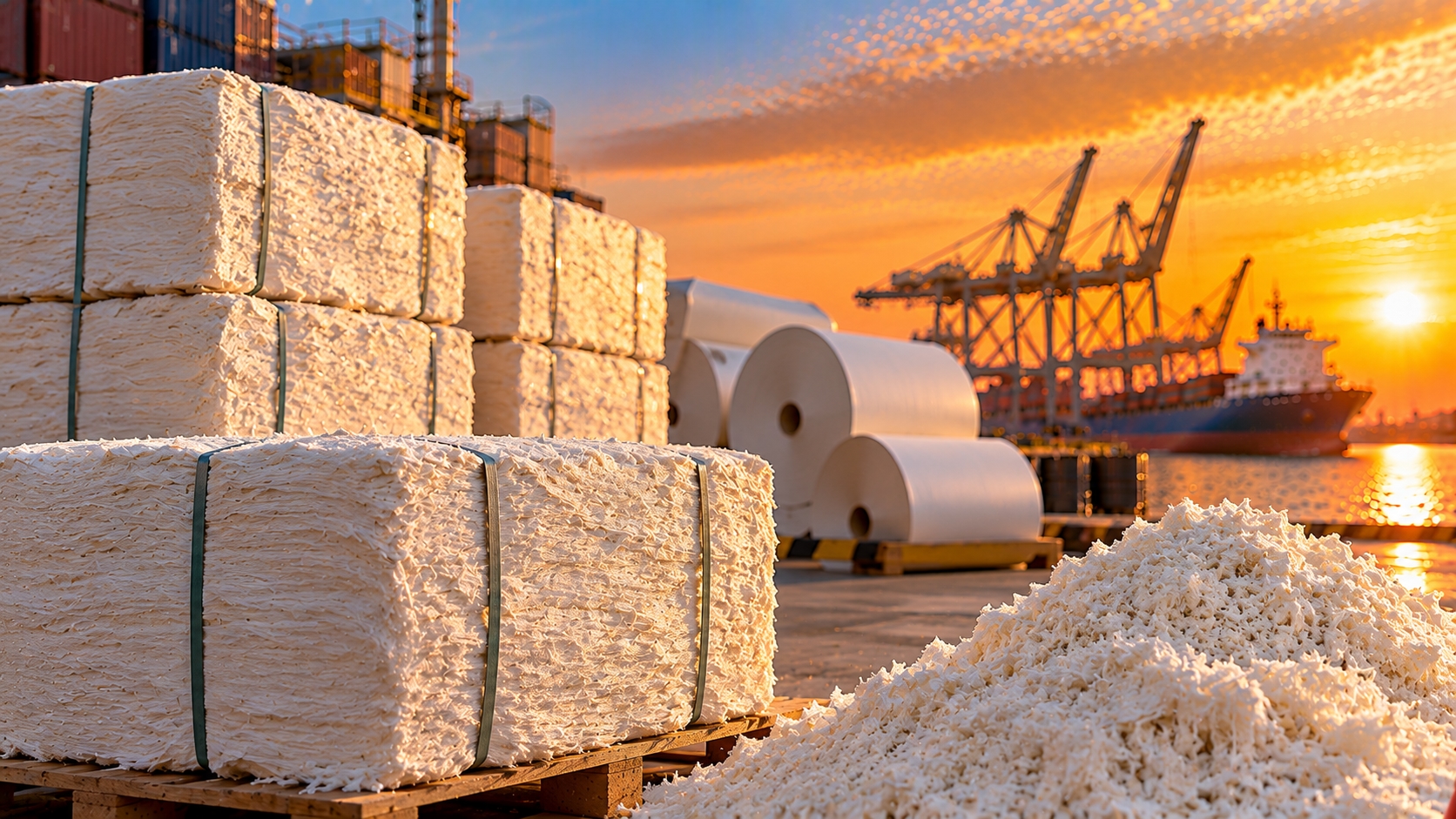
Northern Bleached Softwood Kraft pulp, or NBSK, just posted some interesting numbers for August 2026. Germany’s FOB price landed at USD 725.00 per metric ton. China’s came in at USD 605.71 per metric ton, also FOB. That’s not a small gap. It’s over USD 119 per ton, and anyone buying pulp for paper, packaging, or tissue production should be paying attention to why.
Pulp pricing doesn’t move in a vacuum. NBSK specifically feeds into high-grade paper products, printing stock, and specialty tissue, so when the price shifts, it eventually shows up in costs further down the supply chain.
Current NBSK Pulp Prices: Germany vs China
Product | Region | Incoterm Basis | Price | Last Updated |
|---|---|---|---|---|
NBSK Pulp | Germany | FOB | USD 725.00/MT | August 2026 |
NBSK Pulp | China | FOB | USD 605.71/MT | August 2026 |
Germany’s price sits roughly 19.7% higher than China’s. Both quotes are FOB, so this isn’t a freight-versus-insurance comparison like you’d get with mixed incoterms. The gap here is coming from somewhere else entirely.
Quick things worth noting:
Both figures are FOB, meaning the price covers goods loaded at the port of origin, before international freight gets added.
These are August 2026 figures specifically. Pulp markets can shift within a single month, so treat this as a snapshot, not a yearly average.
Since the incoterm basis matches across both regions, the spread reflects actual production or market conditions rather than shipping terms.
Why Is There Such a Gap Between Germany and China?
Good question. A same-incoterm comparison usually points to something structural.
Production costs. European pulp mills tend to run higher operating costs than their Chinese counterparts. Energy prices in Germany have been a persistent factor for manufacturers across sectors, and pulp production is energy-intensive by nature.
Wood fiber sourcing. Germany’s softwood supply comes largely from domestic and nearby European forestry. China, on the other hand, often sources at different cost structures depending on import arrangements and regional supply agreements.
Regional demand pressure. German and broader European paper and packaging demand has stayed relatively firm. Stronger local demand can support higher FOB pricing even before export logistics enter the picture.
Currency and labor costs. Euro-denominated production costs, including labor, run higher than in China across most manufacturing categories. Pulp isn’t an exception here.
None of this is a guess dressed up as fact. It’s the kind of pattern that shows up repeatedly in commodity pricing when two regions quote the same incoterm but land at very different numbers.
A Quick Q&A on What This Means for Buyers
So which region offers better value right now?
Depends what you’re optimizing for. China’s lower FOB price looks better on the invoice. But buyers sourcing from Europe might be paying for shorter transit times to EU destinations, tighter quality consistency, or existing supplier relationships that are hard to replicate overnight.
Should paper manufacturers lock in contracts based on these numbers?
Not blindly. August 2026 figures are a reference point, not a guarantee for Q3 pricing going forward. Pulp markets react fast to mill maintenance schedules, export quotas, and shipping availability.
Does this gap affect downstream paper prices?
Yes, eventually. NBSK pulp feeds directly into premium paper grades and tissue products. A sustained price gap between sourcing regions tends to show up in finished product costs within a quarter or two, sometimes faster if demand is already tight.
What This Means for Buyers and Investors
If you’re procuring NBSK pulp, the Germany-China spread gives you a real negotiating data point. Suppliers quoting well above or below these benchmarks deserve a follow-up question.
For investors watching the pulp and paper sector, a persistent gap this size can signal where capacity expansion makes sense. China’s lower production cost base has been a draw for manufacturers looking to relocate or diversify sourcing away from higher-cost European mills.
Procurement teams working on long-term contracts should factor in more than just the headline FOB number. Transit time, port reliability, and currency exposure all affect the real landed cost once the pulp actually arrives.
Looking Ahead: Q3 2026 Outlook
Will this gap hold through the rest of Q3 2026? Hard to say with full certainty, but the structural drivers behind it, energy costs, fiber sourcing, labor, aren’t things that change in a few weeks. That points toward the spread staying roughly in this range unless something disrupts one side of the market specifically.
Watch for mill shutdowns, forestry supply disruptions, or shifts in European energy pricing. Any of those could widen or narrow the Germany-China gap faster than demand-side factors alone.
Buyers negotiating contracts this quarter should ask suppliers for pricing updated within the last few weeks rather than relying on August figures months later. Pulp markets move quickly enough that stale data creates real cost exposure.
Conclusion
The NBSK pulp price trend for Q3 2026 shows Germany at USD 725.00/MT FOB against China’s USD 605.71/MT FOB, both as of August 2026. That near-20% gap comes down to production costs, fiber sourcing, and regional demand rather than shipping terms, since both quotes share the same incoterm basis. For buyers, investors, and procurement teams tracking pulp markets, this spread is worth revisiting regularly rather than treating as fixed.
FAQ Section
What is the current NBSK pulp price trend between Germany and China?
As of August 2026, Germany’s NBSK pulp is priced at USD 725.00/MT FOB, while China’s sits at USD 605.71/MT FOB. The roughly 19.7% gap stems from differences in production costs, fiber sourcing, and regional demand rather than freight terms, since both figures use the same incoterm.
Why is German NBSK pulp more expensive than Chinese pulp?
Higher European energy and labor costs play a big role. German mills also source softwood fiber through different channels than Chinese producers, and steady European paper demand supports firmer pricing. All of this stacks up even before transport costs get added on either side.
What drives NBSK pulp prices overall?
Energy costs for mill operations, raw fiber availability, regional paper and packaging demand, and currency movements all factor in. NBSK pulp production is energy-intensive, so any shift in power costs tends to show up in pricing fairly quickly across producing regions.
How often does NBSK pulp pricing change?
It can shift monthly or even more often depending on mill output, export conditions, and shipping capacity. The August 2026 figures here work well as a benchmark, but buyers finalizing contracts should always request current pricing rather than relying on data that’s a few months old.
What’s the outlook for NBSK pulp prices in Q3 2026?
The Germany-China spread looks likely to hold through most of Q3 2026, since the underlying cost drivers aren’t the type that shift overnight. Mill maintenance schedules, forestry supply issues, or European energy price swings are the main things that could move this gap faster than expected.