When an office network goes down, the cost is rarely just inconvenience. Phones stop working, point of sale systems freeze, and cameras lose their feed all at once, because in a lot of buildings, everything runs through the same tangle of cables with no separation and no plan. Network structured cabling exists to prevent exactly that kind of single point of failure, by organizing a building's entire network into a system that can be traced, isolated, and repaired without shutting everything else down in the process.
What Actually Happens Inside a Structured System
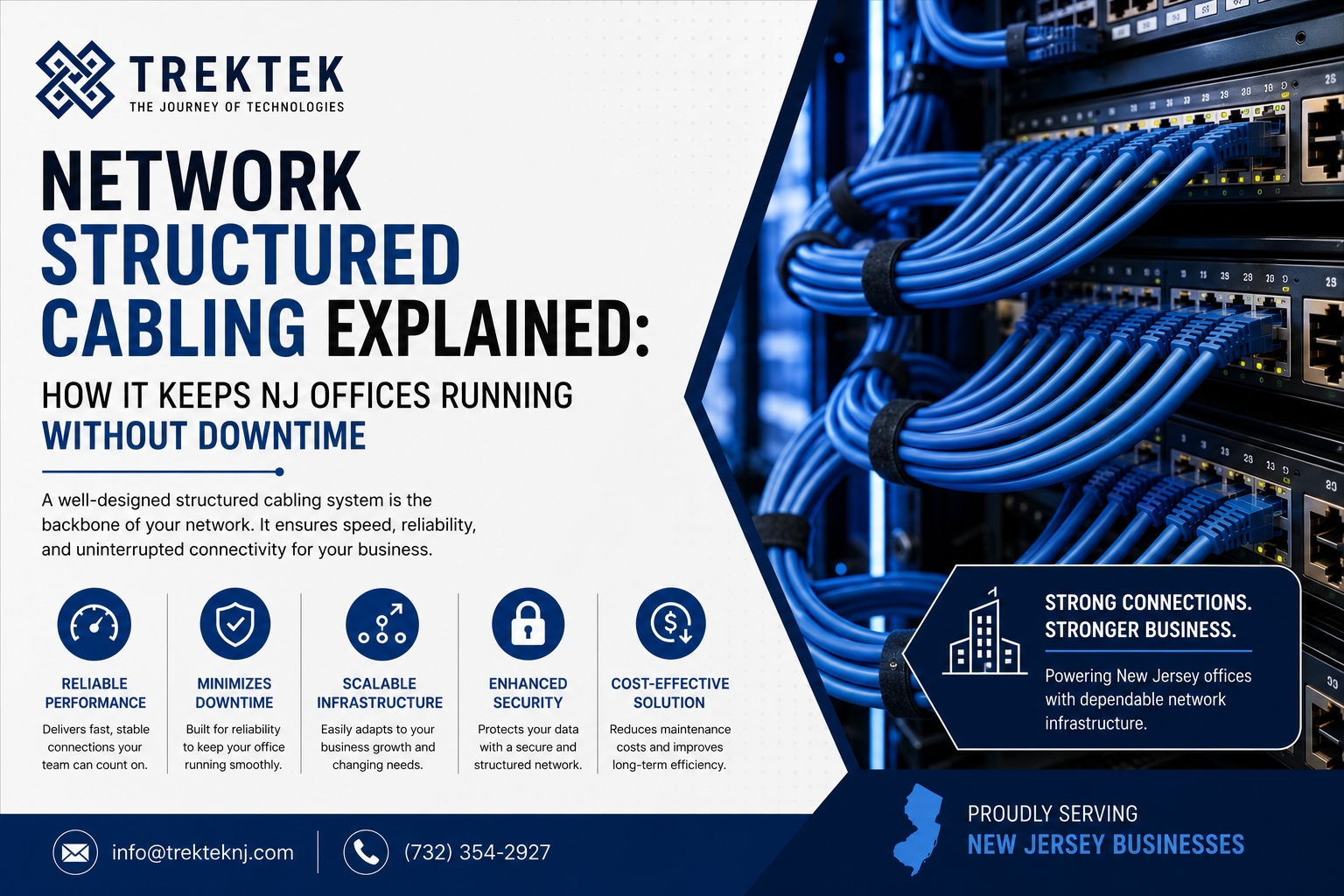
A structured cabling network is built in layers, not as one continuous run from end to end. The entrance facility brings the connection into the building, the equipment room holds the core hardware, backbone cabling connects floors and equipment rooms, and horizontal cabling runs out to individual workstations, cameras, and access points. Each layer is separated and labeled, which means a failure in one section, a single bad cable or a failed switch port, does not have to take down everything connected to that network.
This separation is the entire point of network structured cabling. In a building wired without any real plan, a single break somewhere in the chain can knock out phones, WiFi, and security cameras at the same time, simply because they were never wired independently of each other.
Why This Matters More as Businesses Add More Systems
A decade ago, a business network mainly needed to support computers and maybe a phone system. Today it is common for the same network to run VoIP phones, security cameras, point of sale terminals, and business WiFi, all at once, often from devices that were added over time rather than planned together. Every one of those systems depends on the cabling underneath it, and if that cabling was never built with separation and documentation in mind, a problem with one device can ripple out and affect systems that have nothing to do with it.
This is where a properly built cabling system pays for itself. When something fails, a technician can trace the fault to one section of the network without touching the rest, which usually means minutes of downtime instead of an entire afternoon spent unplugging things to find the problem.
What This Looks Like in Real Buildings
Two recent examples show how this plays out differently depending on the building. A structured cabling installation in Plainfield, NJ involved an older commercial space where the existing wiring had no real separation between systems, meaning a single network issue could affect phones, WiFi, and security cameras all together. Rebuilding the cabling in clear, labeled layers solved that immediately.
A similar project, structured cabling installation in Mount Arlington, NJ, involved a smaller office where growth had outpaced the original wiring. New devices had simply been added onto the existing setup for years, and separating the network into a proper structured system gave the business room to keep adding equipment without repeating the same problem again.
The Bottom Line
Network structured cabling is not just about running cables neatly. It is about building a system where one failure stays contained instead of taking down everything a business depends on. For any office running phones, cameras, and WiFi off the same aging setup, that kind of separation is usually the difference between a quick fix and a full afternoon of lost productivity.