Let me be straight with you.
Most people who search "red garnet price per kg" are not buying a single stone for a ring. They are buying in bulk. They are jewelry makers, wholesalers, or crystal sellers who need to know what fair pricing actually looks like before they wire money to a supplier they found online.
This guide is for those people.
I sell red garnet. Cabochons, finished jewelry pieces, sourced from Madagascar, Thailand, and Africa. So what I am about to tell you is not copied from another website. It is what I actually see in the market every week.
First, Let's Clear Up the "Per Kg" Question
Here is something most suppliers will not tell you upfront.
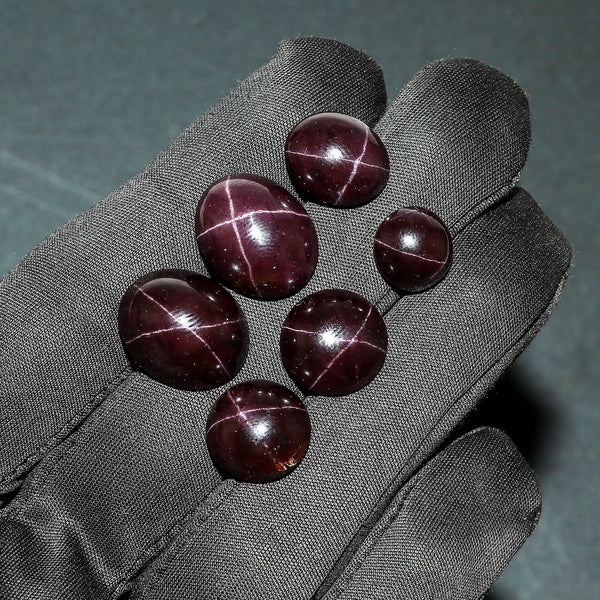
Gemstones — even bulk rough garnet — are not really sold per kg the way you buy rice or sand. The "per kg" pricing you see online is almost always for low-grade rough material. Chips. Tumbled pieces. Filler stones. The kind of garnet that goes into cheap craft projects and mass-produced jewelry.
The moment quality goes up, pricing shifts to per carat or per piece. Always.
So when you search "red garnet price per kg," what you are really asking is: how much does bulk red garnet cost, and how do I know if I am getting a fair deal?
That is what we are going to cover here.
Red Garnet Price Per Kg — The Real Numbers
Here is a rough breakdown of what red garnet actually costs at different quality levels in 2026:
Low Grade — Rough Chips and Tumbled Pieces
Price range: $5 to $30 per kg
This is the bottom of the market. Small rough pieces, inconsistent color, lots of inclusions, no real cutting potential. Fine for resin projects, aquarium decoration, or bulk bead filling. Not suitable for serious jewelry work.
Most of what you find on AliExpress and bulk crystal wholesale sites sits in this range. The color is often pale or brownish-red rather than the deep vivid red that makes garnet worth buying.
Mid Grade — Rough with Cutting Potential
Price range: $50 to $200 per kg
This is where it gets interesting for jewelry makers. Mid-grade rough garnet has good enough clarity to cut into cabochons or faceted stones. Color is consistent — deep red, sometimes with a slight orange or purple tint depending on origin.
Madagascar rough sits here. Good color, decent clarity, reasonable price. If you are buying rough to cut yourself or have cut by a lapidary, this is the range where you get real value.
High Grade — Faceting Quality Rough
Price range: $200 to $800+ per kg
Eye-clean material. Strong vivid red. No visible inclusions. This is the rough that cutters fight over because the yield — the percentage of quality finished stone you get from the rough — is genuinely high.
Africa-origin high-grade garnet sits here, particularly from Mozambique and Kenya. The color on Mozambique garnet is something else — a rich, saturated red that holds its color in all lighting conditions.
Polished Cabochons — Per Piece Pricing
Our pricing: $35 for 50ct lot — 2 pieces
Once garnet is cut and polished into cabochons, per-kg pricing stops making sense. You are paying for the lapidary work, the stone selection, and the quality of the finished piece.
At $35 for 2 cabochons in a 50ct lot, you are getting approximately $0.70 per carat — which for good quality red garnet cabochon is competitive wholesale pricing. Retail on individual quality garnet cabochons runs $2 to $8 per carat depending on size and clarity.
Red Garnet Types — And Why It Matters for Pricing
Not all red garnet is the same stone. The name "red garnet bracelet" covers several different minerals that look similar but have very different values.
Almandine Garnet
The most common red garnet. Deep red to brownish-red. Found everywhere — India, Brazil, Madagascar, Africa. This is the garnet in most affordable jewelry. Price at wholesale: $1 to $15 per carat for cabochons depending on clarity and size.
Pyrope Garnet
Brighter, more vivid red than almandine. Sometimes called "ruby garnet" because the color is so clean. Slightly rarer. Price at wholesale: $5 to $40 per carat.
Rhodolite Garnet
A natural mix of pyrope and almandine. Purple-red color. Very popular in modern jewelry because the color is unusual and beautiful. Madagascar produces excellent rhodolite. Price at wholesale: $10 to $60 per carat for quality material.
Spessartine Garnet
Orange-red to red-orange. Rarer than almandine or pyrope. Some of the finest material comes from Africa — Namibia and Nigeria specifically. Price at wholesale: $30 to $200+ per carat for clean material.
Mozambique Garnet
This is a trade name, not a mineral name. It refers to the rich, vivid red garnet from Mozambique that has become extremely popular in the last decade. It is technically almandine or pyrope-almandine, but the color quality from this origin is consistently excellent. This is what buyers are willing to pay a premium for. Price at wholesale: $15 to $80 per carat depending on size and clarity.
Origin Matters — Here Is Why
Where garnet comes from directly affects the price and the quality. Here is what we see from the origins we source:
Madagascar
Madagascar garnet is our workhorse origin. Consistent quality, good color range — everything from pale raspberry to deep vivid red — and reliable supply. The rhodolite from Madagascar is particularly popular with jewelry makers because the purple-red color is distinctive.
Madagascar material is mid-range in price, which makes it excellent value. You get genuine quality without paying the premium that African origins command.
Thailand
Thailand is less known as a garnet origin and more known as a garnet cutting center. A lot of rough from Africa and other origins gets cut in Thailand, which means "Thailand garnet" in the market often means "cut in Thailand, rough from somewhere else." The cutting quality from Thai lapidaries is generally very good — precise, well-polished, consistent calibrated sizes.
When we source from Thailand, we are mostly sourcing finished cabochons and faceted stones rather than rough material.
Africa — Mozambique, Kenya, Tanzania
African garnet is where the serious buyers go for serious material. Mozambique garnet has become the benchmark for vivid red color in the global market. Kenyan material — particularly from the Umba Valley — produces unusual color combinations including orange-red and color-change garnets that command premium prices.
The downside of African origin is price and consistency of supply. The best material sells fast and at higher prices. But if color is your priority — and for most jewelry buyers it should be — African origin is worth the premium.
What You Actually Get for Your Money — Realistic Breakdown
Let me show you what different budgets get you in the garnet market right now.
$50 budget: Approximately 1kg of low-grade rough chips. Good for crafts. Not for serious jewelry.
OR
5 to 10 mid-grade cabochons in smaller sizes (under 10mm). Usable for production jewelry.
$200 budget: 500 grams of mid-grade rough with cutting potential. Or 20 to 30 quality cabochons in mixed sizes. This is where the value-for-money sweet spot starts for wholesale buyers.
$500 budget: High-grade rough from Madagascar or Africa — enough material to produce 50 to 100 finished cabochons after cutting. Or 80 to 100 quality finished cabochons direct from a reliable supplier.
$1,000+ budget: You are in the territory of eye-clean faceting rough from Africa. Fine jewelry grade material. Investment-level stones if you find the right pieces.
How to Buy Red Garnet Wholesale Without Getting Burned
This is the part most buyers skip and then regret.
Ask for natural light video. Studio photography makes every stone look better than it is. A short video of the stone being turned under natural daylight shows you the real color, the real inclusions, and the real surface quality. Any supplier worth buying from will send this without question.
Ask about treatment. Most commercial garnet is untreated — which is actually a point in its favor compared to rubies or sapphires where treatment is the norm. But some lower-grade material gets heat-treated or fracture-filled to improve appearance. Ask directly. A good supplier tells you. A supplier who avoids the question tells you something too.
Know what origin you are buying. "Red garnet" without an origin is a red flag. Good material has a story — where it was mined, how it was cut, who handled it. Ask for origin information before you commit.
Check the per-carat math. When buying bulk lots, always divide the total price by the total carat weight to get your per-carat cost. Compare this to what you know quality garnet should cost at that grade. If the math is too good to be true — pale color, heavy inclusions, suspicious "AAA" grade claims — it usually is.
Start small. First order with any new supplier should be small. Buy one lot. Check the quality against what was described. Build trust before you scale up.
Red Garnet for Jewelry Making — What Works Best
Different garnet cuts serve different jewelry applications.
Cabochons — best for wire wrapping, bezel settings, and any design where you want a smooth dome of color. Red garnet cabochons in 10mm to 20mm sizes are the most popular with wire wrappers.
Faceted stones — best for prong settings and any design where sparkle matters. Well-cut faceted garnet has excellent light return — it genuinely sparkles in ways that surprise people who associate garnet with flat, dull color.
Rough/raw — increasingly popular for organic jewelry styles. Raw garnet has a different kind of beauty — the crystal structure is visible, the color is unmediated, and the pieces are completely individual.
Bead strands — drilled garnet beads in round or faceted shapes. Used in bracelets, necklaces, and mala-style jewelry. Very popular in our collection and consistently one of our fastest-moving product categories.
Red Garnet Meaning and Why Buyers Care
A significant portion of garnet buyers are not just buying a pretty red stone. They are buying something with meaning.
Garnet is the January birthstone — which makes it one of the most consistently gifted gemstones in the jewelry market. January birthdays drive garnet sales the way December drives turquoise and October drives opal.
Beyond birthstone gifting, garnet carries a long history of symbolic meaning. It has been associated with passion, vitality, and protection across cultures for thousands of years. Roman soldiers wore garnet into battle. Medieval travelers carried it as protection during journeys. In crystal healing traditions, red garnet is connected to the Root Chakra — grounding, physical energy, and the will to move forward.
None of this is why gemstone professionals buy garnet. But it is why their customers buy garnet — and understanding that helps you market what you sell.
Red Garnet vs Ruby — The Question Buyers Always Ask
It comes up constantly. "How is garnet different from ruby? They look the same."
Here is the honest answer.
At low to mid quality levels, deep red garnet and low-quality ruby can look very similar to the untrained eye. Both are deep red. Both are used in jewelry. Both have been confused throughout history.
The differences:
Hardness — Ruby is Mohs 9. Garnet is Mohs 6.5 to 7.5 depending on type. Ruby is significantly harder and more durable for daily wear, particularly in rings.
Price — This is the big one. Fine ruby is one of the most expensive gemstones in the world — thousands to tens of thousands of dollars per carat for quality material. Fine garnet is a fraction of that cost. If someone is selling you "ruby" at garnet prices, it is garnet.
Optical properties — Ruby shows a strong red fluorescence under UV light. Garnet does not fluoresce in the same way. This is one of the simplest tests to distinguish them.
Value for jewelry makers — Garnet gives you deep vivid red at accessible prices. For production jewelry, garnet often makes more commercial sense than ruby even when the budget exists for ruby. The color is comparable; the cost is not.
Frequently Asked Questions
What is red garnet price per kg for rough material?
Low-grade rough garnet sells for $5 to $30 per kg. Mid-grade rough with cutting potential runs $50 to $200 per kg. High-grade faceting quality rough from Africa can reach $200 to $800+ per kg. Quality determines price more than weight.
Is garnet sold per kg or per carat?
Both, depending on grade. Low-grade bulk rough is typically sold per kg or per gram. Quality rough and all finished stones — cabochons, faceted, polished — are sold per carat. When a supplier only quotes per kg for finished stones, ask questions.
What is the best origin for red garnet wholesale?
For vivid color, Mozambique and Kenya produce the finest red garnet currently available. For value and consistent supply, Madagascar is the reliable choice. Thailand is a major cutting center but not a primary mining origin.
How much is a red garnet cabochon wholesale?
Quality red garnet cabochons wholesale from $0.50 to $5 per carat depending on size, clarity, and color. Our 50ct lots — 2 cabochon pieces — are priced at $35, which works out to $0.70 per carat for quality material.
What is the difference between almandine and rhodolite garnet?
Almandine is deep red to brownish-red — the most common red garnet. Rhodolite is a natural mix of pyrope and almandine with a distinctive purple-red color. Rhodolite is generally more sought after for modern jewelry and commands higher prices.
Is red garnet treated?
Most natural red garnet is untreated — this is one of the stone's genuine selling points compared to ruby or sapphire where treatment is the norm. Always ask your supplier directly about treatment status and buy from suppliers who answer the question clearly.
What is red garnet good for in crystal healing?
Red garnet is connected to the Root Chakra in crystal healing traditions — associated with grounding, physical vitality, passion, and the courage to move forward. It is also the January birthstone, making it one of the most consistently purchased birthstone gifts throughout the year.
Where to Buy Red Garnet Wholesale
We supply red garnet cabochons and garnet jewelry at Armonia Gems — sourced from Madagascar, Thailand, and Africa, accurately described, and backed by a 30-day return policy.
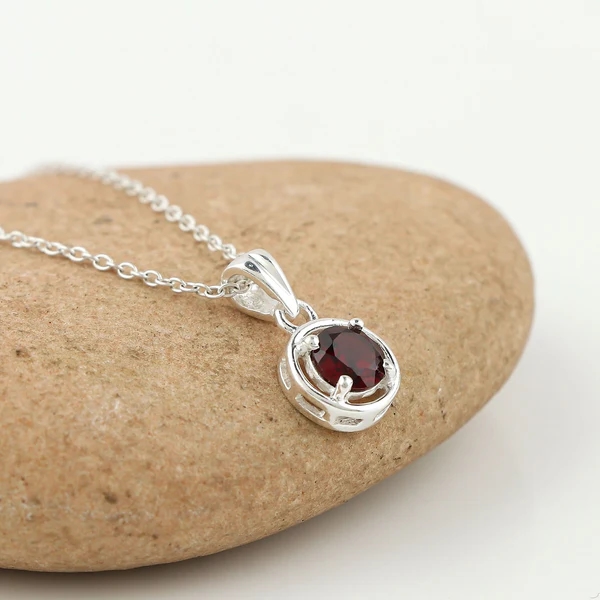
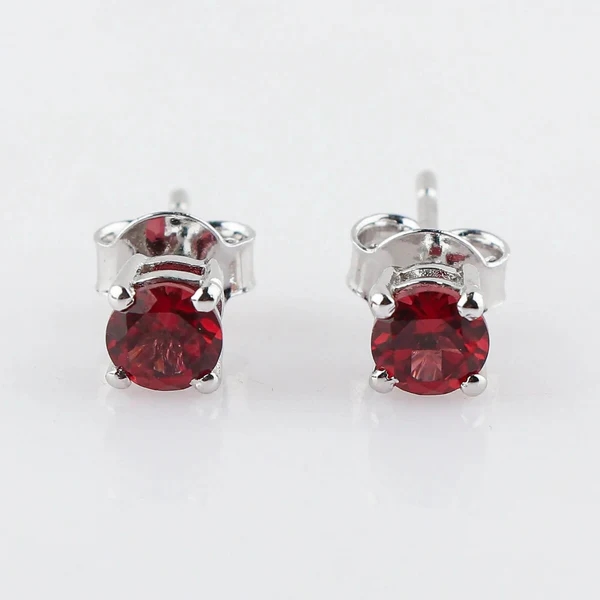
Our current garnet lots start at $35 for 50ct — 2 quality cabochon pieces. We also carry garnet jewelry including stud earrings, bracelets, and pendant necklaces in 925 sterling silver.
Visit armoniagems.com to see current stock. Questions about specific pieces, origins, or wholesale pricing — email support@armoniagems.com or WhatsApp +91 96946 66667. We answer quickly and we answer honestly.
Red garnet is one of those gemstones that does not need a sales pitch. The color does the work. What matters is finding material that actually looks like what it is supposed to look like — vivid, clean, deep red — from a supplier who knows the difference and will tell you the truth about what you are buying.
That is what we try to be.
Armonia Gems