
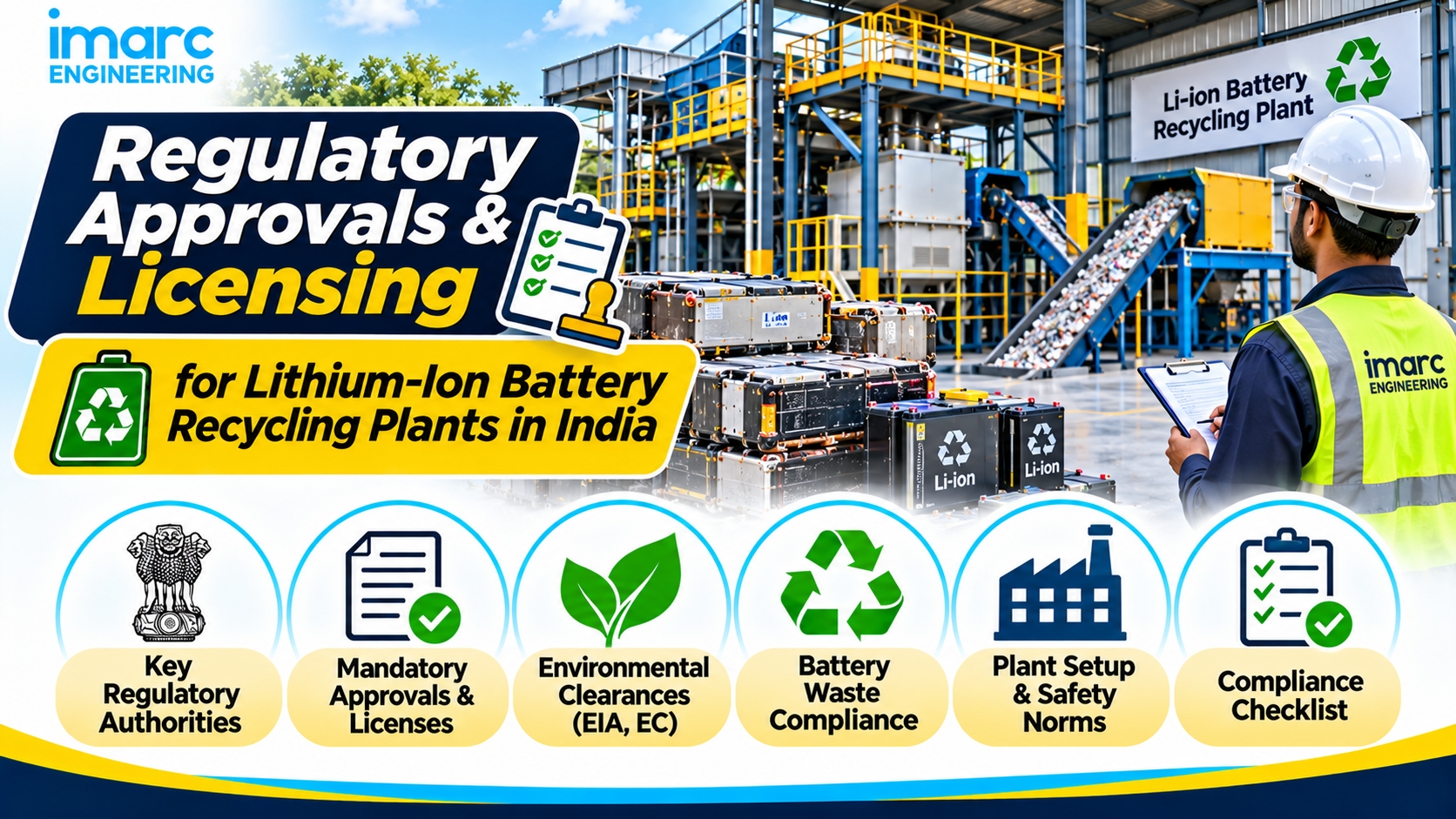
Setting up a lithium-ion battery recycling plant in India is not primarily a technology or machinery project. It is a regulated activity under the Battery Waste Management Rules, 2022. Many promoters discover this only after land is purchased or equipment is ordered, when applications are rejected or delayed because the facility does not meet registration or consent requirements.
Without the correct sequence of approvals, a lithium-ion battery recycling plant cannot legally receive waste batteries, generate EPR certificates or commence commercial operations. Professional Regulatory Approval for Lithium-Ion Battery Recycling Plants helps promoters identify applicable CPCB registrations, SPCB consents, hazardous waste authorisations and other statutory clearances, while coordinating the required technical documentation and approval process. Addressing these requirements early helps reduce regulatory delays and avoid costly changes after construction.
Governing Framework
The primary regulation is the Battery Waste Management Rules, 2022 (notified under the Environment Protection Act, 1986), along with subsequent amendments. These rules apply to all battery chemistries, including lithium-ion, and cover producers, recyclers, refurbishers and other stakeholders.
Key obligations for recyclers include:
Mandatory registration on the CPCB centralised EPR portal
Recycling only from authorised sources
Generation of EPR certificates based on verified recycled quantity
Periodic returns and record-keeping
Compliance with environmental standards for emissions, effluent and hazardous waste
The Central Pollution Control Board (CPCB) manages the national registration system. State Pollution Control Boards (SPCBs) or Pollution Control Committees handle consents and hazardous waste authorisation.
Essential Approvals and Sequence
A typical lithium-ion battery recycling project requires the following clearances in a logical order:
1. Company and Land Formalities
Company incorporation, GST, and confirmation that the land is permitted for industrial / recycling use (conversion or industrial estate allotment where required).
2. Consent to Establish (CTE) from SPCB
Required before construction or major equipment installation. The application must include plant layout, process description, pollution control systems, capacity and environmental management plans.
3. Hazardous Waste Authorisation
Under the Hazardous and Other Wastes (Management and Transboundary Movement) Rules, 2016. Lithium-ion recycling generates process residues and black mass that typically fall under hazardous waste categories. Authorisation must cover the specific waste streams and quantities.
4. Factory Licence and Fire NOC
Factory licence under the Factories Act and fire safety clearance from the local fire department. Battery storage and processing areas have specific fire and explosion risk considerations that influence layout and safety systems.
5. Consent to Operate (CTO) from SPCB
Granted after the plant is installed and inspected. CTO capacity must align with the capacity later declared in CPCB registration.
6. CPCB Recycler Registration
Mandatory under the Battery Waste Management Rules. Application is filed on the official EPR Battery portal (eprbattery.cpcb.gov.in). Required documents typically include CTE/CTO, process flow, capacity details, geo-tagged site images, and authorised person information. Without this registration, the facility cannot legally operate as a recycler or issue EPR certificates.
Additional state-specific or local approvals (building plan sanction, labour licences, etc.) may also apply depending on location and scale.
Why Sequence and Documentation Matter
CPCB registration capacity is expected to match the capacity permitted under the SPCB CTO. Mismatches, incomplete process descriptions, or missing pollution control details are common reasons for delays or rejection. Layout drawings, material flow, storage segregation (especially for incoming batteries and black mass), and emission/effluent control systems are scrutinised during both SPCB and CPCB processes.
Projects that treat approvals as a post-construction formality frequently face redesigns, additional capital expenditure, or prolonged non-operational periods.
Practical Compliance Checklist
Confirm land-use suitability for recycling activity
Prepare detailed process flow and mass balance
Design layout with proper segregation of battery storage, dismantling, processing, black mass handling and hazardous waste storage
Obtain CTE before civil and major equipment work
Secure Hazardous Waste Authorisation covering relevant streams
Complete factory licence and fire safety clearances
Commission the plant and obtain CTO
Apply for CPCB Recycler Registration with matching capacity and complete documentation
Establish systems for record-keeping, quarterly/annual returns and EPR certificate generation
Plan for ongoing environmental monitoring as required by the consents
Common Pitfalls
Starting construction or ordering equipment before CTE
Declaring a higher capacity on the CPCB portal than permitted under CTO
Inadequate description of technology, recovery efficiency or pollution control
Missing or incomplete geo-tagged images and process documentation
Treating hazardous waste authorisation as optional
Underestimating the time required for SPCB inspections and CPCB scrutiny
These issues convert what should be a predictable approval timeline into months of delay.
How IMARC Engineering Can Help
IMARC Engineering supports promoters and investors planning lithium-ion battery recycling facilities with regulatory-aligned project development. This includes process and layout planning that meets consent and registration requirements, preparation of technical documentation for SPCB and CPCB applications, capacity alignment between CTO and EPR registration, and overall project structuring so that licensing proceeds in parallel with engineering rather than becoming a bottleneck after construction.
The objective is to reduce approval risk and ensure the plant can commence operations with valid authorisations in place.
Planning a Lithium-Ion Battery Recycling Plant in India? Get expert regulatory approval and licensing support from IMARC Engineering: https://www.imarcengineering.com/contact?service=regulatory-approval-and-licensing
Conclusion
Regulatory approval and licensing form the foundation of a viable lithium-ion battery recycling business in India. The Battery Waste Management Rules, 2022, together with SPCB consents and CPCB registration, create a clear but sequential compliance path. Projects that map this path early, align plant design with the documentation requirements, and maintain consistency between capacity declarations and actual facilities move through the system more reliably. Those that treat licensing as an afterthought usually pay for it in delayed commissioning and restricted operations.
Contact Us:
IMARC Engineering
Phone: +917827860593
Email: sales@imarcengineering.com
India: C-130, Sector 2, Noida, Uttar Pradesh 201301
LinkedIn: https://www.linkedin.com/showcase/imarc-engineering/



