Welcoming a rescue dog into your home is the beginning of a special journey. However, adjusting to unfamiliar surroundings, new people, and different routines can take time. Preparing your home before adoption and understanding what your dog may experience during the first few months can make the transition easier.
Let Them Be Dog provides practical resources for new adopters, including a rescue dog adjustment guide and a pickup-day checklist. With the right preparation, patience, and safety essentials, you can help your new companion feel secure and gradually become part of the family.
Rescue Dog Adjustment Timeline – Understand the First Three Months
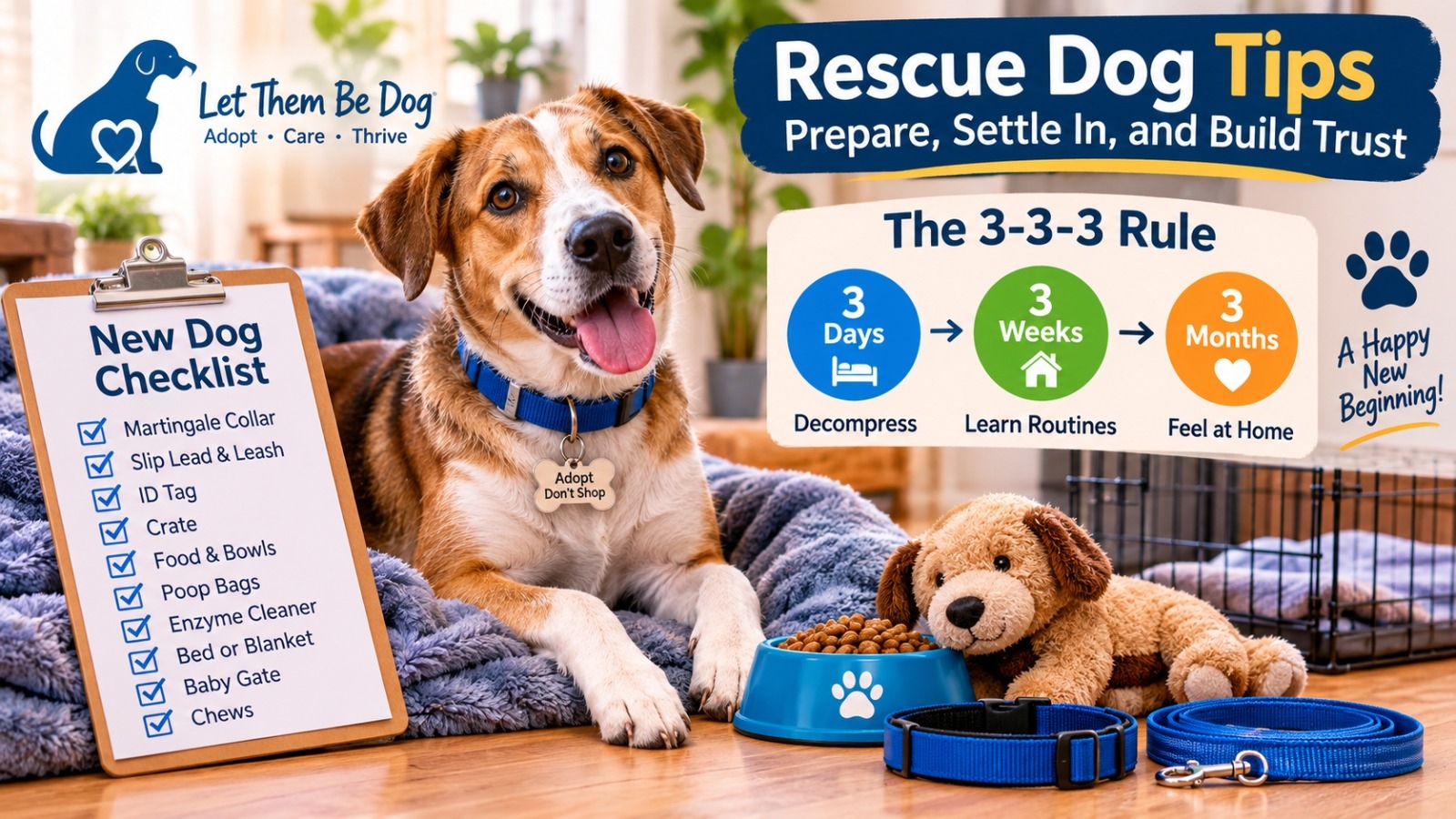
Following a rescue dog adjustment timeline can help you understand what your newly adopted companion may experience after arriving home. Let Them Be Dog explains the process through the 3-3-3 rule: three days to decompress, three weeks to learn routines, and three months to feel at home.
This timeline is a general guide rather than a strict deadline. Some dogs adjust quickly, while fearful, senior, and under-socialized dogs may need considerably longer.
First 3 Days – Give Your Rescue Dog Time to Decompress
The first three days are usually about rest, quiet surroundings, and reducing stress. Your dog may hide, sleep frequently, skip meals, or show little interest in playing. Potty accidents and clinginess can also occur during this period.
Keep the home calm and avoid introducing too many visitors or unfamiliar experiences. Show your dog the water bowl, bed, and designated potty area, then give them space to explore at their own pace.
First 3 Weeks – Establish Familiar Daily Routines
During the first three weeks, your rescue dog gradually becomes familiar with household patterns. They start learning feeding times, walking schedules, sleeping arrangements, and household boundaries.
You may notice more personality, playful behavior, barking, chewing, or testing of house rules. Maintain consistent routines and introduce short, reward-based training sessions. Sniff walks, puzzle feeders, and enrichment activities can also provide helpful mental stimulation.
First 3 Months – Build Trust and Confidence
By the three-month stage, many rescue dogs feel more comfortable in their new environment. They may sleep more deeply, seek attention, bring toys, and show their individual personalities.
Continue using positive training methods, maintaining consistent routines, and gradually introducing new experiences. Watch for signs of separation anxiety, such as excessive whining, chewing doors, or accidents when left alone.
Remember that progress matters more than following an exact calendar. Let your dog set a comfortable pace.
New Dog Checklist – Essential Supplies to Buy Before Pickup Day
A practical new dog checklist helps you prepare for adoption without spending unnecessarily on accessories your dog may not need. Let Them Be Dog recommends prioritizing safety, food, and basic supplies before purchasing extra toys, expensive beds, and grooming equipment.
The most important items to prepare before pickup include:
Martingale collar: Helps prevent a nervous dog from backing out of its collar when correctly fitted.
Slip lead: Provides a backup connection around car doors, front doors, and during early walks.
Six-foot leash: Offers better control around traffic, bicycles, and unfamiliar surroundings.
Identification tag: Include your cell phone number so someone can contact you if your dog gets lost.
Wire crate with divider: Provides a quiet resting space where your dog can stand, turn around, and lie down comfortably.
Baby gate: Helps limit access to one or two quiet rooms during the first few weeks.
Familiar shelter food: Purchase a small bag of the same brand and formula your dog has been eating.
Food and water bowls: Choose stable, heavy bowls that are less likely to tip or slide.
Poop bags: Keep them ready for bathroom breaks from the moment you collect your dog.
Enzyme cleaner: Helps remove urine odors and clean up unexpected accidents.
Washable bed or old blanket: Provides a comfortable resting surface that can be cleaned easily.
Two sturdy chews: Offer appropriate chewing options while your dog settles in.
Check with the shelter first to find out which supplies they provide and ask for your dog's size, food brand, and identification information.
What Can Wait Until Your Dog Settles In?
Not every dog accessory needs to be purchased before adoption. Let Them Be Dog recommends waiting around two to four weeks before investing in certain extras. This gives you time to understand your dog's size, sleeping preferences, chewing habits, and coat-care needs.
An upgraded dog bed can wait until weeks three or four. Additional toys and puzzle feeders can be introduced during weeks two or three, while grooming tools can wait until you understand your dog's coat and handling comfort.
A larger bag of new food should also wait. Continue with the shelter's familiar food during the first week and discuss any gradual food change with your veterinarian.
Rescue Dog Adjustment and Adoption Preparation Timeline
Stage | What to Expect | What to Prepare or Do |
Before pickup | Organize the home and safety equipment | Collar, slip lead, leash, ID tag, crate, shelter food |
First 3 days | Hiding, extra sleep, stress, possible appetite changes | Quiet surroundings, familiar food, water, potty breaks |
First week | Learning basic household patterns | Consistent meals, walks, rest, and house training |
Weeks 2–3 | Personality develops and boundaries are tested | Sniff walks, enrichment, toys, reward-based training |
Weeks 3–4 | Greater familiarity with the home | Consider an upgraded bed and appropriate grooming supplies |
First 3 months | Stronger bonds and increasing confidence | Maintain routines, build trust, and set training goals |
Important Safety Tips for New Rescue Dog Owners
Safety is particularly important during the first few weeks because a frightened dog may try to escape through an open door or gate.
Let Them Be Dog recommends using a properly fitted martingale collar and keeping a slip lead available as a backup. A martingale should be removed when your dog is crated or left unsupervised because its additional loop can become caught on crate wire or furniture.
A slip lead is intended as a backup rather than a replacement for an everyday walking collar or suitable harness. Avoid retractable leashes, unverified car restraints, and equipment that shocks, pinches, or sprays.
Make sure your dog has an identification tag with your phone number and confirm that their microchip is registered with your details. These precautions can help protect your new companion during the adjustment period.
Frequently Asked Questions
How long does it take a rescue dog to adjust to a new home?
The 3-3-3 rule provides a general guide of three days to decompress, three weeks to learn household routines, and three months to feel at home. Individual dogs may need more or less time.
What should I buy before adopting a rescue dog?
Prioritize a martingale collar, slip lead, six-foot leash, identification tag, crate, baby gate, familiar shelter food, bowls, poop bags, enzyme cleaner, a washable blanket, and sturdy chews.
Should I buy expensive toys and beds before adoption?
It is generally better to wait. Your dog's chewing habits, sleeping preferences, and play style become clearer after they have settled in. Many optional supplies can wait two to four weeks.
What if my rescue dog is still hiding after three weeks?
Some dogs need longer to feel secure, especially fearful or under-socialized animals. Monitor gradual progress and seek advice from a veterinarian or certified behavior professional if your dog remains stuck or becomes more distressed.
What identification does my new dog need?
Your dog should have an identification tag displaying your phone number and a microchip registered with your information. Check that the shelter's microchip registry details have been transferred correctly.
Can a newly adopted dog use a crate?
Yes. A correctly sized crate can provide a quiet resting space. It should allow your dog to stand, turn around, and lie down comfortably, and should never be used as punishment. A baby-gated room can be an alternative for dogs that become distressed in crates.
Give Your Rescue Dog a Confident Start with Let Them Be Dog
Adopting a rescue dog requires more than purchasing supplies. It involves understanding your dog's needs, creating a safe environment, and allowing time for trust to develop.
Whether you are following a rescue dog adjustment timeline or preparing a new dog checklist before pickup day, Let Them Be Dog provides practical guidance to help make the transition smoother.
Explore the 3-3-3 Rule for Rescue Dogs and the New Dog Checklist to prepare for adoption and give your new companion a comfortable beginning.