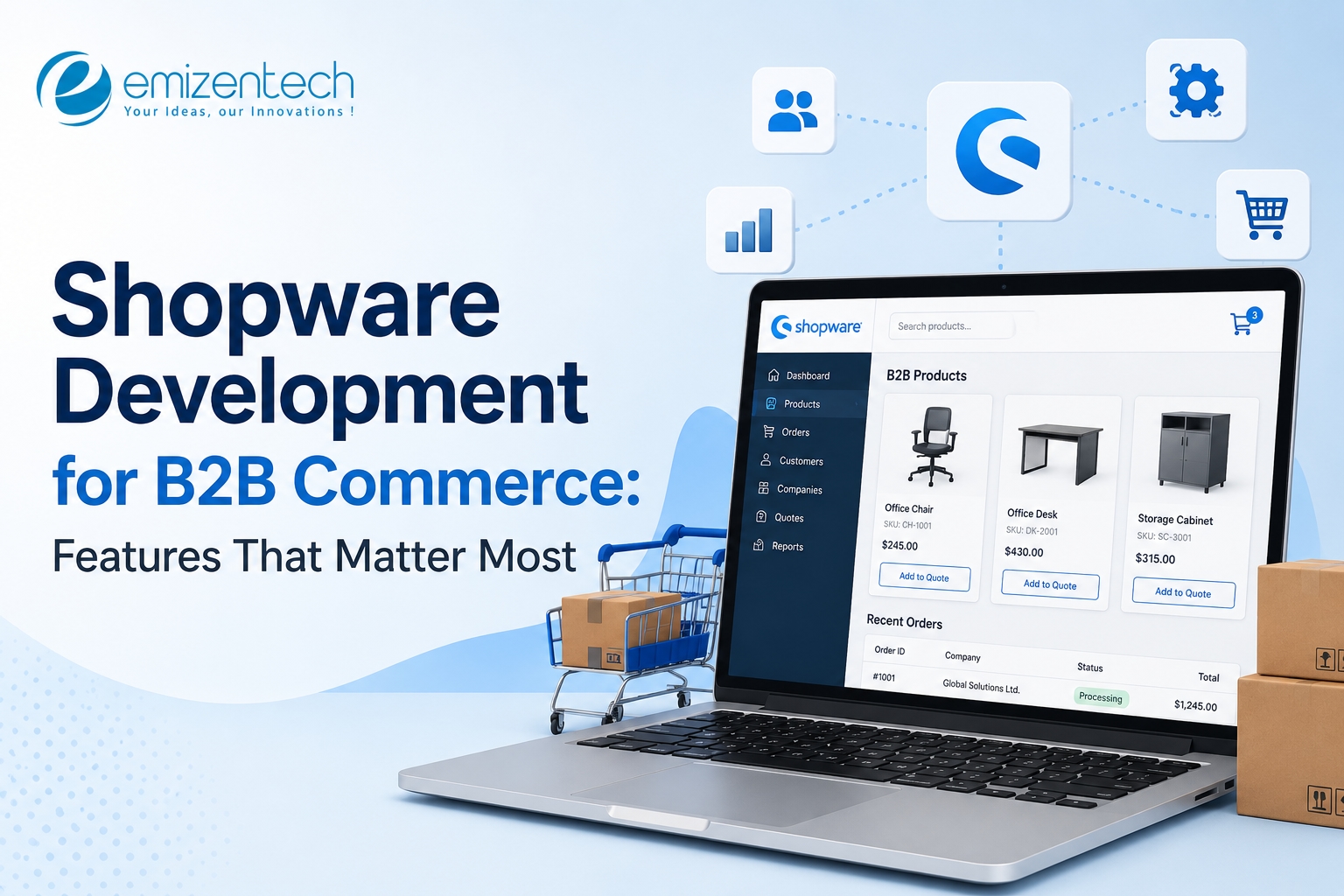
B2B eCommerce has changed significantly over the last few years. Buyers now expect the same convenience, speed, and personalization they experience in B2C shopping. At the same time, B2B transactions involve more complex pricing structures, approval workflows, account hierarchies, bulk orders, and integrations with ERP and CRM systems.
This is where Shopware has emerged as a strong choice for modern B2B commerce. Built with flexibility, scalability, and an API-first architecture, Shopware allows merchants to create tailored purchasing experiences without sacrificing operational efficiency. Many brands looking for long-term scalability often work with a shopware development company to customize these capabilities according to their operational requirements.
In this article, we will explore the Shopware features that matter most for B2B commerce and why they play a critical role in building a successful digital sales channel.
Why Shopware Is Becoming Popular for B2B Commerce
Unlike traditional eCommerce platforms designed primarily for direct consumers, Shopware provides dedicated B2B functionalities that support complex purchasing processes. The platform combines flexibility with enterprise-grade capabilities, making it suitable for manufacturers, wholesalers, distributors, and suppliers.
Its modular architecture allows merchants to add only the features they need while maintaining performance and scalability. Shopware also supports both B2B and B2C operations within a unified ecosystem, helping brands manage multiple sales channels efficiently.
Another factor behind its growing adoption is Shopware's API-first approach, which supports integrations with ERP systems, CRM software, payment gateways, and inventory management tools. This makes it easier to connect different systems and maintain smoother workflows. A shopware development company can also customize these capabilities based on specific B2B requirements, from complex integrations to tailored purchasing processes.
Company Accounts and Employee Management
One of the most important requirements in B2B commerce is managing multiple users under a single customer account.
A purchasing manager, finance department, procurement specialist, and warehouse team may all require different levels of access. Shopware addresses this challenge through employee management and role-based permissions.
This functionality allows organizations to:
Create multiple employee accounts
Assign specific roles and permissions
Control purchasing authority
Manage departmental access levels
Streamline procurement workflows
Instead of sharing one login across multiple users, each team member receives controlled access based on their responsibilities. This improves security and operational efficiency.
For businesses with complex purchasing structures, a shopware development company can further customize account management features to align with internal approval policies.
Advanced Pricing and Customer-Specific Catalogs
Pricing in B2B commerce is rarely straightforward.
Different customers often receive unique pricing agreements, discounts, negotiated contracts, or volume-based rates. A platform must be capable of handling these complexities without creating administrative challenges.
Shopware supports:
Customer-specific pricing
Tier pricing
Volume discounts
Contract-based rates
Custom product assortments
This allows buyers to view pricing that is relevant to their account while simplifying order management for sellers. Personalized catalogs can also display products available only to certain customer groups.
Such flexibility helps create a more personalized purchasing experience while reducing pricing errors.
Quote Management
Many B2B transactions begin with a quotation rather than an immediate purchase.
Buyers often request pricing for large orders before committing to a purchase. Managing these requests manually through emails and spreadsheets can slow down sales cycles.
Shopware includes integrated quote management capabilities that allow:
Quote requests directly from the storefront
Personalized pricing negotiations
Faster communication between buyers and sellers
Approval and acceptance tracking
This creates a smoother procurement process while improving transparency for both parties.
Approval Workflows for Large Orders
Large B2B purchases frequently require approval from managers or finance teams before an order can be finalized.
Without automated approval processes, procurement becomes slow and inefficient.
Shopware provides approval workflows that allow organizations to define purchasing rules and authorization requirements. Orders can be reviewed, approved, or rejected according to internal policies before processing.
This feature is especially valuable for organizations handling high-value transactions or complex purchasing structures.
Many businesses rely on a shopware development company to configure approval systems that match existing procurement procedures and compliance requirements.
Quick Ordering Capabilities
B2B buyers often know exactly what they want to purchase.
Unlike retail customers who browse product catalogs, procurement teams frequently order using product SKUs or item numbers.
Shopware simplifies this process through Quick Order functionality.
Users can:
Enter product numbers directly
Upload product lists
Add multiple items simultaneously
Reduce repetitive manual searching
This significantly speeds up purchasing workflows, particularly for customers placing recurring orders.
For wholesalers and distributors processing large order volumes, this feature can save substantial time.
Shopping Lists and Repeat Orders
Repeat purchasing is common in B2B commerce.
Customers often order the same products every week, month, or quarter. Rebuilding orders manually each time creates unnecessary friction.
Shopware's shopping list functionality enables customers to:
Save frequently ordered products
Organize purchasing lists
Share lists internally
Reorder quickly
These capabilities improve efficiency and encourage repeat purchases by simplifying the buying process.
ERP and CRM Integrations
Successful B2B commerce depends on seamless data flow between systems.
Inventory, pricing, customer records, accounting, shipping, and procurement data must remain synchronized across platforms.
Shopware's API-first architecture makes integration significantly easier. Businesses can connect their stores with:
ERP systems
CRM platforms
Inventory management tools
Accounting software
Marketing automation platforms
Shipping solutions
This eliminates manual data entry while improving operational accuracy.
When evaluating integration requirements, partnering with a skilled shopware development company often helps ensure smooth connectivity between existing business systems.
Scalability for Business Growth
Many eCommerce platforms perform well initially but struggle as operations expand.
B2B commerce growth often brings:
Larger product catalogs
Increased customer accounts
Higher transaction volumes
Additional sales channels
Global expansion requirements
Shopware is designed with scalability in mind. Its flexible architecture supports growing catalogs, expanding customer bases, and complex operational structures without requiring a complete platform rebuild.
This makes it suitable for organizations planning long-term digital commerce strategies.
Multi-Store and Multi-Currency Support
B2B sellers frequently operate across multiple regions and markets.
Managing separate stores for different countries can become difficult without centralized administration.
Shopware supports:
Multiple storefronts
Multiple currencies
Multiple languages
Regional pricing strategies
Localized shopping experiences
These capabilities simplify international expansion while maintaining a consistent backend management process.
A reliable shopware development company can help configure regional storefronts and localization strategies that align with market-specific requirements.
Custom Development Flexibility
Every B2B operation has unique processes.
Some require advanced procurement workflows. Others need custom product configurations, specialized pricing rules, or industry-specific integrations.
One of Shopware's biggest advantages is its open and customizable architecture.
Businesses can extend the platform through:
Custom plugins
API integrations
Workflow automation
Theme customization
Headless commerce implementations
Industry-specific functionality
This flexibility allows merchants to create tailored solutions instead of adapting their operations to platform limitations.
Many organizations choose a shopware development company when these customizations become central to their commerce strategy.
Mobile-Optimized B2B Experiences
Modern procurement teams increasingly place orders from smartphones and tablets.
A poor mobile experience can slow purchasing decisions and create frustration.
Shopware supports mobile-first experiences and Progressive Web Apps (PWAs), enabling:
Faster page loading
Improved mobile usability
Better accessibility
Consistent experiences across devices
This helps businesses serve buyers regardless of where they are working.
SEO and Marketing Support
Even in B2B commerce, visibility matters.
Decision-makers often research suppliers online before initiating contact or making purchasing decisions.
Shopware includes built-in SEO and marketing capabilities such as:
SEO-friendly URLs
Meta management
Sitemap generation
Structured data support
Content management tools
These features help improve organic visibility and support content-driven growth strategies.
Conclusion
B2B commerce requires far more than a standard online store. Features such as role-based account management, quote handling, approval workflows, customer-specific pricing, ERP integrations, and quick ordering capabilities play a major role in creating efficient purchasing experiences.
Shopware addresses these requirements through a flexible and scalable architecture designed for modern commerce operations. Whether supporting complex procurement processes, international expansion, or custom business workflows, the platform offers the tools needed to adapt and grow. Organizations evaluating B2B eCommerce platforms often work with a shopware development company to ensure these capabilities are implemented effectively and aligned with operational goals.
As the B2B commerce landscape continues to evolve, platforms like Shopware provide the flexibility needed to meet changing buyer expectations. As B2B commerce continues to evolve, the focus remains on creating scalable and flexible digital experiences. At EmizenTech, there is a strong emphasis on solutions that can adapt to changing operational needs and customer expectations over time.
FAQs
1. Why is Shopware suitable for B2B commerce?
Shopware offers B2B-focused features such as custom pricing, company accounts, approval workflows, quote management, and ERP integrations that support complex purchasing processes.
2. Can Shopware provide customer-specific pricing?
Yes. Shopware supports personalized pricing, volume discounts, contract rates, and custom product catalogs for different customer groups.
3. Does Shopware integrate with ERP and CRM systems?
Yes. Shopware's API-first architecture allows seamless integration with ERP, CRM, inventory, accounting, and other business tools.
4. How does Shopware support bulk ordering?
The platform includes Quick Order features that let buyers add products using SKUs, upload order lists, and place large orders faster.
5. Can a shopware development company customize Shopware?
Yes. A shopware development company can tailor workflows, integrations, themes, and features to match specific operational needs.