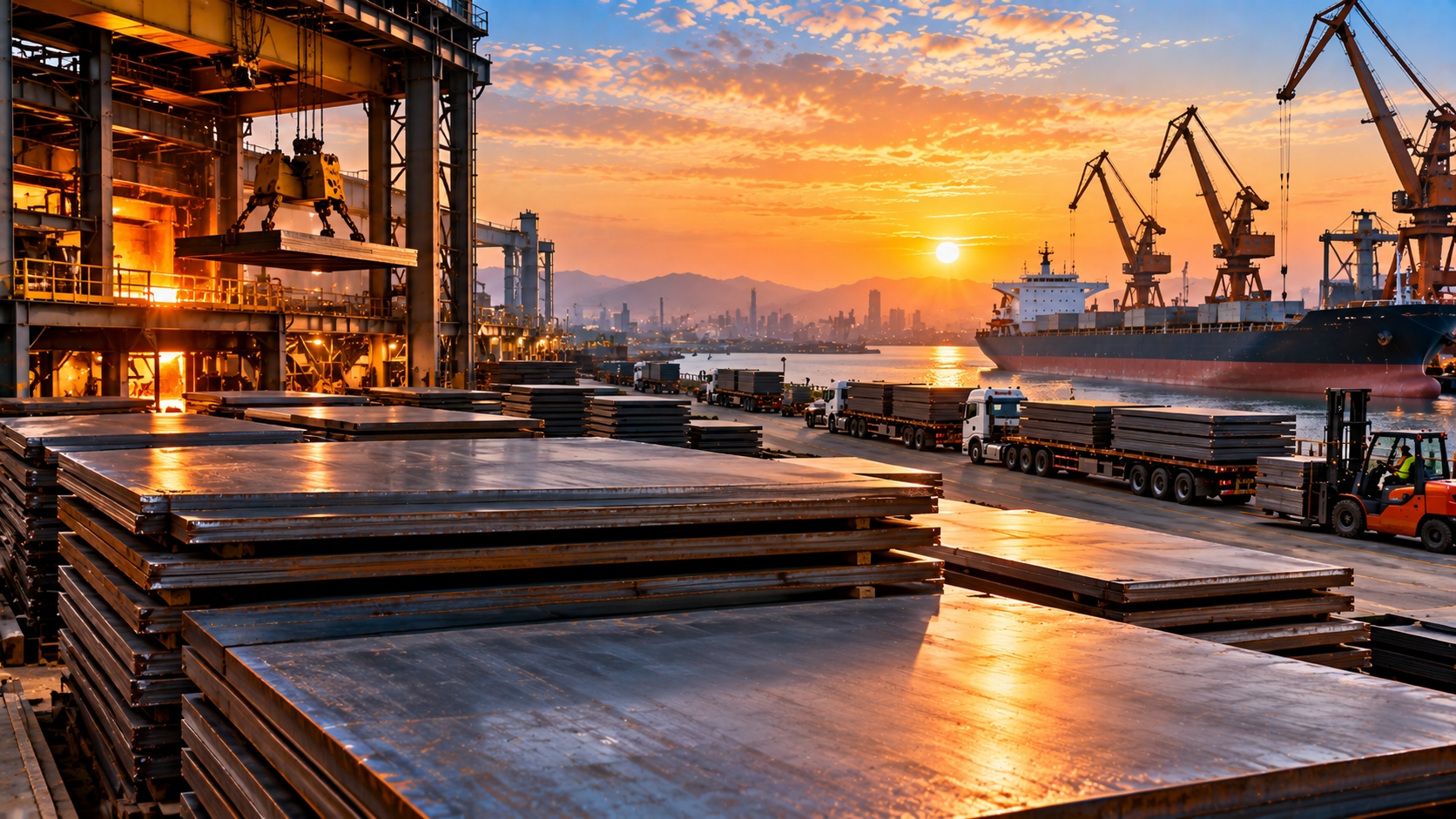
Steel plate numbers just came in for August 2026, and the steel plate price trend heading into Q3 2026 shows a real gap worth paying attention to. China's quoting USD 500.72/MT FOB. India's higher, at USD 578.60/MT FOB. That's a spread of nearly USD 78 per metric ton, and for buyers running large volumes, that adds up fast.
Steel plate feeds into shipbuilding, heavy equipment, construction, and industrial fabrication. When the price moves in either market, project budgets downstream feel it within a quarter, sometimes sooner.
Current Steel Plate Prices: China vs India
Product | Region | Incoterm Basis | Price | Last Updated |
|---|---|---|---|---|
Steel Plate | China | FOB | USD 500.72/MT | August 2026 |
Steel Plate | India | FOB | USD 578.60/MT | August 2026 |
Both figures are FOB, so at least the comparison is cleaner than it would be with mixed incoterms. The buyer still covers freight and insurance from the loading port onward in both cases.
A few quick notes:
The gap is roughly USD 77.88 per metric ton.
Both prices are August 2026 figures, not yearly averages.
FOB basis means production cost, local demand, and export policy carry more weight here than shipping terms.
That's a meaningfully wider spread than what shows up in some other commodity comparisons. Worth asking why.
Why Is China's Steel Plate Cheaper?
China runs massive production scale. Dozens of large mills, government-backed capacity, and export incentives that have kept Chinese steel competitive on price for years now. When domestic Chinese demand softens, a good chunk of that excess output gets pushed into export markets, and prices adjust downward to move the volume.
India's situation looks different. Production costs run higher there, partly due to raw material sourcing and partly due to energy costs at the mill level. Domestic steel demand in India has also stayed fairly strong, driven by infrastructure projects and construction activity, which gives Indian producers less reason to discount for export buyers.
What's Actually Driving These Prices
Raw material costs. Iron ore and coking coal prices sit underneath everything in steel pricing. A jump in either one, and plate prices follow within weeks.
Energy costs. Steel production eats a lot of power. Regions with cheaper electricity or coal access, China included, tend to produce at lower cost.
Domestic demand strength. India's construction and infrastructure sector has been absorbing steel output at a healthy pace. Less surplus means less pressure to discount.
Trade policy. Export tariffs, anti-dumping duties, and quota restrictions can shift pricing in either direction almost overnight. A single policy change in either country tends to ripple through the whole regional market.
Currency movement. Steel trades in dollars. A weaker yuan or rupee against the dollar changes what local producers are effectively earning, which can push export pricing one way or another.
Quick Q&A: What Buyers Are Actually Asking
Does the FOB price include shipping to my country?
No. FOB only covers cost up to loading at the origin port. Freight, insurance, and destination handling get added separately, so the landed cost will run higher than the FOB figure in both the China and India cases.
Is China always going to be cheaper?
Not necessarily. Export incentives and domestic demand cycles shift. If Chinese domestic demand picks up, that export discount could shrink pretty quickly.
Should I lock in a long-term contract at current prices?
Depends on your risk tolerance. Steel plate pricing moves with raw material costs and trade policy, both of which can swing within a single quarter. A shorter contract with price review clauses tends to protect buyers better in volatile periods like this one.
What This Means for Procurement Teams and Investors
Buyers sourcing steel plate have a straightforward decision in front of them right now. China's lower FOB price looks appealing, but factor in shipping distance, lead times, and quality consistency before assuming it's the better deal overall. Some buyers find the total landed cost closer than the headline FOB numbers suggest.
Investors watching India's steel sector might read the higher domestic pricing as a sign of underlying strength. Strong local demand, less dependence on export markets to move inventory. That's not necessarily a bad position to be in.
For project planners in construction or heavy manufacturing, this price gap is also a sourcing diversification signal. Relying entirely on one region carries risk if either trade policy or domestic demand shifts unexpectedly.
Looking Ahead: Q3 2026 Outlook
Where's this headed through the rest of Q3? Hard to say with total certainty, but a few things point toward the gap holding, maybe even widening slightly. China's export-driven pricing model isn't changing structurally anytime soon. India's domestic demand doesn't look like it's cooling off either.
Raw material costs remain the wildcard. Iron ore and coal prices have moved sharply before, and either could reshape this comparison within a matter of weeks. Buyers locking in contracts right now should treat the August 2026 figures as current, not fixed.
Conclusion
The steel plate price trend for Q3 2026 points to a clear divide. China at USD 500.72/MT FOB, India at USD 578.60/MT FOB, both as of August 2026. Production scale, domestic demand, and trade policy explain most of that USD 77.88 gap. For procurement teams and investors tracking steel markets, that spread is worth watching closely as Q3 unfolds.
FAQ Section
What is the current steel plate price trend in China and India?
As of August 2026, China's steel plate sits at USD 500.72/MT FOB, while India's runs USD 578.60/MT FOB. The gap comes down to production scale, domestic demand strength, and trade policy differences between the two countries.
Why is Chinese steel plate cheaper than Indian steel plate?
China's large-scale production and export-oriented policies keep prices competitive, especially when domestic demand softens. India has higher production costs and stronger domestic demand absorption, giving producers less reason to discount for export buyers.
What factors affect steel plate prices the most?
Raw material costs like iron ore and coking coal drive most of it. Energy costs, domestic demand levels, trade policy changes, and currency movement all play a role too. These factors interact, so prices can shift quickly within a short window.
How reliable is FOB pricing for budgeting purposes?
FOB covers only the cost up to the origin port. Buyers still need to add freight, insurance, and destination handling fees to get a true landed cost. Treat FOB as a starting reference point, not a final delivered price.
What's the outlook for steel plate prices in Q3 2026?
The China-India gap looks likely to persist through Q3 2026, given current production economics and domestic demand patterns. Raw material cost swings remain the biggest wildcard that could shift this comparison within the quarter.