
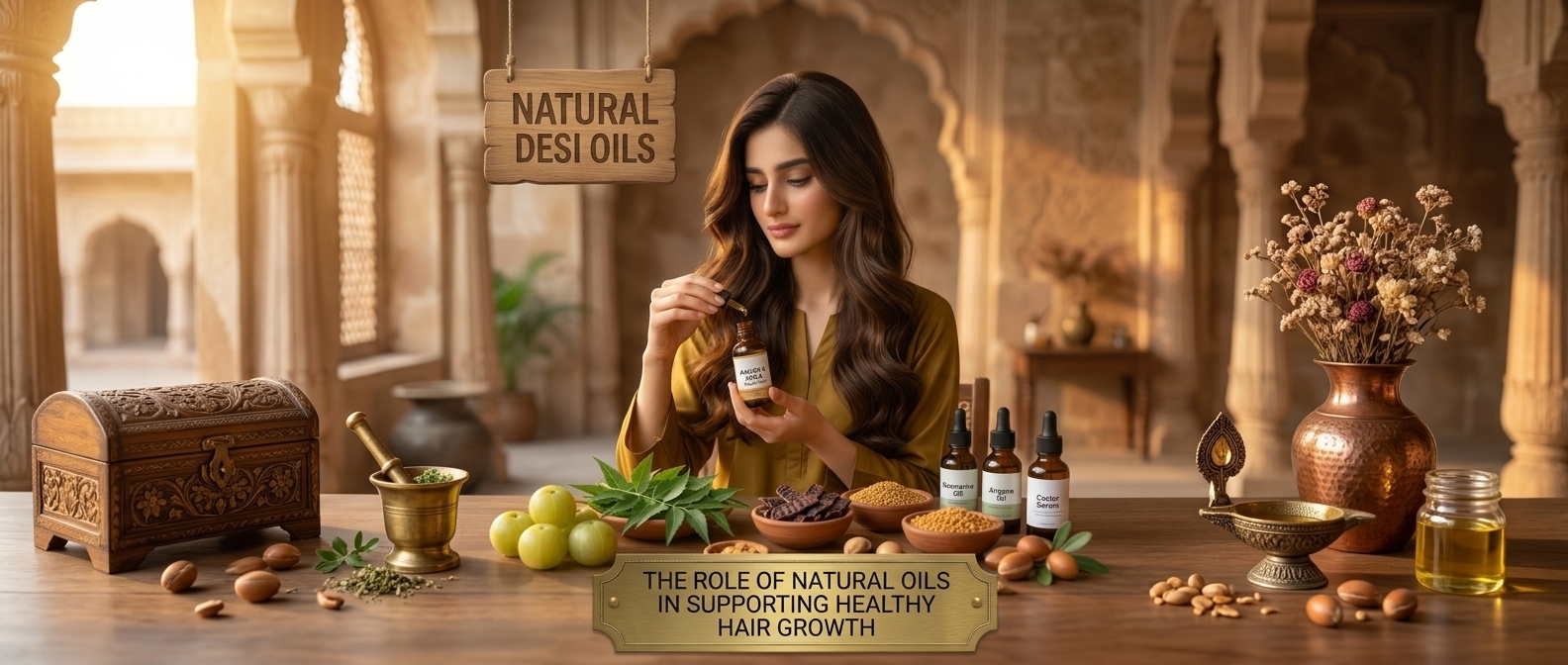
Hair oiling is one of the oldest beauty rituals in Pakistan and across South Asia. Many of us remember a grandmother or mother sitting us down on a weekend, warming a bowl of oil, and massaging it into our scalps while we squirmed to get away. Today, with so many shampoos, serums, and treatments on the market, oiling is still going strong, and for good reason. Natural oils nourish the scalp, protect strands, and create a healthier environment for hair to grow.
But how exactly do oils help, and how do you use them to get the most out of them? Let’s look at what natural oils can and cannot do, which ones are worth knowing, and how to build a routine that works.
How Hair Actually Grows
To understand the role of oils, it helps to know a little about hair growth. Every strand grows from a follicle beneath the scalp, and each follicle goes through cycles: a growth phase that can last several years, a short transition phase, and a resting phase before the hair sheds and a new one begins. Genetics, hormones, age, nutrition, stress, and medical conditions all influence this cycle.
This is important because no oil can change your genetics or rewrite your biology. What oils can do is support the conditions around hair growth. A clean, balanced, well-moisturized scalp is a better foundation for healthy hair than one that is dry, flaky, or irritated. Meanwhile, nourished strands are less likely to snap, which means you keep more of the length you grow.
What Natural Oils Do for Your Hair
Natural oils work in a few different ways. Some, like coconut oil, are small enough to penetrate the hair shaft and help reduce protein loss during washing. Others, like jojoba and argan, mostly sit on the surface, smoothing the cuticle, adding shine, and sealing in moisture. Many herbal oils are infused with plant ingredients that people have traditionally used to soothe the scalp and keep hair feeling strong.
The act of massaging the oil in also matters. A gentle scalp massage for five to ten minutes can feel relaxing, may help ease tension, and encourages circulation in the area. Some small studies have suggested that regular scalp massage may support hair thickness over time, although more research is needed. At the very least, it is a calming ritual that many people enjoy.
Popular Natural Oils and Their Benefits
Coconut oil is a classic choice, known for its ability to penetrate the hair and reduce damage from washing and styling. It suits most hair types, though those with very oily scalps may prefer to apply it mostly to the lengths.
Mustard oil, widely used in Pakistani households, is warming and traditionally valued for scalp massage. Because it has a strong smell and can be irritating for sensitive skin, it is best diluted with a gentler oil and patch tested first.
Sesame oil is a staple in traditional Ayurvedic and Unani practices. It is rich in nutrients, absorbs well, and is often used as a base for herbal infusions.
Almond oil is light and rich in vitamin E, making it a good option for dry, frizzy hair. It works nicely as a carrier for other oils.
Castor oil is thick and heavily moisturizing. It coats the hair well and is often mixed with lighter oils, though claims that it speeds up growth are not strongly backed by science.
Olive oil is a gentle conditioner that works well on dry or coarse hair, especially as a pre-wash treatment.
Rosemary oil has become popular recently thanks to small studies suggesting it may support hair density. It should always be diluted before use.
Argan and jojoba oil are lightweight and excellent for smoothing frizz, adding shine, and balancing the scalp.
Why Herbal Blends Are So Popular
Instead of using a single oil, many traditional formulas combine several oils with herbs such as amla, bhringraj, fenugreek, neem, and hibiscus. The idea is that each ingredient contributes something different: one nourishes, another soothes, another adds shine. Because these blends are infused slowly over time, the plant compounds are drawn into the oil, creating a rich, aromatic product.
Of course, not all blends are equal. Some contain very small amounts of the herbs they advertise, with most of the bottle being mineral oil or fragrance. That is why reading labels matters so much.
How to Choose the Best Hair Oil in Pakistan
Searching for the Best hair oil in Pakistan can feel overwhelming, since the market is full of options at every price point. Rather than chasing the loudest advertisement, focus on a few practical points.
First, check the ingredients. Look for natural oils and herbs listed near the top, and avoid products dominated by mineral oil, heavy synthetic fragrance, or artificial colors. Second, consider your scalp type. If your scalp is oily, choose lighter oils or use less product. If it is dry or flaky, richer oils may serve you better. Third, think about your climate. Pakistan’s hot summers and humid monsoons can make heavy oils feel sticky, so you may want to switch to lighter blends during those months.
Finally, consider the brand’s approach. Companies like Desi Khazanay focus on herb-inspired oils built on traditional recipes, which many people appreciate when they want something familiar and natural. Whichever brand you consider, do a patch test on your inner arm and give the product a few months of regular use before deciding whether it suits you.
How to Oil Your Hair the Right Way
Even the best oil will not do much if it is applied incorrectly. Here is a simple method you can follow.
Start by warming a small amount of oil, either by placing the bottle in a bowl of warm water or rubbing a few drops between your palms. Part your hair into sections and apply the oil directly to your scalp with your fingertips. Massage in slow, circular motions for five to ten minutes without scratching or pulling. Then spread the remaining oil through the lengths and ends, where hair is driest.
Leave the oil on for at least one hour. Overnight is fine if your scalp tolerates it, but wear a loose cap or use an old pillowcase to protect your bedding. Wash with a gentle shampoo, and if the oil feels stubborn, apply shampoo to dry hair first and then add water to lather. Follow with conditioner on the ends if needed.
Common Oiling Mistakes to Avoid
Many people undermine their results without realizing it. One common mistake is using too much oil. A thick, greasy layer does not increase benefits; it just makes your scalp harder to clean and may clog pores. Another is oiling too often. For most people, once or twice a week is plenty, and daily heavy oiling can lead to buildup, itching, or dandruff.
Applying very hot oil is another error, as it can burn the scalp. The oil should be comfortably warm, never hot. Tying oiled hair tightly can also stress strands that are already fragile. And finally, many people expect results within weeks. Hair grows around half an inch per month, so it takes at least three to four months of consistent care before you can fairly judge any product.
Supporting Hair Growth Beyond Oils
Oils are only one part of the story. Your hair is made largely of protein, and it needs iron, zinc, vitamin D, B vitamins, and healthy fats to grow well. Eating a balanced diet with eggs, lentils, leafy greens, nuts, seeds, and fruit goes a long way. Staying hydrated, sleeping enough, and managing stress also matter more than most people think.
Gentle handling is equally important. Avoid brushing wet hair roughly, limit heat styling, trim split ends regularly, and choose a mild shampoo. If you notice sudden or heavy hair fall, patchy bald spots, or a widening part, see a doctor or dermatologist. Conditions such as thyroid imbalance, anemia, hormonal changes, and certain scalp disorders need proper medical attention, and no oil can substitute for that.
Final Thoughts
Natural oils will not work miracles, but they can be a valuable part of a healthy hair care routine. They moisturize, protect, and soothe, while the ritual of massage adds relaxation and consistency. By choosing quality ingredients, applying oil correctly, and pairing it with good nutrition and gentle habits, you give your hair the best possible chance to grow strong and healthy.
Be patient, stay consistent, and pay attention to how your scalp responds. Healthy hair is built slowly, one good habit at a time.