
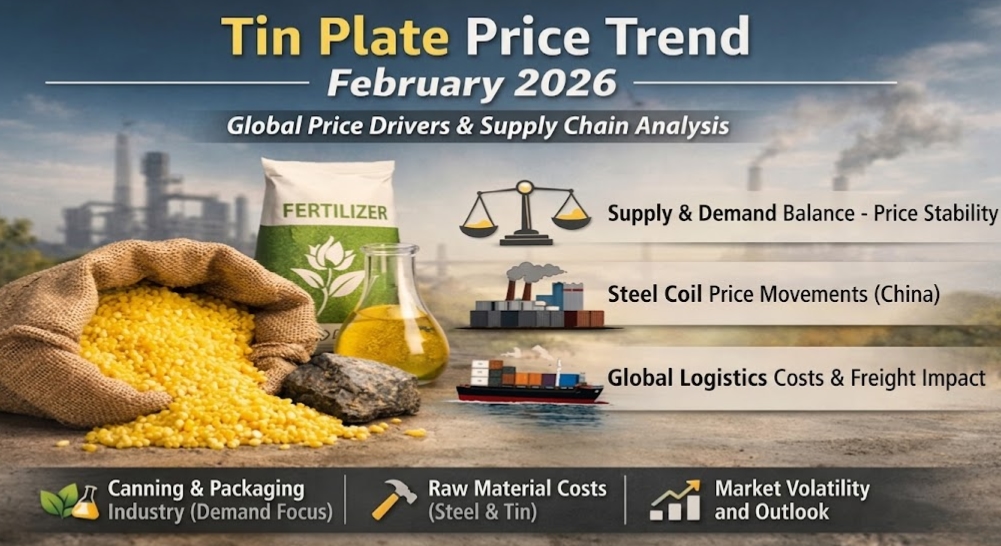
Tin plate buyers watching the market this quarter are seeing something unusual. China and India are practically tied. As of August 2026, China’s tin plate is priced at USD 921.02/MT FOB, and India isn’t far behind at USD 922.28/MT FOB. A difference of just USD 1.26 per metric ton. That’s as close as two major supplying regions get.
Tin plate feeds the packaging industry more than people realize. Food cans, aerosol containers, paint tins, beverage packaging. All of it depends on steady tin plate supply at a price that doesn’t wreck downstream margins. When the gap between regions narrows this much, it usually means something’s happening in the underlying cost structure worth paying attention to.
Current Tin Plate Prices: China vs India
Product | Region | Incoterm Basis | Price | Last Updated |
|---|---|---|---|---|
Tin Plate | China | FOB | USD 921.02/MT | August 2026 |
Tin Plate | India | FOB | USD 922.28/MT | August 2026 |
Both figures are quoted FOB, which actually makes this a fairer comparison than most cross-region price checks. No freight or insurance baked in on either side. Just the cost at the port of origin before shipping even enters the picture.
A couple of points buyers should keep in mind:
FOB pricing means the buyer takes on freight and insurance separately once goods leave port.
The USD 1.26 spread is small enough that logistics costs will likely decide the real landed price winner, not the base rate itself.
Both figures reflect August 2026. Steel-linked products shift fast, so don’t assume these hold into next month without checking again.
China still runs the larger tin plate export volume globally, so its pricing tends to set the tone for the broader market. India closing the gap this tightly says its domestic steel and tinning capacity has gotten genuinely competitive.
What’s Driving Tin Plate Prices Right Now
Tin plate pricing comes down to a mix of raw steel costs, tin coating costs, and energy. Here’s how each piece plays in.
Base steel cost. Tin plate starts as cold-rolled steel before the tin coating gets applied. Steel input costs move with iron ore and coking coal prices, and that movement shows up in tin plate within weeks, not months.
Tin coating costs. Tin itself is a separately traded commodity, and its price has its own volatility tied to mining output from major producers like Indonesia and China. A tight tin supply pushes coating costs up regardless of what steel is doing.
Energy and processing. Tinning lines run on consistent power and controlled processes. Energy price spikes in either country add directly to production cost, and that gets passed through fast given how thin margins run in packaging steel.
Export policy. China occasionally adjusts export tax rebates on steel products, which can shift its FOB pricing almost overnight. Worth watching if you’re sourcing from China specifically.
A Quick Buyer Q&A
Still unsure how to read this spread? A few quick answers.
Does a USD 1.26 difference even matter for bulk buyers? It can, once volume scales. On a 5,000-ton order, that’s over USD 6,000. Small on a per-ton basis, but it adds up.
Should buyers switch from China to India because the gap closed? Not automatically. Price is one factor. Mill capacity, delivery timelines, and quality consistency matter just as much, sometimes more.
Is this gap likely to stay this tight? Hard to say with certainty. Steel markets move on their own schedule, and a single quarter of near-parity doesn’t guarantee the next one looks the same.
What This Means for Buyers and Investors
Packaging manufacturers sourcing tin plate have a genuine choice right now instead of a clear default. That’s worth something on its own.
For buyers negotiating contracts, this is a decent moment to request competitive quotes from both regions rather than defaulting to whichever supplier has been used historically. A near-tied market gives real leverage.
Investors tracking steel and packaging materials should note what a tight China-India spread usually signals. It often points to rising competitiveness in Indian steel processing, which could matter for anyone looking at capacity expansion plays in that space.
Business advisers working with food and beverage packaging clients should flag this trend now. Input costs this close to flat between two major suppliers rarely last, and locking in favorable terms while the window’s open tends to pay off later.
Looking Ahead: Q3 2026 Outlook
Where this goes depends mostly on steel and tin commodity movements over the next few months, not on anything specific to the tin plate market itself.
If Indian steel output keeps climbing the way it has, don’t be surprised if India’s FOB price actually dips below China’s before the quarter ends. That would be a notable shift from the historical pattern of China holding the lower rate.
Buyers locking in Q3 contracts should build in some flexibility. A gap this narrow can flip directions on short notice, and getting caught on the wrong side of a fixed-price agreement isn’t ideal when the market’s moving this fast.
Conclusion
The tin plate price trend for Q3 2026 shows China and India almost dead even, at USD 921.02/MT and USD 922.28/MT FOB respectively, both as of August 2026. A gap this small hasn’t been common historically, and it points to real competitive shifts happening in Indian steel processing. For packaging buyers, investors, and anyone sourcing tin plate right now, this is a market worth watching closely before the quarter wraps up.
FAQ Section
What is the current tin plate price trend between China and India?
As of August 2026, China’s tin plate sits at USD 921.02/MT FOB, with India right behind at USD 922.28/MT FOB. The gap is just USD 1.26, making this one of the closest China-India price comparisons seen in the tin plate market recently.
Why are China and India tin plate prices so close right now?
India’s domestic steel and tinning capacity has grown more competitive, narrowing what used to be a wider gap. Both regions are quoting FOB, so the comparison isn’t distorted by freight differences. Raw steel and tin coating costs are also moving in similar directions for both.
What factors influence tin plate prices the most?
Base steel cost drives most of it, tied to iron ore and coking coal. Tin coating costs add their own volatility since tin trades separately. Energy costs for tinning lines and occasional export policy shifts, especially from China, round out the major price drivers.
How often do tin plate prices change?
Tin plate prices can shift within weeks since they’re tied closely to steel and tin commodity movements. The August 2026 figures here are a solid reference point, but buyers finalizing Q3 contracts should check for updated pricing rather than relying on numbers that are even a month old.
What’s the outlook for tin plate prices in Q3 2026?
The China-India gap is unlikely to stay this narrow indefinitely. If Indian steel output keeps rising, India’s FOB rate could dip below China’s before the quarter ends. Buyers should build flexibility into Q3 contracts given how quickly this spread has already shifted.



