Travelling through the Democratic Republic of the Congo (DRC) is also a chance to discover a food culture shaped by the Congo River, fertile farmland and family cooking. Meals often bring together cassava, plantains, leafy vegetables, fish and slow-cooked sauces. Whether you are eating in Kinshasa or visiting another part of the country, these local dishes are a good place to start.
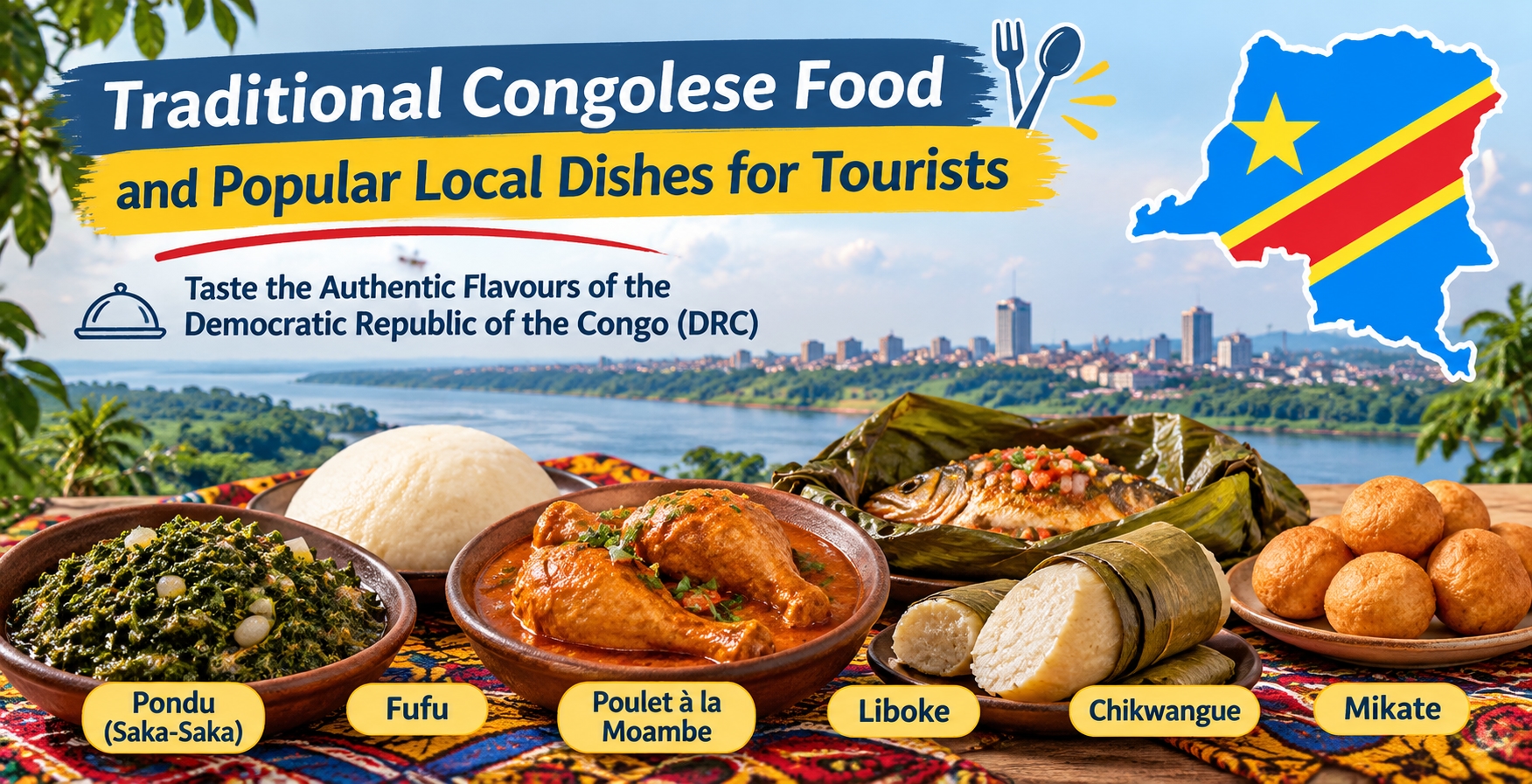
1. Pondu (Saka-Saka): A Popular Cassava Leaf Dish
Pondu is made from finely pounded cassava leaves cooked until tender. Depending on the recipe, cooks add palm oil, onions, eggplant, smoked fish or other seasonings. The result is a rich green dish usually served with rice, fufu or chikwangue. It is one of the most familiar foods on Congolese tables.
2. Fufu: The Everyday Staple
Fufu is a thick, smooth dough prepared with cassava flour, maize flour or a mixture of both. It has a mild taste, making it a perfect partner for spicy sauces and stews. Locals often pinch off a small portion and use it to scoop up the accompanying dish. For first-time visitors, fufu is an easy introduction to traditional Congolese meals.
3. Poulet à la Moambe: Chicken in Palm Nut Sauce
Moambe chicken is a favourite for those looking for a hearty main course. Chicken is simmered in a sauce made from palm nuts, with ingredients and seasonings varying between kitchens. The sauce has a deep, savoury flavour and is commonly enjoyed with rice, plantain or another local staple. Ask about peanuts if you have an allergy, since recipes can differ.
4. Liboke: Fish Cooked in Leaves
Liboke is a traditional cooking method in which fish, or sometimes meat, is seasoned and wrapped in leaves before cooking. Onions, chillies and herbs help flavour the parcel. Opening the leaves releases a wonderful aroma, and the fish is often served with cassava-based sides. It is a great choice for travellers interested in Congo River food traditions.
Planning Your Culinary Trip to the Democratic Republic of the Congo
Discovering traditional Congolese cuisine is a wonderful reason to explore the country's cities, markets and local restaurants. Before planning your food adventure, international travellers should check passport validity, entry requirements and visa eligibility. For information about the online application process, travellers can Apply for the Democratic Republic of the Congo Visa and prepare their travel documents before departure.
5. Chikwangue: Fermented Cassava Bread
Also called kwanga, chikwangue is made from fermented cassava paste wrapped in leaves and cooked. Its firm texture and slightly tangy flavour make it different from ordinary bread. People eat it alongside grilled fish, stews and vegetables. You may see neatly wrapped portions sold at local markets.
6. Madesu: Comforting Bean Stew
Madesu is a satisfying bean dish, frequently prepared with onions, tomatoes and oil. It can be eaten with rice, fufu or plantains. The simple ingredients make it a welcoming option for visitors who prefer a milder meal, although preparation varies and some versions include animal-based ingredients.
7. Mikate and Grilled Street Food
For a quick snack, look for mikate: small, golden pieces of fried dough that are slightly sweet and fluffy inside. Grilled meat skewers, often called kamundele, are another popular street-food choice. Buy from busy stalls where food is freshly cooked and served hot.
Where to Try Traditional Congolese Food
Local restaurants, known in some areas as nganda, offer a relaxed setting for trying grilled fish, liboke and other dishes. Ask about ingredients, especially if you avoid peanuts, fish or meat. Drink sealed bottled or properly treated water, and choose food that is cooked thoroughly and served hot.
Final Thoughts
Traditional Congolese food offers an unforgettable combination of local ingredients, authentic cooking methods and rich cultural traditions. From the comforting taste of pondu to freshly prepared fish liboke and sweet mikate, every dish tells a story about everyday life in the Democratic Republic of the Congo. Exploring local markets and restaurants is an excellent way to experience the country's culture beyond its famous attractions.