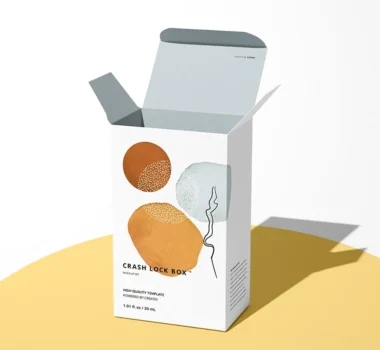
There's a certain kind of packaging that people interact with constantly without ever learning its name. You've almost certainly opened one this week, a deck of playing cards, a box of tea bags, a small cosmetics item, maybe a supplement bottle's outer carton. Pull the flap out, and the whole thing pops open with a satisfying little motion. That's a tuck box, and it's one of those quiet packaging workhorses that shows up everywhere without ever demanding much attention.
This article goes through what tuck boxes actually are, why so many businesses across completely different industries rely on them, the material and finish choices worth understanding, and what to think about before ordering your first batch.
What Exactly Is a Tuck Box
A tuck box is a style of folding carton where the closing mechanism relies on a flap that tucks into a slot or against the box body, rather than needing tape, glue, or a separate lid. The most familiar version is the standard "tuck end" carton, where both the top and bottom have a flap that folds down and tucks into place, holding the box closed through simple friction and the tension of the folded cardboard itself.
This might sound like a small mechanical detail, but it's actually the entire reason tuck boxes have remained such a dominant packaging style for so long. No adhesive needed at the point of closing means faster assembly, no drying time, and no risk of a poorly applied glue line failing later. It's a design that solves the closing problem elegantly with nothing but the fold of the material itself.
The Main Types of Tuck Boxes
Straight Tuck End (STE)
This is the simplest and most common version, where both the top and bottom flaps fold and tuck in the same direction. It's efficient to produce, easy to assemble by hand or machine, and works well for a huge range of lightweight to moderately weighted products.
Reverse Tuck End (RTE)
Here, the top and bottom flaps fold in opposite directions from each other. This style tends to offer a slightly more secure closure and a cleaner look on the front panel, since the front-facing flap has a continuous, unbroken surface that's ideal for branding and print design. This is part of why RTE boxes are so common in retail settings where the front panel needs to do real marketing work.
Auto-Lock Bottom Tuck Boxes
These combine a standard tuck top with a self-locking bottom that folds into place automatically during assembly, without needing manual tucking or gluing on that end. This speeds up packing significantly for businesses filling large volumes of boxes, since the bottom essentially locks itself the moment it's folded correctly.
Snap Lock Bottom Tuck Boxes
Similar in concept to auto-lock bottoms, these use interlocking tabs that click into place, offering a bit more structural reliability for slightly heavier products where a standard auto-lock bottom might not feel quite as secure.
Why Tuck Boxes Are So Widely Used
There's a reason this packaging style shows up across such a wide range of industries, cosmetics, food, pharmaceuticals, retail electronics, games and cards, supplements, and more. A handful of practical advantages explain why it's become such a default choice.
Cost efficiency is a big one. Tuck boxes require relatively little material compared to more structurally complex packaging styles, and their simple die-cut shape keeps production costs manageable even at lower order volumes. For businesses just starting to invest in branded packaging, this makes tuck boxes an accessible entry point rather than a big financial commitment.
Assembly speed matters a lot too, especially for businesses packing products at scale. Since tuck boxes fold and lock without needing glue or tape at the point of closing, they can be assembled quickly by hand or fed through automated packing lines without waiting on adhesive to set.
They also print beautifully. The flat panel structure of a tuck box, before it's folded into shape, gives a clean, continuous printing surface that works well for detailed branding, ingredient information, or eye-catching retail graphics. This is a big reason why so many retail products, especially ones competing for shelf attention, lean on tuck box packaging specifically.
There's a practical shipping advantage as well. Tuck boxes typically ship flat before assembly, taking up a fraction of the space a pre-assembled box would need. This matters enormously for businesses ordering in bulk, since flat-packed cartons dramatically reduce freight costs and warehouse storage requirements compared to boxes that arrive already built.
Common Industries and Products That Rely on Tuck Boxes
Cosmetics and Personal Care
Lipsticks, small skincare items, perfume samples, and various beauty accessories often ship in tuck boxes, since the format is compact, lightweight, and easy to brand attractively for retail shelves.
Food and Beverage
Tea bags, small snack items, chocolate bars, and various packaged food products commonly use tuck box styles, particularly reverse tuck end cartons where a clean front panel supports strong product branding.
Games and Playing Cards
This is probably one of the most recognizable uses of tuck boxes. Standard playing card decks almost universally ship in a straight tuck end box sized specifically to hold the cards snugly, a format that's remained essentially unchanged for generations because it simply works.
Supplements and Pharmaceuticals
Vitamin bottles, medication packaging, and various health products frequently use tuck boxes as their outer carton, holding the actual bottle or blister pack securely while providing space for required labeling and dosage information.
Electronics and Small Retail Items
Phone accessories, small gadgets, and various retail electronics often ship in tuck boxes sized specifically around the product, offering a clean, branded presentation without the added cost of more complex packaging structures.
Materials Commonly Used for Tuck Boxes
Paperboard, sometimes called folding box board, is the most common material choice for tuck boxes generally. It's lightweight, cost-effective, holds fold lines cleanly without cracking, and takes print exceptionally well, making it well suited to retail products that need strong branding without much structural weight requirement.
Cardstock offers a step up in rigidity compared to standard paperboard, useful for products needing a slightly sturdier feel or a touch more protection, cosmetics and premium retail items often lean toward heavier cardstock for this reason.
Kraft paperboard has become increasingly popular for brands leaning into a natural, eco-conscious aesthetic, offering the same functional folding and locking properties as standard paperboard while communicating a sustainability message through its raw, unbleached appearance.
Recycled and sustainable stock options have expanded significantly in recent years, giving businesses a way to maintain the practical benefits of tuck box packaging while aligning with growing customer expectations around environmentally responsible packaging choices.
Custom Printed Tuck Boxes and Why Branding Matters Here Specifically
Custom printed tuck boxes do a particularly good job of turning a purely functional container into a genuine branding asset, largely because of that clean, continuous printing surface tuck boxes offer before assembly. Unlike some packaging styles where seams or structural elements interrupt the design, a well-planned tuck box layout can carry a design across multiple panels seamlessly, creating a cohesive look the moment the box is picked up.
For retail products specifically, this matters enormously. A tuck box sitting on a shelf next to competing products often has only a few seconds to catch someone's attention, and a well-designed, properly printed box does a lot of that work before a customer even picks the product up to read further details.
Printing options for tuck boxes generally follow the same two main categories used across most cardboard and paperboard packaging. Offset printing tends to make more sense for larger production runs, since the higher upfront setup cost for printing plates gets offset by a significantly lower per-unit cost at scale. Digital printing works better for smaller runs or businesses wanting to test a design before committing to a large order, since there's no plate setup cost involved, even though the per-unit price runs a bit higher.
Finish choices add another layer of branding opportunity. A matte finish tends to communicate a clean, understated premium feel, often favored by skincare and wellness brands. Gloss finishes make colors pop more vividly, which suits food and snack branding where an appetizing, eye-catching look matters. Some brands go further with spot UV highlights on specific logo elements, foil stamping for a metallic accent, or embossed textures that add a tactile element customers notice the moment they pick the box up.
Tuck Box Packaging Beyond Just Retail Shelves
While a lot of the conversation around tuck box packaging naturally centers on retail branding, this packaging style solves genuinely practical problems beyond just looking good on a shelf.
For subscription businesses, tuck boxes offer a low-cost way to add a branded, structured element to a shipment without the higher material and production cost of a full custom mailer box. A small tuck box holding a sample product or a specific item within a larger subscription package adds a bit of polish to the unboxing experience without significantly increasing overall packaging costs.
For businesses shipping products with specific handling or dosage instructions, particularly in the supplement and pharmaceutical space, the flat printing surface of a tuck box provides ample space for required regulatory information alongside branding, something that's harder to achieve cleanly on packaging styles with more complex folds or seams cutting across the design.
Tuck boxes also work well as secondary or inner packaging within a larger shipping structure. A cosmetics brand, for example, might use a tuck box to hold an individual product attractively, then place several of these smaller boxes within a larger outer shipping carton, combining the branding benefit of the tuck box with the structural protection of a sturdier outer container.
How to Choose the Right Tuck Box Style and Size
Getting the sizing right matters more than people often expect when first ordering tuck boxes. A box that's slightly too large lets the product shift around inside, which can look sloppy and occasionally lead to minor product damage during shipping or handling. A box that's too tight makes assembly awkward and can put unnecessary stress on the fold lines, sometimes causing the box to tear or wear out faster than it should.
Product weight and fragility should influence the material choice more than businesses sometimes account for. A lightweight product like tea bags or thin cosmetics doesn't need the same paperboard weight as something slightly heavier or more fragile, like a glass sample bottle. Choosing a heavier stock than necessary adds cost without adding real functional benefit, while choosing too light a stock for a heavier product risks the box collapsing or losing shape during handling.
The choice between a straight tuck end and reverse tuck end often comes down to branding priorities more than structural need. If a completely uninterrupted front panel matters for a specific design concept, reverse tuck end usually makes more sense. For simpler branding needs or when cost efficiency matters more than a perfectly seamless front design, straight tuck end remains a perfectly solid, cost-effective choice.
For businesses with higher packing volumes, auto-lock or snap-lock bottom styles are worth considering specifically for the assembly time savings they offer, even if they carry a slightly higher production cost than a standard tuck bottom.
Common Mistakes Businesses Make With Tuck Box Packaging
Skipping a physical sample before committing to a full production run is one of the more costly mistakes businesses make with tuck boxes specifically, since the fold and tuck mechanism needs to actually function smoothly with the chosen material weight and box dimensions. A design that looks perfect on a screen can behave completely differently once folded, sometimes not tucking securely, sometimes tearing at a fold line that wasn't quite positioned correctly for the chosen stock thickness.
Underestimating how a design will look once folded is another frequent issue. Since a tuck box design starts as a flat template before being folded into its final three-dimensional shape, it's easy to misjudge how specific design elements, particularly logos or text near fold lines, will actually appear once the box is assembled. A proof or mockup review before full production catches this kind of issue while it's still cheap to fix.
Choosing the wrong material weight for the actual product is a mistake that shows up more in practice than people expect. A heavier product placed in a tuck box built for something lighter often leads to the box losing its shape over time, or the tuck flaps failing to hold closed properly under the product's weight.
Ignoring how the box will actually perform during real handling, not just how it looks sitting still on a table, causes problems that only become obvious once products start shipping or getting handled by retail staff regularly. Testing a sample tuck box under realistic conditions, repeated opening and closing, some handling roughness, catches structural weaknesses before they become a widespread customer complaint.
Finally, treating tuck box design as purely decorative rather than functional is a subtler mistake worth avoiding. The best tuck box designs account for how the fold lines, tuck flaps, and overall structure interact with the printed design, rather than simply wrapping an existing design around a generic template without adjusting for how the actual folding mechanism works.
Sustainability Considerations for Tuck Box Packaging
Tuck boxes already carry a bit of a natural sustainability advantage, given how little material they typically use compared to more structurally complex packaging styles. This efficiency, combined with the widespread availability of recyclable paperboard and kraft stock options, makes tuck boxes a relatively easy category to align with growing customer expectations around packaging waste.
Businesses looking to push sustainability further often look specifically at recycled content percentages in their chosen paperboard, along with water-based, food-safe inks where relevant, rather than heavier plastic-based coatings or laminates that can complicate recyclability at the end of a box's life.
Reducing unnecessary size is another straightforward way tuck box packaging supports sustainability goals without requiring a complete packaging overhaul. A tuck box sized specifically around its actual product, rather than a generic, oversized template, uses less material per unit and reduces the need for additional filler material to stop a product shifting inside an oversized container.
What to Expect When Ordering Tuck Boxes
For businesses ordering tuck boxes for the first time, understanding the general process helps set realistic expectations around both cost and timeline. It typically starts with sharing product dimensions and rough order volume with a supplier, who can then recommend an appropriate material weight and tuck style based on the specific product involved.
For custom printed orders, a design proof usually follows before full production begins. This step matters more with tuck boxes than some other packaging styles, precisely because the flat template needs to translate correctly once folded, catching any issues with text placement, logo positioning near fold lines, or color accuracy before committing to a full print run.
Lead times vary depending on order complexity and whether standard stock or a fully custom die-cut shape is involved. Simpler, standard-sized tuck boxes with basic printing tend to move through production faster than fully custom shapes requiring new die-cutting tooling. Planning orders with a reasonable buffer before packaging is actually needed avoids the added cost and stress of rush production fees, particularly around busier seasonal periods when suppliers are managing higher order volumes across many businesses at once.
For businesses with recurring packaging needs, ordering in bulk tends to make more financial sense than repeated smaller orders, since setup costs for custom printing or die-cutting spread across a larger batch, lowering the overall per-unit cost significantly. That said, bulk ordering does require some reasonable forecasting of actual usage and available storage space, since even flat-packed tuck boxes still take up meaningful warehouse space at higher volumes.
Tuck Boxes vs Other Folding Carton Styles
It's worth briefly touching on how tuck boxes compare to other common folding carton styles, since understanding the tradeoffs helps clarify why a business might choose one over the other for a specific product.
Compared to a full seal end carton, which uses glue at both ends for a more permanent, tamper-evident closure, tuck boxes offer faster assembly and easier access for the end user, though they generally provide less tamper resistance. This makes tuck boxes better suited to products where repeated opening and closing matters more than a fully sealed, one-time-use closure, think of the difference between a box of playing cards someone opens and closes constantly versus a product needing strong evidence of tampering for safety reasons.
Compared to a fully custom rigid box, tuck boxes are considerably more cost-effective and ship flat rather than requiring the assembled, non-collapsible structure rigid boxes need. The tradeoff is that rigid boxes generally offer a more premium feel and better structural protection for delicate or higher-value items, making them a better fit for luxury retail or gift products where the unboxing experience itself carries significant weight in the overall customer impression.
For most everyday retail, food, and small product packaging needs, tuck boxes strike a practical middle ground, offering solid branding opportunity and reasonable protection without the added cost and reduced shipping efficiency that comes with more structurally complex packaging styles.
Final Thoughts
Tuck boxes solve a surprisingly wide range of packaging problems with a design that's stayed largely unchanged for a very long time, precisely because it works so well. Between the cost efficiency, fast assembly, strong branding surface, and flat-pack shipping advantage, it's easy to see why this format remains a default choice across so many completely different industries, from cosmetics to card games to pharmaceuticals.
Whether you're sourcing a simple, functional tuck box for a straightforward product, or investing in custom printed tuck boxes designed specifically to stand out on a crowded retail shelf, understanding how the fold, material, and print design work together makes the difference between packaging that quietly does its job and packaging that actively strengthens how a product gets perceived the moment someone picks it up. Getting the details right on something as seemingly simple as tuck box packaging pays off in ways that are easy to underestimate until you compare a thoughtfully designed box against a generic, poorly fitted one sitting right next to it.