
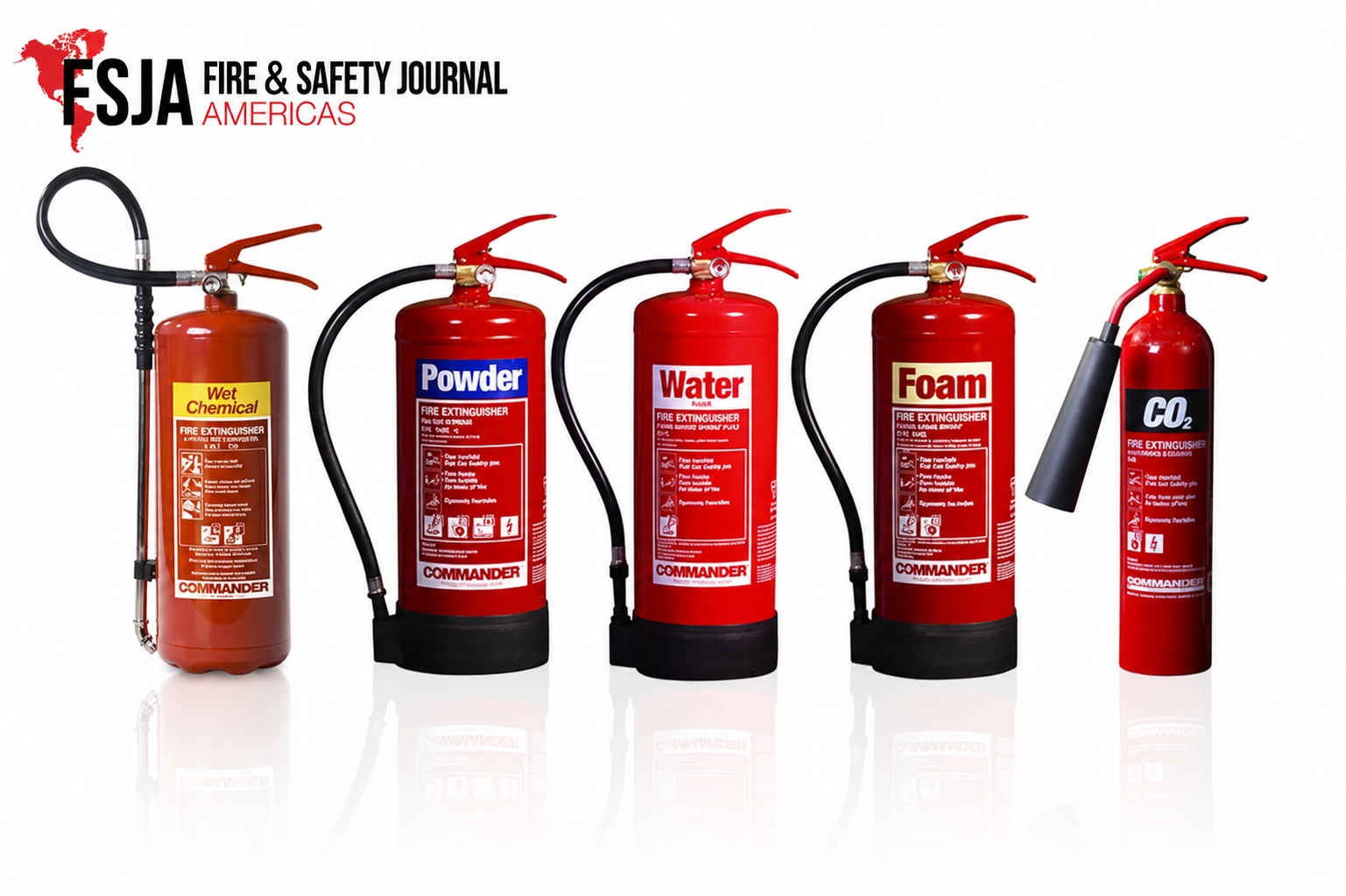
Fire extinguishers are an important part of fire safety, but using the correct type is essential. Different fires involve different fuels, and an extinguisher designed for one type of fire may be ineffective or unsafe for another. Understanding how fire classifications work can help people recognize the appropriate extinguisher and respond more safely during an emergency.
Fire classifications are based primarily on the material or substance that is burning. Common examples include wood and paper, flammable liquids, energized electrical equipment, combustible metals, and cooking oils. Knowing these differences is particularly important in workplaces where several types of fire hazards may be present.
Why Are Fire Extinguisher Classes Important?
Fire can spread quickly when the wrong extinguishing method is used. For example, applying water to burning cooking oil can cause the fire to spread, while using an unsuitable agent on a combustible metal fire may fail to control the flames.
Understanding fire extinguisher classes helps people connect a fire hazard with an appropriate extinguishing agent. Extinguishers are normally marked with letters, symbols, or both, making it easier to identify the types of fires for which they are rated.
The classification system also helps organizations select suitable equipment for different areas. An office may mainly have ordinary combustible and electrical hazards, while a commercial kitchen may require equipment specifically intended for cooking oils and fats.
Types of Fire Extinguisher Classes
Fire extinguisher classes identify fires according to their fuel source. Each class requires a suitable extinguishing agent, helping people choose appropriate equipment and respond safely during a fire emergency.
Class A Fire Extinguishers
Class A fires involve ordinary combustible materials. These include wood, paper, cardboard, cloth, rubber, and certain plastics.
These materials generally produce ash and embers as they burn. Water is commonly effective because it cools the burning material and reduces its temperature. Some dry chemical and foam extinguishers are also rated for Class A fires.
For example, a small fire involving cardboard boxes in a storage area may fall into this category. However, the extinguisher should only be used when the fire is small and there is a safe escape route.
Class B Fire Extinguishers
Class B fires involve flammable and combustible liquids. Common examples include gasoline, diesel, solvents, paints, and certain oils.
Water is generally unsuitable for these fires because it may spread the burning liquid instead of controlling it. Depending on the extinguisher's rating, dry chemical, carbon dioxide, or foam agents may be appropriate.
Consider a workshop where a container of flammable liquid accidentally catches fire. The correct response depends on the substance involved, the size of the fire, and the rating of the available extinguisher.
Class C Fire Extinguishers
Under the U.S. fire classification system, Class C refers to fires involving energized electrical equipment. Examples include electrical panels, computers, appliances, machinery, and wiring.
The main concern is avoiding an extinguishing agent that could create an electrical shock hazard. Carbon dioxide and certain dry chemical extinguishers are commonly rated for this type of hazard.
Once electrical equipment has been safely disconnected from its power source, the remaining fire may be classified according to the material actually burning. For example, burning plastic insulation could present a Class A hazard.
Class D Fire Extinguishers
Class D fires involve combustible metals. Examples include magnesium, titanium, sodium, potassium, and certain metal powders or shavings.
These fires are generally associated with specialized industrial, laboratory, manufacturing, and metal-processing environments. They require extinguishing agents specifically designed for the particular metal involved.
Standard water or general-purpose extinguishers should not automatically be used on combustible metal fires. The correct extinguishing agent depends on the metal and the conditions of the fire.
Class K Fire Extinguishers
Class K fires involve cooking oils and fats, particularly in commercial kitchens. Deep-fat fryers are a common source because cooking oil can reach temperatures high enough to ignite.
Water must not be poured onto a burning fryer. When water contacts extremely hot oil, it can rapidly turn into steam and cause burning oil to splash or spread.
Wet chemical extinguishers are designed for these kitchen hazards. They help cool the cooking medium and create a layer that suppresses the fire and reduces the likelihood of re-ignition.
How to Identify the Right Fire Extinguisher Class
The extinguisher label is the best place to start. It identifies the fire classifications for which the extinguisher has been tested and rated.
For example, an ABC extinguisher is designed for Class A, B, and C hazards. These multipurpose extinguishers are commonly used in homes, offices, schools, and other locations with several ordinary fire risks.
However, an ABC extinguisher is not suitable for every situation. A commercial kitchen may require a Class K extinguisher, while a facility handling combustible metals may require a Class D extinguisher.
When selecting an extinguisher, consider the materials present in the area, the potential fire hazards, and the manufacturer's rating. Fire safety equipment should also be selected and installed according to applicable local requirements.
Safety Tips for Using Different Fire Extinguisher Classes
Before using an extinguisher, assess whether the fire is small and manageable. Make sure there is a clear escape route and that smoke or heat does not prevent safe access.
If it is appropriate to fight the fire, the PASS technique provides a simple method:
Pull the pin.
Aim the nozzle at the base of the flames.
Squeeze the handle.
Sweep from side to side.
Always keep an eye on the fire while using the extinguisher. If the flames grow, smoke becomes overwhelming, the extinguisher runs out, or the escape route becomes threatened, leave immediately.
Fire extinguishers should also remain accessible and undergo regular inspection and maintenance. Employees should receive appropriate training where workplace fire hazards require it.
Conclusion
Understanding the different fire classifications makes it easier to identify suitable fire extinguishing equipment and avoid potentially dangerous mistakes. Ordinary combustibles, flammable liquids, electrical equipment, combustible metals, and cooking oils each present different challenges and may require different extinguishing agents. Fire and Safety Journal Americas provides a useful industry perspective on fire safety awareness and preparedness for professionals and the wider community.
FAQ
1. What are the main fire extinguisher classes?
The main U.S. classifications are Class A, Class B, Class C, Class D, and Class K.
2. What is an ABC extinguisher used for?
An ABC extinguisher is designed for Class A, Class B, and Class C fire hazards.
3. Can water be used on every type of fire?
No. Water can be dangerous or ineffective for certain fires, including flammable-liquid, electrical, and cooking-oil fires.
4. Which extinguisher is used for cooking oil fires?
Commercial cooking-oil fires are generally addressed with extinguishers specifically rated for Class K hazards.
5. Are Class D extinguishers used in normal homes?
Usually not. They are intended for specialized environments where combustible metals are present.