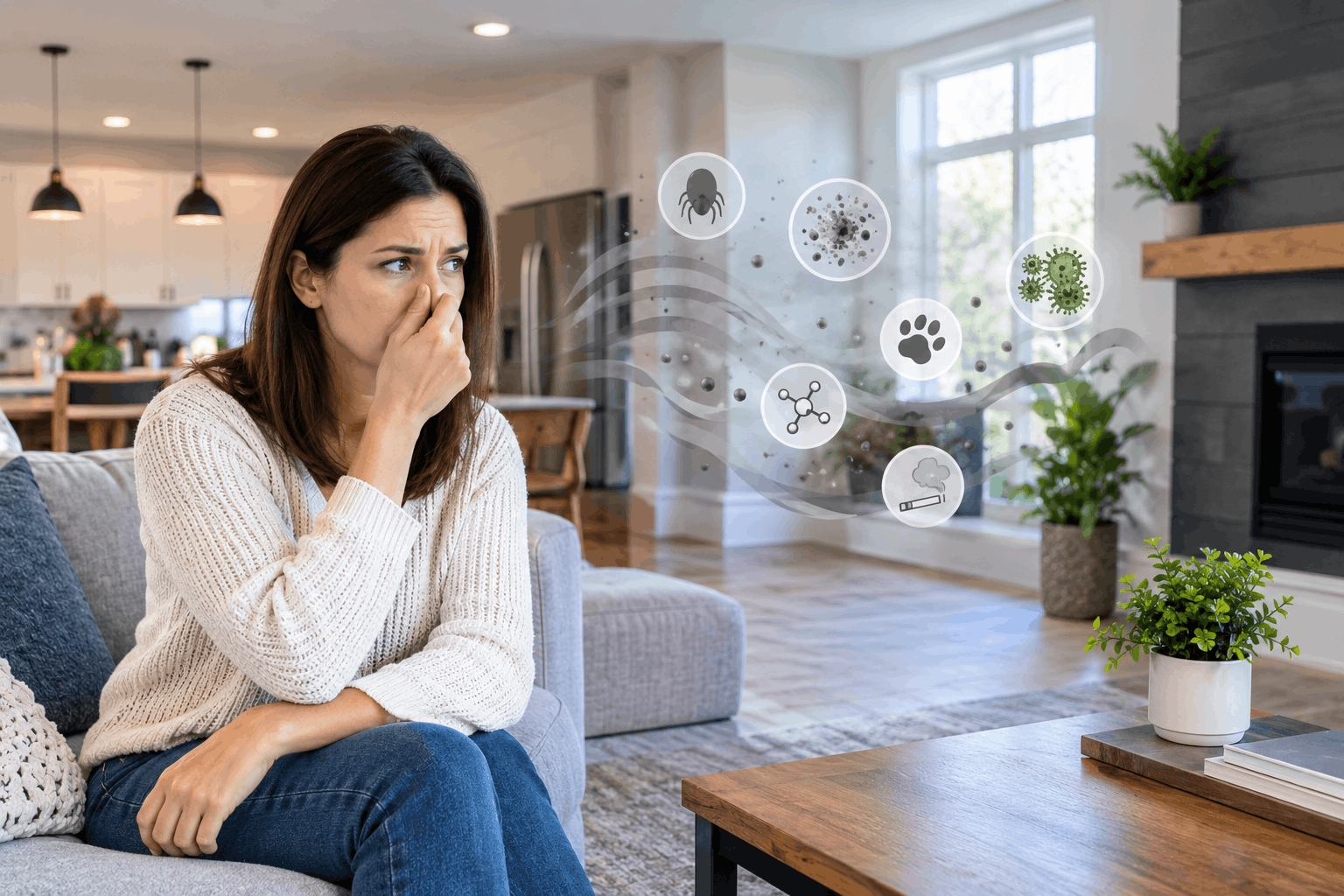
Poor indoor air quality in modern homes usually comes from a combination of tighter construction trapping pollutants indoors, off-gassing from newer building materials and furnishings, excess moisture feeding mold growth, household chemical use, and in many regions, radon seeping up from soil beneath the foundation. Older homes had a built-in advantage here, they leaked air constantly, which diluted pollutants almost by accident. Modern homes are sealed too well for that accidental dilution to happen on its own anymore, which is exactly why a dedicated radon testing St. Louis appointment matters regardless of how new or efficient a home appears.
Why Modern, Energy-Efficient Homes Trap More Pollutants
Tighter Sealing Reduces Natural Air Exchange
Energy-efficient construction is genuinely great for your utility bills, better insulation, tighter window seals, more consistent indoor temperatures. But that same tightness that keeps conditioned air inside also keeps whatever's already indoors from escaping as easily. Older homes naturally exchanged air with the outdoors constantly through gaps and drafts most homeowners never noticed. Modern homes don't have that built-in ventilation happening by accident, which means whatever pollutants exist indoors tend to stick around longer.
Off-Gassing From Newer Building Materials
New carpet, fresh paint, engineered wood products, and various adhesives used in modern construction release volatile organic compounds for weeks or months after installation. This is a real phenomenon, often called "new house smell," and while it fades over time, it represents a genuine air quality concern during that initial period, one that a tightly sealed home doesn't dilute as quickly as an older, leakier structure would.
The Most Common Sources Behind Poor Air Quality
Moisture, Mold, and Humidity
Excess indoor humidity, often from poor ventilation in bathrooms and kitchens, or from moisture intrusion in basements and crawl spaces, creates ideal conditions for mold growth. Mold spores are a significant, well-documented air quality concern, and modern homes with tighter envelopes can actually trap humidity more effectively than older homes with more natural airflow.
Household Chemicals and Combustion Byproducts
Cleaning products, air fresheners, and even certain personal care products release chemicals into indoor air that accumulate more in a sealed home than they would with constant natural ventilation. Combustion sources like gas stoves and fireplaces add another layer, particularly in homes without adequate exhaust ventilation to actually remove these byproducts rather than just recirculating them.
Radon: The Source Sealing Can't Fix
Here's where modern construction creates a genuinely different problem than the others. Radon seeps continuously from soil beneath a home's foundation, and tighter modern sealing doesn't block this pathway, it actually concentrates it by reducing the natural dilution that used to happen through drafty older construction. This is why radon testing St. Louis has become such a routine consideration for homeowners in this region specifically, since our area's soil composition combines with increasingly tight modern construction to create real potential for elevated indoor levels regardless of how new or well-built a home otherwise is. It's also why radon mitigation St Louis demand hasn't dropped even as home construction standards have generally improved.
How These Sources Interact and Compound Each Other
None of these factors exist in isolation. A tightly sealed home with poor bathroom ventilation traps both humidity and any radon entering from below, compounding two separate problems through the same underlying mechanism, reduced air exchange. Understanding this interaction matters because addressing just one source, say running an air purifier for dust while ignoring humidity or radon entirely, only ever solves a fraction of what's actually affecting your indoor air.
A Modern Home That Looked Perfect on Paper
I worked with a family in a newly built subdivision in Wentzville who'd specifically chosen an energy-efficient, well-sealed home expecting better air quality as a byproduct of better construction standards. Reasonable assumption, and true in some respects, their home had excellent insulation and virtually no drafts. But their radon testing St. Louis result came back at 8.3 pCi/L, more than double the EPA's action level, a genuine surprise given how "modern and well-built" the home felt. The same tight sealing that made their home efficient had also trapped radon more effectively than a leakier older home might have. We installed a mitigation system, and their post-test came back at 0.7 pCi/L, resolving the one air quality issue that their home's excellent construction had actually made slightly worse rather than better. That radon mitigation St Louis installation ended up being the missing piece their otherwise well-built home needed all along.
What Homeowners Can Actually Do About It
Address moisture and humidity through proper ventilation and dehumidification where needed. Choose low-VOC materials and products when renovating or furnishing, and ventilate well after any work involving paint, adhesives, or new flooring. Run exhaust fans consistently in kitchens and bathrooms rather than just briefly during use. And separately, specifically test for radon, since it's the one source on this list that ventilation habits and general air quality improvements genuinely can't fix on their own. If your result comes back elevated, radon mitigation St Louis installation addresses that specific pathway directly, something no amount of humidity control or air purifier will ever accomplish.
Conclusion
Poor indoor air quality in modern homes comes from a mix of trapped moisture, off-gassing materials, household chemicals, and often radon, all made worse by the same tight sealing that makes these homes energy efficient in the first place. Addressing humidity and choosing better materials handles a good chunk of the problem, but radon requires its own dedicated solution since no amount of general air quality improvement touches it. Radon mitigation St Louis installation fills that specific gap, a fast, proven fix for the one source tighter, better-built homes can actually make worse rather than better. Any homeowner assuming new construction automatically means no radon mitigation St Louis needs should verify that assumption with an actual test rather than taking it on faith. If you've got a newer home and assume good construction meant good air quality across the board, reach out to Air Sense Environmental and I'll help you find out whether radon is part of your specific picture.
FAQs
1. Does a higher-efficiency HVAC system improve indoor air quality on its own? Not significantly for pollutant removal, since standard HVAC filters aren't designed to capture VOCs, humidity, or radon, though upgraded filtration can help with dust and particulates specifically.
2. Is new house smell actually harmful? It's generally a low-level, temporary concern for most people, though those with respiratory sensitivities may want extra ventilation during the first few months in a newly built or renovated space.
3. Can improving ventilation alone fix a radon problem in a modern home? Only temporarily and unreliably, since levels typically climb back once the home closes up again, particularly overnight, making dedicated radon mitigation St Louis work the only real fix.
4. Are newly built homes required to test for radon before buyers move in? Not typically, so it's worth requesting radon testing St. Louis services yourself rather than assuming it happened automatically during construction. A quick radon testing St. Louis appointment within your first year of moving in is a reasonable habit for any new build.
5. Does furniture or new flooring off-gassing ever get worse in a sealed home? Yes, tighter sealing slows the natural dissipation of off-gassing materials, which is why extra ventilation during the first few weeks after installation genuinely helps.