
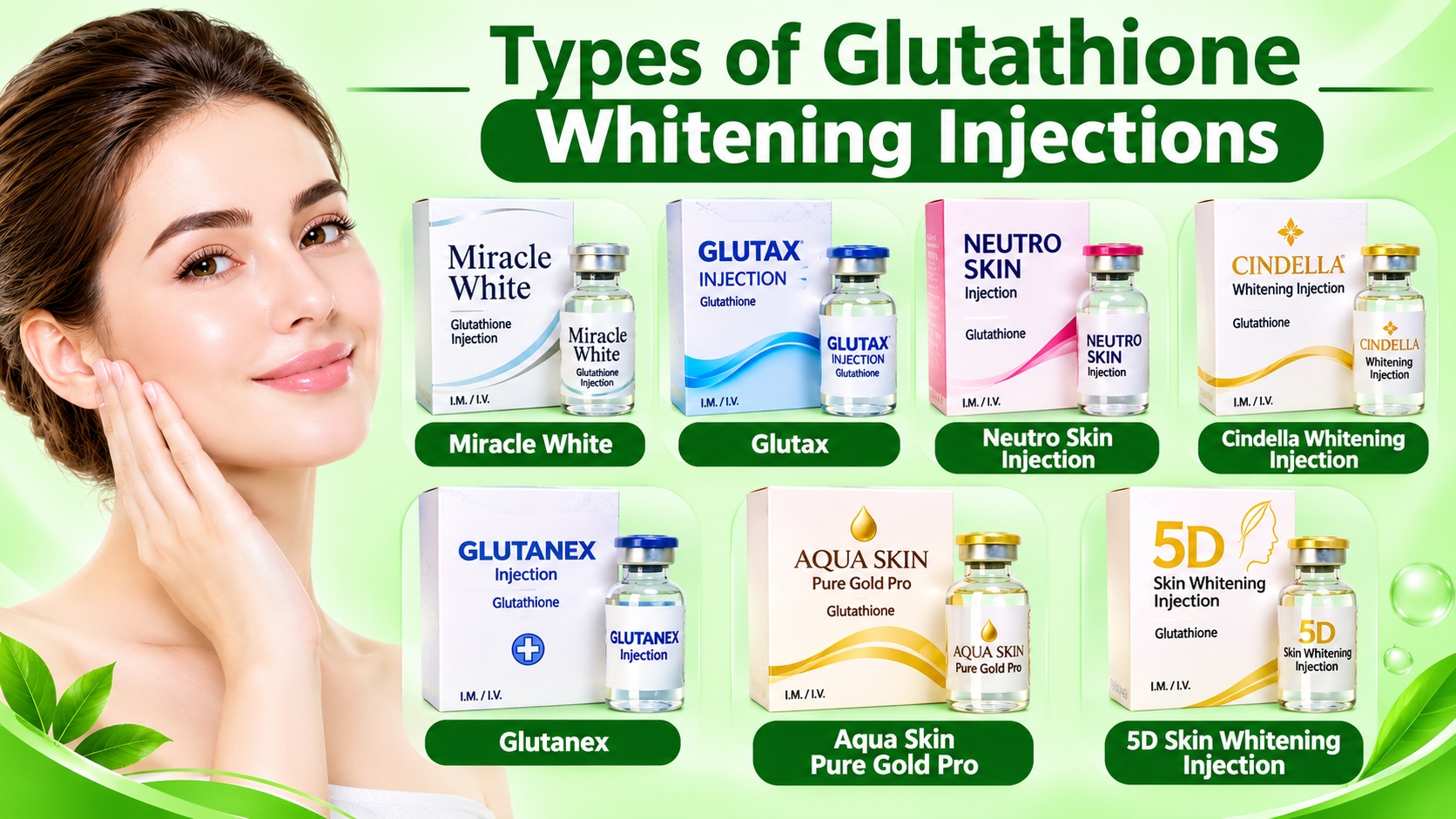
Healthy, radiant, and evenly toned skin is an important part of many people's skincare goals. However, factors such as excessive sun exposure, hormonal changes, ageing, acne marks, and environmental pollution can contribute to dullness and uneven pigmentation. As a result, many individuals explore cosmetic treatments that promise to improve their complexion.
One treatment that has attracted considerable attention is the whitening injection. These injectable products are commonly marketed for skin brightening and are frequently associated with glutathione, a naturally occurring antioxidant in the human body.
Whitening injections are promoted as a way to improve skin appearance, reduce pigmentation, and achieve a brighter complexion. Some formulations also contain vitamin C and other antioxidant ingredients.
Despite their popularity, it is important to understand that the scientific evidence supporting injectable glutathione for cosmetic skin whitening remains limited. There are also potential health risks associated with injectable products, particularly when their quality, ingredients, or administration are not properly controlled.
This article provides a detailed overview of whitening injections, including their ingredients, proposed mechanisms, benefits, treatment considerations, possible side effects, alternatives, and cost factors in Pakistan.
What Is Skin Whitening Injection Treatment?
Skin whitening injections are injectable formulations marketed to improve skin brightness and reduce the appearance of pigmentation.
Glutathione is one of the most widely advertised ingredients in these products. It is an antioxidant naturally produced by the body and consists of three amino acids: glutamate, cysteine, and glycine.
Glutathione supports several biological processes, including:
Protecting cells against oxidative stress.
Supporting normal cellular functions.
Maintaining antioxidant balance.
Participating in the body's detoxification pathways.
Helping regenerate other antioxidants.
In cosmetic research, glutathione has received attention because of its possible influence on melanin production.
Melanin is the pigment responsible for the natural colour of human skin. Its production is influenced by genetics, sunlight, hormones, and several biological processes.
Some studies have investigated whether glutathione can influence pigmentation pathways. However, injectable glutathione has not been established as a consistently effective or permanent skin-whitening treatment.
Understanding the Science Behind Whitening Injections
The proposed relationship between glutathione and skin pigmentation involves several biological mechanisms.
The Role of Melanin
Melanin is produced by specialised cells called melanocytes. These cells are located in the epidermis and help protect the skin against ultraviolet radiation.
There are two major types of melanin:
Eumelanin: Responsible primarily for brown and black pigmentation.
Pheomelanin: Associated with yellow and reddish pigmentation.
The balance and quantity of these pigments contribute to an individual's natural skin colour.
Glutathione and Tyrosinase
Tyrosinase is an important enzyme involved in melanin production.
Laboratory research suggests that glutathione may influence this enzyme and certain pathways involved in pigmentation.
However, laboratory findings do not automatically demonstrate that injecting glutathione produces meaningful cosmetic changes in humans.
Antioxidant Activity
Glutathione helps protect cells from damage caused by free radicals.
Free radicals are unstable molecules that can contribute to oxidative stress and cellular damage.
Although antioxidant activity is an established function of glutathione, its effect on visible skin whitening after injection remains uncertain.
Popular Ingredients Used in Whitening Injections
Different cosmetic injection products contain different ingredients. Their formulations and quality standards can vary significantly.
1. Glutathione
Glutathione is the most frequently advertised ingredient in skin-whitening injections.
It is investigated for its antioxidant properties and potential influence on melanin synthesis.
However, there is insufficient evidence to establish the safety and effectiveness of repeated injectable glutathione administration for cosmetic whitening.
2. Vitamin C
Vitamin C is an antioxidant that supports collagen production and normal skin function.
It is also involved in protecting cells against oxidative stress.
Some cosmetic formulations combine vitamin C with glutathione, although the combination has not been proven to guarantee better whitening results.
3. Other Vitamins and Antioxidants
Certain commercial products may contain additional vitamins or antioxidant compounds.
The precise formulation should always be checked before considering any injectable product.
Patients should avoid products with incomplete ingredient information or unclear manufacturing and regulatory status.
Potential Benefits of Whitening Injections
Whitening injections are marketed for several cosmetic purposes. However, advertised benefits should be distinguished from clinically demonstrated outcomes.
1. Brighter-Looking Complexion
A brighter complexion is one of the main reasons people consider these treatments.
Glutathione has been investigated for possible pigmentation-related effects, but current research does not establish predictable results from injectable administration.
2. Skin Tone Improvement
Uneven pigmentation can make the skin appear patchy or discoloured.
Professional dermatological treatments may help address the underlying causes of uneven skin tone.
3. Antioxidant Properties
Glutathione supports the body's antioxidant defence mechanisms.
This is an established biological function, although it should not be confused with proven cosmetic whitening benefits.
4. Pigmentation Management
Individuals experiencing dark spots, melasma, or post-inflammatory hyperpigmentation may benefit from a proper dermatological evaluation.
Identifying the cause of pigmentation allows healthcare professionals to recommend more appropriate treatments.
5. Personalised Skincare Planning
A consultation can help establish an effective skincare plan based on skin type, pigmentation, medical history, and cosmetic goals.
Different Types of Whitening Injection Treatments
The market includes several types of injectable products advertised for skin brightening.
These can be broadly classified according to their formulations and administration methods.
Glutathione-Based Products
These products primarily contain glutathione and are marketed for antioxidant support and skin brightening.
Glutathione and Vitamin C Combinations
These formulations combine glutathione with vitamin C and are advertised for their antioxidant properties.
Multi-Ingredient Formulations
Some commercial products contain glutathione alongside other vitamins or compounds.
Intravenous Glutathione
Intravenous administration delivers a formulation directly into a vein.
This method is frequently advertised by cosmetic providers, but its safety and effectiveness for skin whitening have not been adequately established.
Other Injectable Routes
Some products may be intended for different routes of administration. Their suitability depends on their specific formulation and authorised product instructions.
Different routes should never be substituted for one another without appropriate medical guidance.
What Happens During a Whitening Injection Consultation?
A responsible consultation is important before considering any injectable cosmetic procedure.
The purpose is to evaluate the patient's concerns, discuss treatment limitations, and assess possible health risks.
Step 1: Discussing Skin Concerns
The healthcare professional asks about the patient's main concerns, such as dullness, uneven pigmentation, dark spots, or melasma.
Step 2: Examining the Skin
A skin examination helps identify the type and extent of pigmentation.
The healthcare professional may also assess skin sensitivity and any underlying dermatological condition.
Step 3: Reviewing Medical History
Medical history, allergies, medications, and previous reactions to cosmetic products should be reviewed.
Step 4: Discussing Treatment Options
Different treatments may be appropriate for different skin conditions.
The healthcare professional should explain the evidence, potential risks, limitations, and alternatives rather than promising a particular whitening result.
Step 5: Reviewing Product Safety
If an injectable formulation is being considered, its manufacturer, ingredients, quality, storage, expiry date, and intended administration route must be verified.
Step 6: Follow-Up Guidance
Patients should receive appropriate guidance regarding skincare, sun protection, and any symptoms that require medical attention.
How Many Whitening Injections Are Required?
There is no scientifically established number of whitening injection sessions for achieving cosmetic skin lightening.
Treatment schedules advertised online and by commercial providers vary significantly.
However, these schedules are not supported by sufficient clinical evidence to be considered standard medical protocols.
Repeated injections should not be assumed to provide greater benefits. They can increase exposure to potential complications.
Any decision involving injectable glutathione should be based on medical assessment and a careful evaluation of its uncertain cosmetic benefits and risks.
How Long Do Whitening Injection Results Last?
The duration of any cosmetic change following injectable glutathione has not been reliably established.
Commercial advertisements sometimes claim that results last for several months or longer, but these claims should be approached cautiously.
Skin pigmentation can change over time because of:
Sun exposure.
Hormonal changes.
Genetic factors.
Skin inflammation.
Certain medications.
Age-related changes.
For pigmentation concerns, appropriate treatment and preventive skincare are generally more useful than relying on unverified promises of long-lasting whitening.
Possible Side Effects of Whitening Injections
Injectable treatments require particular attention to product quality, administration standards, and patient safety.
Possible complications associated with injectable glutathione and injectable procedures include the following.
Allergic Reactions
An individual may develop a reaction to glutathione or another ingredient in the formulation.
Severe allergic reactions can become medical emergencies.
Injection-Site Discomfort
Possible local reactions include:
Redness.
Swelling.
Pain.
Irritation.
Bruising.
Nausea and Dizziness
Some people may experience nausea, dizziness, headache, or general discomfort following an injectable treatment.
Liver-Related Concerns
Reports involving intravenous glutathione have raised concerns about possible liver-related adverse effects.
The frequency and long-term significance of these events remain uncertain.
Kidney-Related Concerns
There is insufficient research to establish the long-term effects of repeated cosmetic intravenous glutathione administration on kidney function.
Infection and Contamination
Contaminated products, non-sterile equipment, and inappropriate administration practices can cause serious infections.
The US FDA has also issued safety communications concerning adverse events associated with certain compounded intravenous glutathione products.
Unknown Long-Term Safety
Repeated cosmetic use has not been adequately studied over long periods.
Patients should understand that a naturally occurring antioxidant is not automatically safe in every injectable formulation or dose.
Important Precautions Before Considering Whitening Injections
Before considering an injectable skin treatment, individuals should pay attention to several important precautions.
Verify Product Authenticity: Confirm the manufacturer's identity, packaging, ingredients, expiry date, and product quality.
Avoid Unqualified Providers: Injectable cosmetic products should not be administered by unqualified individuals.
Discuss Allergies: Inform the healthcare professional about previous allergic reactions and medication sensitivities.
Review Medical Conditions: Liver disease, kidney disease, pregnancy, breastfeeding, and other medical conditions require particular attention.
Understand the Evidence: Ask about proven benefits, uncertainties, potential complications, and alternatives.
Avoid Guaranteed Claims: No responsible provider should promise permanent skin whitening or guaranteed results.
Whitening Injection vs Skin Whitening Creams
Whitening injections and topical skin-brightening products differ in their ingredients, administration, and available evidence.
Topical products are commonly used to manage particular pigmentation conditions.
Some ingredients recommended by dermatologists include:
Niacinamide.
Vitamin C.
Azelaic acid.
Retinoids.
Hydroquinone, where appropriate and medically supervised.
Topical treatments can be selected according to the type of pigmentation and skin sensitivity.
Unlike injectable glutathione, several topical ingredients have established clinical uses for specific pigmentation conditions.
The best option depends on the patient's skin concerns rather than the popularity of a cosmetic product.
Alternative Treatments for Uneven Skin Tone
There are several dermatological treatments that may be considered for pigmentation and uneven skin tone.
Chemical Peels
Chemical peels use selected acids to exfoliate the skin.
They may be helpful for certain types of superficial pigmentation when performed by appropriately trained professionals.
Laser Skin Treatments
Some laser procedures target specific pigmentation concerns.
However, laser selection and settings must be appropriate for the patient's skin type to reduce the risk of complications.
Medical Treatments for Melasma
Melasma may require a combination of topical medication, sun protection, and carefully selected procedures.
Treatment is often ongoing because the condition can recur.
Professional Skincare
A dermatologist may recommend a combination of moisturisers, topical antioxidants, and pigmentation-targeting ingredients.
A personalised treatment plan is generally more appropriate than using unverified whitening products.
Whitening Injection Price in Pakistan
Whitening injection prices in Pakistan vary considerably depending on the formulation and clinical setting.
There is no universal price for all glutathione products or injectable skin-brightening treatments.
Several factors influence the quoted cost:
Product Quality: Authenticity and manufacturing standards can affect the price.
Formulation: Different ingredients and concentrations may have different costs.
Medical Assessment: Consultation and evaluation fees may be separate.
Administration: The professional services and monitoring required can influence the overall expense.
Additional Treatment: Other dermatological procedures may be recommended depending on the underlying skin condition.
Patients should avoid making decisions based exclusively on the lowest advertised price.
A qualified healthcare professional should explain the treatment's safety, evidence, and alternatives before any financial commitment.
For information about skin and aesthetic services, individuals can contact Dot Clinics in Lahore and Multan.
Skin Whitening and Aesthetic Services at Dot Clinics
Dot Clinics offers skin and aesthetic services in Lahore and Multan, Pakistan.
Individuals interested in improving their skin appearance can seek professional advice regarding pigmentation, skin texture, uneven complexion, and available aesthetic treatments.
Choosing a suitable procedure requires an understanding of individual skin conditions and realistic treatment expectations.
A professional consultation should focus on:
Understanding the patient's skin concerns.
Identifying the causes of pigmentation.
Evaluating medical history.
Discussing appropriate treatment options.
Explaining potential side effects.
Providing skincare and sun-protection guidance.
Establishing realistic expectations.
The objective should always be to prioritise healthy skin and appropriate medical care.
Frequently Asked Questions About Whitening Injections
1. What is a whitening injection used for?
Whitening injections are marketed to improve skin brightness and reduce the appearance of uneven pigmentation. Glutathione is a commonly advertised ingredient.
2. What is glutathione?
Glutathione is a natural antioxidant produced by the human body. It consists of three amino acids and helps protect cells against oxidative stress.
3. Are whitening injections scientifically proven?
Current evidence is insufficient to establish injectable glutathione as a reliable cosmetic skin-whitening treatment.
4. Can whitening injections permanently whiten the skin?
There is no reliable clinical evidence demonstrating that injectable glutathione permanently changes natural skin colour.
5. How many sessions are required?
There is no scientifically established number of sessions. Commercially advertised treatment schedules should not be treated as proven medical protocols.
6. Do whitening injections contain vitamin C?
Some commercial formulations contain both glutathione and vitamin C. The ingredients vary between manufacturers.
7. Are whitening injections safe for everyone?
No. People with allergies, certain medical conditions, or other risk factors may not be suitable candidates. Medical assessment is necessary.
8. Can whitening injections remove melasma?
Injectable glutathione has not been established as a reliable melasma treatment. Melasma generally requires an individualised dermatological management plan.
9. Can whitening injections cause side effects?
Yes. Possible complications include allergic reactions, injection-site problems, nausea, dizziness, contamination-related infections, and other serious adverse effects.
10. What is the difference between glutathione injections and IV drips?
An injection is administered through its specified route, while an IV drip delivers a liquid formulation directly into a vein. Their formulations and risks can differ.
11. Is sunscreen necessary after skin-brightening treatment?
Yes. Broad-spectrum sunscreen with SPF 30 or higher helps protect against ultraviolet radiation and reduces the risk of additional pigmentation.
12. What is the cost of whitening injections in Pakistan?
The cost varies depending on the formulation, manufacturer, product quality, and clinical setting. Patients should request verified information from a qualified healthcare provider.
13. Where can I get professional skin consultation in Pakistan?
Dot Clinics has locations in Lahore and Multan, Pakistan. You can contact the clinic for information about available skin and aesthetic services.
Conclusion
Whitening injections have become a widely discussed option in the cosmetic industry, particularly because of their association with glutathione and its antioxidant properties.
People interested in these treatments often hope to achieve a brighter complexion, reduce uneven pigmentation, and improve their overall skin appearance.
However, it is essential to understand that the effectiveness and long-term safety of injectable glutathione for cosmetic skin whitening have not been adequately established.
Before considering any injectable treatment, individuals should consult qualified healthcare professionals, verify product quality, and understand the potential risks and alternatives.
For people seeking professional guidance about their skin concerns, Dot Clinics in Lahore and Multan, Pakistan, offers access to skin and aesthetic services.
Making informed decisions and prioritising healthy skin are essential parts of responsible cosmetic care.