Have you ever looked at a piece of art and felt that it was somehow alive? In Côte d’Ivoire (Ivory Coast), traditional masks are not just museum pieces or souvenirs meant to gather dust on a shelf. They are living symbols of ancestry, spiritual protection, and village identity.
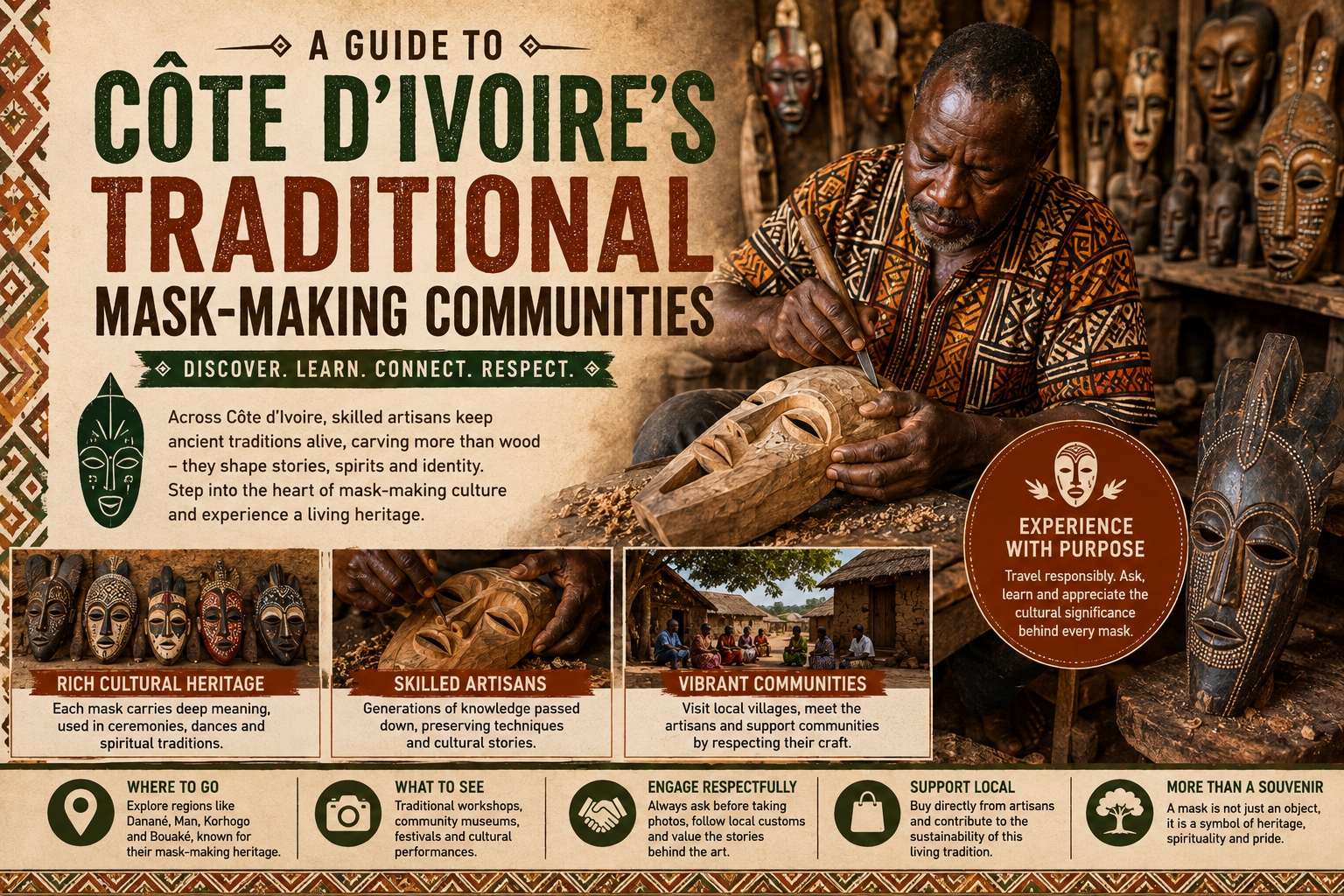
Long before modern art movements drew inspiration from West African woodcarvings, these sacred objects were guiding daily community life across the lush forest belts and sweeping northern plains of the country.
If you are planning a trip to West Africa and want to experience rich living traditions, exploring the artisan villages of Côte d’Ivoire is an unforgettable journey. In this guide, we will walk you through the most famous mask-making regions, what makes each style unique, and how to plan your visit smoothly.
Why Masks Hold Deep Meaning in Ivorian Culture
To appreciate Ivorian masks, it helps to understand that they are considered sacred vessels rather than simple costumes. During traditional ceremonies, when a dancer puts on a mask and full-body raffia suit, they are no longer seen as an ordinary person. Instead, they become the temporary home for an ancestor, a forest spirit, or a community protector.
Communities bring out their masks for essential milestones in life:
Initiation Ceremonies: Welcoming young men and women into adulthood.
Funerals and Memorials: Honoring ancestors and helping departed souls transition peacefully to the spirit world.
Agricultural Festivals: Thanking the earth and forest spirits for a bountiful harvest of yams, cocoa, or millet.
Community Mediation: Summoning ancestral authority to resolve local disputes and bring peace.
4 Iconic Mask-Making Communities to Visit
Côte d’Ivoire has more than 60 ethnic groups, each with its own signature carving techniques, spiritual codes, and ceremonial dances. Here are the four primary mask-making cultures every cultural traveler should know:
1. The Senufo of the Northern Plains (Korhogo & Boundiali)
The northern savanna around Korhogo is the heartland of Senufo culture. Senufo woodcarvers are closely connected to the Poro society, a traditional educational and spiritual system that teaches young people history, philosophy, and survival skills.
Artistic Style: Senufo masks feature slender, stylized human faces combined with animal horns, birds, and geometric crests.
Key Mask to Know: The Kpelie mask, an oval face framed by small decorative "wings" and topped with an animal figure, often representing ancient family lineages and feminine beauty.
Where to Go: Visit the artisan quarter of Korhogo and nearby weaving and carving villages like Koni and Fakaha.
2. The Baoulé of Central Côte d’Ivoire (Bouaké & Yamoussoukro)
The Baoulé people, descendants of the historic Akan kingdom, are renowned for producing some of the most refined and elegant woodcarvings in West Africa.
Artistic Style: Known for smooth, rounded foreheads, delicate arching eyebrows, slender noses, and intricately braided hairstyles carved directly into the dark wood.
Signature Masks:
Mblo (Portrait Masks): Carved to honor respected living community members who are celebrated for their grace, wisdom, or kindness.
Goli Masks: Worn during energetic, day-long festivals of celebration and remembrance, featuring round faces with buffalo or antelope horns.
Where to Go: Travel to Sakassou and rural villages around Bouaké.
3. The Dan (Yacouba) of the Western Highlands (Man & Danané)
Nestled among the mist-covered mountains of western Côte d’Ivoire, the Dan people produce masks famous for their deep spiritual weight and minimalist beauty.
Artistic Style: Polished to a glossy, dark sheen, Dan masks often feature high domed foreheads, serene almond-shaped slit eyes, and gently parted lips.
Signature Masks:
Deangle: Gentle, peaceful masks that represent benevolent spirits teaching young initiates in sacred camp schools.
Gunyege (Racing Masks): Masks with large, open circular eyes worn by champion runners during village athletic competitions.
Where to Go: The mountain city of Man, famous for its surrounding sacred forests, waterfalls, and stilt-dancing ceremonies.
4. The Guro and the World-Famous Zaouli Dance (Bouaflé & Marahoué)
The Guro people of central-western Côte d’Ivoire are the creators of the world-famous Zaouli dance, recognized by UNESCO as an Intangible Cultural Heritage of Humanity.
Artistic Style: Guro masks feature vibrant, hand-painted colors, long slender noses, and elaborate headdresses topped with carved birds, serpents, or human figures.
The Zaouli Experience: The dancer wears a painted mask representing legendary feminine beauty and performs dizzyingly fast footwork to driving drum rhythms and flutes. Witnessing a live Zaouli performance in a village courtyard is one of the most electric spectacles in West Africa.
The Art of Mask-Making: How Master Carvers Work
Carving a sacred mask is a hereditary skill passed down from fathers to sons over decades. Master artisans follow strict traditions before picking up their tools:
Selecting the Sacred Timber: Before cutting wood from trees such as Iroko or Kapok, carvers often make offerings to the forest spirits to ask for permission and protection.
Shaping with Traditional Adzes: Using handheld axes, gouges, and hand-carved chisels, the sculptor roughs out the silhouette from a single, solid piece of green wood.
Natural Pigments and Dyes: Carvers use natural earth tones—charcoal for deep blacks, kaolin clay for bright whites, and tree resins or ochre for reds and browns.
Polishing and Finishing: The wood is rubbed with abrasive forest leaves and massaged with vegetable or palm oils to create a lasting, protective patina.
Helpful Tips for Cultural Travelers
To ensure you have a respectful and rewarding visit to artisan villages, keep these practical tips in mind:
Arrange Your Travel Documents Early: Before booking regional transport or village homestays, make sure your paperwork is settled. You can submit your Côte d'Ivoire visa application online well in advance so your entry into Abidjan is seamless.
Hire a Knowledgeable Local Guide: A guide who speaks French and local dialects (like Baoulé, Senufo, or Dan) can introduce you to village chiefs and explain proper protocol.
Always Ask Before Taking Photos: Never take pictures of sacred shrines, active carving studios, or dancers without explicit permission from village elders.
Buy Directly from Cooperatives: If you wish to take home a decorative mask, buy directly from local artisan markets in Korhogo, Man, or Grand-Bassam so your money directly supports the carvers and their families.
Planning Your Trip: How to Get Your Côte d'Ivoire Visa Easily
Before you can explore the sacred forests of Man or listen to the drums in Korhogo, you will need to arrange your entry documentation. Most international travelers heading to Côte d'Ivoire require an approved entry visa prior to boarding their flight.
Navigating foreign visa forms, document specifications, and embassy guidelines on your own can feel stressful. Using a dedicated visa service ensures your documents are reviewed thoroughly so your journey starts without delays.
Why Choose Us for Your Côte d'Ivoire Visa?
Reliable Travel Visa Services: Our global approach has assisted numerous international travelers in obtaining their visas quickly and without hassle.
Round-the-Clock Assistance: Have a question about your paperwork? Reach out to us 24/7, and our support team will respond promptly to keep your travel plans on track.
Experienced Visa Consultants: Get dedicated guidance from travel document specialists to ensure your application meets all official government criteria.
Efficient Visa Application Process: Skip complicated paperwork and long embassy queues. Apply for your visa in just a few minutes using our simplified digital platform.
👉 Ready to begin your cultural adventure? Apply for your Côte d'Ivoire Visa here and start preparing for the journey of a lifetime!