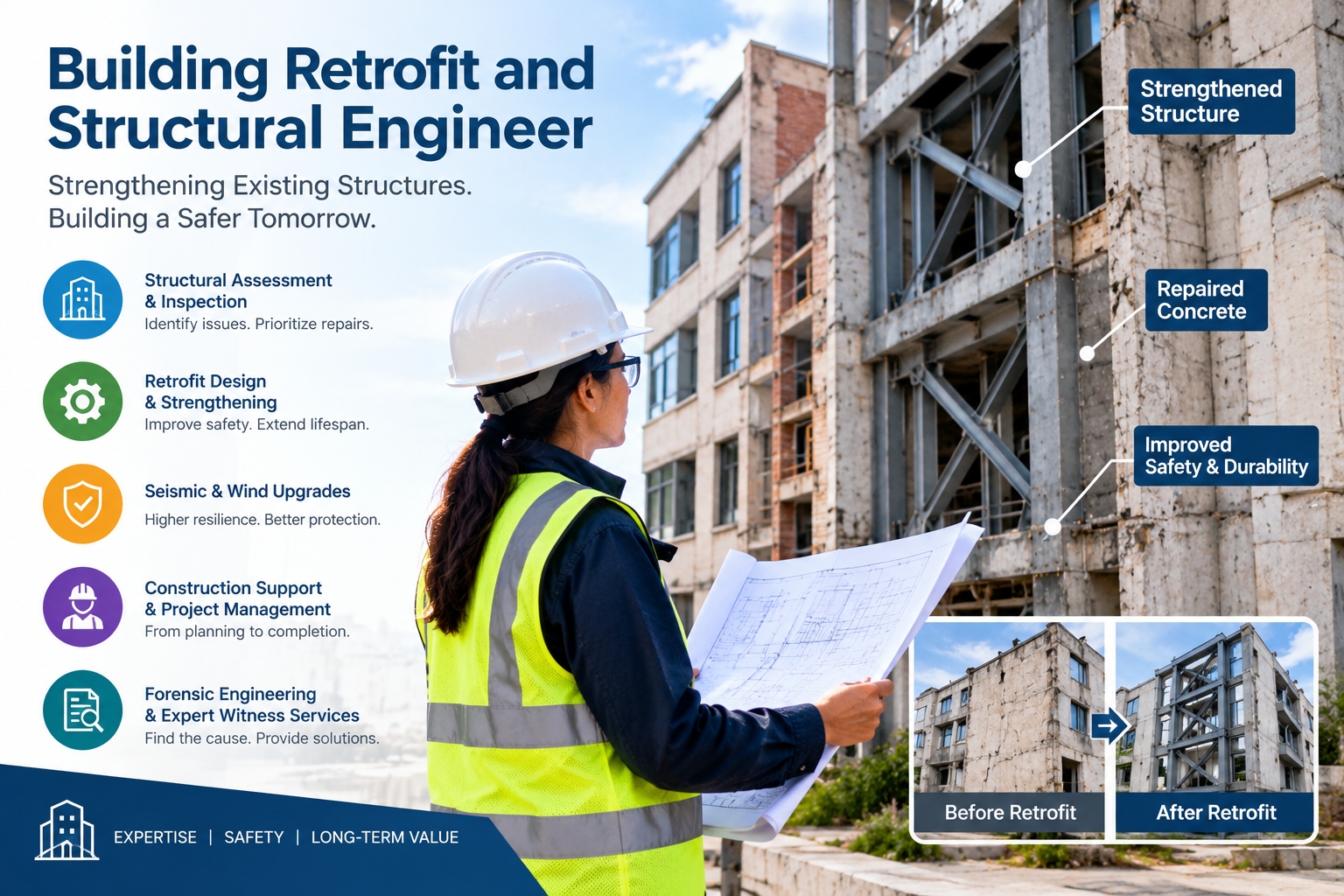
What Is Building Retrofitting and Why Does It Matter?
Building retrofitting involves modifying or strengthening an existing structure to improve its safety, stability, durability, or ability to meet new performance requirements. It may be necessary when a building has deteriorated over time, requires a change in use, faces increased loading demands, or needs improvements to its resistance to environmental hazards.
Older commercial buildings, residential properties, industrial facilities, warehouses, and historic structures can all benefit from a carefully planned retrofit. However, every building presents different challenges because its original design, construction materials, maintenance history, and exposure to environmental conditions influence its current performance.
Retrofitting is not simply a matter of adding stronger materials. Engineers must first understand how the existing structure transfers loads, identify its weaknesses, and determine how proposed modifications will affect the entire building.
Common Problems Found in Aging Structures
Recognizing early warning signs can help building owners arrange appropriate inspections before structural problems become more extensive.
1. Concrete Deterioration and Reinforcement Corrosion
Concrete structures can deteriorate because of moisture penetration, environmental exposure, poor construction practices, or inadequate maintenance. When reinforcing steel corrodes, the resulting expansion can cause concrete cracking, surface delamination, and spalling.
2. Foundation Settlement and Structural Cracks
Uneven settlement can cause cracks in walls, floors, foundations, and structural connections. Potential contributing factors include changing soil conditions, drainage problems, nearby excavation, and variations in foundation loading.
3. Steel Corrosion and Connection Problems
Older steel buildings may experience corrosion, section loss, loose connections, or deterioration around bolted and welded joints. These problems can reduce the capacity of structural members or affect how loads move through the building.
4. Outdated Structural Design
Some existing buildings were designed under earlier building codes or for different occupancy requirements. A change from light storage to heavy industrial use, for example, can introduce loads that the original structure was not designed to support.
How a Structural Engineer Evaluates an Existing Building
A successful retrofit begins with a detailed assessment rather than an immediate decision about which strengthening material to use.
Step 1: Review Existing Records
Engineers examine available architectural and structural drawings, previous renovation documents, maintenance records, inspection reports, and information about earlier damage. These records can reveal original design assumptions and identify modifications that may have affected structural performance.
When documentation is incomplete, the engineer may need to conduct additional site measurements and investigate concealed structural elements.
Step 2: Conduct a Structural Condition Assessment
The site inspection focuses on visible deterioration, structural movement, damaged connections, corrosion, cracking, and other signs of distress. Engineers also examine the relationship between affected components to understand whether the problem is isolated or part of a larger structural issue.
Where necessary, specialized testing can help determine material properties, internal defects, reinforcement locations, or the extent of deterioration.
Step 3: Perform Structural Analysis
Engineering calculations and computer-based models can help determine whether existing members have sufficient capacity for their intended use. The analysis may consider dead loads, occupancy loads, equipment loads, wind forces, seismic demands, and other relevant conditions.
The engineer compares the existing structural capacity with the demands identified for the project. This process helps establish where strengthening is needed and whether the proposed retrofit could introduce new problems elsewhere in the building.
Step 4: Develop and Review Retrofit Options
The final design should consider safety, construction access, budget, disruption to occupants, material compatibility, and long-term maintenance. Engineers may compare several strengthening strategies before selecting a suitable solution.
A well-developed retrofit plan also identifies construction sequencing, temporary support requirements, inspection needs, and the steps required to verify that the completed work matches the design.
Effective Solutions for Strengthening Aging Buildings
The best retrofit method depends on the structure's materials, existing condition, and performance objectives.
Concrete Strengthening
Damaged or undersized concrete members may be strengthened using reinforced concrete additions, steel plates, fiber-reinforced polymer systems, or other engineered techniques. These methods can improve the capacity of beams, columns, slabs, or selected structural connections when properly designed and installed.
Before choosing a system, engineers must assess the condition of the existing concrete, reinforcement, bonding surfaces, and load paths. Strengthening one component without considering adjacent members can shift forces and create new areas of concern.
Steel Reinforcement and Connection Upgrades
Steel plates, supplemental framing, braces, and engineered connection modifications can improve the performance of existing steel structures. Such upgrades may be useful when a building requires additional capacity or when corrosion and connection deficiencies have reduced its reliability.
Installation details matter because the retrofit must transfer forces effectively into the existing structure. Engineers therefore evaluate fasteners, welds, supporting members, and the surrounding materials as part of the design.
Seismic Retrofitting
Buildings in earthquake-prone regions may require improvements to their lateral-force-resisting systems. Depending on the building, solutions can include added bracing, shear walls, improved connections, or other measures that help control movement and reduce vulnerability during seismic events.
A seismic retrofit should reflect the building's structural system, expected earthquake demands, applicable standards, and the owner's performance objectives. The aim is to improve the building's behavior under relevant seismic conditions, not simply to make individual members stronger.
Foundation and Load-Path Improvements
Foundation-related retrofits may involve underpinning, foundation strengthening, drainage improvements, or other measures selected after evaluating the underlying cause of movement. In some projects, the solution also requires modifying how loads are distributed through the superstructure.
The Role of Forensic Engineering in Retrofit Projects
Retrofitting becomes more complex when structural damage is linked to a construction defect, disputed repair, or suspected design deficiency. In these situations, a Structural Forensic Engineer investigates the condition, documents the available evidence, and evaluates the mechanisms responsible for the observed damage.
A Damage Assessment and Forensic Engineer may examine crack patterns, deformation, material deterioration, previous repairs, and relevant engineering calculations to determine the extent of the problem. This assessment helps distinguish between cosmetic deterioration, serviceability concerns, and conditions that may affect structural safety.
A Standard and Cause and Forensic Engineer approach involves reviewing applicable technical requirements while investigating why the damage occurred. The investigation may consider design assumptions, construction methods, material quality, maintenance history, environmental exposure, and changes made after the original construction.
Understanding the cause is essential because repairing the visible damage without addressing its source can allow the same problem to return. Forensic findings can therefore inform the retrofit design, establish a defensible repair scope, and help owners prioritize the work that matters most.
Expert Witness Support in Structural Retrofit Disputes
When a building's deterioration leads to a legal or insurance dispute, independent engineering analysis can help clarify the technical issues.
A Structural Engineer Expert Witness may review project documents, inspect affected areas, analyze the design, and explain whether the available evidence supports a particular conclusion. The expert's role is to provide an objective, technically supported opinion rather than simply advocate for one party.
A Design Defect Expert Witness and Structural Engineer may evaluate whether a suspected design deficiency contributed to structural distress or inadequate performance. This can involve reviewing calculations, construction drawings, design criteria, and the interaction between structural components.
Similarly, a Construction Defect Expert Witness and Structural Engineer may investigate whether observed problems are consistent with deficiencies in construction, installation, materials, or workmanship. These conclusions must be supported by evidence and should distinguish confirmed findings from assumptions or unresolved questions.
Benefits of Planning a Retrofit Before Problems Escalate
Early assessment can help property owners identify deterioration before it develops into more extensive damage. A planned retrofit may also extend a building's useful life, support changing occupancy needs, improve structural performance, and reduce the likelihood of repeated repairs.
However, retrofitting is not automatically cheaper than replacement in every situation. The decision should consider the extent of deterioration, the feasibility of strengthening, construction disruption, future maintenance, regulatory requirements, and the expected remaining service life.
A qualified structural engineer can compare repair and retrofit options with replacement where appropriate. This creates a clearer basis for budgeting, scheduling, and making long-term property decisions.
Final Thoughts
Building retrofitting provides a practical path to preserving aging structures, improving safety, and extending the useful life of existing properties. The most effective results come from understanding the building's current condition, identifying the underlying causes of deterioration, and selecting strengthening methods that address both immediate concerns and long-term performance. Working with experienced structural engineers helps property owners make informed decisions, manage project risks, and develop repair strategies suited to their buildings. When suspected construction defects require technical investigation or independent expert analysis, a Construction Defect Structural Engineer can help clarify the evidence, evaluate potential structural deficiencies, and support informed decisions about repairs and rehabilitation.



