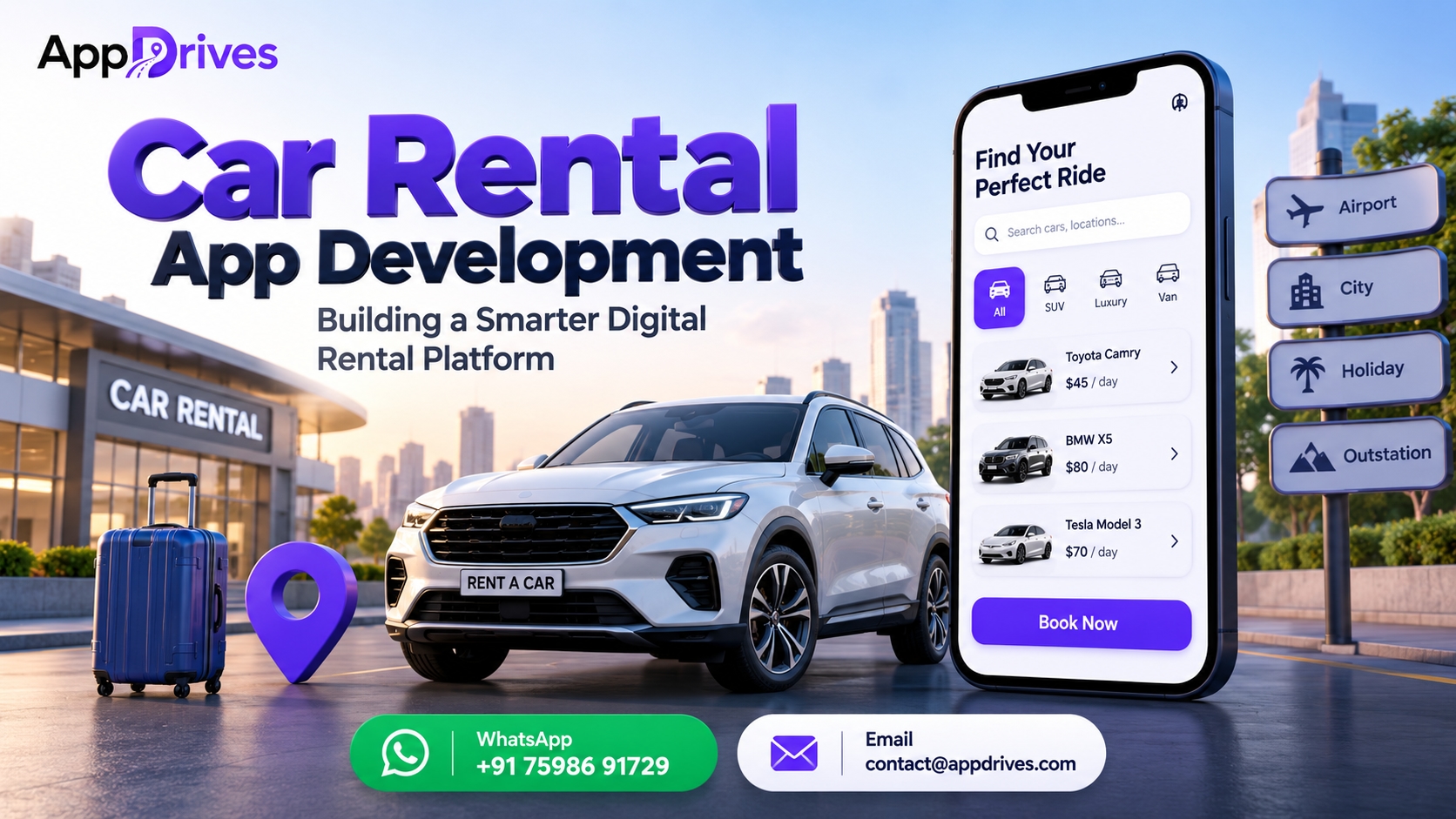
Car rental is no longer limited to physical rental offices and phone-based reservations. Customers now expect to discover vehicles, compare prices, check availability, make payments, and manage bookings directly from their smartphones. This shift has made car rental apps an important digital channel for rental businesses looking to improve customer experience and compete in an increasingly connected mobility market.
However, simply putting a booking form inside an app is not enough. A successful car rental platform needs to simplify the entire rental journey while giving businesses better control over their vehicles, bookings, customers, and revenue.
What Does a Modern Car Rental App Need?
A strong rental application connects the customer-facing experience with the operational side of the business. Customers should be able to find the right vehicle quickly, understand the rental terms, and complete their reservation without unnecessary steps.
Essential features can include:
Vehicle search with filters for model, price, type, and location
Real-time vehicle availability
Flexible pickup and drop-off scheduling
Digital booking and cancellation
Secure online payments
Customer identity and document verification
GPS and vehicle tracking
Booking history and digital invoices
Ratings and customer reviews
Push notifications and booking reminders
Offers, coupons, and loyalty programs
For rental operators, the backend is equally important. Fleet management software can help businesses manage vehicle availability, pricing, maintenance records, active rentals, customer information, and revenue from a centralized dashboard.
Turning the Rental Process Into a Seamless Experience
Customers generally do not want to spend several minutes navigating through complicated booking screens. The best rental booking apps focus on reducing friction from vehicle discovery to reservation confirmation.
For example, a customer searching for a car at an airport should be able to enter the location, choose dates, compare available vehicles, select additional services, make payment, and receive confirmation within a few simple steps.
Location-based search, instant availability updates, transparent pricing, and automated notifications can make this experience considerably smoother.
Businesses can also personalize the experience by recommending vehicles based on previous bookings, preferred vehicle categories, rental duration, or customer behavior.
Planning the Right Development Approach
The development process should begin with the business model rather than the feature list. A company operating its own fleet may require a different architecture from a car rental marketplace that connects multiple vehicle owners with customers.
Factors such as fleet size, operating locations, pricing structure, user roles, payment methods, vehicle verification, and expansion plans should be considered before development begins.
If you are evaluating the complete process, this guide on how to build a car rental app provides a useful starting point for understanding the planning, features, technology, and development considerations involved.
Creating More Revenue From Every Booking
A digital rental platform can create revenue opportunities beyond the basic rental charge. Businesses can introduce additional services and pricing models based on their target customers.
Potential revenue streams include booking fees, commissions, insurance-related services, premium vehicle categories, additional driver charges, airport delivery fees, subscription plans, corporate rental packages, and promotional placements.
Dynamic pricing can also help rental operators adjust rates according to demand, vehicle category, season, location, and rental duration.
The objective is not simply to increase the number of bookings but to improve vehicle utilization and revenue per customer.
Choosing a Development Partner for Long-Term Growth
The technology behind a rental platform needs to support more than its initial launch. As the business grows, it may need additional vehicles, locations, vendors, payment gateways, integrations, and customer services.
Working with an experienced car rental app development company can help businesses create a customized solution around their specific rental model instead of relying on a one-size-fits-all product.
A capable development partner can bring together customer applications, fleet management, admin dashboards, payment systems, APIs, notifications, and analytics into one connected ecosystem.
Preparing for the Next Generation of Rental Apps
The future of vehicle rental platforms is moving toward greater automation and personalization. AI-powered recommendations, predictive maintenance, dynamic pricing, digital vehicle access, connected-car technology, and automated customer support can make rental operations more efficient.
Businesses planning to expand into other digital services can also benefit from working with a broader mobile app development company that can support new applications, integrations, and mobile experiences as their requirements evolve.
Ultimately, the strongest car rental apps will not compete only on the number of vehicles available. They will compete on convenience, reliability, personalization, and operational efficiency.
For rental businesses, investing in the right digital platform today can create a stronger customer experience while laying the foundation for a scalable mobility business tomorrow.