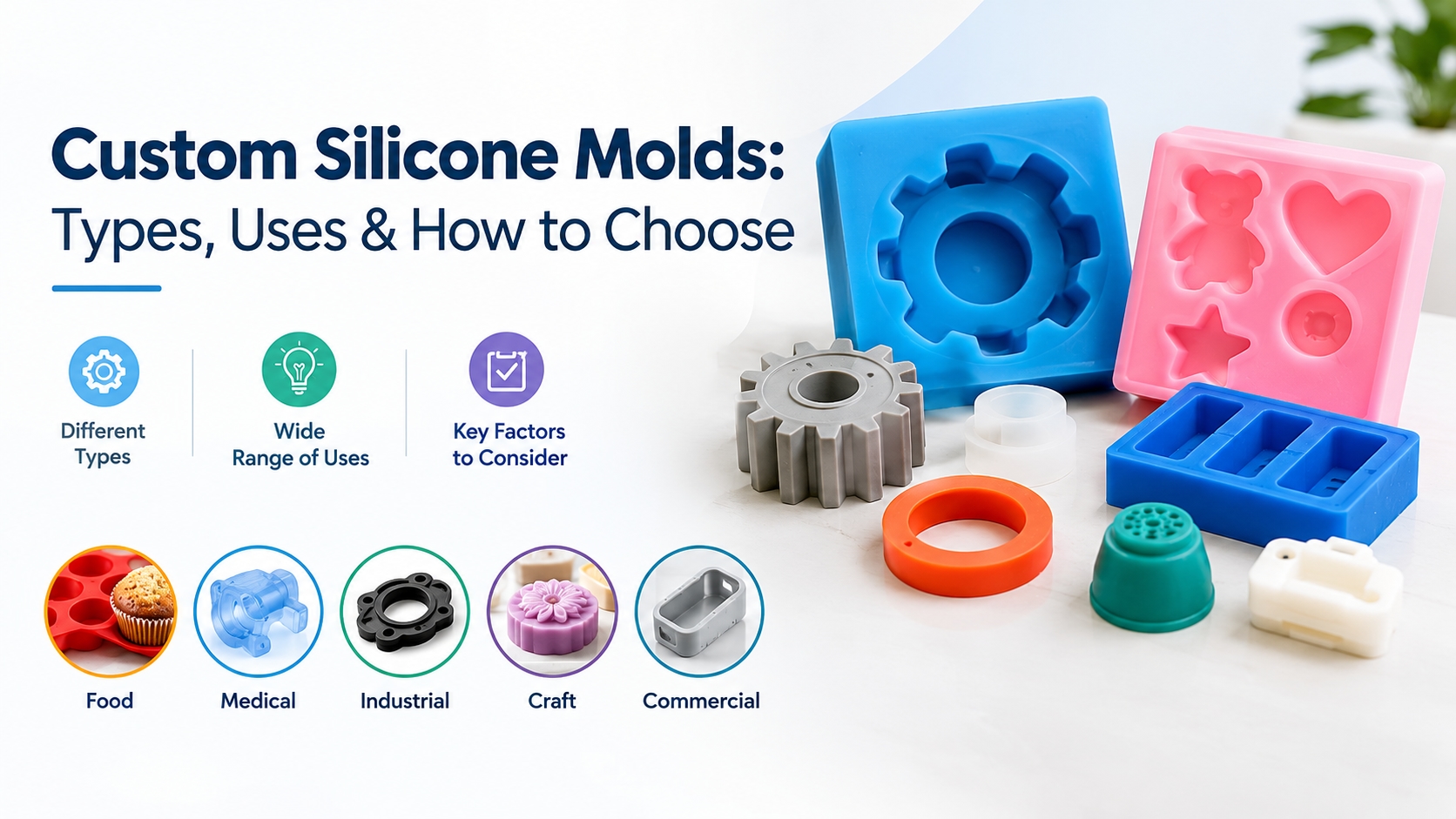
Silicone molds create consistent products across many different shapes and sizes. These molds hold shape through heating, cooling, and repeated production cycles. They work with a wide range of castable materials for many sectors. The custom silicone molds
fill gaps for projects with unique design needs. These molds match exact dimensions, surface details, and production requirements.
This guide covers mold types, applications, materials, and selection factors. Projects of all sizes rely on the right mold for good results. The right mold selection reduces waste and improves final product quality.
What Are Custom Silicone Molds?
The custom molds match exact individual project specifications. These molds differ from pre-made standard stock mold options. The silicone mold manufacturer measures every feature before starting production. They design each mold around product dimensions and fine design details.
The flexibility of the molds allows clean product release without damage to fine edges. Their durability ensures consistent results across the full mold lifespan. The custom designs solve problems that standard molds cannot address properly.
Different Types of Custom Silicone Molds
Mold types vary by construction, design intent, and intended production use. No single mold type delivers optimal results for every possible project. Below are the most common types used across industries:
Single-Cavity Silicone Molds
● Produces exactly one finished item per full molding cycle
● Ideal for prototype development and very small production batches
● Works best for products with highly detailed or complex shapes
● Allows fine adjustments before scaling to larger production runs
● Costs less to produce than molds with higher cavity counts
Multi-Cavity Silicone Molds
● Holds multiple identical mold spaces for simultaneous production
● Increases total output for designs suited to high volume runs
● Maintains consistent quality across every item made in one cycle
● Reduces total production time for moderate to large batches
● Delivers lower per-unit cost for consistent high volume demand
Two-Part Silicone Molds
● Separates cleanly into two halves for safe product removal
● Used for products with undercuts or complex three-dimensional shapes
● Prevents tearing or distortion during the product release process
● Requires careful alignment to maintain consistent part dimensions
● Works for designs that cannot be released from single-piece molds
Food-Grade Silicone Molds
● Designed for contact with edible food products
● Meets strict global safety standards for food contact materials
● Works for chocolate, baked goods, candy, and decorative food items
● Resists stains and odors from repeated use with food materials
● Withstands normal baking and freezing temperatures without damage
Industrial Silicone Molds
● Withstand harsh conditions common in industrial production
● Supports creation of custom-shaped component parts for machinery
● Maintains tight dimensional tolerances through repeated use
● Matches specific material compatibility requirements for each project
● Resists damage from chemicals used in industrial manufacturing processes
A silicone mold supplier provides guidance on the best type for each project. Selecting the wrong mold type leads to increased waste and lower quality.
Common Uses of Custom Silicone Molds
Each mold type serves specific practical applications across different sectors. Matching mold type to use case ensures good long-term results.
Food Preparation and Baking
Food-grade molds create uniform chocolate shapes, baked goods, and candy items. The flexible material releases finished food without extra handling or damage. The baking industry uses these molds for consistent product output. Uniform sizing helps with packaging and portion control for food items.
Crafts and Decorative Products
The industries can use these molds for soap making, candle production, resin art, and home decor items. They have fine surface details, so each craft comes out easily.
Product Prototyping and Small-Scale Manufacturing
The molds allow fast production of functional product samples. So, engineers test shape, fit, and design suitability before full manufacturing runs. They can also manufacture small production batches for market testing. This approach reduces risk before investing in large-scale tooling.
Industrial and Specialty Applications
Industrial molds create custom components for automotive, medical, and engineering use. The temperature resistance and material compatibility are critical for these applications. They also require exact dimensional accuracy through thousands of production cycles. Custom mold manufacturers design these molds for specific operating conditions. This allows production of parts that meet exact performance standards.
Key Benefits of Using Silicone Molds
Main benefits of silicone molds:
● Custom parts match exact product shapes and dimensions with no compromises.
● The flexible nature of silicone simplifies product release for most designs. It can ensure fine surface details, textures, and patterns.
● Silicone mold product manufacturers can get consistent results across every production cycle with proper care.
● Durability varies by silicone grade, intended use, and regular maintenance schedules.
● Good quality molds last for hundreds or thousands of production cycles before replacement. It also lessens waste levels when molds match product requirements.
How to Choose the Right Custom Silicone Mold?
Follow these factors to avoid common and costly selection mistakes. Every project has unique requirements that influence the final choice.
Identify the Product and Its Intended Use
● Define what item the mold will produce
● Confirm the final use case for the finished product
● Note if the product is for food, crafts, prototyping, or industrial use
● Document any special requirements related to product function
● Share all use case details with the manufacturing partner early
Select the Appropriate Silicone Material
● Match silicone grade directly to the intended application
● Consider maximum operating temperature for the molding process
● Verify chemical compatibility with the material being molded
● Confirm all relevant safety standards are met for the use case
Consider the Shape and Design Complexity
● Measure all product dimensions, wall thicknesses, and surface details
● Note any undercuts or features that complicate product release
● Discuss complex shapes with manufacturing engineers early in the process
● Adjust design slightly if needed to improve mold performance
Determine the Required Production Volume
● Define if the mold is for samples, small batches, or high volume runs
● Select cavity count that matches expected production output
● Avoid overbuilding molds for very low volume production needs
● Plan for future volume increases when designing initial molds
● Cavity count has the largest impact on initial mold cost
Check Temperature and Material Compatibility
● Confirm mold silicone withstands maximum process temperatures
● Test compatibility with the material that will be cast inside
● Note that repeated heating reduces long-term mold performance
● Select higher grade silicone for frequent high temperature use
Evaluate Mold Quality and Expected Lifespan
● Review silicone quality, manufacturing accuracy, and surface finish
● Confirm mold resistance to wear from repeated use
● Follow proper cleaning and storage guidelines for each mold
Review Cost and Production Requirements
● Consider mold design, tooling complexity, and production quantity
● Account for ongoing maintenance and replacement costs over time
● Balance upfront cost with expected total production output
● Calculate total cost per unit rather than just initial mold cost
A silicone mold product manufacturer helps evaluate these factors for each project. Every decision should align with the long-term goals for the product. Skipping any of these steps leads to avoidable problems.
Custom Silicone Molds vs. Standard Silicone Molds
The custom molds offer complete design flexibility for unique product requirements. Standard molds are limited to pre-existing shapes and dimensions. They offer faster delivery and lower upfront cost for suitable projects.
Custom molds require more lead time and initial investment. They deliver much better results for products with unique features. Clients can choose standard molds when available options match requirements. They select custom tooling when no existing mold meets project needs. This choice depends almost entirely on product design and production volume.
Projects with unique selling points require custom tooling. The right choice balances cost, lead time, and final product quality. Standard molds are a good choice for simple, high-volume common products. Custom molds are the only option for products with unique design features.
How Do The Molding Companies Support Custom Silicone Mold Requirements?
Manufacturers like Krishani work closely with clients to understand full project requirements first. Their engineers review product dimensions, intended use, and fine design details. They require the production volume and operating conditions. This silicone mold manufacturer selects the correct silicone grade for each case. They also suggest some practical design adjustments to improve mold performance.
The custom mold manufacturers provide ongoing support after mold delivery. The engineers are available to answer questions and resolve production issues. They focus on delivering molds that perform as expected for the full lifespan.
Conclusion
Mold type, application, material, and design all influence the final selection. A silicone mold supplier with industry experience prevents common costly mistakes. Take time to evaluate all project requirements before making a final selection. Proper mold selection reduces waste, improves quality, and lowers total production cost. The right mold becomes a reliable asset for the full production lifecycle.
Need help with a custom mold project? Our team at Krishani is ready to discuss your requirements and help you find a suitable solution. Share your project specifications, product dimensions, and intended use so we can better understand your needs. For questions, project support, or further information, contact our team directly. We will be happy to discuss your requirements and help you take the next step.
Phone: +1 647-294-5240
Email: info@krishani.com
FAQs
1. What are custom silicone molds used for?
It play a key role in the manufacturing of products with particular shapes and sizes. They are widely used in baking, craft making, prototyping, and industrial applications.
2. What types of silicone molds are available?
The most popular choices are single cavity, multi cavity, two part and industrial silicone molds. Each benefits different product designs and manufacturing needs.
3. How do I choose the right silicone mold?
The product shape, intended use, and quantity of production should be taken into consideration first. Additionally, look at material compatibility, temperature, and mold life.
4. Are custom molds suitable for food products?
Yes, the right silicone molds can be used for a variety of food items. The molds used for baking or chocolate-making must be food-contact compatible. Always check the food-contact compliance.