
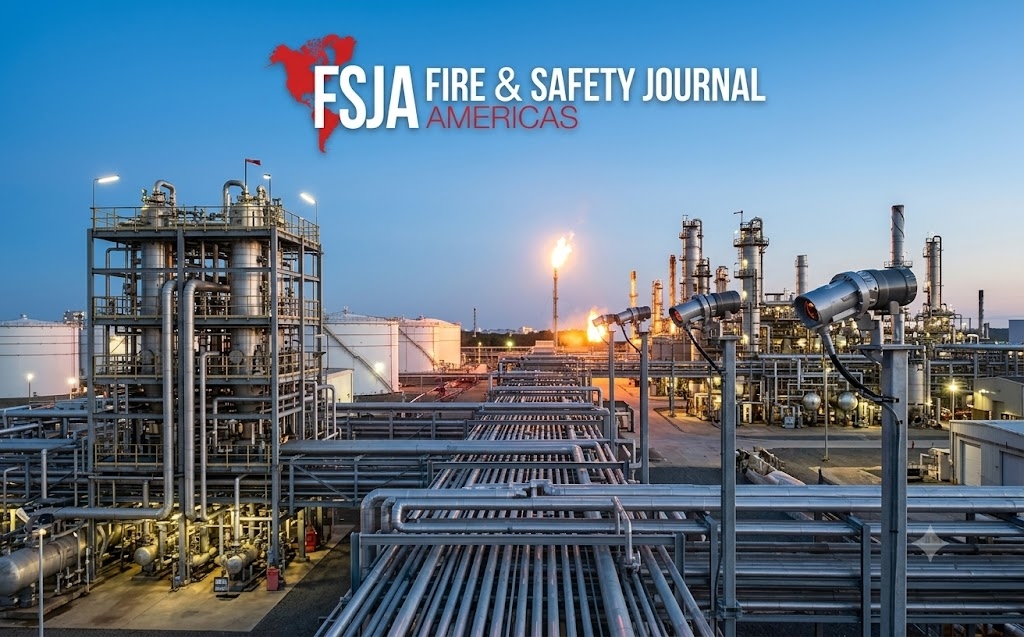
Energy and high-hazard facilities require fire protection strategies that can respond to rapidly developing incidents. Oil and gas installations, fuel terminals, power plants, chemical processing areas and similar environments may contain materials capable of producing intense fires within seconds of ignition.
In these settings, relying on a single detection technology can leave important gaps in protection. Smoke may disperse rapidly, heat may take time to reach a detector and some fires can occur in locations where conventional building detection is difficult to apply.
A flame detection system can help address these challenges by identifying optical characteristics produced by flames. When properly designed and installed, this technology can provide rapid notification of certain fire events and support the activation of emergency procedures.
Why High-Hazard Facilities Need Rapid Detection
High-hazard operations frequently involve fuels and materials with high energy-release rates.
A small ignition can quickly develop into a major incident when combustible materials are continuously available. In addition, process equipment may be located outdoors or in large open areas where traditional smoke detection is less effective.
Rapid detection can provide operators with valuable time to respond.
A flame detection system can identify certain fires from a distance, allowing alarm signals to be generated without requiring smoke or heat to travel to a conventional sensing device.
This capability makes optical detection particularly relevant to facilities where fire growth can be rapid.
Identifying Suitable Fire Scenarios
Before selecting detection equipment, safety professionals should identify the types of fires that could realistically occur.
Different fuels produce different combustion characteristics. Gas fires, liquid pool fires and fires involving industrial materials may generate different optical signatures.
The facility's hazard assessment should consider:
Fuel characteristics
Potential ignition sources
Fire growth rate
Equipment arrangement
Indoor or outdoor installation
Environmental conditions
Required detection distance
Emergency response capabilities
This information can help determine whether optical detection is appropriate and which technology is most suitable.
Selecting Between Detection Technologies
Ultraviolet, infrared and multispectral technologies are commonly used for flame detection.
UV detectors respond to ultraviolet radiation generated by certain flames. Infrared detectors analyse infrared emissions and may use characteristic flame flicker patterns to identify combustion.
Multispectral detectors examine multiple wavelength ranges. This can provide additional information when distinguishing a flame from environmental interference.
The correct choice depends on the facility rather than the technology's marketing specifications alone.
Engineers should evaluate expected fire types, environmental conditions and the consequences of missed or delayed detection.
Outdoor Applications
Many high-hazard facilities contain extensive outdoor equipment.
Fuel tanks, pipelines, compressors, processing units and loading areas may be exposed to weather, sunlight and changing temperatures.
Outdoor fire detection presents unique challenges because the environment contains numerous potential sources of optical interference.
A flame detection system intended for outdoor use should therefore be assessed for environmental performance, detection range and resistance to false alarms.
Detector positioning becomes particularly important because the equipment needs an unobstructed view of the protected hazard.
Protecting Critical Equipment
Fire protection is not limited to occupied buildings.
Critical equipment can represent major financial and operational assets. Damage to pumps, compressors, transformers, generators or process-control equipment can cause lengthy shutdowns.
Strategically positioned flame detection can provide an additional layer of monitoring around these assets.
When integrated with appropriate alarms and emergency controls, detection may help personnel intervene before a small fire causes extensive damage.
However, detection should complement physical protection, fire-resistant construction, isolation systems and suppression equipment rather than replace them.
Designing Alarm Logic
Alarm design is another important consideration.
A detector signal may trigger different levels of response depending on the site's emergency procedures. Some systems may generate an initial warning, while confirmed fire conditions can initiate stronger actions.
Facilities should define how alarms are prioritised and who is responsible for responding.
If automatic suppression or equipment shutdown is connected to detection, the logic should be carefully tested.
A reliable detection system is only one part of the safety chain. The complete sequence from detection to response must function as intended.
Avoiding Blind Spots
One of the most important design considerations is coverage.
Large facilities can contain complex structures, pipework, machinery and storage areas that obstruct optical detection.
A detector that cannot see a potential fire location cannot provide the intended protection.
Design teams should therefore map potential fire locations and identify areas that may be hidden from individual detectors. Multiple viewing angles may be necessary for critical hazards.
Future modifications should also be considered. A new structure or piece of equipment could unintentionally block an existing detector.
Inspection and Reliability
High-hazard facilities operate under demanding conditions, so fire detection equipment must be maintained accordingly.
Regular inspections can identify contamination, physical damage, wiring problems and changes in detector alignment.
Maintenance teams should also verify communication between detectors and central safety systems.
A flame detection system that is technically advanced but poorly maintained may not provide dependable protection when it is needed most.
Preventive maintenance should therefore be integrated into the facility's broader safety management programme.
Human Response Still Matters
Automation can accelerate detection, but people remain an important part of emergency response.
Operators must know what different alarm signals mean and understand the actions required during an emergency.
Training should reflect realistic scenarios rather than focusing solely on theoretical procedures.
Emergency drills can help identify communication problems, unclear responsibilities and delays in decision-making.
The objective is to create a coordinated response in which technology provides information and trained personnel know how to act on it.
Integration With Suppression Systems
In certain high-hazard applications, flame detection may be integrated with automatic suppression.
When the detection system identifies a confirmed fire condition, it may provide a signal to activate an appropriate extinguishing system.
The relationship between detection and suppression must be carefully engineered. Factors such as detector reliability, voting arrangements, activation delays and manual intervention requirements should be considered.
The suppression system itself must be appropriate for the fuel and environment.
This highlights why fire detection cannot be designed independently from the rest of the facility's fire protection strategy.
Improving Situational Awareness
Modern facilities increasingly rely on centralised monitoring.
Signals from multiple detectors can be displayed at control stations, helping operators identify the location of an alarm and understand which areas are affected.
Event histories can also support incident investigation and maintenance planning.
Over time, collected information may help organisations identify recurring faults or patterns that require additional engineering controls.
The result is a shift from simple alarm notification toward broader safety information management.
Building a Layered Fire Protection Strategy
The strongest protection strategies combine several safeguards.
Prevention measures reduce the probability of ignition. Detection provides early warning. Isolation systems can limit the spread of hazardous materials. Suppression systems can control fire development, while emergency procedures guide personnel through evacuation and response.
Within this framework, a flame detection system serves as one important layer rather than a standalone solution.
This layered approach is particularly valuable in high-hazard environments because individual safeguards can fail or become less effective under certain circumstances.
Looking Ahead
Advances in sensing technology, signal processing and digital connectivity are likely to continue changing the way high-hazard facilities manage fire detection.
Future systems may offer improved discrimination between flames and environmental interference, enhanced diagnostics and stronger integration with facility-wide safety platforms.
At the same time, organisations will need to consider system resilience, cybersecurity, maintenance requirements and the skills needed to manage increasingly connected technologies.
Professionals and safety leaders can follow these developments through industry resources such as Fire & Safety Journal Americas, where emerging approaches to fire prevention and protection continue to receive attention.
Conclusion
A flame detection system can provide rapid optical fire detection in environments where traditional smoke or heat detection may have limitations. Its greatest value comes from identifying suitable applications and integrating the technology into a wider fire protection strategy.
Successful implementation requires careful hazard assessment, appropriate technology selection, effective coverage, reliable alarm logic and consistent maintenance.
For energy and high-hazard facilities, the goal should not simply be faster detection. The goal is to create a dependable chain of protection in which detection, communication, emergency response and suppression work together.