When travelers picture Mozambique, thoughts usually turn to turquoise ocean waters, powdery white beaches, and fresh seafood. But beyond its stunning 2,500-kilometer coastline lies another captivating side of the country: a rich, dramatic railway history and some of the most scenic train journeys in Southern Africa.
From world-renowned architectural landmarks in Maputo to rugged inland train tracks passing giant granite peaks, exploring Mozambique by rail offers a unique glimpse into the nation's past and present. If you are planning an adventurous journey across these historic lines, make sure to check Mozambique eVisa eligible countries first to prepare your travel documents smoothly.
Whether you are a railway enthusiast, a history lover, or an adventurous traveler seeking off-the-beaten-path experiences, here is your complete guide to Mozambique’s historic railway heritage and scenic train routes.
1. Maputo Railway Station: A Masterpiece of Colonial Architecture
No exploration of Mozambique’s rail history can begin anywhere other than Maputo Central Railway Station (Estação Central de Caminhos de Ferro).
Located in the heart of the capital city, Maputo Railway Station is widely regarded as one of the most beautiful train stations in the world. Built between 1910 and 1916, this Beaux-Arts marvel features striking mint-green and white walls, grand marble pillars, intricate wrought-iron lattice work, and an impressive central dome.
Highlights of Maputo Station:
Architectural Grandeur: Designed by architects Alfredo Augusto Lisboa de Lima, Mário Veiga, and José Ferreira da Costa, the structure showcases classical European influence with grand archways and cast-iron details.
Historic Steam Locomotives: On the platforms, you will find preserved early 20th-century steam engines that once powered trade across Southern Africa.
The Railway Museum (CFM Museum): Located inside the station, this museum houses historic photographs, old uniform displays, telegraph equipment, and fascinating artifacts detailing the evolution of the national railway operator, Portos e Caminhos de Ferro de Moçambique (CFM).
2. Key Historic Train Routes in Mozambique
Mozambique’s rail network was historically built to connect inland landlocked nations—such as Zimbabwe, Malawi, and Eswatini—to Mozambique's busy coastal ports. Today, several key corridors stand out for their historic value and breathtaking scenery.
The Nacala Corridor (Nampula to Cuamba)
If you want to experience authentic modern train travel in Mozambique, the route between Nampula and Cuamba along the Nacala Corridor is legendary.
The Scenery: The train winds through Northern Mozambique's lush rural countryside, passing dramatic inselbergs—massive, isolated granite mountains rising abruptly from the surrounding plains.
The Experience: This passenger line is vibrant and full of life. At every rural stop, local vendors line the tracks selling fresh mangoes, cashews, roasted corn, and handcrafted goods through the train windows.
The Historic Sena Line & Dona Ana Bridge
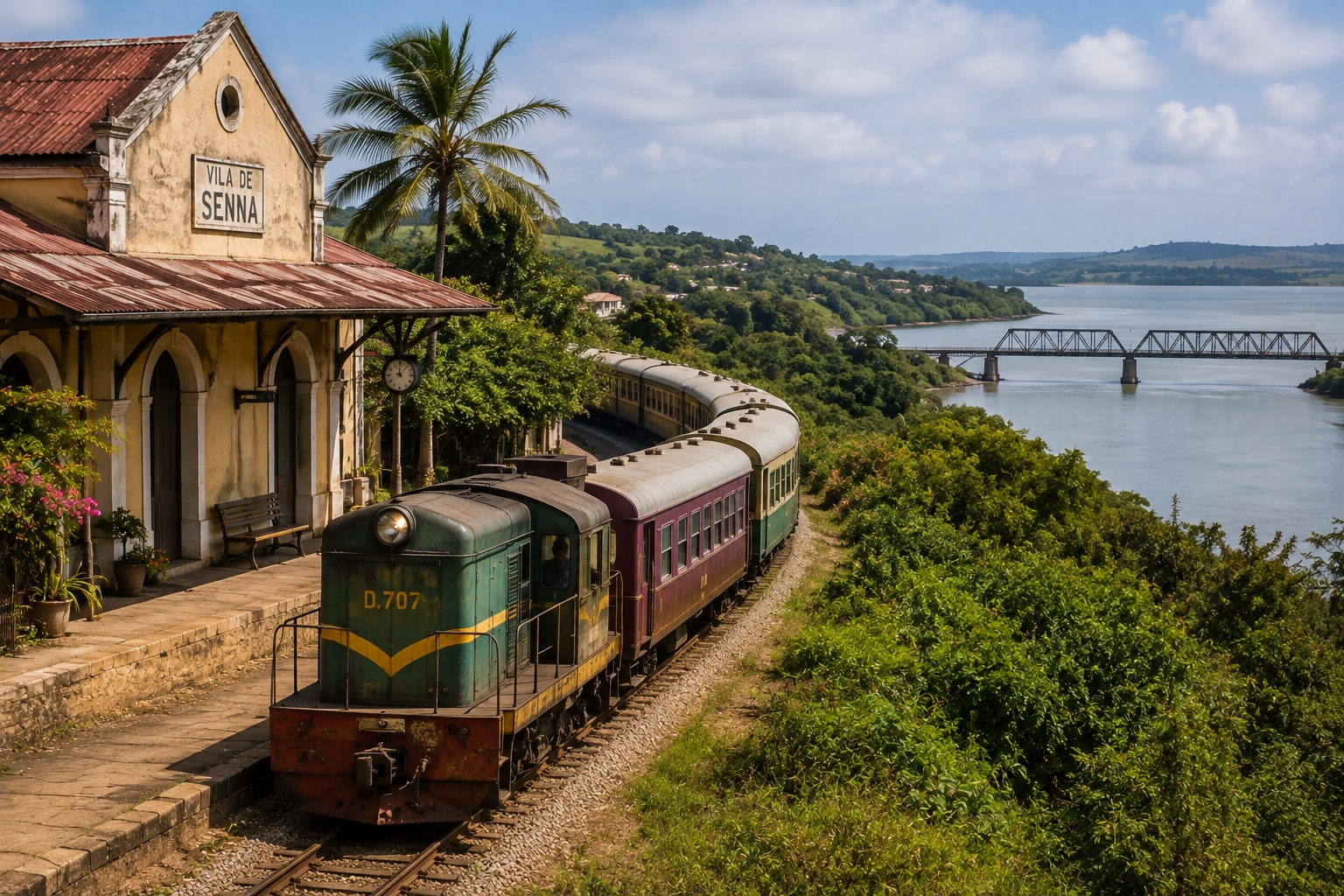
Stretching through the Zambezi River basin, the Sena Railway Line connects the port city of Beira with the coal-mining region of Moatize.
Dona Ana Bridge: A true engineering marvel, this 3.6-kilometer railway bridge spans the mighty Zambezi River at Mutarara. Built in the 1930s, it was once the longest railway bridge in the Southern Hemisphere and remains an iconic symbol of Mozambique's infrastructure heritage.
The Ressano Garcia Line (Maputo to South Africa)
This historic border-crossing line connected Maputo directly to the Transvaal region in South Africa during the late 19th-century gold rush. Today, it remains a vital artery for regional trade and offers sweeping views of the southern savannah landscape.
3. Practical Tips for Exploring Mozambique's Railways
Traveling by rail in Mozambique is an adventure. To make the most of your journey, keep these practical travel tips in mind:
Plan Around Timetables: Passenger trains on routes like Nampula–Cuamba do not run every single day. Always double-check schedules at local stations ahead of time.
Pack Water and Snacks: While train journeys offer plenty of local snacks from platform vendors, bringing plenty of bottled water and extra supplies is recommended for long trips.
Bring Cash: Credit cards are rarely accepted on trains or at remote rural stations. Keep small denominations of Mozambican Meticais ($MZN$) handy.
Secure Your Travel Documents Early: Most international visitors require an entry visa to visit Mozambique. Before finalizing your flight or train reservations, verify your country's status on the Mozambique eVisa eligible list to ensure a hassle-free trip.
4. How to Secure Your Mozambique Visa Easily
Planning your trip to discover Mozambique’s railway heritage should be exciting, not stressful. Before you book your train tickets and explore historic landmarks, ensure your travel documents are completely in order.
Getting your visa approved smoothly is the first step toward an unforgettable African journey. You can check Mozambique eVisa eligibility to start your application right away.
Why Choose Us for Your Mozambique eVisa?
Navigating visa requirements can sometimes feel overwhelming, but our dedicated visa platform makes the process simple, fast, and reliable.
Reliable Travel Visa Services: Our global approach has assisted numerous travelers across the world in successfully obtaining their visas without hassle.
Round-the-Clock Assistance: Have questions during your application? Reach out to us 24/7, and our experts will respond promptly within 72 hours to guide you.
Experienced Visa Consultants: Receive professional, step-by-step guidance to ensure your documentation is accurate and to maximize the acceptance rate of your application.
Efficient Visa Application Process: Skip long paper forms and embassy queues. Apply for your visa in just a few minutes using our simplified digital application process.
Ready to start planning your historic rail adventure? Review the list of Mozambique eVisa eligible countries and apply online today!
Final Thoughts
From the majestic dome of Maputo Central Station to the granite peaks along the Nacala Corridor, Mozambique offers a rich railway history waiting to be discovered. Stepping onto these platforms connects you to over a century of trade, culture, and natural beauty. Prepare your travel itinerary, secure your eVisa, and get ready to experience Mozambique from a whole new perspective!