Have you noticed small, ring-shaped bumps on your skin that seem unusual or refuse to disappear? One possible explanation is granuloma annulare, a benign inflammatory skin condition that can appear in several forms. Although the classic type usually creates smooth rings beneath the skin's surface, perforating granuloma annulare can develop a very different appearance, with tiny openings, crusts or depressed marks.
Knowing the difference can help you understand what a dermatologist may look for, why a biopsy might be recommended and which treatment options could be suitable. The two forms share the same underlying skin condition, but their visible features and healing patterns are not always alike.
This article explains the differences in clear, practical language. It also discusses diagnosis, possible triggers, treatment choices, everyday skin care and when medical advice is important.
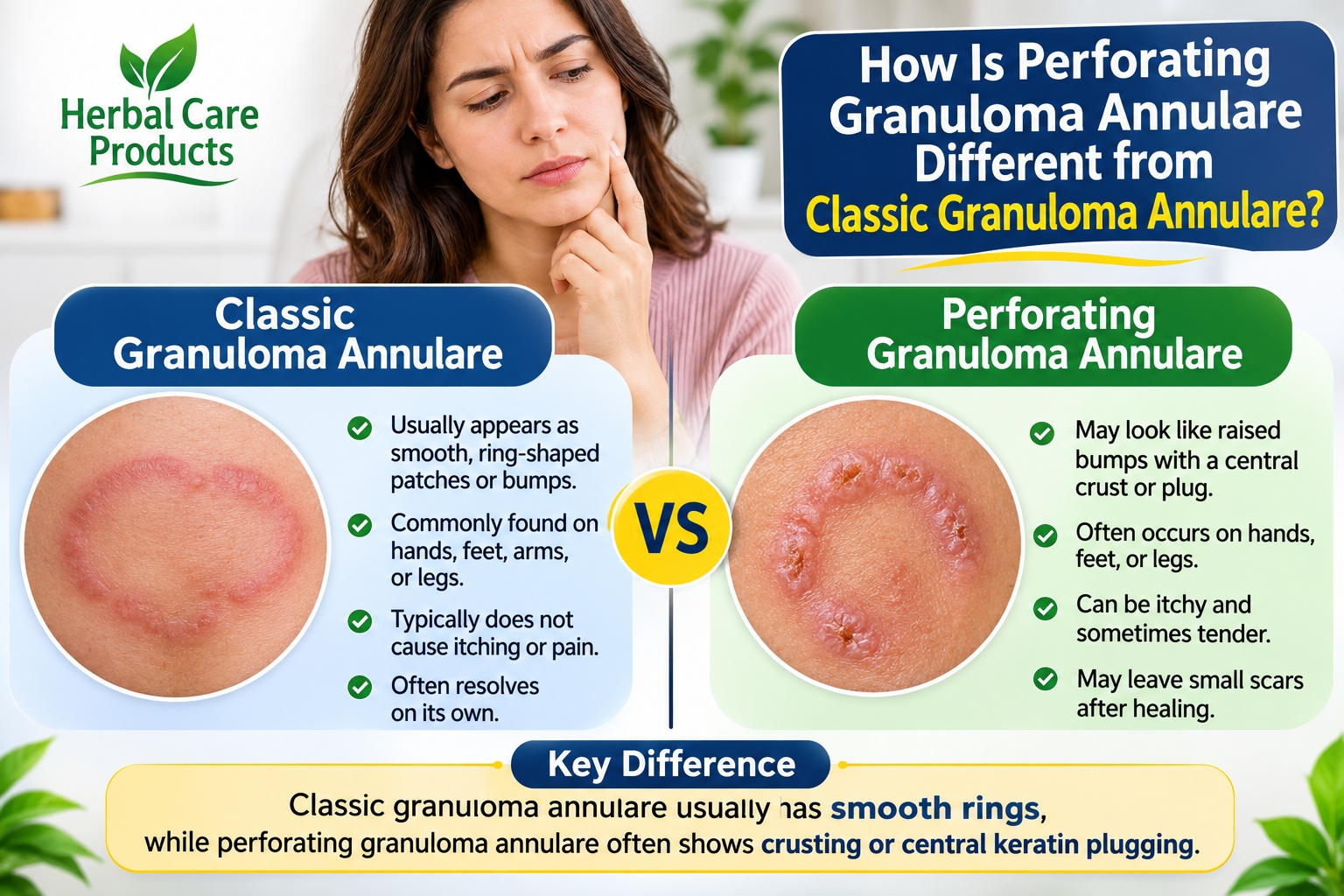
perforating granuloma annulare: An Overview
Granuloma annulare, often shortened to GA, is a non-contagious inflammatory skin condition. It commonly appears as small, firm papules that join together to form circular or ring-shaped patches. These lesions may be skin-coloured, pink, reddish or slightly brown, depending on a person's skin tone.
The condition usually affects the skin's dermis, which lies beneath the outer epidermis. It is not caused by poor hygiene, and you cannot catch it through touching, sharing clothes or being close to someone who has it.
Classic GA is the most familiar presentation, but dermatologists recognise several clinical forms. These include localised, generalised, subcutaneous and perforating variants. The appearance can vary considerably, which is one reason a careful examination matters.
The perforating type is uncommon. It can develop bumps that release material through tiny openings in the epidermis, the skin's outer layer. These openings may become crusted or appear as small shallow depressions after healing.
A key point is that the word perforating describes the way the skin lesion behaves. It does not mean that the condition is a deep hole or a dangerous infection. The changes occur as part of an inflammatory skin process, although broken skin can sometimes become irritated or infected.
What Is Classic Granuloma Annulare?
Classic granuloma annulare generally appears as a smooth, raised ring or partial ring. The border consists of closely grouped papules, while the centre may look relatively normal. The surface is usually not scaly, which helps distinguish it from certain other circular rashes.
The lesions often develop on the backs of the hands, feet, ankles, wrists or elbows. Some people have only one or two rings, while others develop several. The rash may remain unchanged for months before gradually fading.
Many people experience little discomfort. Itching or tenderness can occur, but these symptoms are not always present. Classic GA is usually harmless and often improves without treatment, although it may return later.
What Makes the Perforating Form Unusual?
In the perforating variant, inflammatory material can pass through the epidermis in a process called transepidermal elimination. The skin may form small central plugs, crusts or shallow erosions instead of remaining smooth.
This surface change is the main clinical distinction. The lesions may still be arranged in groups or rings, but their centres can look rough, scabbed or punctured. Some lesions heal with small depressed scars or changes in pigmentation.
The condition is rare, and published descriptions often come from individual cases or small clinical series. That means its exact frequency, causes and best treatment approach are less firmly established than those of common GA.
Research reviews describe GA as a benign inflammatory disorder with several clinical patterns. They also emphasise that treatment evidence remains limited and that management should reflect the subtype and the person's symptoms.
How Do the Two Forms Look on the Skin?
The most useful difference is often visible at the skin surface. Classic lesions tend to be smooth, while the perforating form may show crusting, tiny openings or shallow areas where the skin has broken down.
Feature | Classic granuloma annulare | Perforating variant |
Surface | Usually smooth and non-scaly | May be crusted, rough or eroded |
Shape | Ring or arc of firm papules | Papules, grouped lesions or ring-like clusters |
Centre | Often clear or normal-looking | May contain a tiny plug or depression |
Healing | Often fades without a scar | May leave small scars or pigment changes |
Frequency | More common | Rare |
Diagnosis | Often clinical | Biopsy may be more helpful |
These differences are useful clues, but they are not enough to confirm the diagnosis by themselves. Several skin conditions can create ring-shaped bumps, crusts or small erosions. A dermatologist considers the full appearance, location, duration and medical history before deciding what the lesions represent.
Classic Lesions: Smooth Rings and Firm Bumps
The classic form often begins with a few small papules. Over time, they may gather into a circular or semicircular outline. The ring can expand slowly, and its border may feel firmer than the surrounding skin.
Unlike ringworm, classic GA generally does not have a prominent scaly edge. Ringworm is a fungal infection and may spread to other areas or people, whereas GA is not infectious. Still, visual similarities can make self-diagnosis unreliable.
A person may notice that the ring looks more obvious in certain lighting or after the skin becomes warm. This does not necessarily mean the condition is worsening. Changes in colour and visibility can occur naturally in inflammatory skin lesions.
Perforating Lesions: Crusting and Small Openings
The perforating form may begin as small, raised bumps. A central area can develop a plug or break through the surface, allowing inflammatory material to be expelled. As the lesion dries, a crust may form.
When the crust falls away, the skin underneath may look shallow, pink or slightly indented. Repeated inflammation or scratching can increase the chance of lasting marks. For this reason, gentle skin care is particularly important.
If a bump becomes increasingly painful, warm, swollen or produces pus, do not assume that these changes are simply part of GA. They may indicate a secondary infection or another diagnosis that needs prompt medical assessment.
Symptoms, Locations and Healing
The symptoms of GA vary from person to person. Some people notice the rash only because it looks different, while others experience itching, tenderness or irritation. The perforating subtype can be more noticeable because the surface changes may resemble sores or scabs.
A lesion's appearance does not always reflect how serious the condition is. A small crusted bump can be benign, while a persistent or rapidly changing lesion may need examination to rule out other causes.
Where Can These Lesions Appear?
Classic GA commonly affects the hands, feet, ankles and wrists. The perforating form has been reported on the hands, fingers, arms, legs and other body areas. In some cases, lesions appear in areas exposed to friction or minor trauma.
The distribution can offer clues, but it does not establish the diagnosis. A dermatologist may ask whether the bumps started after an injury, whether they have spread and whether similar lesions have appeared before.
Does the Perforating Type Leave Scars?
It can. Classic GA usually resolves without leaving a permanent scar, although temporary colour changes may remain. The perforating form has a greater possibility of leaving small depressed scars because the epidermis becomes disrupted.
Scarring is not inevitable. It depends on factors such as lesion depth, repeated inflammation, scratching, infection and the person's healing response. Avoid picking crusts or squeezing bumps, as these actions can damage the surrounding skin.
If a mark remains after the inflammation settles, it may gradually become less noticeable. However, pigment changes and scars can take months to improve, and some may persist.
Causes, Triggers and Risk Factors
The exact cause of granuloma annulare is not fully understood. Researchers believe that an abnormal immune response in the skin contributes to inflammation around collagen and other tissue structures. The condition is not considered a simple bacterial or fungal infection.
In GA, immune cells called histiocytes and other inflammatory cells gather in the dermis. These changes create the papules and plaques seen during examination. In the perforating variant, the inflammatory process is accompanied by the movement of material through the epidermis.
What May Trigger Granuloma Annulare?
Some cases appear after minor skin trauma, insect bites, vaccination or certain infections, but a clear trigger is not always identified. These associations do not prove that a particular event caused the rash.
GA has also been studied alongside conditions such as diabetes, thyroid disorders and altered blood lipid levels. The evidence is mixed, and having GA does not automatically mean that a person has one of these health problems. A clinician may recommend screening based on symptoms, medical history, age or other risk factors.
Is the Perforating Variant More Dangerous?
Not necessarily. The perforating subtype is unusual because of its surface changes, not because it is automatically more severe or life-threatening. It remains a form of a generally benign skin condition.
However, broken skin requires sensible care. Keeping lesions clean, avoiding friction and seeking advice if signs of infection appear can help prevent additional problems.
The main concern is often diagnostic uncertainty. A crusted or ulcerated bump can resemble an infection, a wart, another inflammatory disorder or, occasionally, a more serious skin lesion. Proper assessment helps avoid treating the wrong condition.
How Is the Diagnosis Confirmed?
A dermatologist can often recognise classic GA by examining the shape, colour and location of the lesions. The perforating form may require a closer investigation because crusts, erosions and small openings can resemble several other skin conditions.
The diagnosis matters because treatment depends on what is actually causing the skin changes. For example, ringworm requires antifungal treatment, while a bacterial infection may need an appropriate antimicrobial medicine. Using the wrong product can delay improvement or irritate the skin further.
Skin Examination and Medical History
During your appointment, the dermatologist may ask when the lesions first appeared, whether they itch or hurt, and whether they have changed over time. They may also ask about recent injuries, medicines, previous skin conditions and other health concerns.
The examination may include checking whether the lesions are smooth, scaly, crusted or ulcerated. The clinician may look at other parts of the body for similar marks and assess whether the pattern fits a recognised GA subtype.
Photographs can be useful when the rash changes gradually. If you have pictures from earlier weeks, they may help the dermatologist understand how the lesions developed.
Why Might a Skin Biopsy Be Needed?
A skin biopsy involves removing a small sample of tissue for examination under a microscope. It is often considered when the appearance is unusual, the diagnosis is uncertain or the lesions do not respond as expected.
In GA, the microscopic examination may show inflammatory cells around altered collagen and increased mucin. In the perforating variant, the pathologist may identify evidence of transepidermal elimination, which helps explain the tiny openings and crusts.
A biopsy is usually performed using local anaesthetic. The area may remain tender for a short time, and the clinician will explain how to care for the wound while it heals.
The American Academy of Dermatology notes that a skin examination is often sufficient to diagnose GA, but a biopsy or other tests may be needed when another condition is suspected.
Treatment Options and Skin Care
Treatment depends on the number of lesions, their location, the symptoms they cause and whether they are leaving scars. Some people need no active treatment because the condition may improve naturally. Others seek treatment because the rash is persistent, uncomfortable or affects their confidence.
There is no single treatment that works for everyone. A dermatologist may recommend observation, a topical medicine, an injection or another approach depending on the clinical presentation.
Can Medical Treatment Help?
For a few localised lesions, a clinician may prescribe a topical corticosteroid to reduce inflammation. In selected cases, an injection of corticosteroid into a lesion may be considered. These treatments should be used under medical guidance because prolonged or inappropriate steroid use can thin the skin.
Other options may be discussed for widespread or persistent disease. These can include phototherapy or selected prescription medicines. The benefits and risks vary, and the evidence for many treatments is based on limited studies rather than large clinical trials.
In perforating disease, the doctor may also focus on protecting damaged skin and reducing the risk of secondary infection. Treatment of the inflammation may help, but it does not guarantee that every lesion will disappear quickly or without a mark.
Gentle Skin Care and Complementary Support
Everyday skin care cannot replace a medical diagnosis, but it can support comfort and protect the skin barrier. Wash affected areas gently with lukewarm water and a mild cleanser. Avoid harsh scrubs, strong fragrances and repeated rubbing over crusted lesions.
If the skin is dry, a simple fragrance-free moisturiser may help reduce irritation. Do not apply creams or ointments to open lesions without checking whether they are suitable, particularly if the area looks infected.
Some people explore Herbal Supplements for Granuloma Annulare because they prefer complementary approaches. At present, there is no strong clinical evidence that herbal supplements cure GA or reliably prevent recurrence. Supplements can also interact with prescription medicines or cause unwanted effects, so discuss them with a healthcare professional before use.
A balanced diet, adequate sleep and routine health care support general wellbeing, but they should not be presented as a guaranteed way to clear this skin condition. Be cautious of products that promise rapid healing, permanent results or complete removal of lesions.
What About Natural or Home-Based Approaches?
People often search for a Granuloma Annulare Natural Treatment when they want to manage the condition without strong medicines. The safest starting point is usually simple skin protection rather than experimenting with irritating ingredients.
Avoid applying undiluted essential oils, acidic substances, bleach, abrasive powders or homemade mixtures to affected skin. These can cause burns, allergic reactions or additional inflammation, especially when the surface is already broken.
A cool compress may soothe mild irritation, provided it is clean and used gently. Do not use it as a substitute for medical care if the lesion is painful, spreading or producing discharge.
Some topical products marketed as Herbal Care Products may offer moisturising or soothing ingredients. However, their labels do not establish that they treat the underlying inflammation. Check ingredients carefully, avoid applying them to open wounds without professional advice, and stop use if burning, swelling or a new rash develops.
How Can You Protect the Skin During Healing?
The aim is to reduce friction and allow the skin to recover without additional damage. Small changes in your routine can make a meaningful difference.
Keep the affected area clean and avoid unnecessary rubbing.
Do not pick, scratch or squeeze the bumps.
Use a gentle moisturiser on intact, dry skin.
Protect exposed areas from excessive sun, which can make pigment changes more noticeable.
Follow the dermatologist's instructions for prescribed creams or wound care.
If a crust comes away naturally, avoid pulling at it. The skin beneath may be delicate and can bleed or become irritated if disturbed.
When Should You See a Dermatologist?
Arrange a medical appointment if you have persistent ring-shaped bumps, unexplained crusted lesions or skin changes that do not improve over several weeks. A dermatologist can distinguish GA from infections and other conditions that may look similar.
Seek prompt medical attention if a lesion becomes increasingly painful, hot, swollen, rapidly enlarges or develops pus. Fever or redness spreading beyond the lesion may indicate an infection and should not be ignored.
You should also return for review if the diagnosis is uncertain, the rash spreads widely, treatment causes significant irritation or the lesions begin to scar. Early assessment can help clarify the condition and reduce unnecessary treatment.
Remember that perforating granuloma annulare is a rare presentation, so it is particularly important not to rely on photographs or online descriptions alone. A professional examination can determine whether the surface changes fit this subtype or point to another cause.
Conclusion
Classic GA and its perforating variant share the same underlying inflammatory skin condition, but their surface appearance can be quite different. Classic lesions usually form smooth, firm rings, while the perforating type may develop tiny openings, crusts, shallow erosions or small scars.
The most important distinction is the way the epidermis becomes involved. In the perforating form, inflammatory material can pass through the outer skin, creating changes that may look like sores or punctures. This unusual appearance can make diagnosis more challenging and may increase the need for a skin biopsy.
Both forms are generally benign, and treatment is based on symptoms, extent and individual circumstances. Gentle skin care, avoiding scratching and seeking professional advice for unusual or worsening lesions can help protect your skin.
If you notice persistent ring-shaped bumps or crusted skin lesions, consult a dermatologist rather than assuming they are harmless. A correct diagnosis is the first step towards suitable care and realistic expectations about healing.
Frequently Asked Questions
1. Is perforating granuloma annulare the same as classic granuloma annulare?
They are different clinical forms of the same inflammatory skin condition. Classic GA usually produces smooth, ring-shaped papules, whereas the perforating form may develop central openings, crusts or shallow erosions. The underlying diagnosis is related, but the visible skin changes differ.
2. Is perforating granuloma annulare contagious?
No. GA is not caused by a contagious infection, and it does not spread from one person to another through touch, clothing or shared household items. You can maintain normal social contact with someone who has the condition.
3. Does the perforating form always leave scars?
No, but scarring is more likely than with classic GA because the skin surface can break down. Some lesions heal with small depressed marks or changes in pigmentation. Avoiding scratching and following appropriate skin-care advice may help reduce additional damage.
4. Can perforating granuloma annulare disappear without treatment?
Some cases of GA improve naturally over time. However, the course of the perforating subtype can vary, and lesions may persist or recur. A dermatologist can help determine whether observation or active treatment is appropriate.
5. How is perforating granuloma annulare diagnosed?
A dermatologist examines the lesions and reviews your medical history. If the appearance is unusual or another skin condition is suspected, a biopsy may be taken. Microscopic examination can help identify the characteristic inflammatory changes and distinguish GA from similar conditions.
Medical Disclaimer
This article is for educational and informational purposes only. It does not replace professional medical advice, diagnosis or treatment. Skin conditions can look similar, and only a qualified healthcare professional can confirm the cause of your symptoms. Always consult a dermatologist before starting, changing or stopping any treatment, including herbal supplements or topical products.