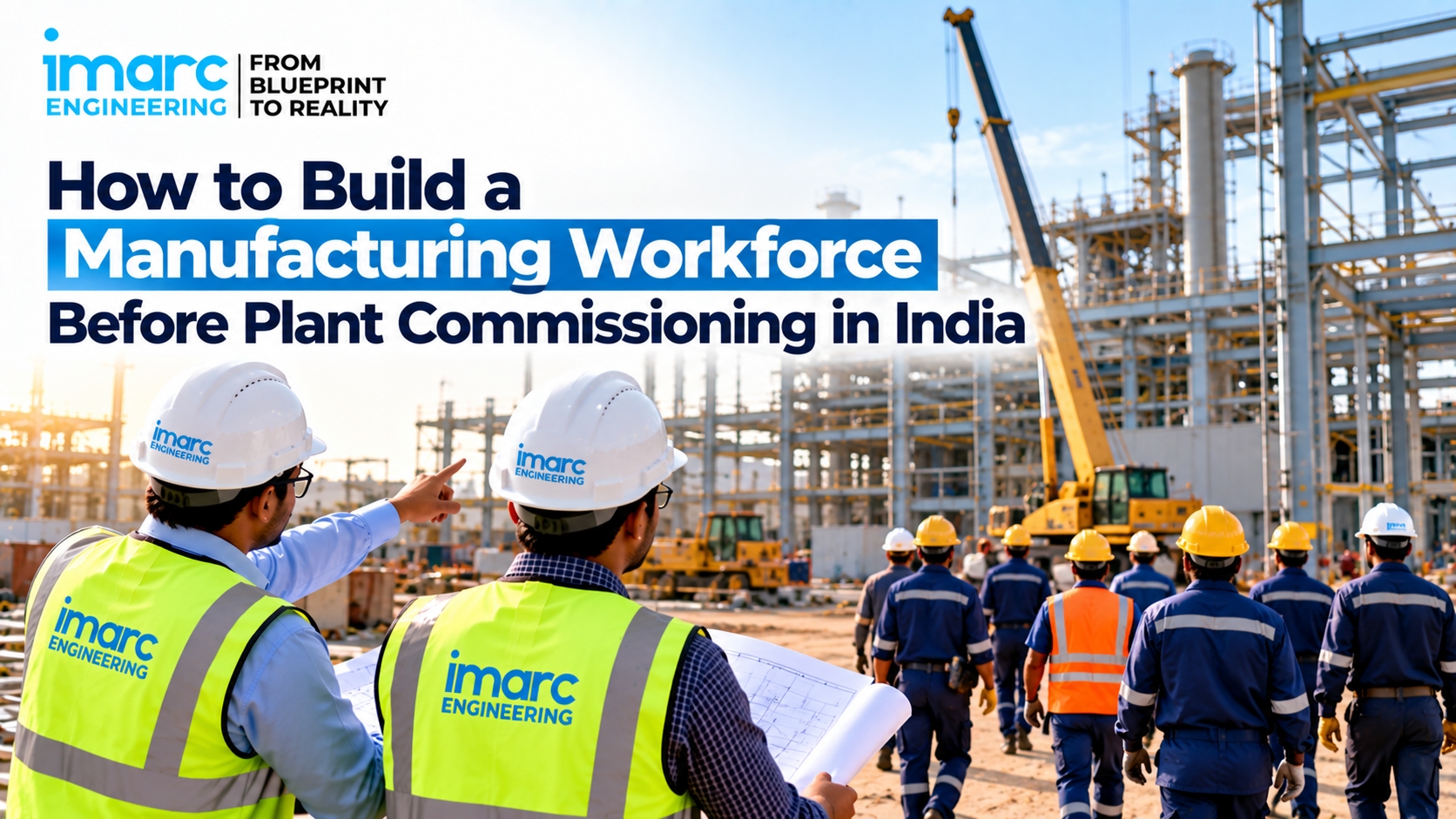
A manufacturing plant can reach mechanical completion and still fail its first months of operation because the workforce is incomplete. Machines are installed, utilities are ready and trial material is available, yet shift supervision is thin, maintenance response is slow and quality checks are inconsistent. Commissioning then becomes on-the-job crisis management.
How to build a manufacturing workforce before plant commissioning in India is a planning discipline: define roles early, hire in waves, train against real process requirements and stabilise critical competencies before full production pressure arrives. The objective is start-up readiness, not last-minute recruitment. A structured Rapid Deployment Capability for Greenfield Project approach can help align recruitment timelines with commissioning milestones and planned production commencement.
Why Workforce Planning Must Begin Before Commissioning
Commissioning and ramp-up expose every skill gap. New equipment, unfamiliar SOPs, unstable process windows and first-time coordination between production, maintenance, quality and stores all arrive together.
When workforce building is late, plants typically face:
Delayed stabilisation after mechanical completion
High dependence on vendor technicians
Inconsistent quality during early batches
Safety incidents from low process familiarity
Attrition caused by role confusion and shift pressure
Output below design capacity despite available equipment
India’s manufacturing sector continues to expand under policy support and investment momentum:
Manufacturing growth is estimated at around 7% at constant prices in FY 2025-26 (MoSPI First Advance Estimates).
FDI into manufacturing rose 18% in FY 2024-25 to US$19.04 billion (Ministry of Commerce & Industry / DPIIT).
PLI cumulative investment has exceeded ₹2.16 lakh crore, with cumulative production and sales surpassing ₹20.41 lakh crore as of December 2025 (PIB).
Logistics costs have improved to an estimated 7.97% of GDP (DPIIT-NCAER study).
As more plants commission under growth pressure, workforce readiness becomes as critical as utilities and equipment.
Step 1: Define the Operating Model Before the Hiring Plan
Workforce design follows the way the plant will run.
Clarify:
Product mix and capacity ramp profile
Shift pattern for start-up and steady state
Automation level and operator responsibility boundaries
In-house versus outsourced maintenance model
Quality release model and laboratory or inspection needs
Stores, planning and supervisory structure
Without an operating model, recruitment becomes a list of generic titles rather than a capability plan.
Step 2: Build a Role Map for Commissioning and Steady State
Separate the roles needed to start the plant from the roles needed to run it at target volume.
Typical critical groups include:
Production operators and line leads
Shift supervisors and production executives
Maintenance technicians and engineers
Quality inspectors, analysts and release owners
Stores and material-handling staff
EHS and utility operators where relevant
Planning, documentation and coordination support
For each role, define must-have skills, trainable skills and the minimum number required before trial production.
Step 3: Hire in Waves Aligned to Project Milestones
A practical workforce build usually follows project stages:
Wave 1: Core leadership and technical anchors
Plant head or operations lead, maintenance lead, quality lead and key supervisors should join early enough to influence SOP readiness, punch-list discipline and vendor training.
Wave 2: Commissioning support team
Operators, technicians and inspectors required for installation support, dry runs, water trials and process trials.
Wave 3: Shift strength for ramp-up
Remaining manpower added as volume, product mix and shift coverage expand.
Hiring everyone at once creates cost without absorption capacity. Hiring too late creates dependency and instability.
Step 4: Recruit for Process Reality, Not Resume Keywords
Manufacturing start-up roles need evidence of operating discipline.
Assess candidates for:
Relevant process or equipment exposure
Ability to follow standard work under pressure
Safety behaviour and escalation judgment
Basic troubleshooting orientation
Shift flexibility and role ownership
Supervisory capability where team leadership is required
For critical technical roles, practical assessment is more useful than interview confidence alone.
Step 5: Train Against the Actual Plant, Not Generic Modules
Training must be tied to the equipment, materials and SOPs of the new facility.
A commissioning-oriented training plan includes:
Process overview and product quality requirements
Machine-specific operation and changeover methods
Line clearance, start-up and shutdown sequences
In-process checks and record discipline
Basic maintenance and fault reporting
Safety, emergency response and permit rules
Material handling and housekeeping standards
Vendor training is necessary but not sufficient. Internal supervisors must convert vendor inputs into plant-owned standard work.
Step 6: Stabilise Competency Before Full-Speed Production
Before raising output targets, confirm that critical tasks can be performed correctly without continuous vendor support.
Use readiness checks such as:
Supervised process trials by shift teams
Skill sign-off for critical operations
First-level maintenance response drills
Quality checks performed under real cycle times
Shift-handover discipline under trial conditions
Commissioning success is not only equipment performance. It is also whether the workforce can repeat controlled operation.
Step 7: Align HR, Project and Operations Ownership
Workforce building fails when recruitment is treated as a standalone HR task.
Effective coordination requires:
Role priorities linked to commissioning schedule
Offer and joining timelines matched to training windows
Clear reporting structure during start-up
Temporary vendor or contract support with defined exit points
Early attention to housing, transport and shift logistics where location demands it
People logistics are part of commissioning readiness in many industrial locations.
Common Mistakes Before Plant Commissioning
Starting serious hiring only after mechanical completion
Underestimating supervisor and maintenance strength
Training after production targets are already live
No skill matrix for critical tasks
Over-dependence on a few experienced joiners
Ignoring quality and stores staffing in early waves
No plan for attrition during the first 90 days
These mistakes extend ramp-up and increase scrap, downtime and safety exposure.
Practical Pre-Commissioning Workforce Checklist
Operating model and shift plan are defined.
Critical roles for trials are identified.
Leadership anchors are onboarded early.
Hiring waves match project milestones.
Role-wise skill requirements are documented.
Training is based on plant-specific SOPs and equipment.
Competency sign-off exists for critical tasks.
Maintenance and quality coverage is available for trials.
Vendor support has a defined handover plan.
Ramp-up manpower plan is linked to volume increase.
If several points remain open, commissioning risk remains high.
How IMARC Engineering Can Help
IMARC Engineering supports manufacturers who need stronger operational readiness before plant start-up. Workforce building is most effective when role design, process requirements and commissioning milestones are planned together.
Support may include:
Operational readiness inputs for new and expanded plants
Process-aligned role and capability planning support
Commissioning-stage coordination advisory for production, quality and maintenance readiness
Experience across pharmaceuticals, food and beverage, chemicals, auto components, electronics, FMCG and discrete manufacturing
If you are preparing to build a manufacturing workforce before plant commissioning in India, IMARC Engineering can help structure role prioritisation, readiness sequencing and start-up discipline: https://www.imarcengineering.com/contact?service=recruitment
Conclusion
How to build a manufacturing workforce before plant commissioning in India is a staged process of defining the operating model, hiring in waves, training against real plant conditions and verifying competency before full production pressure. Equipment readiness without people readiness produces unstable start-ups.
Plants that staff and train early protect safety, quality and ramp-up speed. Plants that treat workforce building as a post-installation task often spend the first months recovering from avoidable errors.
A plant is ready to commission only when both systems and teams can operate under control.
Contact Us:
IMARC Engineering
Phone: +91-120-433-0800
Email: sales@imarcengineering.com
India: C-130, Sector 2, Noida, Uttar Pradesh 201301
LinkedIn: https://www.linkedin.com/showcase/imarc-engineering/