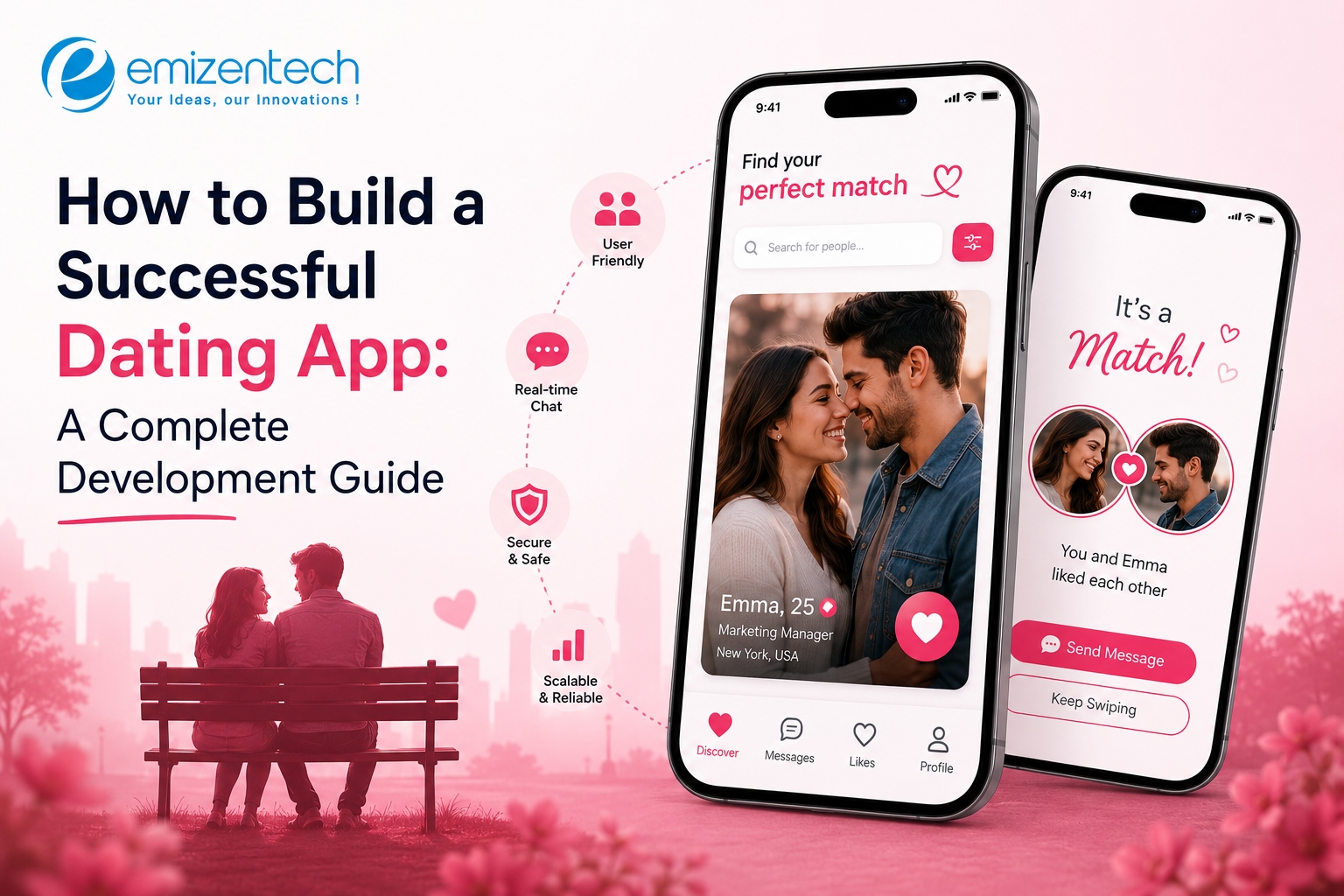
The online dating industry has evolved far beyond simple matchmaking platforms. Today's users expect personalized recommendations, AI-powered matching, real-time communication, robust privacy controls, and seamless experiences across devices. As user expectations continue to rise, businesses have a strong opportunity to launch innovative dating platforms that differentiate themselves in a competitive market.
However, building a dating app is about more than creating user profiles and swipe features. Success depends on understanding your audience, choosing the right technology, implementing engaging features, and delivering a secure, scalable platform.
This complete dating app development guide walks you through everything you need to know—from planning your app and selecting essential features to choosing the right technology and development approach.
Why Invest in Dating App Development?
The demand for online dating platforms continues to grow as more people prefer digital ways to connect and build relationships. From niche communities to professional matchmaking and interest-based platforms, dating apps cater to a wide range of audiences.
Investing in dating app development provides businesses and startups with several advantages:
Growing global user demand
Multiple revenue opportunities through subscriptions and in-app purchases
High user engagement and retention potential
Scalability for regional or global markets
Opportunities to integrate AI and advanced technologies
With the right strategy, a dating app can become a sustainable digital business with recurring revenue and long-term growth.
Types of Dating Apps
Before starting development, define the type of platform you want to build.
Swipe-Based Dating Apps
Popularized by platforms like Tinder, these apps allow users to swipe through profiles and connect when both parties show mutual interest.
Niche Dating Apps
These platforms focus on specific communities based on religion, profession, hobbies, lifestyle, or shared interests, offering more personalized experiences.
Matrimonial Apps
Designed for users seeking long-term relationships or marriage, matrimonial apps emphasize compatibility, family preferences, and detailed profiles.
LGBTQ+ Dating Apps
These platforms create inclusive spaces with features designed specifically for LGBTQ+ communities while prioritizing user safety and privacy.
Social Discovery Apps
Instead of focusing solely on dating, these apps help users meet new people, expand social circles, or build friendships through shared interests.
Essential Features of a Successful Dating App
An engaging user experience is one of the biggest factors behind a dating app's success. While features may vary depending on your niche, the following are considered essential.
User Registration & Profile Management
Offer multiple sign-up options, including email, phone number, and social login. Users should be able to create detailed profiles with photos, interests, preferences, and bios.
AI-Powered Matchmaking
Artificial intelligence can analyze user behavior, interests, location, and preferences to provide smarter and more relevant match recommendations.
Swipe & Discovery
A simple and intuitive swipe interface keeps users engaged while making profile discovery effortless.
Real-Time Chat
Instant messaging enables users to communicate after matching. Features such as emojis, media sharing, read receipts, and typing indicators improve conversations.
Voice & Video Calling
Adding voice and video calling helps users build trust before meeting in person and increases overall engagement.
Location-Based Matching
Geolocation allows users to discover potential matches nearby while also supporting custom distance filters.
Push Notifications
Keep users informed about new matches, messages, profile views, and app activity without overwhelming them.
User Verification
Phone verification, email confirmation, selfie verification, or ID verification help reduce fake accounts and improve platform credibility.
Privacy & Security
Protecting user data should be a priority. Features like profile visibility controls, block/report options, encrypted messaging, and secure authentication create a safer user experience.
Subscription & Payment Integration
Offer premium memberships with benefits such as unlimited swipes, advanced filters, profile boosts, and exclusive features using secure payment gateways.
Step-by-Step Dating App Development Process
Developing a successful dating app requires careful planning rather than jumping straight into coding.
Step 1: Identify Your Target Audience
The first step is understanding who your app is designed for.
Ask yourself:
Who are your ideal users?
What age group are you targeting?
Which problems are existing dating apps failing to solve?
What unique value will your app provide?
A clearly defined audience helps shape every aspect of your application, from design to monetization.
Step 2: Study Your Competitors
Analyze leading dating apps like Tinder, Bumble, Hinge, and niche platforms within your target market.
Pay attention to:
User experience
Matching process
Subscription models
User reviews
Missing features
Common complaints
Competitor research helps identify opportunities to build a better product rather than simply copying existing platforms.
Step 3: Define Your Business Model
Your monetization strategy should be decided early in the development process.
Popular revenue models include:
Freemium memberships
Monthly or annual subscriptions
In-app purchases
Profile boosts
Premium messaging features
Advertising
Choosing the right model influences both feature planning and long-term profitability.
Step 4: Design an Intuitive User Experience
Users often decide whether they'll continue using a dating app within the first few minutes.
Focus on creating:
Simple onboarding
Attractive profile layouts
Easy navigation
Fast loading times
Smooth matching interactions
Minimal user friction
A clean and intuitive interface significantly improves engagement and retention.
Step 5: Build an MVP First
Instead of launching with dozens of features, develop a Minimum Viable Product (MVP) that includes only the core functionality.
An MVP typically includes:
User registration
Profile creation
Matching system
Chat
Notifications
Basic subscription features
Launching early allows you to gather real user feedback, validate your business idea, and make improvements before investing in advanced functionality.
Choosing the Right Technology Stack
The technology stack you choose directly impacts your app's performance, scalability, and future growth. While the exact stack depends on your project requirements, most successful dating apps use:
Frontend: Flutter, React Native, Swift, or Kotlin
Backend: Node.js, Laravel, or Python
Database: PostgreSQL, MongoDB, or MySQL
Cloud: AWS, Google Cloud, or Microsoft Azure
APIs: Google Maps, Firebase, Stripe, Twilio, and AI services
Partnering with an experienced dating app development company ensures you select the right technologies based on your budget, business goals, and target audience.
How AI Is Transforming Dating Apps
Artificial intelligence has transformed modern dating app development. Instead of relying solely on location or age, AI analyzes user preferences and behavior to deliver more meaningful matches.
Some popular AI use cases include:
Smart matchmaking recommendations
Personalized profile suggestions
Fake profile detection
Automated content moderation
AI chat assistants
User behavior analysis for better engagement
Integrating AI not only improves user satisfaction but also increases retention and platform growth.
Common Mistakes to Avoid
Even great ideas can fail without proper planning. Avoid these common mistakes when building your dating app:
Launching without validating your idea
Targeting everyone instead of a specific niche
Ignoring user privacy and security
Overloading the MVP with unnecessary features
Poor UI/UX design
Choosing the wrong technology stack
Skipping testing before launch
Addressing these issues early can save significant time and development costs.
How to Monetize Your Dating App
A successful dating app should have a clear monetization strategy from the start. Popular revenue models include:
Freemium Model: Free basic access with paid premium features.
Subscriptions: Monthly or yearly membership plans.
In-App Purchases: Profile boosts, Super Likes, or virtual gifts.
Advertising: Display relevant ads to free users.
Premium Features: Advanced filters, unlimited swipes, read receipts, and profile visibility options.
Many leading dating platforms combine multiple revenue streams to maximize profitability.
How Much Does It Cost to Build a Dating App?
The cost of dating app development depends on factors such as features, platform, technology stack, UI/UX complexity, third-party integrations, and the development team's location.
Generally:
App Type | Estimated Cost |
MVP Dating App | $20,000–$40,000 |
Mid-Level Dating App | $40,000–$80,000 |
Advanced Dating App with AI | $80,000–$150,000+ |
Building an MVP first is often the most cost-effective approach, allowing you to validate your idea before scaling with advanced features.
How to Choose the Right Dating App Development Company
Selecting the right development partner is one of the most important decisions you'll make. Seek a company that offers:
Proven experience in dating app development
Strong UI/UX design capabilities
AI and cloud development expertise
Transparent pricing and communication
Agile development process
Ongoing maintenance and support
Positive client reviews and portfolio
An experienced development partner can help reduce risks, accelerate development, and deliver a scalable product that meets market demands.
Final Thoughts
Building a successful dating app requires more than an attractive interface. It involves identifying the right niche, creating a seamless user experience, integrating intelligent features, implementing strong security, and choosing a scalable technology stack. Whether you're launching a niche dating platform or the next global matchmaking app, thoughtful planning and expert execution are key to long-term success.
If you're looking for a trusted dating app development company, EmizenTech offers end-to-end dating app development services tailored to startups and enterprises. From strategy and UI/UX design to AI integration, development, deployment, and post-launch support, our experts can help transform your dating app idea into a secure, scalable, and feature-rich platform that stands out in today's competitive market.
Frequently Asked Questions
1. How much does it cost to build a dating app?
The cost of dating app development depends on factors such as app complexity, features, technology stack, design, and platform. A basic MVP may cost between $20,000 and $40,000, while an advanced AI-powered dating app can exceed $150,000.
2. How long does it take to develop a dating app?
The development timeline typically ranges from 3 to 9 months. A basic MVP can be built in 3–4 months, while a feature-rich dating app with AI, video calling, and advanced integrations may take 6–9 months or longer.
3. What features should a successful dating app include?
A successful dating app should offer user registration, detailed profiles, AI-powered matchmaking, swipe functionality, real-time chat, voice and video calling, geolocation, profile verification, push notifications, secure payment integration, and strong privacy and security features.
4. What is the best technology stack for dating app development?
The ideal tech stack depends on your project requirements. Popular choices include Flutter or React Native for cross-platform development, Node.js or Laravel for the backend, MongoDB or PostgreSQL for databases, and cloud platforms like AWS or Google Cloud for scalability.
5. Why should I hire a dating app development company?
Hiring an experienced dating app development company gives you access to skilled developers, UI/UX designers, and technology experts who can build a secure, scalable, and feature-rich application. They also provide end-to-end support, from planning and development to deployment and ongoing maintenance, helping you launch your app faster and more efficiently.