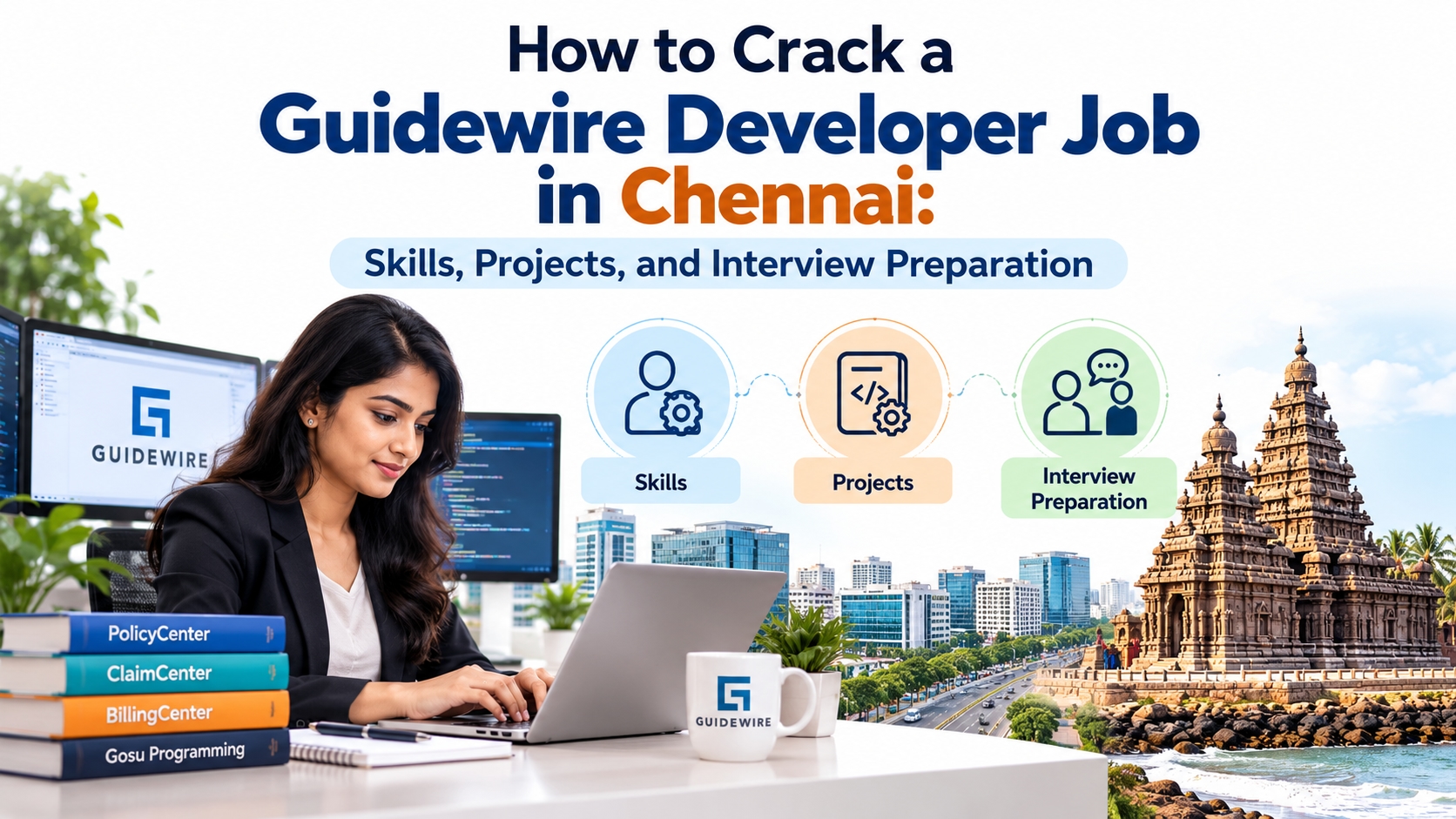
The Property and Casualty (P&C) insurance technology sector is experiencing unprecedented growth worldwide, and Chennai has emerged as one of India's premier hubs for core insurance modernization platforms. Top-tier IT service multinationals, global capability centers (GCCs), and specialized insurance tech consultancies across OMR, Guindy, and DLF Cybercity actively recruit skilled engineers to maintain, configure, and transform enterprise core systems. Securing a position in this niche domain offers high job security, accelerated salary progression, and global project exposure. However, standing out in the competitive IT ecosystem of Tamil Nadu requires more than basic software engineering principles. It demands domain-specific mastery, fluency in proprietary development frameworks, practical project building, and a targeted interview strategy designed for regional IT hiring managers.
To successfully navigate the recruitment pipeline in Chennai, aspiring developers must align their technical capabilities with the specific operational demands of insurance enterprise systems. Understanding how core modules manage policy lifecycles, billing schedules, and claims workflows allows candidates to transition from generic object-oriented programmers to specialized insurance domain experts. Beyond theoretical domain knowledge, candidates need hands-on technical proficiency with specialized tools like Guidewire Studio, Page Configuration Format (PCF) files, and custom Gosu code enhancements. By mastering these tools, developing production-grade portfolio projects, and learning how to articulate architectural decisions during technical discussions, you can significantly boost your interview callback rates and position yourself for lucrative roles across Chennai’s top technology parks.
Domain Foundations & Core Suite Architecture
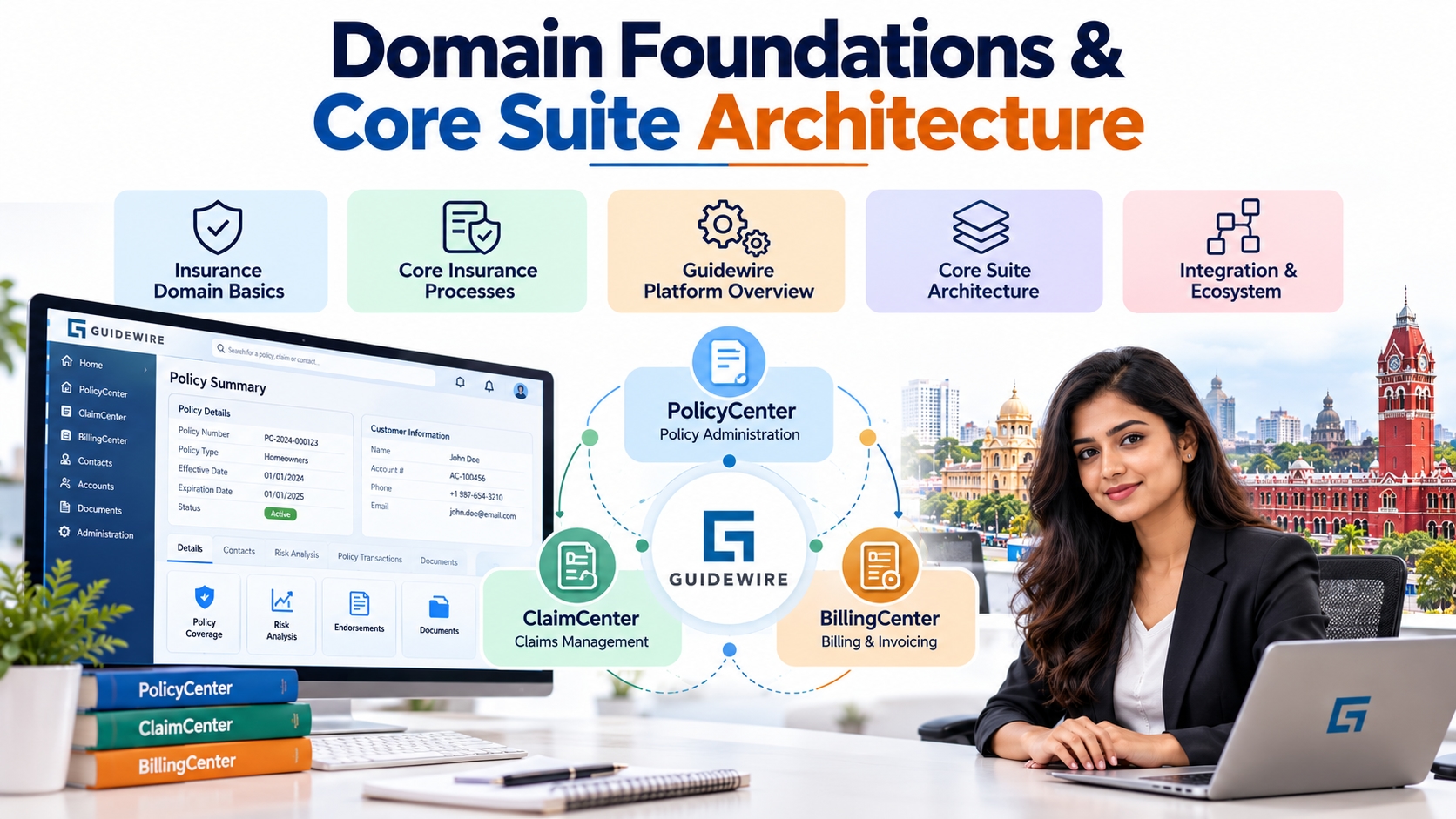
Entering the Guidewire ecosystem requires a deep understanding of its foundational software architecture and how it serves the Property and Casualty (P&C) insurance market. Unlike standard web frameworks, Guidewire provides a highly configurable, object-oriented suite designed to digitize complex insurance operations. The primary core applications—PolicyCenter, ClaimCenter, and BillingCenter—form the operational backbone of modern insurance enterprises. PolicyCenter handles policy underwriting, quoting, issuance, endorsements, and renewals. ClaimCenter manages the end-to-end claims lifecycle from First Notice of Loss (FNOL) to evaluation, exposure tracking, and settlement payouts. BillingCenter automates payment collections, invoicing schedules, commission splits, and premium auditing routines.
Developers working in Chennai's IT ecosystem must understand how these core modules exchange data and interoperate within enterprise architectures. Standard implementations use asynchronous messaging, web services, and shared data models to ensure seamless transactions across all three modules. For instance, when a policy is modified in PolicyCenter, an automated billing instruction triggers in BillingCenter to adjust premium collections. Similarly, when a loss event occurs, ClaimCenter validates active policy details directly against PolicyCenter records. Mastering these module interactions and domain terminology gives candidates a distinct advantage during initial technical screening rounds.
Technical Skill Set: Gosu, PCF, and Integration Tools
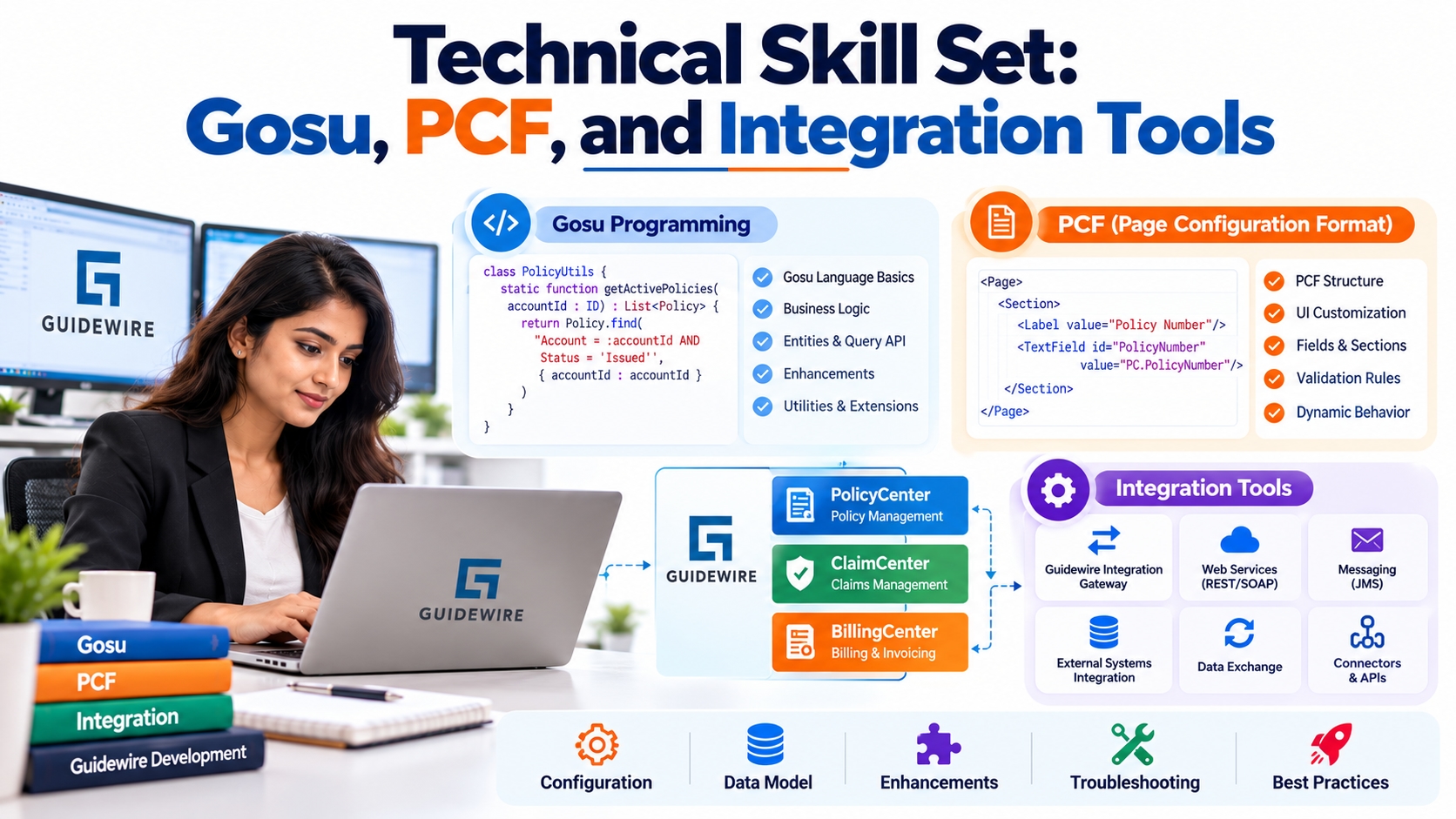
To build enterprise solutions within the platform, developers must master Gosu—a strongly typed, object-oriented programming language designed specifically for the Java Virtual Machine (JVM). Gosu features syntax similar to Java and C#, making it intuitive for object-oriented software engineers. However, Gosu introduces specialized capabilities like program enhancements, type lists, rule sets, and dynamic data model extensions. Developers use Gosu to implement business logic, write validation scripts, trigger assignment rules, and create custom web service handlers within Guidewire Studio.
Equally critical is mastering user interface and entity data model customization. User interfaces are built using Page Configuration Format (PCF) files, which use XML structures to render dynamic web screens, input forms, detail views, and action buttons. On the back end, data model entity files (.etx and .eti) define business objects and database table relationships. Modern enterprise projects in Chennai also place a heavy emphasis on integration engineering. Developers must be skilled in building RESTful APIs, SOAP web services, plugin frameworks, and event-driven messaging queues to connect core applications with third-party systems like payment gateways, fraud detection engines, and document management solutions.
Real-World Portfolio Projects to Stand Out
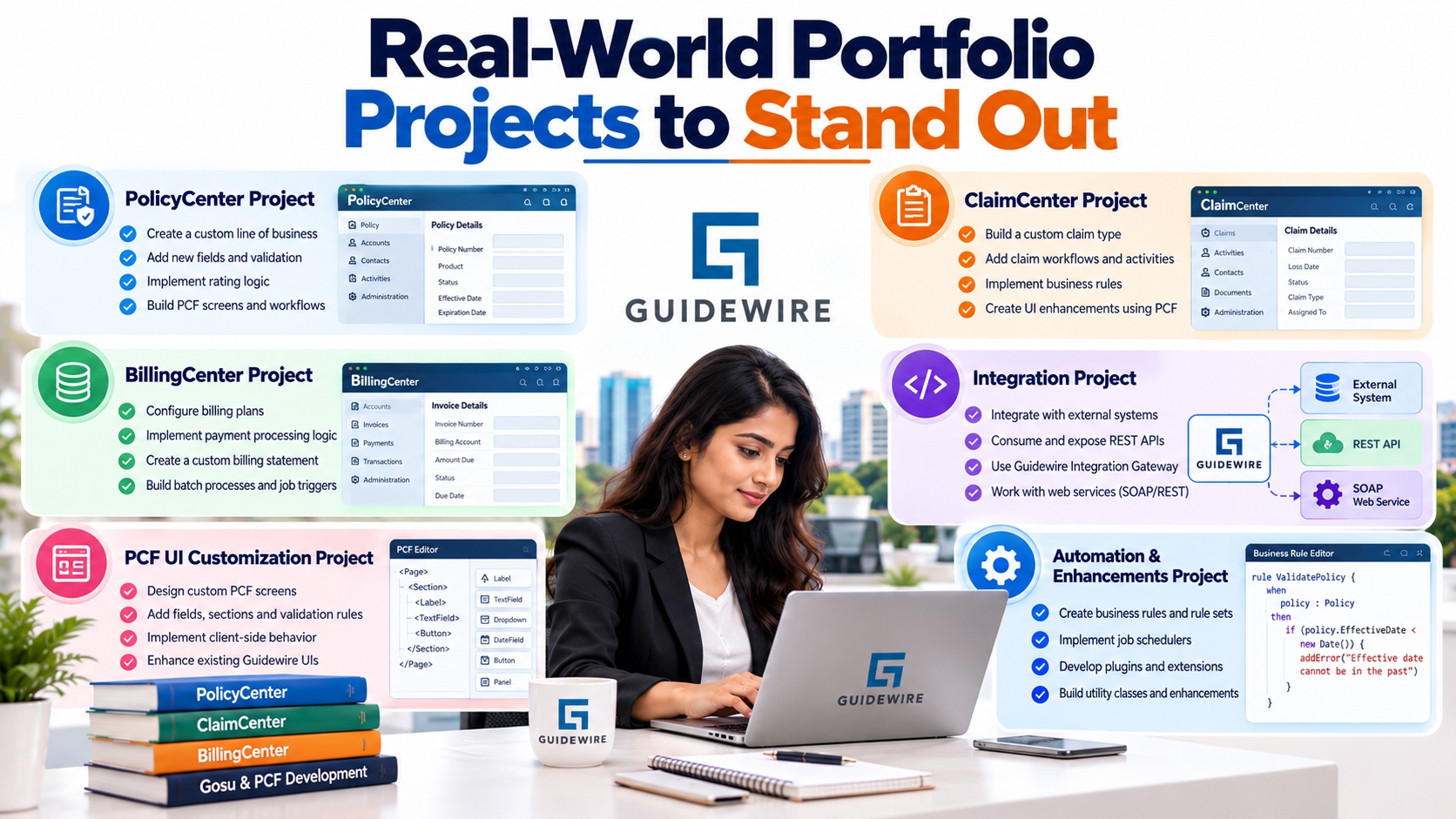
Theoretical knowledge alone rarely secures a job offer in competitive tech markets like Chennai. To demonstrate job readiness, candidates should construct end-to-end portfolio projects that solve realistic P&C insurance business problems. One highly effective project is building an Automated Claims Fraud Evaluation Engine in ClaimCenter. This involves configuring custom claims entities, writing Gosu rules to score incoming claims based on suspicious loss indicators, and implementing custom PCF screens to display fraud scores and automated task assignments to claims adjusters.
Another valuable portfolio piece is an External Payment Gateway Integration Module built using the Guidewire Integration Framework. In this project, you can simulate a REST/SOAP endpoint that communicates with an external payment gateway from BillingCenter. The integration handles customer payment requests, updates invoice statuses, records financial transaction logs, and manages failure fallbacks using Guidewire transaction bundles. Presenting these practical implementations in your portfolio demonstrates to prospective employers that you possess genuine hands-on configuration experience rather than just textbook knowledge.
Chennai Hiring Ecosystem & Target Companies
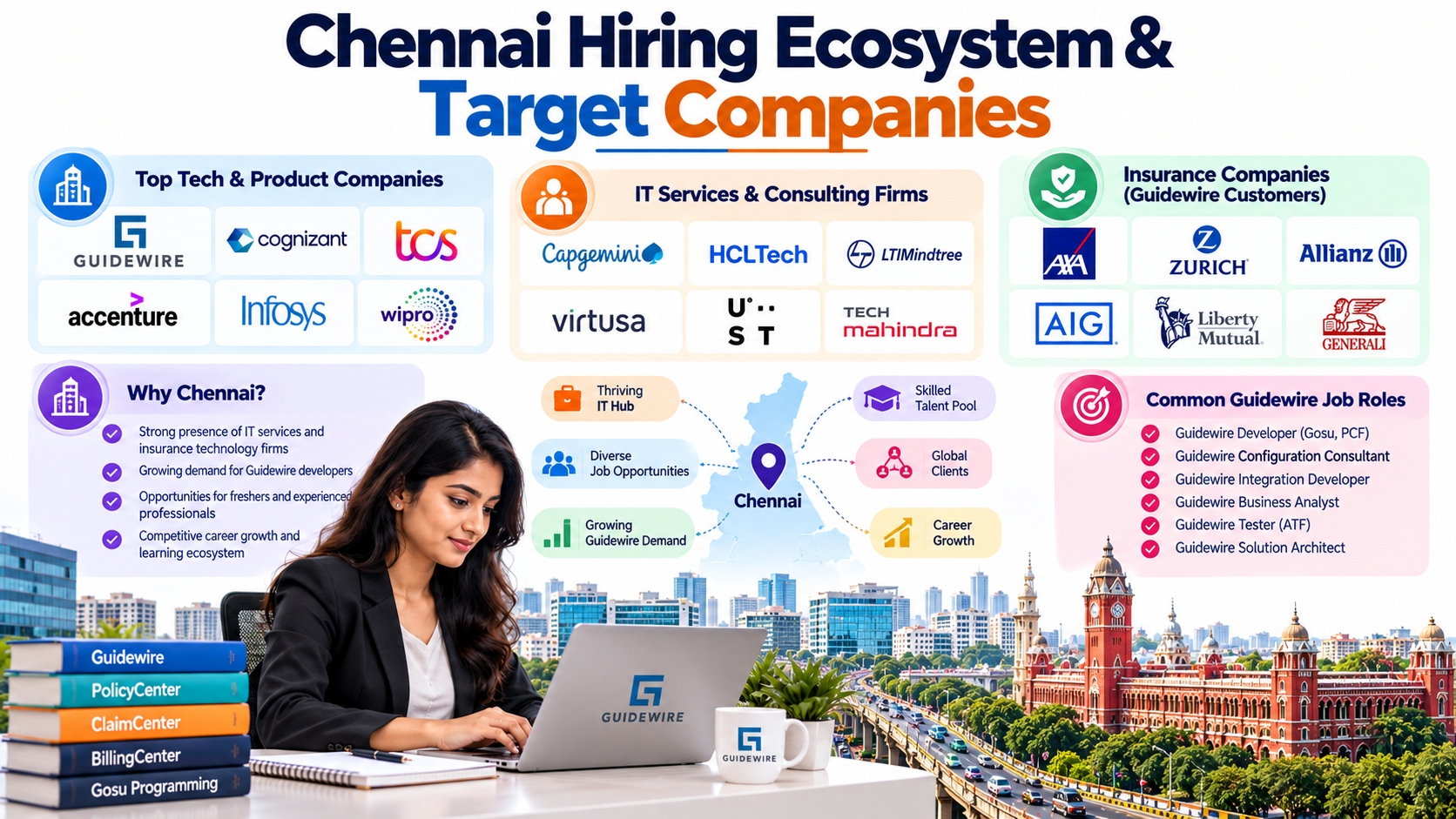
Chennai has grown into a premier hub for insurance tech recruitment across India. Global IT service leaders with massive operations along the Old Mahabalipuram Road (OMR) tech corridor—such as Cognizant, TCS, Infosys, Wipro, and Capgemini—frequently recruit developers for global insurance transformation programs. Additionally, specialized consulting firms and global capability centers (GCCs) situated in Guindy, Ambattur Industrial Estate, and DLF Cybercity (Ramapuram) maintain dedicated insurance business units focused exclusively on core enterprise platforms.
Understanding local hiring expectations gives local applicants a strategic advantage. Most Chennai-based IT employers seek candidates who can immediately contribute to live agile projects without needing extensive onboarding. Tailoring your resume to highlight experience with Gosu coding, PCF layout creation, API integrations, and CI/CD deployment pipelines aligns directly with what regional technical leads look for. Networking through local tech meetups, LinkedIn connections at Chennai GCCs, and specialized regional referral channels can also help bypass automated resume filters and secure direct interviews.
Technical Interview Preparation & Code Round Strategy
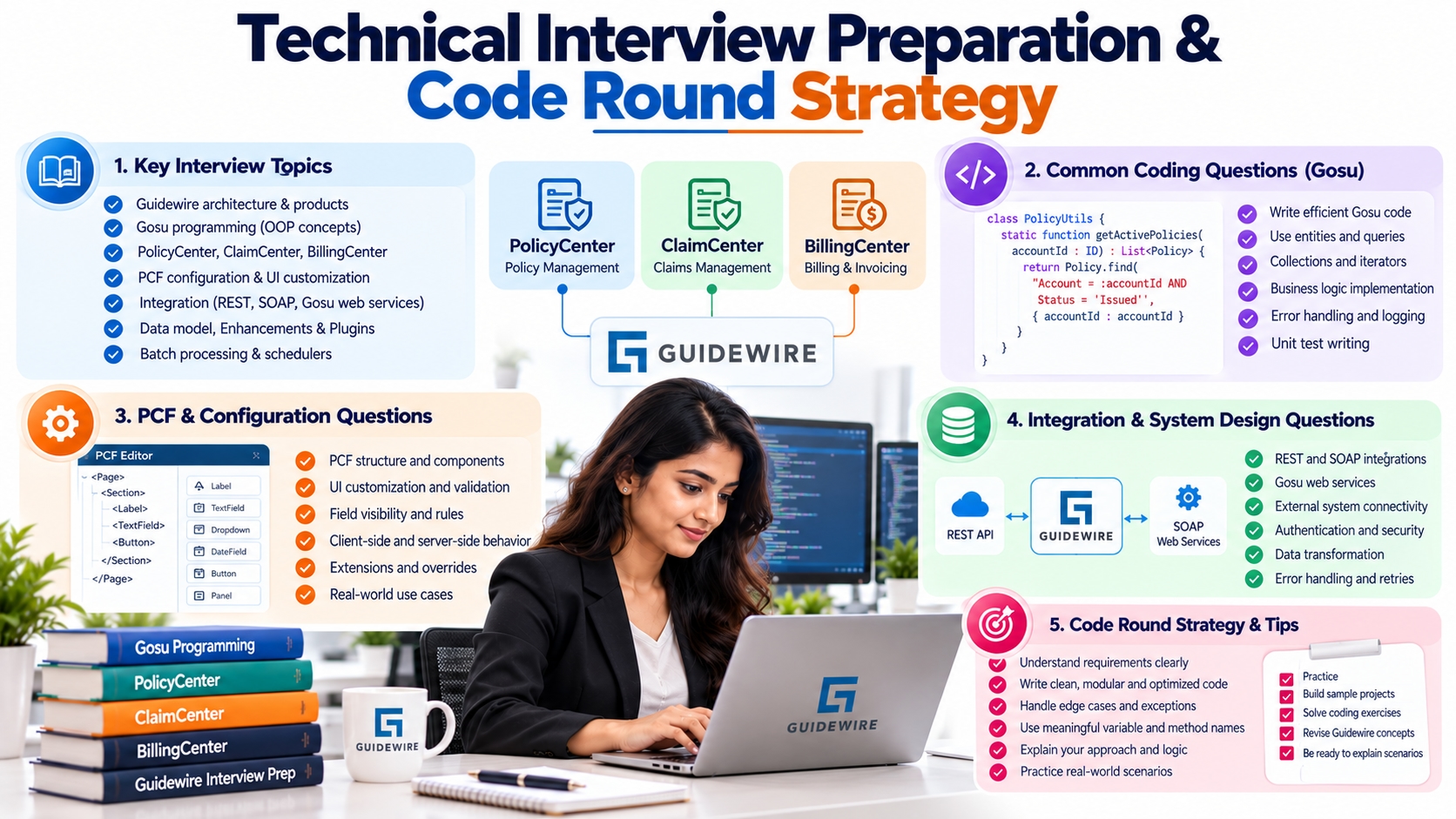
Technical interview processes for developer roles in Chennai typically follow a structured multi-stage format. The initial technical screening evaluates core Gosu syntax, object-oriented concepts, and basic domain knowledge. Candidates are often asked to explain the differences between static and dynamic typing in Gosu, detail how class enhancements work, or describe how transaction bundles manage atomic database operations. Candidates should practice writing clean Gosu snippets on a whiteboard or shared live coding editor to build confidence ahead of these sessions.
Subsequent rounds focus heavily on architectural design, UI configuration, and troubleshooting scenarios. Expect questions about modifying PCF layouts, adding new attributes to existing data entities, configuring business validation rules, and designing REST/SOAP integration flows. Interviewers frequently present scenario-based problems, such as debugging a failing policy transaction or optimizing slow batch processing jobs. Structuring your responses using the STAR method (Situation, Task, Action, Result) helps you clearly articulate how you systematically isolate bugs, analyze application logs, and write upgrade-safe configurations.
Certifications, Continuous Learning & Career Growth
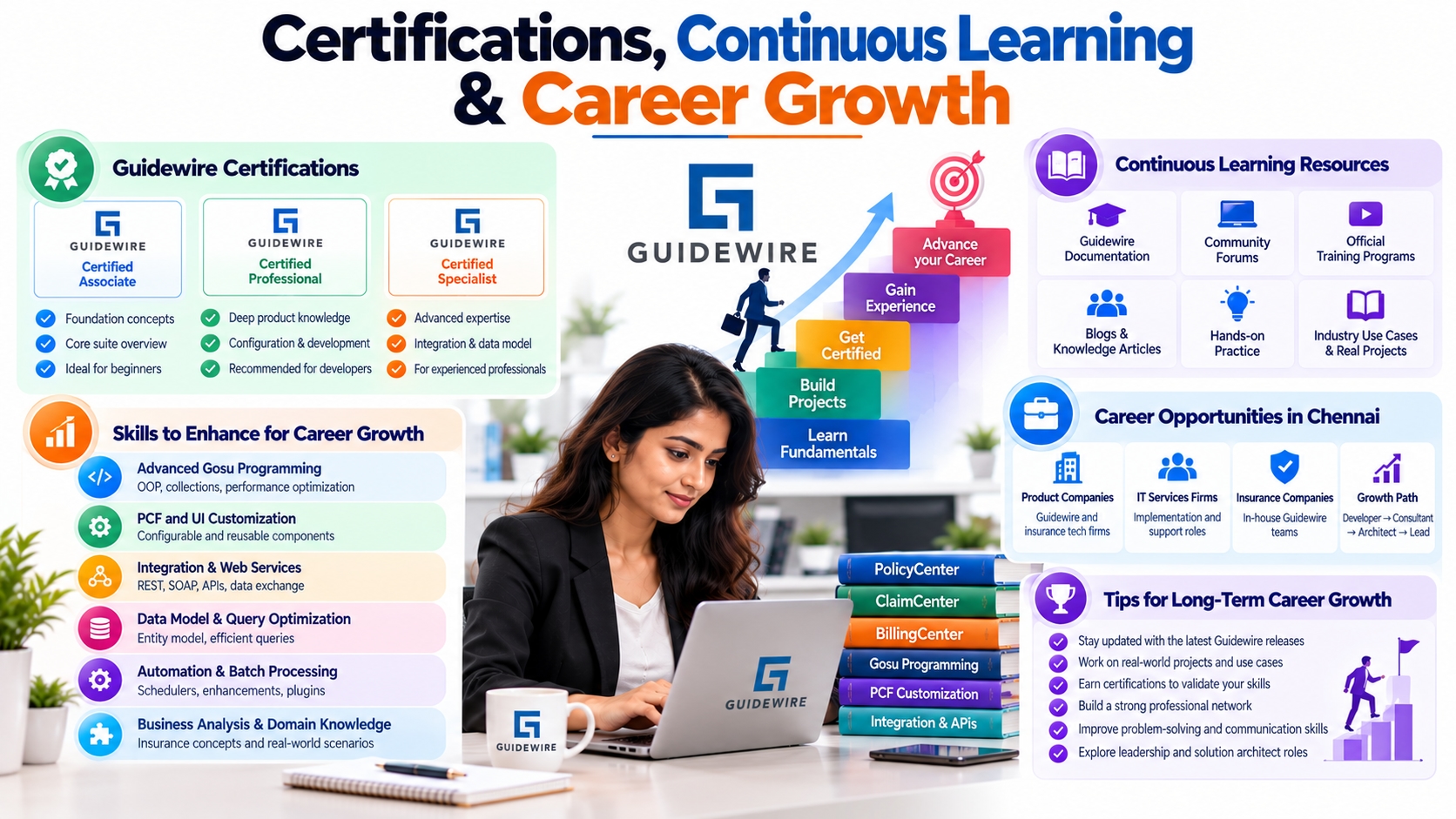
Earning official industry certifications is one of the most effective ways to validate your expertise and accelerate your career trajectory. Obtaining credentials like the Guidewire Certified Associate or Certified Specialist certifications in PolicyCenter, ClaimCenter, or Integration demonstrates verified competency to potential employers. These certifications validate your knowledge of standard platform architecture and best practices, making your profile significantly more competitive during shortlist reviews.
Continuous professional development is essential for long-term career growth in the insurance tech sector. As insurance companies transition from legacy on-premise servers to cloud-native platforms, mastering cloud architecture, Docker containerization, Kubernetes, and automated CI/CD deployment pipelines becomes increasingly valuable. Developers in Chennai who combine core Gosu coding skills with cloud engineering and integration expertise can quickly advance into Senior Developer, Technical Lead, and Solution Architect roles across the region's top IT organizations.
Conclusion
Securing a developer role in Chennai's thriving insurance tech market requires a clear preparation strategy that combines core domain knowledge, Gosu coding expertise, and practical project building. By building a solid foundation in PolicyCenter, ClaimCenter, and BillingCenter, mastering PCF interface customization, and constructing real-world integration projects, you can clearly demonstrate job readiness to prospective employers across OMR and Guindy tech hubs. Pursuing industry certifications, preparing for scenario-based technical interviews, and staying current with cloud technologies will help you successfully navigate the hiring pipeline and build a rewarding career in software engineering.