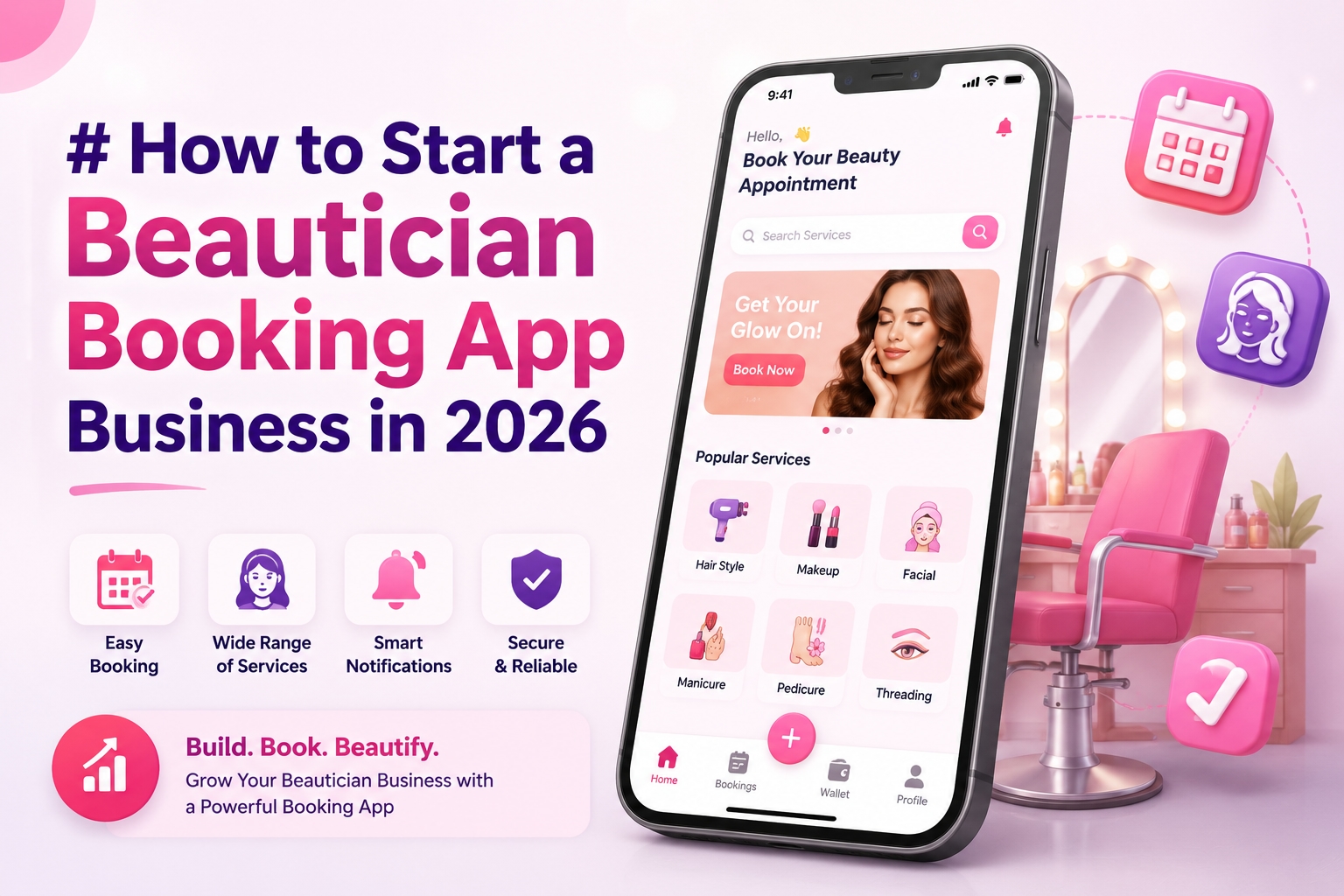
The beauty and personal care industry is rapidly moving toward on-demand services. Customers increasingly prefer booking professional beauticians, makeup artists, hairstylists, nail technicians, and other beauty experts through mobile apps rather than visiting traditional salons.
Launching a Beautician Booking App Business in 2026 can be a profitable opportunity for startups and entrepreneurs who want to build a scalable beauty-service marketplace.
What Is a Beautician Booking App?
A beautician booking app is an on-demand platform that connects customers with professional beauticians and beauty service providers. Customers can browse services, check profiles, compare prices, select convenient time slots, and book appointments directly through the app.
Depending on your business model, services can be offered at:
Customer homes
Beauty salons
Spas
Hotels
Offices
Event venues
A well-designed app can make the complete booking process faster and more convenient for both customers and beauticians.
Why Start a Beautician Booking App Business in 2026?
The demand for convenient beauty services continues to grow as consumers become more comfortable booking services digitally.
Some major reasons to consider this business include:
1. Growing Demand for On-Demand Services
Customers value convenience and often prefer professionals who can come directly to their location.
2. Easy Online Booking
Users can book appointments 24/7 without calling a salon or waiting for confirmation.
3. Multiple Revenue Opportunities
Business owners can generate revenue through commissions, service fees, subscriptions, featured listings, advertisements, and other models.
4. Scalable Business Model
You can initially launch in one city and expand to multiple cities, regions, or countries as your customer and beautician network grows.
5. Digital Beauty Marketplace
The app can bring customers and independent beauty professionals together on a single platform.
How to Start a Beautician Booking App Business
Starting this type of business requires more than simply developing an application. You need a clear business strategy, reliable service providers, and an effective customer acquisition plan.
Step 1: Research Your Target Market
Start by identifying your target customers and understanding their beauty-service requirements.
Research:
Customer demographics
Popular beauty services
Local competitors
Average service prices
Customer booking habits
Service-provider availability
Popular locations
This research will help you determine which services and features should be included in your app.
Step 2: Decide Your Business Model
Choose how your platform will operate.
You can create a marketplace where independent beauticians register and provide services to customers. Alternatively, you can work with established salons and beauty businesses.
Common models include:
Marketplace Model: Connect customers with independent beauticians.
Salon Aggregator Model: List multiple salons and allow customers to book their services.
On-Demand Model: Customers request a beautician for home-service appointments.
Hybrid Model: Combine salons, independent professionals, and home-service providers.
Step 3: Select Beauty Services
Start with services that have strong demand in your target market.
Your app could offer:
Haircuts
Hair styling
Hair coloring
Makeup
Bridal makeup
Facial treatments
Manicure
Pedicure
Waxing
Threading
Eyelash services
Spa services
Grooming
Skin-care services
You can expand the service catalog after understanding customer demand.
Step 4: Develop the Beautician Booking App
Your platform generally requires separate interfaces for different users.
Customer App
Customers should be able to:
Register and create profiles
Search for beauticians
Browse services
View prices
Check ratings and reviews
View beautician profiles
Select date and time
Book appointments
Make online payments
Track booking status
Cancel or reschedule appointments
Receive notifications
Contact service providers
Beautician App
Beauticians need tools to manage their services and appointments.
Important features include:
Profile management
Service management
Pricing management
Availability calendar
Booking management
Appointment notifications
Earnings dashboard
Customer information
Reviews and ratings
Online/offline status
Withdrawal management
Admin Panel
The admin dashboard allows the business owner to control the entire platform.
It can include:
Customer management
Beautician management
Service management
Booking management
Payment management
Commission management
Location management
Promotions
Reviews management
Reports and analytics
Content management
Notifications
Step 5: Integrate Online Payments
Your app should provide secure payment options that are convenient for customers.
Depending on your target market, you can integrate:
Credit and debit cards
Digital wallets
Bank transfers
UPI
Cash payments
Other local payment methods
Providing multiple payment options can reduce booking friction and improve the customer experience.
Step 6: Add Ratings and Reviews
Ratings and reviews are important for building trust.
Customers should be able to rate beauticians after completing an appointment. New customers can then use these reviews to select reliable professionals.
You can also allow beauticians to receive ratings based on factors such as:
Service quality
Professionalism
Punctuality
Customer experience
Step 7: Launch Your MVP
Instead of launching with dozens of features, start with a Minimum Viable Product (MVP) containing the core functionality.
Your initial version can include:
Customer registration
Beautician registration
Service listings
Search and filters
Booking
Payment
Notifications
Ratings and reviews
Admin dashboard
Once customers begin using the platform, analyze feedback and add advanced features.
Step 8: Recruit Beauticians
Your platform needs enough service providers before marketing heavily to customers.
You can attract beauticians through:
Introductory commission rates
Free registration
Promotional campaigns
Referral programs
Local partnerships
Social media marketing
Training and onboarding support
Verify professional profiles and establish appropriate quality standards before allowing providers to accept bookings.
Step 9: Promote Your App
Once your platform is ready, focus on customer acquisition.
Useful marketing strategies include:
Google Ads
Social media advertising
Instagram marketing
Local SEO
Influencer marketing
Referral programs
Beauty blogger partnerships
Promotional discounts
First-booking offers
Email and SMS marketing
Local marketing can be particularly useful when launching in a specific city.
Revenue Models for a Beautician Booking App
A beautician booking platform can generate revenue through multiple channels.
Commission
Charge a percentage of every completed booking.
Service Fee
Add a small platform or convenience fee to customer bookings.
Subscription Plans
Offer premium membership plans to beauticians or customers.
Featured Listings
Beauticians can pay to receive greater visibility within search results.
Advertising
Beauty brands and service providers can advertise products and services through the platform.
Promotional Packages
Create paid promotional campaigns for salons and beauticians.
Using multiple revenue streams can make your business more financially sustainable.
Advanced Features to Add in 2026
To differentiate your platform from competitors, consider adding modern features such as:
AI-powered beautician recommendations
Smart search
Personalized beauty recommendations
Real-time appointment availability
Automated reminders
Digital loyalty programs
Multiple language support
Location-based matching
Wallet integration
Referral rewards
AI customer support
Advanced analytics
Dynamic pricing
Video consultations
These features can improve personalization and customer engagement.
How Much Does It Cost to Build a Beautician Booking App?
The development cost depends on several factors, including:
Number of platforms
App design
Features
Technology stack
Payment integrations
Third-party APIs
Admin panel requirements
Customization
Development team location
Maintenance requirements
A basic MVP will generally cost less than a feature-rich platform with advanced AI, analytics, multiple payment gateways, and complex integrations.
For startups, beginning with a ready-made beautician booking app solution or clone script can reduce development time and initial investment compared with building the entire platform from scratch.
Tips for Building a Successful Beautician Booking Business
Keep these points in mind when launching your platform:
Focus on a specific target market initially.
Partner with reliable and experienced beauticians.
Make the booking process simple.
Provide transparent pricing.
Offer secure payment options.
Build a strong review system.
Provide excellent customer support.
Invest in local marketing.
Monitor customer feedback.
Continuously improve the app based on user behavior.
Final Thoughts
Starting a Beautician Booking App Business in 2026 can be an attractive opportunity for entrepreneurs entering the on-demand beauty-service market. A successful platform should make it easy for customers to discover and book professionals while giving beauticians powerful tools to manage appointments, services, and earnings.
The best approach is to begin with a focused MVP, launch in a selected market, build a strong network of service providers, and gradually introduce advanced features as your business grows.
With the right business model, technology, marketing strategy, and service quality, a beautician booking app can become a scalable digital marketplace in the beauty industry.