
How Is India’s Diagnostic Labs Market Performing?
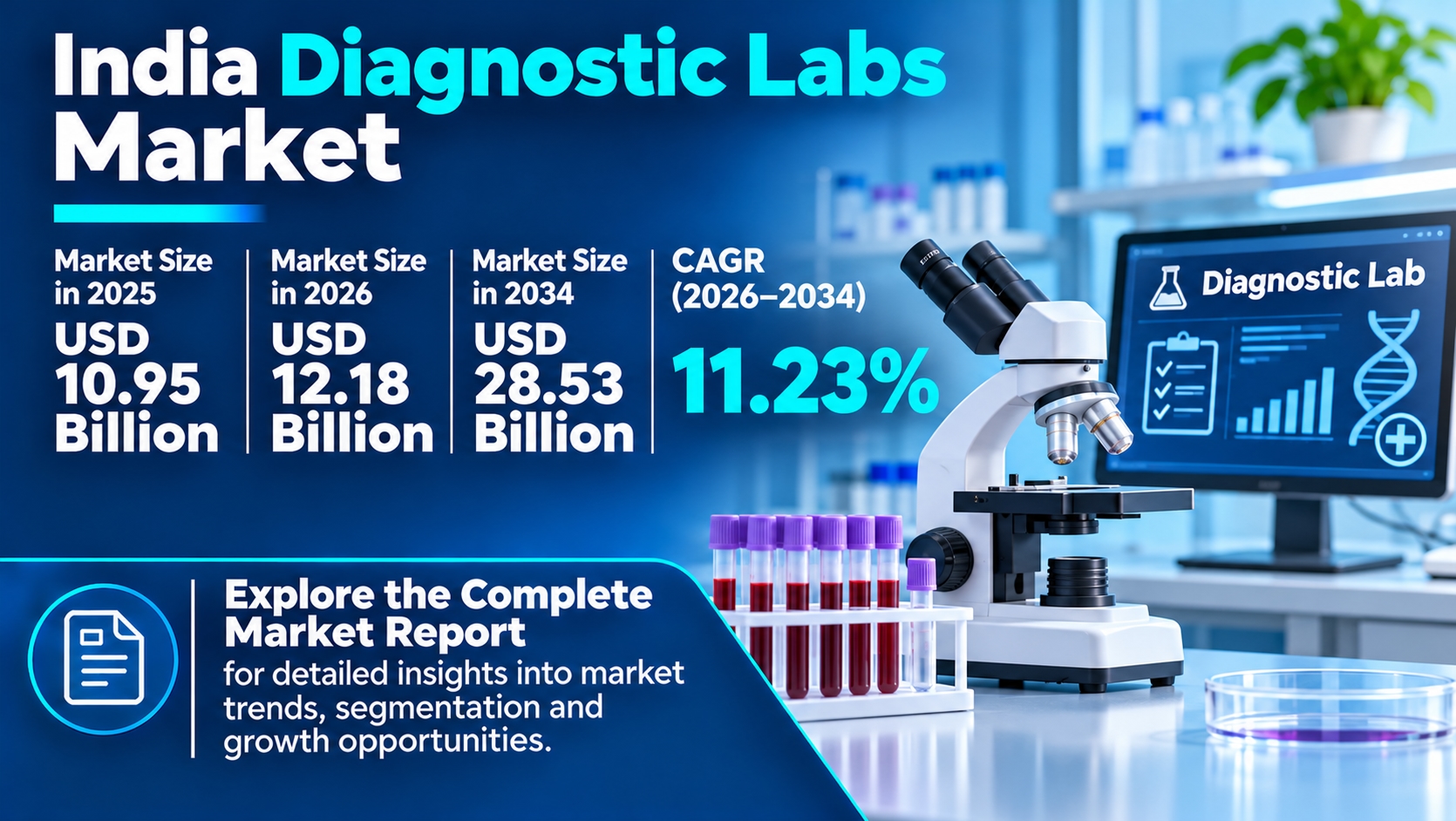
The India diagnostic labs market size grew from USD 10.95 Billion in 2025 to USD 12.18 Billion in 2026. Looking forward, IMARC Group expects the market to reach USD 28.53 Billion by 2034, exhibiting a growth rate (CAGR) of 11.23% during 2026-2034. The India diagnostic labs market key growth drivers include rising healthcare awareness, a growing burden of chronic and lifestyle-related diseases, technology adoption and government health initiatives. Digital platforms, home sample collection and AI-powered diagnostics are reshaping service delivery.
India Diagnostic Labs Market Dynamics
Driver: Rising Burden of Chronic and Lifestyle-Related Diseases:
Diabetes, cardiovascular conditions, cancer and respiratory ailments are creating sustained demand for tests that support disease detection, progression monitoring and treatment evaluation. Urbanization, dietary change, sedentary habits and occupational stress are pushing chronic disease into younger age groups once considered low-risk. Diagnostic labs now play a role throughout the patient journey, from initial screening to ongoing therapeutic monitoring.
An aging population adds to the pressure, as people aged 60 and above need more frequent diagnostic surveillance. Health insurance penetration and corporate wellness programs are broadening the consumer base, while a shift from reactive to preventive care is boosting wellness packages, genetic testing and early cancer screening. Government support strengthens this trend: Ayushman Bharat PM-JAY provides health insurance coverage to over 50 Crore vulnerable citizens, and over 67 crore citizens hold ABHA identifications for portable health records.
Opportunity: Digital Transformation, Home Collection and AI-Powered Diagnostics:
Artificial intelligence and cloud-based laboratory information systems improve accuracy, cut turnaround times and widen access through telepathology and teleradiology. Home sample collection and point-of-care testing have become mainstream, with doorstep services now an expected part of the offer. In December 2024, Orange Health Labs secured USD 12 Million from the Amazon Smbhav Venture Fund to expand home collection, and in January 2026, Dr Lal PathLabs announced plans to launch ‘Sovaaka’ preventive wellness centres combining diagnostics with personalized digital health guidance.
Specialized testing in oncology, reproductive health, autoimmune disorders and transplant immunology allows organized chains to capture higher-value segments. India’s AI in medical diagnostics market size reached USD 55.04 Million in 2024, and IMARC Group expects it to reach USD 546.95 Million by 2033, exhibiting a CAGR of 26.90% during 2025-2033, a sign of how strongly technology investment is transforming service delivery.
Restraint: Rural Access Gaps, Skilled Workforce Shortages and Quality Standardization:
Rural areas face inadequate laboratory infrastructure, outdated equipment and limited operating hours. According to the industry report, only 25% of populations in semi-rural and rural areas have access to modern healthcare facilities nearby, which concentrates diagnostic revenue in cities. Dispersed populations also make comprehensive networks economically difficult to set up.
India also faces shortages of pathologists, microbiologists and laboratory technicians, which constrain quality and capacity. A fragmented regulatory landscape across states and a large unorganized segment with low entry barriers allow substandard operators to persist, which can affect diagnostic accuracy and patient outcomes.
Evaluate Market Opportunity with the Business Sample Report
How Is India’s Diagnostic Labs Market Segmented?
By Provider Type:
Stand-Alone Labs: leading segment with a 42% share in 2025; independent, accessible and competitively priced
Hospital Labs: attached to hospitals and supporting in-patient and outpatient care
Diagnostic Chains: organized national and regional networks expanding through acquisitions
By Test Type:
Pathology: leading segment with a 65% share in 2025; blood analysis, urine examination and tissue diagnostics for routine checkups and chronic disease monitoring
Radiology: imaging services supporting diagnosis and treatment planning
By Sector:
Urban: dominant with a 70% share in 2025; concentrated infrastructure, awareness and insurance penetration
Rural: limited access creating an expansion opportunity for organized players
By End User:
Referrals: largest segment with a 49% share in 2025; physician-directed testing based on clinical assessment
Walk-ins
Corporate Clients
Regional Insights:
North India: leading region with a 32% share in 2025; organized chains concentrated in Delhi-NCR and a large population base across Uttar Pradesh, Punjab, Haryana and Rajasthan
West and Central India: metropolitan healthcare hubs and strong private lab presence
South India: established healthcare infrastructure and high health awareness
East and Northeast India: emerging diagnostic access and growing organized lab presence
In terms of India diagnostic labs market share, stand-alone labs lead provider types, while pathology dominates test types. Metropolis Healthcare’s acquisitions in North India in FY2025, including Core Diagnostics in Delhi-NCR, Scientific Pathology in Agra and DAPIC in Dehradun, show how chains are strengthening regional positions.
Explore the Full Report with Charts, Table of Contents, and List of Figures
Competitive Landscape
The India diagnostic labs market is characterized by intense competition among organized national chains, regional players and hospital-based laboratories. Leading players are expanding into tier-2 and tier-3 cities through organic growth and acquisitions, investing in advanced testing capabilities, digital transformation and home collection infrastructure. Quality accreditation, physician relationship management and operational efficiency shape competitive positioning.
Examples of strategic moves include Lupin Diagnostics, whose 27 greenfield laboratories all achieved NABL accreditation in April 2025, and Metropolis Healthcare’s December 2024 acquisition of Core Diagnostics for approximately INR 246.8 Crores.
Government Initiatives Supporting the Market
Ayushman Bharat PM-JAY: health insurance coverage for over 50 Crore vulnerable citizens, making hospital-linked diagnostics accessible
Ayushman Bharat Digital Mission: over 67 crore citizens hold ABHA identifications, enabling seamless health record portability across diagnostic facilities
Ayushman Arogya Mandirs: expanding diagnostic availability at community level with a focus on preventive care and non-communicable disease screening
Production Linked Incentive schemes: fostering domestic manufacturing of diagnostic equipment, reducing import dependence and improving affordability
NABL accreditation framework and the National Health Mission’s free diagnostics initiative: strengthening quality standards and public sector testing access
Investment Opportunities
Digital and Home Collection Platforms: Doorstep sample collection, online booking and digital report delivery are now mainstream, creating scalable, asset-light growth models.
Specialized and Preventive Testing: Oncology, genetics, reproductive health and wellness packages offer higher-value revenue and better margins than routine tests.
Tier-2, Tier-3 and Rural Expansion: Hub-and-spoke models connecting reference labs with collection centers extend reach without duplicating expensive equipment, converting the rural access gap into an opportunity.
Discuss Your Requirements With an Analyst and Get Your Customized Market Report
Frequently Asked Questions (FAQ)
How big is the diagnostic labs market in India?
The India diagnostic labs market was valued at USD 10.95 Billion in 2025 and USD 12.18 Billion in 2026.
What is the forecast size by 2034?
The market is projected to reach USD 28.53 Billion by 2034, exhibiting a CAGR of 11.23% during 2026-2034.
What are the key growth drivers?
Rising chronic disease prevalence, government initiatives like Ayushman Bharat, increasing health awareness, technology adoption, expanding insurance coverage and growing demand for preventive healthcare.
Which provider type leads?
Stand-alone labs lead with a 42% share in 2025, supported by wide geographic presence, easy access without appointments and competitive pricing.
What are the major challenges?
Limited rural infrastructure, shortage of skilled laboratory professionals, regulatory and quality standardization complexities, high operating costs and data privacy concerns.
Conclusion
India’s diagnostic labs market presents a compelling long-term opportunity, underpinned by the chronic disease burden, preventive health awareness and a rapidly digitizing healthcare ecosystem. Government programs such as Ayushman Bharat and the Ayushman Bharat Digital Mission are widening coverage and building the digital rails for interoperable diagnostics.
Organizations that invest in digital platforms, home collection, specialized testing and tier-2 and tier-3 expansion will capture the largest share of the USD 17.58 Billion incremental market generated through 2034.
Source: IMARC Group