Nestled in the heart of Southeast Asia, Laos remains one of the continent's most pristine and untouched natural sanctuaries. Unlike its more modernized neighbors, Laos offers dense tropical rainforests, dramatic limestone karsts, sweeping mountain ranges, and vibrant river systems. For birdwatchers and nature enthusiasts, this peaceful landlocked nation is a paradise waiting to be explored.
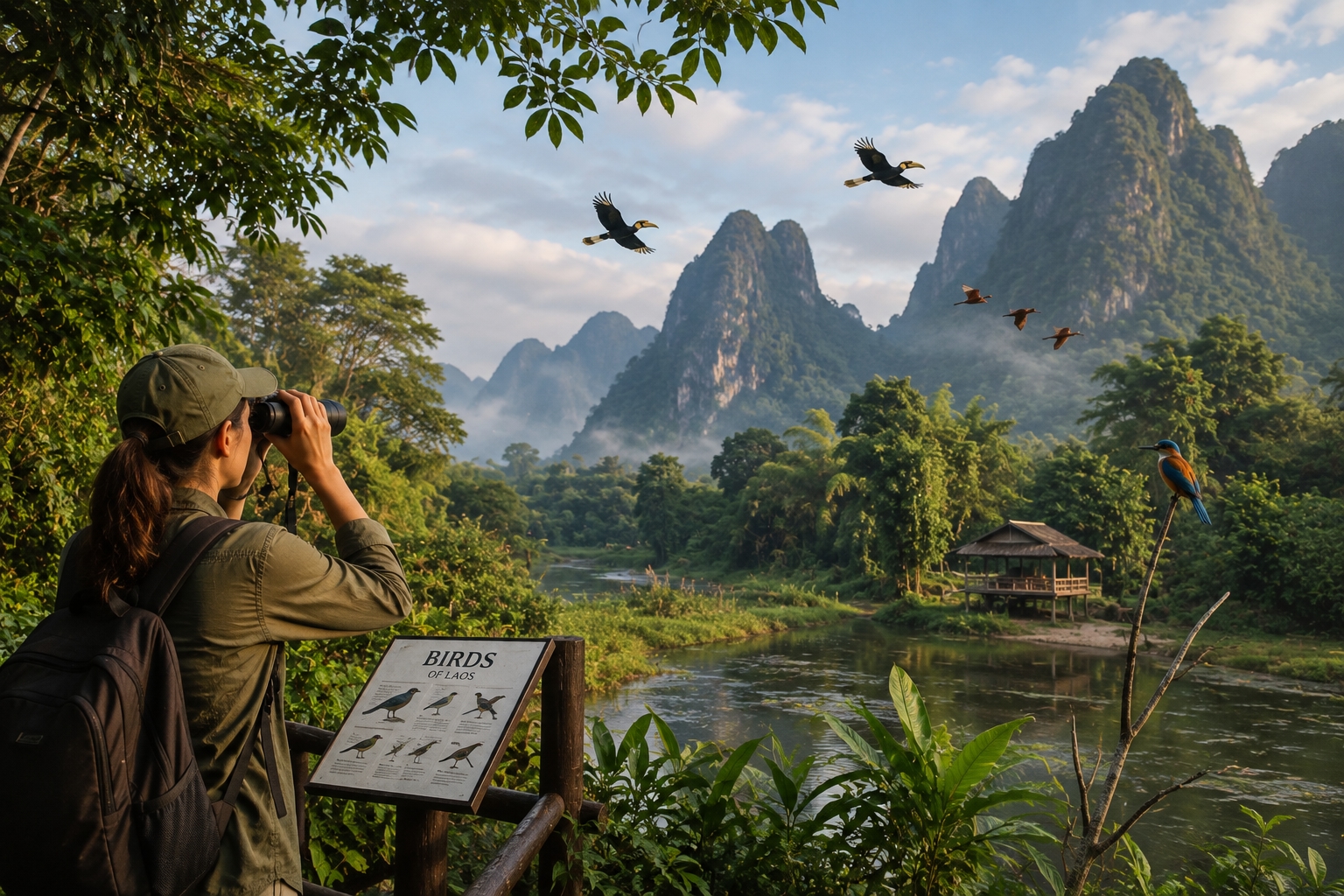
With over 700 recorded bird species—including rare endemics and endangered regional species—Laos is rapidly becoming a top destination for eco-tourists. Whether you are searching for the elusive Bare-faced Bulbul or hoping to catch a glimpse of the magnificent Great Hornbill, here is your ultimate guide to the best birdwatching locations in Laos.
Why Laos is a Hidden Gem for Birdwatchers
Laos boasts vast tracts of continuous forest cover, making it a critical stronghold for Southeast Asian biodiversity. The country’s unique geography spans from the Mekong River lowlands in the west to the rugged Annamite Range along the eastern border with Vietnam.
Key reasons to add Laos to your birding bucket list include:
Unique Endemic Species: Regions with limestone karst formations harbor birds found nowhere else on Earth.
Intact Eco-Systems: National Protected Areas (NPAs) protect crucial habitats for threatened wildlife.
Low Tourist Density: Enjoy quiet, uninterrupted birding trails deep in nature.
Top 5 Birdwatching Locations in Laos
1. Phou Hin Poun National Protected Area (Khammouane Province)
If you have one specific bird on your target list for Laos, it is likely the Bare-faced Bulbul—Asia's only bald songbird. Discovered relatively recently, this fascinating bird lives strictly among the jagged limestone karsts of central Laos.
Key Species: Bare-faced Bulbul, Limestone Leaf Warbler, Sooty Babbler, Red-collared Woodpecker, and various hornbill species.
Best For: Karst specialist species and dramatic landscape photography.
Travel Tip: Base yourself in Thakhek or Ban Na village to arrange local guides who know the karst trails well.
2. Xe Pian National Protected Area (Champasak & Attapeu Provinces)
Located in southern Laos, Xe Pian is a massive reserve dominated by lowland evergreen forests, wetlands, and rivers. It offers some of the most diverse birding in the country, particularly for large waterbirds and raptors.
Key Species: Giant Ibis (critically endangered), White-shouldered Ibis, Green Peafowl, Woolly-necked Stork, and the Crested Serpent Eagle.
Best For: Wetland species and lowland forest dwellers.
Travel Tip: Take a guided trekking or boat tour starting from Kingfisher Eco-Lodge near Pakse for easy access to the reserve's key zones.
3. Nakai-Nam Theun National Park (Khammouane & Bolikhamsai Provinces)
Stretching across the Annamite Mountains, Nakai-Nam Theun is one of Southeast Asia's most important conservation areas. Its elevation ranges from lowland evergreen forests to cool mountain ridges, creating multiple micro-climates for birdlife.
Key Species: Crested Argus, Rufous-necked Hornbill, Annam Limestone Babbler, Blue-rumped Pitta, and the White-winged Duck.
Best For: Rare Annamite endemic species and deep forest trekking.
Travel Tip: The wildlife safari boat trips along the Nam Theun river offer fantastic morning opportunities to spot canopy birds.
4. Nam Et-Phou Louey National Protected Area (Northern Laos)
Famous for its award-winning "Night Safari," Nam Et-Phou Louey covers high-altitude mountain forests in northern Laos. While famous for mammal sightings, its high elevation makes it an exceptional spot for highland birding.
Key Species: Blyth’s Kingfisher, Rufous-necked Hornbill, Beautiful Nuthatch, Purple Cochoa, and various sunbirds and laughingthrushes.
Best For: Eco-friendly night safaris and high-altitude bird species.
Travel Tip: Book official community-managed eco-tours; a portion of your travel fee directly supports local wildlife conservation and anti-poaching patrols.
5. Bolaven Plateau & Tad Fane (Southern Laos)
Known for its cool climate, coffee plantations, and spectacular waterfalls, the Bolaven Plateau is also a rewarding stop for nature travelers. The lush montane forests surrounding Tad Fane waterfall harbor a rich collection of mid-to-high altitude species.
Key Species: Green Cochoa, Indochinese Green Magpie, Red-vented Barbet, and various bulbuls and flycatchers.
Best For: Combining relaxing nature travel, waterfall views, and accessible birdwatching trails.
Essential Travel Tips for International Birdwatchers
Best Time to Visit: The dry season from November to April is the ideal window for birdwatching in Laos. Migratory birds arrive between November and February, while resident birds are active and vocal during early spring.
Gear to Pack: Bring high-powered binoculars, sturdy waterproof hiking boots, lightweight quick-dry clothing, leech socks for jungle treks, and a good headlamp for nocturnal excursions.
Hire Local Guides: Navigating National Protected Areas often requires local knowledge. Hiring local park rangers or community guides ensures you stay safe and supports sustainable community tourism.
Planning Your Nature Trip: Obtaining Your Lao Travel Visa
Before you pack your binoculars and field guides, ensure your travel documents are fully prepared. International travelers visiting Laos can conveniently obtain an electronic visa (eVisa) prior to departure, avoiding long queues upon arrival.
Whether you are traveling solo or organizing a group birdwatching tour, streamlining your visa application ensures a stress-free start to your expedition.
Check your eligibility and verify if your country qualifies by visiting the official list on Who Can Apply for Lao eVisa.
Why Choose Our Travel Visa Services?
Reliable Travel Visa Services: Our global approach has assisted thousands of international travelers in successfully securing their travel Visas without hassle.
Round-the-Clock Assistance: Have questions during your application? Reach out to our support team 24/7, and our experts will review and respond within 72 hours.
Experienced Visa Consultants: Receive professional guidance throughout your submission to minimize errors and ensure maximum application acceptance.
Efficient Visa Application Process: Complete your Lao eVisa form in just a few minutes using our simplified, user-friendly digital platform.
Final Thoughts
Laos offers an unforgettable experience for international nature travelers. From watching rare hornbills fly over lush rainforest canopies to tracking endemic species across limestone karsts, a birdwatching journey through Laos is full of discovery.
Get your travel visa sorted early, prepare your field gear, and get ready to explore one of Southeast Asia's last true wilderness destinations!